
If you buy custom sheet metal parts from Vietnam — or you are planning to — one of the most consequential decisions you will make has nothing to do with price per part. It is how many suppliers you run, where they sit, and what happens on the day one of them fails. This guide is written for sourcing managers and supply chain leads who need a practical framework: when single sourcing makes sense, when dual or multi-sourcing earns its overhead, how to build a backup supplier list before you need it, and how to plan a transition if a supplier goes down.
To build a resilient Vietnam sheet metal supply chain, single-source only low-volume or expensive-tooling parts, dual-source core production with a 70/30 split, qualify each backup on real first articles, spread suppliers across the northern and southern clusters, and keep a written transition plan ready.
Key takeaways:
- Vietnam’s verified partner facility ecosystem provides Tier-1 precision manufacturing with direct engineering transparency and relief from Section 301 Chinese punitive tariffs for qualifying goods.
- Technical documentation must pair 3D models with 2D drawings detailing critical GD&T datums, tolerance limits, and material specs.
- On-site supplier auditing (50-point Dolphin Audit across QCLDM) verifies machinery capacity, CMM metrology, and material traceability.
- Sourcing through DEWIN guarantees Delaware LLC contracting, streamlined RFQ turnaround and engineering review turnaround, and door-to-door DDP logistics.
Key Takeaways
- Single sourcing minimizes overhead and maximizes leverage on tooling and pricing, but concentrates 100% of your production risk in one factory.
- Dual sourcing with a 70/30 or 80/20 volume split is the most common resilience strategy for sheet metal programs; full multi-sourcing is usually reserved for high-volume or safety-critical parts.
- A backup supplier that has never made your part is not a backup — qualification means first articles approved and documentation in hand before a crisis.
- Vietnam offers genuine geographic diversification within one country: the northern (Hanoi/Bac Ninh/Hai Phong) and southern (HCMC/Binh Duong/Dong Nai) clusters have separate ports, labor pools, and infrastructure.
- A written transition plan — tooling ownership, drawing packages, material specs, and inspection records — cuts supplier switchover from months to weeks.
Single, Dual, or Multi-Sourcing: What Are the Real Trade-Offs?
There is no universally correct answer. Each model trades administrative cost against resilience, and the right choice usually differs part by part, not company by company.
There is no universal answer: single sourcing maximizes leverage but concentrates all risk in one factory, dual sourcing with a 70/30 split is the common resilience choice for sheet metal, and full multi-sourcing is usually reserved for high-volume or safety-critical parts. Choose part by part.
| Strategy | Typical Setup | Strengths | Weaknesses | Best For |
|---|---|---|---|---|
| Single sourcing | 100% of volume at one factory | Maximum volume leverage, one tooling investment, simplest quality management | Total exposure to one factory’s capacity, finances, and location | Low-volume parts, complex parts with expensive tooling, early-stage programs |
| Dual sourcing | 70/30 or 80/20 split across two factories | Live backup with proven quality, competitive tension on pricing, surge capacity | Two tooling sets (or shared fixtures), double the audits and PPAP work | Core production parts, medium-to-high volumes, parts with steady demand |
| Multi-sourcing | 3+ qualified factories, volume allocated dynamically | Near-immunity to single-supplier failure, strongest negotiating position | Highest overhead, fragmented volumes can weaken per-factory pricing | High-volume commodity parts, safety-critical or contractual continuity requirements |
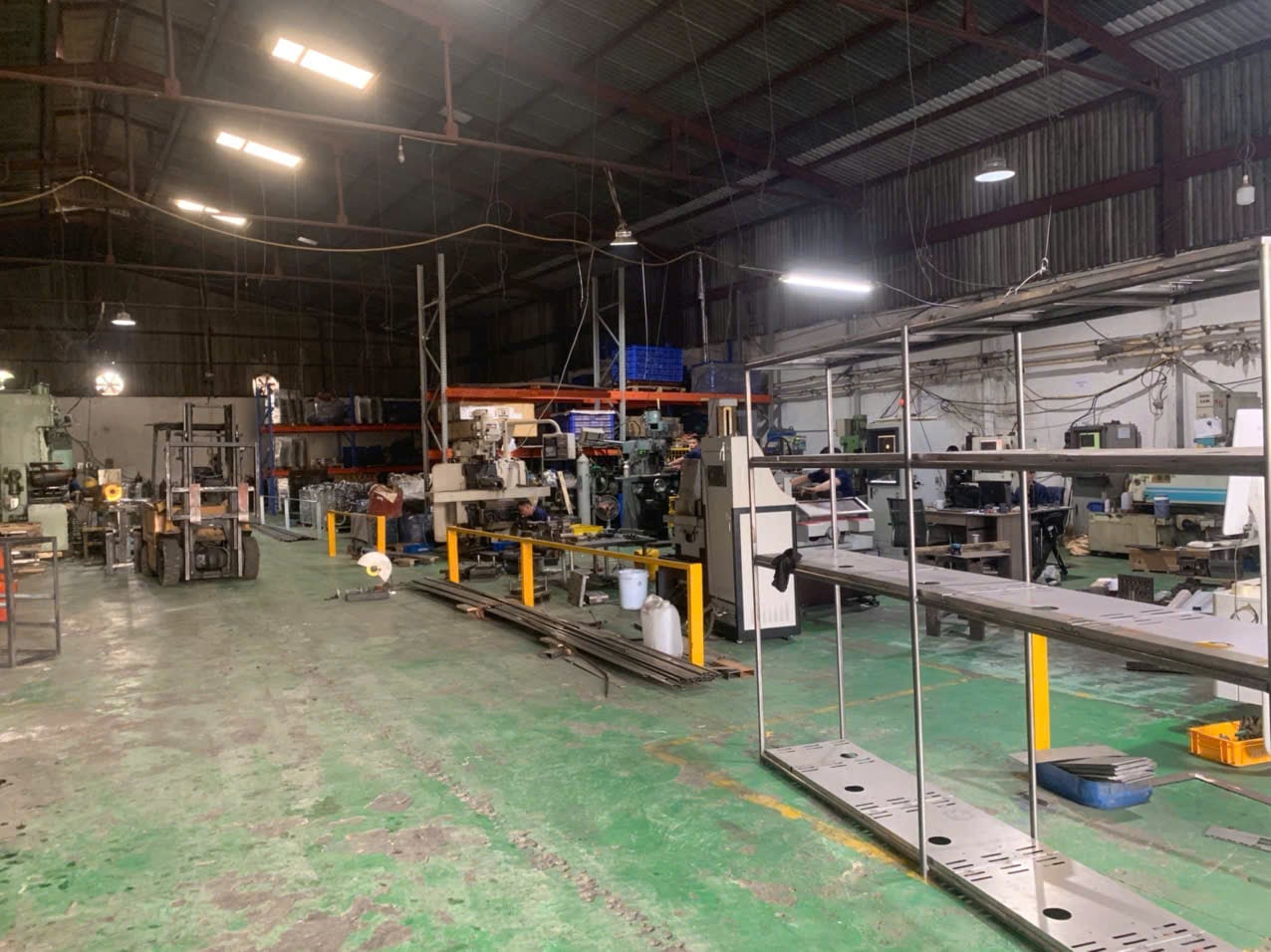
Two nuances matter in practice. First, sheet metal tooling is cheaper than injection molds or die-cast dies — press brake setups, laser programs, and simple stamping dies can often be duplicated for hundreds rather than tens of thousands of dollars. That lowers the barrier to dual sourcing compared to other processes. Second, splitting volume too thin backfires: a factory receiving 10% of your demand treats you as a marginal account. Keep each qualified source above the threshold where you matter to them.
A structured supply chain risk assessment helps you decide which parts justify a second source. Score each part on revenue impact, tooling replacement time, and demand stability — dual-source the ones that score high on all three.
How Do I Build a Qualified Backup Supplier List Before I Need It?
The worst time to find a second supplier is the week your first one misses a shipment. A real backup list has three tiers:
A real backup list has three tiers — identified (right equipment, screened on paper), audited (passed an on-site audit), and qualified (has produced your actual part, first articles approved). Only the qualified tier counts in a crisis, so route small live orders through backups to get there.
- Identified — factories with the right equipment (laser cutting, press brakes, welding, finishing) and export experience, screened on paper.
- Audited — factories that have passed an on-site audit covering equipment condition, quality systems, financial health, and management. DEWIN’s network runs on a 50-point Dolphin Audit, and only factories meeting QCLDM Tier 1–2 standards are matched to buyer RFQs.
- Qualified — factories that have produced your actual part: first articles inspected and approved, material certs on file, packaging validated.
Only tier three counts when a crisis hits. The economical way to get there is to route a small percentage of live orders — a pilot run, a spare-parts batch, an engineering prototype — through the backup so qualification happens on real production rather than as a standalone exercise. Our supplier qualification checklist for Vietnam covers the audit criteria in detail, and you can browse audited fabricators directly in the DEWIN supplier network, which spans vetted Vietnamese manufacturing facilities across Vietnam.
Which Questions Reveal Whether a Supplier Is Really Resilient?
Two factories with identical machine lists can behave very differently under stress. When you evaluate a sheet metal fabrication partner — primary or backup — test flexibility explicitly:
- Volume surges. Ask what happens if next month’s order is 2x the forecast. Listen for specifics: available press brake hours, second-shift capability, subcontracting policy for cutting overflow. A vague “no problem” is a warning sign; a factory that says “we can absorb 40% above forecast within lead time, beyond that we need three weeks’ notice” is telling you the truth.
- Engineering changes. How fast can they implement a revision — update programs, re-fixture, and produce a new first article? For laser-cut and press-brake work, days is reasonable; for hard tooling, ask about modification versus re-cut costs.
- Rush orders. Is there a defined expedite process with a stated premium, or does everything jump the queue informally? Factories that quote expedite fees openly usually manage their schedule well enough to honor them.
- Material sourcing. Do they hold stock of your grades, or buy per-order? A fabricator holding SPCC, SS304, and AL5052 in standard thicknesses can start cutting this week; one that orders material per job adds two to four weeks before anything happens.
Score these answers during the audit, not after the first missed delivery.
How Do I Spread Geographic Risk Within Vietnam?
Diversification does not have to mean a second country. Vietnam’s two major industrial clusters are over 1,000 km apart with independent infrastructure:
Diversification need not mean a second country: Vietnam’s northern cluster (Hanoi, Bac Ninh, Hai Phong) and southern cluster (HCMC, Binh Duong, Dong Nai) sit over 1,000 km apart with separate ports and labor pools, yet share identical tariff and FTA treatment — a north–south split insulates you from regional disruption.
- The North — Hanoi, Bac Ninh, Hung Yen, Hai Phong — grew around electronics supply chains and ships through Hai Phong port. Proximity to the Chinese border helps when your BOM includes Chinese sub-components.
- The South — Ho Chi Minh City, Binh Duong, Dong Nai, Long An — is the traditional export manufacturing heartland, shipping through Cat Lai and Cai Mep deep-water port, with the country’s densest base of sheet metal fabricators.
A north–south dual-sourcing setup insulates you from regional typhoon disruption, localized power constraints, port congestion, and provincial labor market swings — while keeping both suppliers inside the same tariff and FTA framework. Vietnam-origin goods currently enter the US with relief from Section 301 Chinese punitive tariffs for qualifying goods, and Vietnam’s 16+ free trade agreements cover the EU, UK, Japan, Korea, and the CPTPP bloc, so both regions carry identical trade treatment. See our guide to Vietnam’s industrial parks for cluster-by-cluster detail. DEWIN maintains on-ground teams in HCMC, Binh Duong, and Hanoi, which is what makes managing a two-region program practical without flying your own engineers in.
What Should I Do When a Supplier Fails?
Supplier failures rarely announce themselves. The common patterns — quality drift, slipping deliveries, key staff departures, requests for advance payment — show up quarters before the collapse. A workable transition plan has four elements you prepare in advance:
- Tooling ownership on paper. Your purchase orders and agreements should state that dies, fixtures, and weld jigs paid for by you belong to you, with the right to remove them. Photograph and serial-number tooling during audits.
- A complete technical package outside the supplier’s hands. Current-revision drawings, CAD, material specs, weld maps, finish standards, packaging specs, and approved first-article reports — stored in your systems, not reconstructed from the supplier’s files during a dispute.
- Inspection history. Dimensional reports and material certs from recent lots let a new factory reproduce the part without re-deriving undocumented tolerances.
- A warm backup (see above). With a qualified second source, transition means shifting release quantities. Without one, it means starting qualification from zero — typically 8–12 weeks for sheet metal parts, longer if hard tooling must be rebuilt.
When a transition is triggered, sequence it: place a bridge order for extra stock with the failing supplier if quality still holds, transfer tooling, run first articles at the new source against your retained inspection history, then ramp.
Resilience Checklist
- Segment parts by risk: revenue impact × tooling replacement time × demand volatility
- Dual-source the high-risk segment with a 70/30 or 80/20 split
- Qualify backups on real parts — first articles approved, certs on file
- Split across northern and southern Vietnam where volumes justify it
- Verify tooling ownership clauses on every PO
- Keep the full technical package (drawings, specs, FAI reports) in your own systems
- Re-audit active suppliers annually; watch for quality drift and payment-term changes
- Document a written transition playbook before you need it
FAQ
What are the main benefits of sourcing single vs multi-sourcing for vietnam sheet metal in Vietnam?
Vietnam offers competitive machine-hour rates, a rapidly modernizing precision supplier ecosystem, relief from Section 301 Chinese punitive tariffs for qualifying goods into the United States, and preferential trade terms under EVFTA and CPTPP. Audited suppliers in the DEWIN network maintain ISO 9001, AS9100, and IATF 16949 certifications.
How does DEWIN ensure quality and dimensional accuracy?
Every manufacturing facility undergoes the rigorous 50-point Dolphin Audit evaluating Quality, Cost, Logistics, Delivery, and Management (QCLDM). Critical dimensions are verified using on-site 3D CMM inspection, optical comparators, and full material test reports (MTRs) before shipment.
What file formats and information are required for a streamlined RFQ turnaround and engineering review?
To generate a binding quotation within 24 hours, submit 3D CAD files in neutral STEP (AP214/AP242) or IGES format alongside 2D PDF technical drawings specifying critical tolerances, surface finishes, thread callouts, and raw material grades.