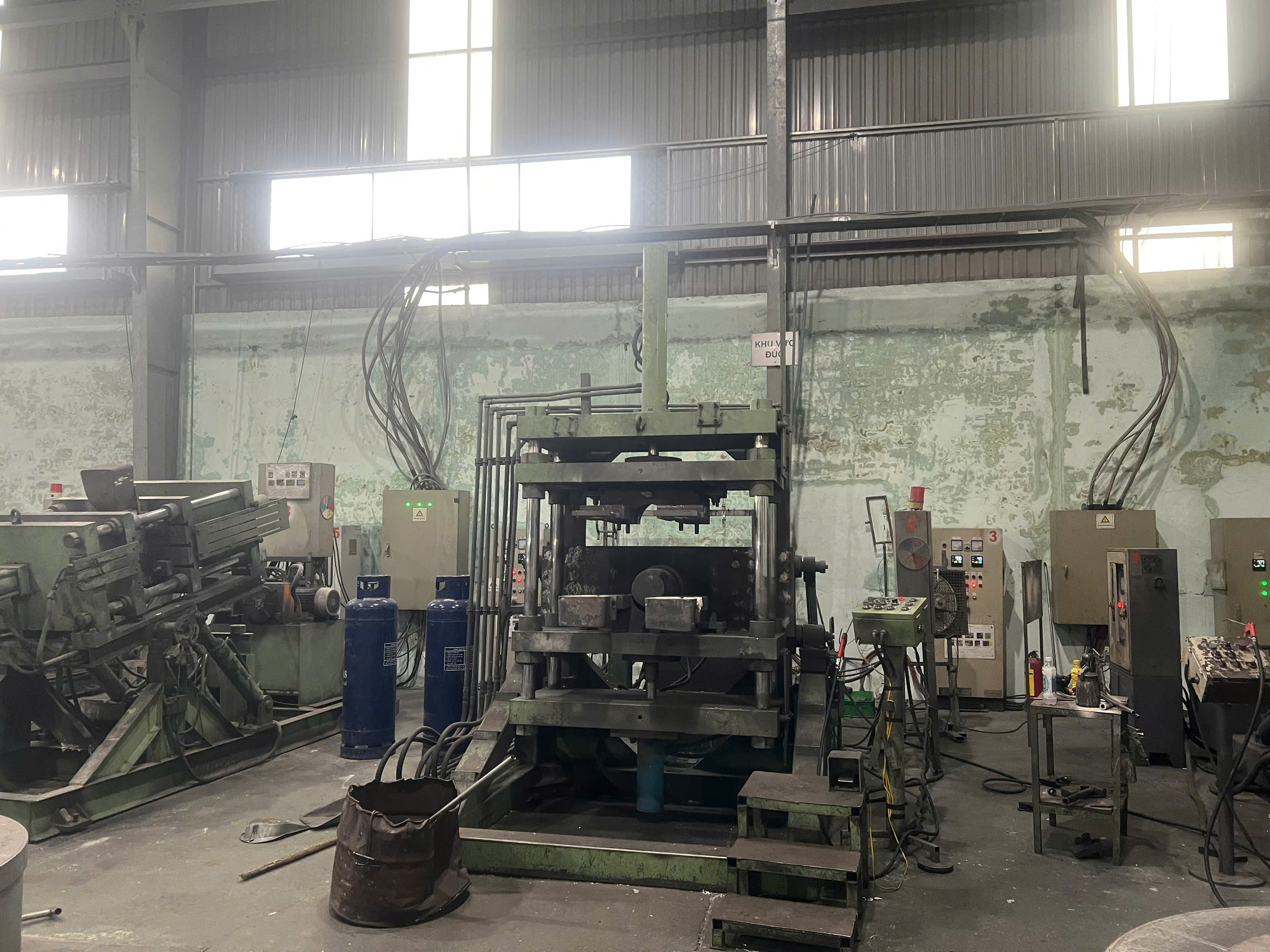
What metal casting and stamping processes operate in Ho Chi Minh City industrial zones?
Industrial zones in Ho Chi Minh City, Binh Duong, and Dong Nai concentrate specialized processes including Japanese-invested zinc die casting, precision CNC machining, high-tonnage progressive stamping, and robotic MIG and TIG welding. Local engineering teams direct pre-production DFM reviews, tooling simulations, and ZEISS CMM dimensional verifications across more than 150 audited manufacturing facilities in Vietnam.
Key Takeaways
- Southern Vietnam hubs in Ho Chi Minh City, Binh Duong, and Dong Nai host capabilities including zinc die casting, precision CNC machining, progressive metal stamping, and robotic welding.
- Production of structural brackets and welded assemblies utilizes SPCC and SS304 materials ranging from 2.0 mm to 4.0 mm gauges, supported by 240hr+ ASTM B117 salt spray testing and 1,500hr UV powder coating.
- On-site engineering teams in Ho Chi Minh City conduct DFM reviews, QCLDM factory audits, and ZEISS CMM dimensional inspections to maintain quality standards across Vietnam supply chains.
Manufacturing hubs in Southern Vietnam support complex component production ranging from zinc die-cast parts to heavy metal stampings and structural weldments. On-site engineers based in Ho Chi Minh City manage local supplier networks across Binh Duong and Dong Nai to ensure precise execution from initial 2D drawings to finished assemblies.
These facilities combine multi-axis CNC machining centers with high-tonnage progressive stamping presses. By pairing zinc die casting with downstream secondary operations like CNC turning and robotic welding, factories deliver ready-to-assemble hardware for industrial applications.
- Zinc Die Casting: Executed at Japanese-invested facilities in Ho Chi Minh City with integrated CNC finishing.
- Progressive Metal Stamping: High-tonnage press lines handling sheet metal and structural bracket forming.
- Robotic MIG and TIG Welding: Automated welding cells for structural brackets, enclosures, and workspace assemblies.
- CNC Precision Machining: Multi-axis turning and milling for tight-tolerance die-cast and stamped components.
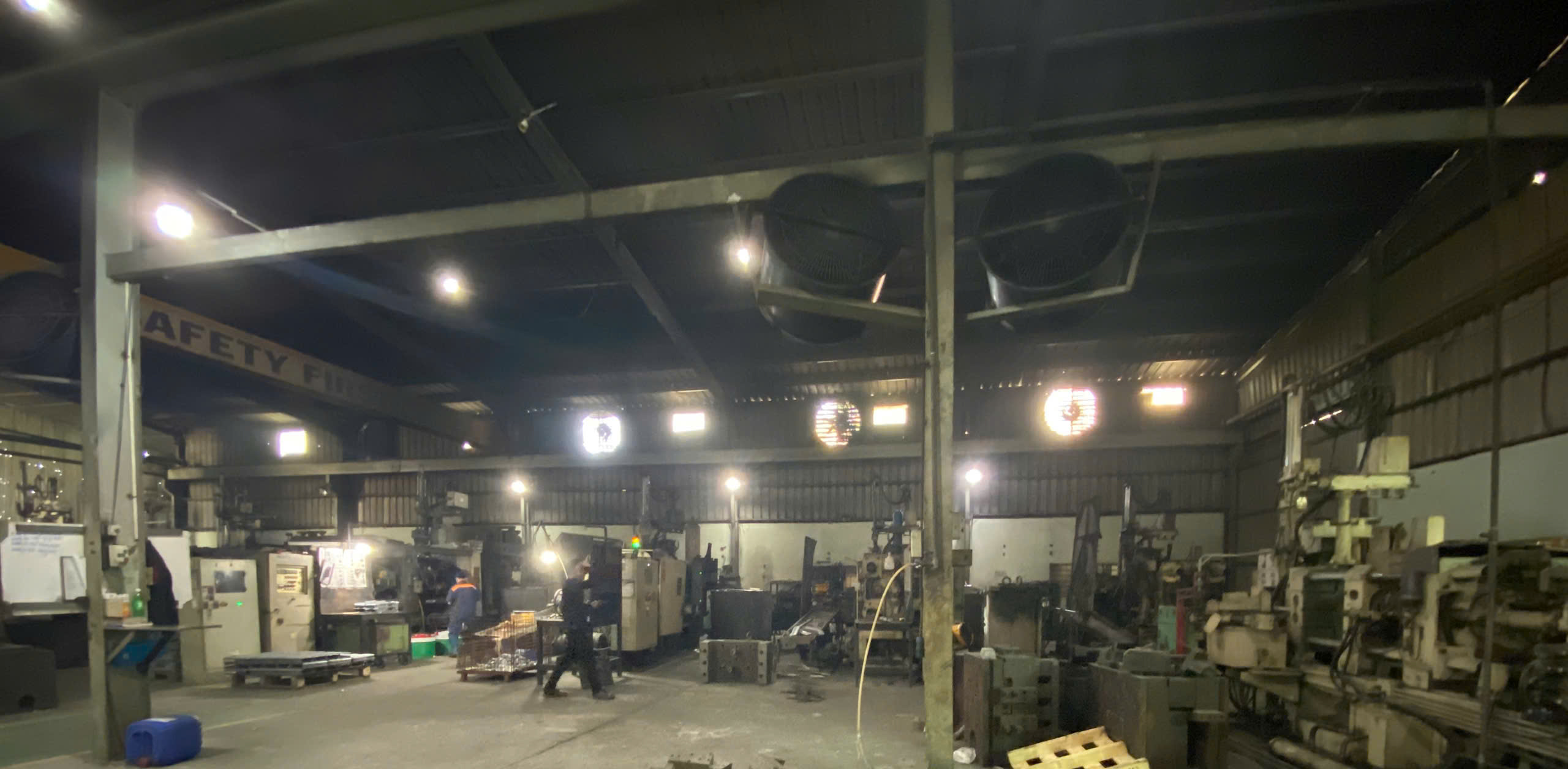
How are structural bracket and sheet metal fabrications inspected in Southern Vietnam?
Structural bracket and sheet metal fabrications undergo strict quality control procedures, including pre-quote DFM analysis, 3D CAD modeling, in-process ZEISS CMM metrology, and 100% functional testing. Weldments made of SPCC or SS304 steel are evaluated using 240hr+ ASTM B117 salt spray testing, 1,500hr UV exposure testing, and 5G vibration analysis.
Quality management in Southern Vietnam relies on structured engineering oversight to verify physical dimensions, material properties, and coating durability. Inspectors perform on-site QCLDM audits and monitor production steps from raw material cutting through final surface treatment.
For bracket fabrications and welded sub-assemblies using SPCC and SS304 sheet steel between 2.0 mm and 4.0 mm gauges, surface protection involves outdoor-grade polyester powder coating. Metrology labs utilize 3D coordinate measuring machines and contour instruments to verify complex geometric tolerances before shipment.
- Material Options: SPCC cold-rolled steel and SS304 stainless steel in 2.0 mm to 4.0 mm sheet gauges.
- Surface Finishing: Outdoor-grade polyester powder coating verified with 1,500hr UV exposure testing.
- Corrosion Protection: 240hr+ ASTM B117 salt spray testing to validate surface coating integrity.
- Dimensional Metrology: ZEISS CMM 3D coordinate measurement and contour roughness analysis.
- Vibration & Retention Testing: 5G vibration testing and quick-release latch validation for heavy-duty brackets.
Which quality control workflows support component relocation and production in Vietnam?
Component relocation and production setup in Vietnam utilize a structured 10-month transfer playbook to move dies, fixtures, and inspection gauges without disrupting supply. On-site Vietnamese engineers manage QCLDM supplier scoring, APQP Gantt tracking, and full PPAP Level 3 documentation, backed by deep-sea export logistics from Haiphong and regional transport links.
Establishing manufacturing lines in Vietnam requires coordinated technical support to transfer tooling, dies, and quality control fixtures smoothly. A 7-person local team in Ho Chi Minh City coordinates closely with regional hubs to align manufacturing processes with international OEM requirements.
Engineers oversee every stage of the setup process, from initial 2D drawing reviews to final pre-shipment container audits. This includes verifying material COA documentation, conducting moisture and salt-spray protection audits during container loading, and managing direct shipping routes from ports like Lach Huyen.
- Line Transfer Playbook: 10-month migration protocol for transferring dies, tooling fixtures, and quality control gauges.
- Quality Benchmarking: PPAP Level 3 documentation, material COA verification, and QCLDM supplier scoring.
- On-Site Supervision: Resident SQE engineers conducting in-process audits and ZEISS CMM metrology checks.
- Logistics Oversight: Pre-shipment container loading inspections and moisture protection verification for global shipping.

Engineering & Production Specification Matrix
| Process Parameter | Prototype / Short-Run Standard | Production Progressive / Hard-Tool Standard | Verification Method |
|---|---|---|---|
| Linear Dimensional Tolerance | ±0.10 mm to ±0.15 mm (ISO 2768-m) | ±0.03 mm to ±0.08 mm (ISO 2768-f) | Optical 2D/3D CMM & Go/No-Go Check Fixtures |
| Edge Burr Height Limit | ≤ 10% of material thickness | ≤ 5%–8% of material thickness | Digital Micrometer & Cross-Section Audit |
| Material & Coating Traceability | Mill Test Certificate (EN 10204 3.1) | Heat-lot MTC + RoHS/REACH + ASTM B117 Salt-Spray | Spectrometer (OES) & XRF Screening |
| Standard Tooling & Lead Time | Laser + CNC Press Brake (5–10 days) | Progressive / Transfer Die (3–5 weeks T1) | First Article Inspection (FAI) & CPK ≥ 1.33 |
Frequently Asked Questions
What material options are supported for bracket and sheet metal stamping in Vietnam?
Vietnam manufacturing facilities process SPCC cold-rolled steel and SS304 stainless steel in gauges ranging from 2.0 mm to 4.0 mm, featuring high-tonnage progressive stamping, CNC bending, and outdoor-grade polyester powder coating.
How does the local engineering team in Ho Chi Minh City oversee factory quality?
The 7-person local team in Ho Chi Minh City performs on-site QCLDM supplier audits, pre-quote DFM reviews, in-process ZEISS CMM inspections, and PPAP Level 3 documentation across manufacturing centers in Southern and Northern Vietnam.
What metrology equipment is used to verify precision parts in Vietnam supply networks?
Metrology labs utilize ZEISS 3D coordinate measuring machines (CMM), Mitutoyo measurement systems, contour meters, surface roughness testers, and hardness testing equipment to ensure parts meet tight dimensional requirements.
What environmental and durability standards apply to welded steel fabrications?
Welded steel fabrications and stamped brackets undergo 240hr+ ASTM B117 salt spray corrosion testing, 1,500hr UV powder coat testing, and 5G vibration retention testing for demanding OEM applications.