Surface Finishing for CNC & Metal Parts: Anodizing, Powder Coating & Plating Costs in Vietnam (2026)
February 19, 2026 · 14 min read
You've designed the part, selected the alloy, and nailed the tolerances — but the surface finish you specify can make or break function, durability, and cost. In Vietnam's manufacturing ecosystem, surface finishing is where many buyers leave money on the table: either over-specifying (paying for Ra 0.4 µm when Ra 1.6 µm works) or under-specifying (discovering parts corrode in 6 months because no one called out a coating).
This guide covers every major surface finishing process available from Vietnam manufacturers, with real 2026 pricing, technical specs, and exactly what to write on your drawing or RFQ.
Vietnam manufacturers offer the full surface-finishing range — Type II and Type III anodizing, powder coating, zinc/nickel/chrome plating, passivation, and electropolishing — often in-house alongside machining. The single biggest cost lever is specifying each finish, and its Ra value, only where the part functionally needs it.
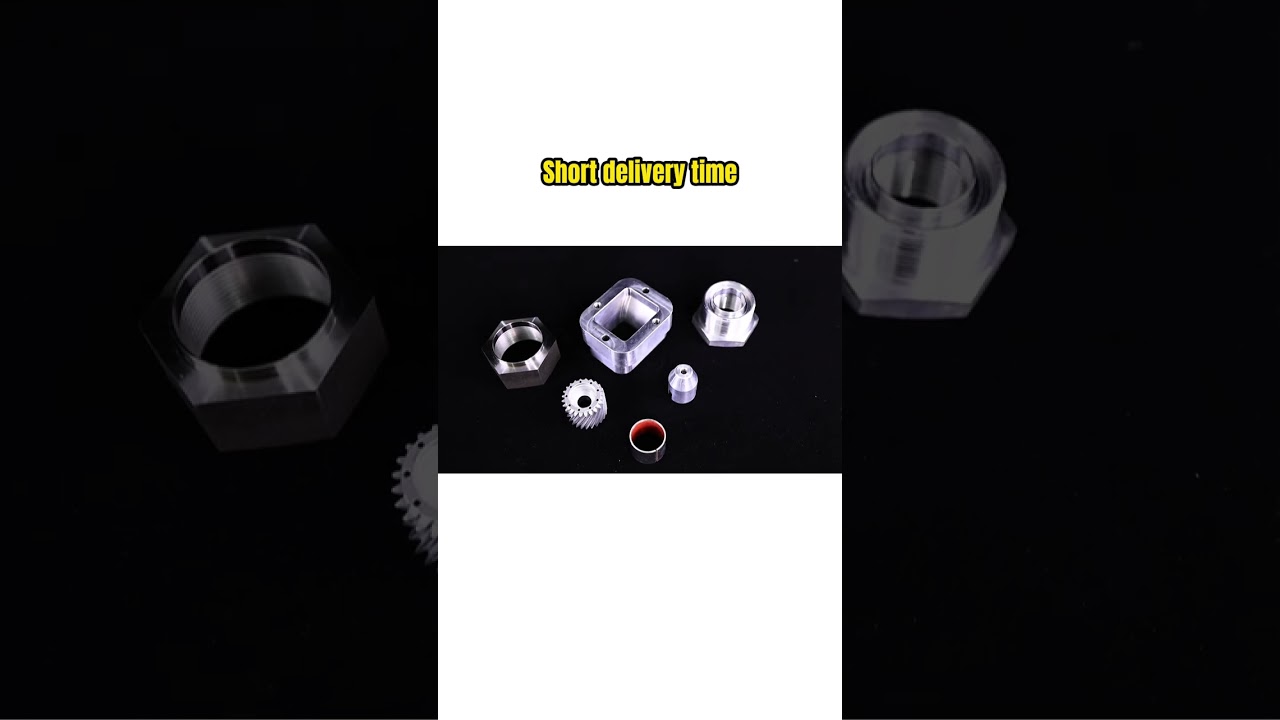
Real Vietnam Factory Samples — Custom Machined & Metal Parts
Watch on YouTube
Real footage from an audited DEWIN partner factory in Vietnam.
Surface Roughness Basics: What Ra Values Actually Mean
Before selecting a coating or treatment, understand your base machined finish. CNC machining in Vietnam typically delivers these as-machined surface roughnesses:
- Ra 3.2 µm: Standard milling finish — visible tool marks. Fine for non-cosmetic, non-sealing surfaces. No additional cost.
- Ra 1.6 µm: Fine machining — slight tool marks visible under light. Standard for most functional parts. Adds ~5-10% to machining time.
- Ra 0.8 µm: Precision finish — smooth to touch, minimal visible marks. Required for sealing surfaces, bearing bores. Adds ~15-25% to machining time.
- Ra 0.4 µm: Mirror-approach finish — requires grinding or lapping after CNC. Needed for hydraulic valve spools, optical mounting surfaces. Adds 30-50% to cost.
- Ra 0.1 µm or better: Mirror polish — requires lapping, superfinishing, or diamond polishing. Used in mold cavities, optical components. 2-3x base machining cost.
Cost tip: Specify Ra values only on functional surfaces. Call out "as machined" (typically Ra 3.2 µm) on non-critical faces. A housing that specifies Ra 0.8 µm all over costs 20-30% more than one that specifies it only on the sealing face.
Anodizing: Types, Colors, and Vietnam Pricing
Anodizing is the most common finish for aluminum parts exported from Vietnam. It converts the surface aluminum into a hard aluminum oxide layer through electrolytic oxidation — it's not a coating that sits on top; it grows into the metal.
Type II (sulfuric) anodizing suits most aluminum parts at 5–25µm, while Type III hardcoat adds wear resistance at 25–75µm. Because roughly half the layer grows outward, hardcoat noticeably changes dimensions — machine tight-tolerance features undersize to leave room for the coating.
Type II Anodizing (Sulfuric Acid — Standard)
The workhorse finish for 90% of aluminum parts.
- Layer thickness: 5–25 µm (typically 8–12 µm for decorative, 18–25 µm for functional)
- Dimensional impact: ~50% of layer grows outward — a 20 µm coating adds ~10 µm per side. Critical for tight-tolerance bores.
- Colors available in Vietnam: Clear, black, red, blue, gold, green, purple. Black and clear are stocked at every anodizer; colors require minimum batches of 50-100 parts at most shops.
- Salt spray resistance: 336-500 hours (ASTM B117) for sealed Type II
- Hardness: 200-400 HV (Vickers)
- Vietnam pricing (2026):
- Clear anodize: $0.15–0.60/part for small parts (< 100 cm²), $0.80–2.50 for medium parts
- Color anodize: $0.25–0.90/part for small, $1.20–3.50 for medium
- Black anodize: $0.20–0.70/part (most common, best pricing due to volume)
- Minimum order: typically $150-300 per batch (combined with other parts is common)
Type III Anodizing (Hardcoat)
For parts that need wear resistance and hardness beyond standard anodizing.
- Layer thickness: 25–75 µm (MIL-A-8625 Type III specifies ≥50 µm)
- Dimensional impact: Significant — a 50 µm coating adds ~25 µm per side. Machine undersize if holding tight tolerances.
- Color: Natural dark grey/bronze to black. Dyeing is possible but limited; thickness darkens the base color.
- Hardness: 400-700 HV — approaches hardened steel
- Salt spray: 1,000+ hours (ASTM B117)
- Vietnam pricing: 2-3x Type II. Typically $0.50–2.00/part for small parts, $2.50–8.00 for medium. Fewer Vietnam shops offer Type III — expect 2-3 day turnaround vs. same-day for Type II.
- Best alloys: 6061-T6 and 7075-T6 anodize well. 2024 anodizes poorly (high copper content creates uneven color). Cast alloys (A356, A380) produce inconsistent results — discuss with your anodizer before specifying.
How to Specify Anodizing on Your Drawing
A complete anodizing callout looks like this:
ANODIZE PER MIL-A-8625, TYPE II, CLASS 2 (BLACK), 18-22 µm. SEAL PER MIL-A-8625.Key elements: specification (MIL-A-8625 or ISO 7599), type (II or III), class (1 = clear, 2 = dyed), color, thickness range, and sealing requirement.
Powder Coating: The Durable All-Rounder
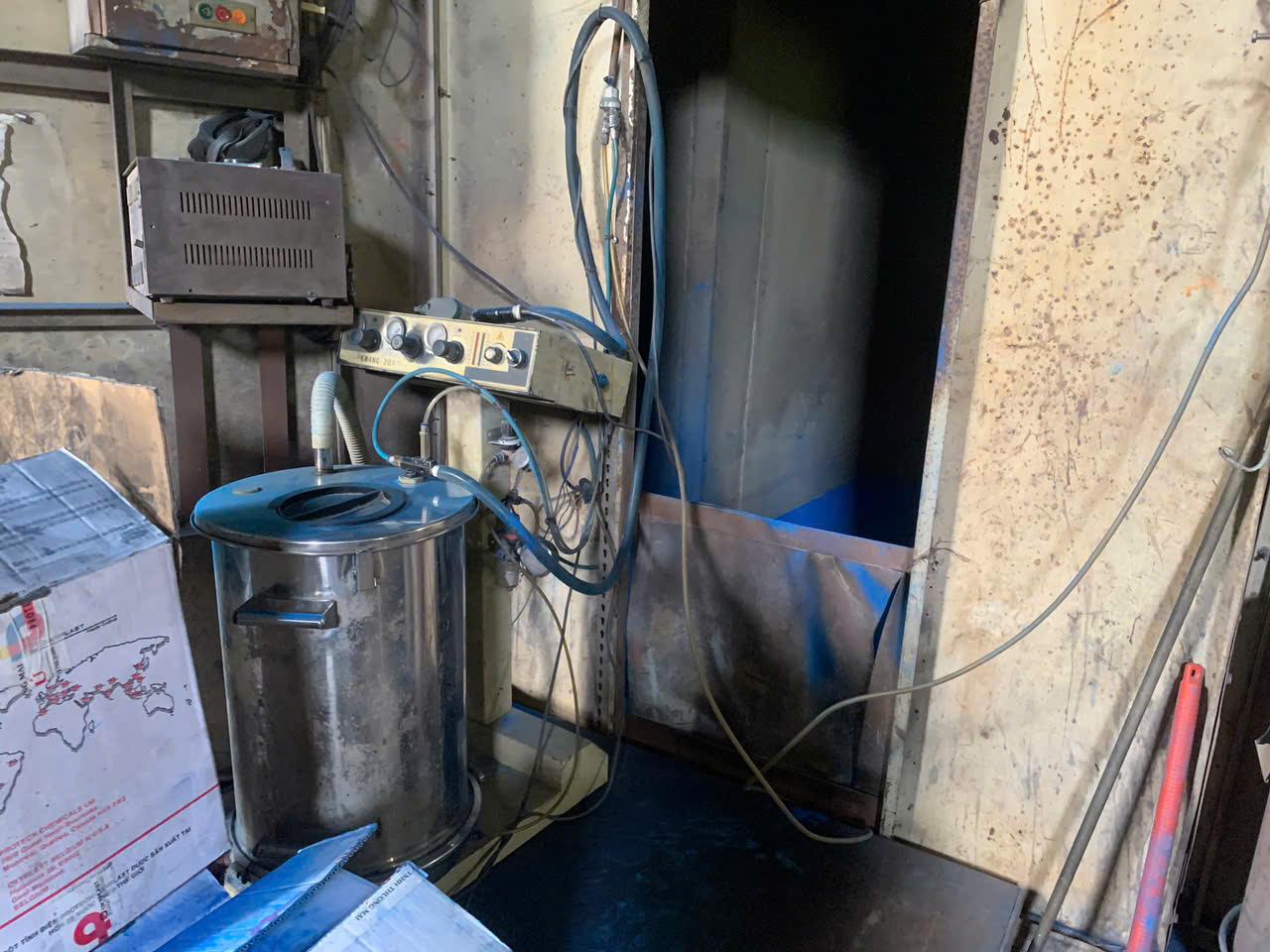
Powder coating is the go-to finish for steel, stainless steel, and aluminum parts that need paint-quality appearance with superior durability. It's applied electrostatically and cured at 180-200°C, creating a 60-120 µm thick coating that won't chip, peel, or fade like wet paint.
Powder Coating Specs & Vietnam Pricing
- Thickness: 60-120 µm standard (50-80 µm for thin-film, 120-200 µm for heavy-duty)
- Adhesion: Cross-hatch test per ASTM D3359 — GT0 or GT1 required
- Salt spray: 500-1,500 hours depending on substrate prep and powder type
- UV resistance: Polyester powders for outdoor use (5-10 year fade resistance). Epoxy for indoor only (yellows in sunlight). Hybrid (epoxy-polyester) for semi-outdoor.
- Color matching: RAL and Pantone matching available. RAL colors are stocked; custom Pantone matching adds $200-500 setup + 2-3 day lead time.
- Vietnam pricing (2026):
- Standard RAL color: $0.30–1.20/part (small-medium parts)
- Large parts (> 500 cm²): $1.50–5.00/part
- Textured finish: +15-25% over smooth
- Two-tone / masking required: +50-100% over single color
- Substrate prep matters: Vietnam shops typically offer phosphate wash (basic), zinc phosphate (better), or sandblast + phosphate (best). Sandblast prep adds $0.10-0.50/part but doubles salt spray life. Always specify prep method.
Powder Coating vs. Anodizing: When to Use Each
- Use anodizing when: Part is aluminum, you need wear/scratch resistance, tight tolerances matter (thinner layer), conductive surface needed (Type II is semi-conductive), operating temperature > 200°C
- Use powder coating when: Steel or mixed-metal assembly, any RAL/Pantone color needed, thick corrosion barrier required, cost is primary concern (powder coating is 20-40% cheaper than anodizing per part), cosmetic appearance is priority
Electroplating: Zinc, Nickel, Chrome & More
Electroplating deposits a thin metal layer onto your part via electrolysis. Vietnam has a mature plating industry — particularly in the fastener and automotive component sectors around Binh Duong and Dong Nai provinces.
Common Plating Types & Costs
Zinc Plating (Electrogalvanizing)
- Thickness: 5-25 µm (8-12 µm typical)
- Passivation options: Clear (blue-white), yellow chromate (gold), black, olive drab. Trivalent chromium passivation (RoHS-compliant) standard in Vietnam.
- Salt spray: Clear = 96-120 hrs, yellow chromate = 240-400 hrs, with sealant = 500+ hrs
- Cost: $0.05-0.30/part for small fastener-type parts; $0.30-1.50 for medium CNC parts
- Best for: Steel fasteners, brackets, low-cost corrosion protection
Nickel Plating (Electroless & Electrolytic)
- Electroless nickel (EN): Uniform thickness even in recesses and blind holes. 10-50 µm. Hardness 500-700 HV (as-plated), 900-1100 HV after heat treatment (1 hr at 400°C). Used for wear surfaces, mold components, hydraulic parts.
- Cost: $0.50-3.00/part (small-medium). Electroless is 2-3x more expensive than electrolytic nickel but far more uniform.
- Spec callout:
ELECTROLESS NICKEL PER MIL-C-26074 OR ASTM B733, CLASS 3 (25 µm MIN)
Chrome Plating
- Decorative chrome: 0.25-0.5 µm chrome over 10-20 µm nickel. Bright, mirror finish. $1-5/part. Common for consumer products.
- Hard chrome: 20-250 µm. Hardness 850-1050 HV. Used for hydraulic cylinders, piston rods, wear rings. $2-15/part depending on size. Vietnam has several specialized hard chrome shops.
- Environmental note: Hexavalent chrome (Cr6+) is increasingly restricted. Vietnam shops are transitioning to trivalent chrome (Cr3+). Specify Cr3+ if your product ships to EU (REACH/RoHS compliance).
Passivation & Conversion Coatings
Stainless Steel Passivation
If you're sourcing stainless steel parts from Vietnam, always specify passivation in your drawing. Machining introduces iron contamination from cutting tools that creates rust spots — even on SS304 or SS316.
- Process: Nitric acid or citric acid bath (citric is more common in Vietnam, equally effective, and more environmentally friendly)
- Spec:
PASSIVATE PER ASTM A967 OR AMS 2700, METHOD 1 (CITRIC ACID) - Cost: $0.05-0.25/part — one of the cheapest treatments but most frequently omitted by buyers
- Salt spray improvement: Unpassivated SS304 = 200-400 hrs. Passivated SS304 = 500-1,000+ hrs.
Chromate Conversion (Alodine/Chem Film)
- Purpose: Corrosion protection for aluminum that maintains electrical conductivity (unlike anodizing). Critical for EMI shielding enclosures and grounding surfaces.
- Types: Type I (gold/iridescent — Cr6+, restricted), Type II (clear — Cr3+, RoHS-compliant)
- Spec:
CHEMICAL CONVERSION COATING PER MIL-DTL-5541, TYPE II, CLASS 3 - Thickness: 0.5-4 µm — negligible dimensional impact
- Cost: $0.10-0.40/part. Often combined with primer + paint for aerospace applications.
Specialty Finishes Available in Vietnam
- Black oxide (steel/stainless): Thin (< 1 µm) conversion coating. Minimal corrosion protection alone — must be oiled or waxed. Gives a matte black appearance. $0.05-0.20/part. Popular for tooling and fixtures.
- Electropolishing (stainless): Removes 10-40 µm of material, smoothing to Ra 0.2-0.4 µm. Essential for food/medical/pharma parts. $0.50-3.00/part. Available at several Vietnam shops catering to medical device OEMs.
- Bead blasting / sandblasting: Creates uniform matte texture, hides machining marks. Ra 1.6-6.3 µm depending on media. $0.10-0.50/part. Often used before anodizing for a satin finish.
- Brushing / hairline finish: Unidirectional grain pattern. Common for consumer electronics enclosures. $0.20-0.80/part depending on part size and grit specification.
- PVD coating (TiN, TiAlN, CrN): Thin-film vacuum deposition for extreme wear resistance. 1-5 µm, hardness 2000-3500 HV. Used for cutting tools, mold inserts. Limited to a few specialized shops in Vietnam — lead time 5-7 days. $2-10/part.
- Hot-dip galvanizing: Thick zinc coating (45-85 µm) for structural steel. Vietnam has large-scale galvanizing lines. $0.08-0.15/kg — very economical for heavy parts. Not suitable for precision dimensions.
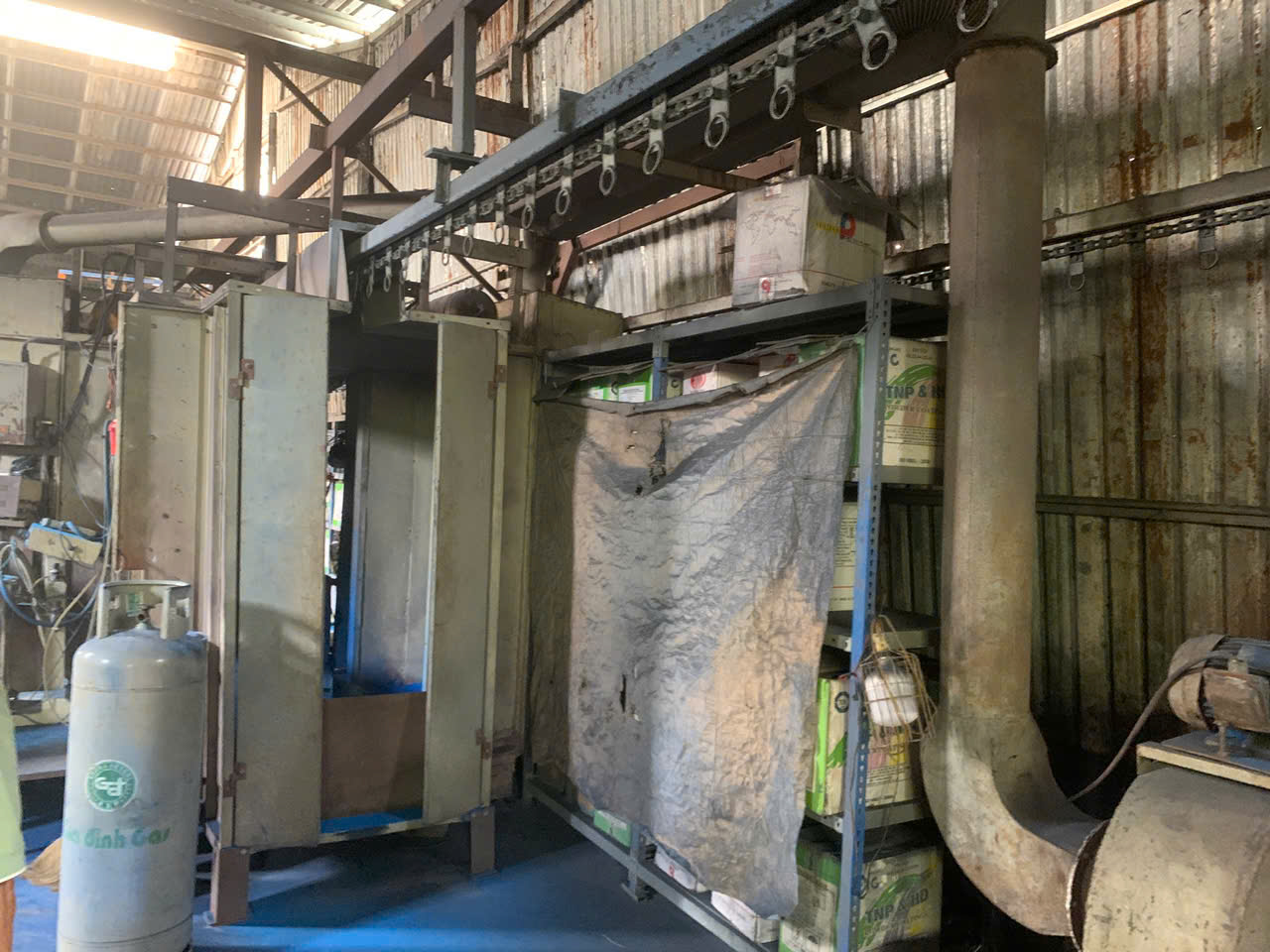
Surface Finish Decision Matrix
Use this quick reference to match your requirements to the right finish:
| Requirement | Best Finish | Vietnam Cost/Part |
|---|---|---|
| Corrosion protection (aluminum) | Type II anodize or powder coat | $0.15–3.50 |
| Wear/scratch resistance (aluminum) | Type III hardcoat anodize | $0.50–8.00 |
| Corrosion protection (steel) | Zinc plating + yellow chromate | $0.05–1.50 |
| Decorative color (any metal) | Powder coating (RAL match) | $0.30–5.00 |
| Electrical conductivity preserved | Chromate conversion (Alodine) | $0.10–0.40 |
| Food/medical grade (stainless) | Electropolish + passivation | $0.55–3.25 |
| Extreme wear (any metal) | Hard chrome or PVD | $2.00–15.00 |
| Cosmetic matte (aluminum) | Bead blast + Type II anodize | $0.25–4.00 |
| Budget corrosion (steel, heavy parts) | Hot-dip galvanize | $0.08–0.15/kg |
How to Specify Surface Finish in Your RFQ
When submitting an RFQ to a Vietnam manufacturer, include these details for every surface treatment:
- Specification standard: MIL-A-8625, ASTM B633, AMS 2700, etc. Don't just write "anodize" — specify the type, class, and standard.
- Thickness range: Min and max in µm. Example: "18-25 µm" not just "per spec."
- Color: RAL number, Pantone code, or physical sample. "Black" alone can mean matte, gloss, or satin — specify texture too.
- Which surfaces: Mark on drawing which surfaces receive treatment. Mask threads, press-fit bores, and datum surfaces unless you account for coating thickness in your tolerance stack.
- Acceptance criteria: Salt spray hours, adhesion test method, thickness measurement locations.
- Compliance: RoHS, REACH, conflict mineral, California Prop 65 — specify upfront to avoid Cr6+ or other restricted substances.
💡 Pro Tip: Don't Over-Specify
The #1 cost mistake we see from US buyers: specifying MIL-spec finishes on commercial parts. MIL-A-8625 Type III hardcoat anodizing on a decorative electronics enclosure wastes $3-5/part. Match the spec to the application — your parts work in an office, not a fighter jet.
Vietnam's Surface Finishing Advantage for US Buyers
Vietnam's finishing costs run 40-60% below US domestic rates and 15-30% below China — driven by lower labor costs ($3-6/hr for finishing operators), competitive chemical costs, and an expanding base of plating and coating facilities built to serve the electronics and automotive supply chains of Samsung, Canon, and Toyota.
Combined with exemption from Section 301 Chinese punitive duties (vs. 25% on Chinese parts), a Vietnam-finished part lands in the US at a significant cost advantage. Many of our partner factories offer in-house finishing — CNC + anodize or CNC + powder coat under one roof — eliminating the quality risk and lead time of moving parts between shops.
DEWIN audits every finishing line in our supplier network: we verify chemical bath composition, oven calibration records, salt spray test equipment, and thickness measurement tools before qualifying a shop.
Need Surface-Finished Parts from Vietnam?
Upload your drawings with finish specs — we'll quote machining + finishing as a turnkey package with 2-3 week lead times.
Get a Quote →Frequently Asked Questions
Do I need to machine features undersize before hardcoat anodizing?
Type III hardcoat anodizing changes part dimensions enough that tight-tolerance features must be machined undersize — a 50 µm coating adds roughly 25 µm per side because about half the layer grows outward. Type II is milder at 5–25 µm, where a 20 µm coating adds around 10 µm per side. Mask threads, press-fit bores, and datum surfaces unless coating thickness is already in your tolerance stack.
Which finish protects aluminum but keeps the surface electrically conductive?
Chromate conversion coating, also called Alodine or chem film, is the finish to specify when an aluminum part must stay electrically conductive, since it protects against corrosion without the insulating oxide layer anodizing creates. It is the standard call for EMI shielding enclosures and grounding surfaces. Specify Type II, the RoHS-compliant trivalent version, because Type I is hexavalent and restricted.
What substrate prep should I specify before powder coating?
Substrate prep must be named explicitly in the RFQ, because Vietnam shops offer three tiers: phosphate wash as the basic option, zinc phosphate as better, and sandblast plus phosphate as best. Sandblast prep adds $0.10-0.50 per part but doubles salt spray life. Since powder coating salt spray ranges from 500 to 1,500 hours depending on prep and powder type, the prep choice drives the result.
Which aluminum alloys anodize well, and which cause colour problems?
6061-T6 and 7075-T6 anodize well, while 2024 anodizes poorly because its high copper content creates uneven colour. Cast alloys such as A356 and A380 produce inconsistent results, so discuss them with the anodizer before committing to a finish. Colours beyond black and clear also require minimum batches of 50-100 parts at most shops.