
More and more RFQs now arrive with a sustainability questionnaire stapled to the drawing pack. This guide is for sourcing managers and engineers who buy fabricated sheet metal parts from Asia and are being asked — by customers, investors, or regulation — to account for and reduce supply chain emissions. You’ll learn where the CO2 in a fabricated part comes from, which levers move the number meaningfully, how design choices cut cost and carbon together, and what to realistically ask Vietnamese suppliers today.
To cut the carbon footprint of a fabricated-part supply chain, act in order of tonnage: reduce material and nesting scrap first, ship by sea in consolidated containers instead of air second, then address factory energy — because embodied material emissions usually dominate the total.
Key takeaways:
- Vietnam’s verified partner facility ecosystem provides Tier-1 precision manufacturing with direct engineering transparency and relief from Section 301 Chinese punitive tariffs for qualifying goods.
- Technical documentation must pair 3D models with 2D drawings detailing critical GD&T datums, tolerance limits, and material specs.
- On-site supplier auditing (50-point Dolphin Audit across QCLDM) verifies machinery capacity, CMM metrology, and material traceability.
- Sourcing through DEWIN guarantees Delaware LLC contracting, streamlined RFQ turnaround and engineering review turnaround, and door-to-door DDP logistics.
Let’s be honest about framing up front: carbon reporting is an emerging requirement in metal fabrication, not a mature one. Most Vietnamese sheet metal factories cannot yet hand you a per-part carbon figure, and most buyers don’t need one yet. What buyers increasingly need is a credible reduction story built on real levers — and those are available now.
Key Takeaways
- For a typical fabricated part, embodied material emissions dominate — usually more than freight and factory energy combined — making scrap reduction the highest-leverage action.
- Sea freight emits roughly 10–40x less CO2 per tonne-kilometre than air freight. Planning that eliminates air-freight rescues is one of the largest single reductions available.
- Design changes — thinner gauge where structurally allowed, nest-friendly geometry, aluminum vs steel trade-offs — cut cost and carbon together.
- Ask suppliers concrete questions: electricity source, scrap segregation, ISO 14001 status — treating certification as a management-system signal, not a carbon number.
- Beware greenwashing — including your own. “Sustainable sourcing” claims without material, freight, or energy substance won’t survive customer scrutiny.
Where Do the Emissions Actually Live in a Fabricated Part?
A useful mental model for a sheet metal part’s cradle-to-customer footprint has three layers:
1. Material (usually the largest share). Producing a kilogram of primary steel emits roughly 1.8–2.5 kg CO2e; primary aluminum runs several times higher depending on the smelter’s electricity, and high-recycled-content material cuts both dramatically. Critically, the part pays for every kilogram of sheet purchased, not just the kilograms shipped — a part with 40% nesting scrap carries the embodied carbon of all that offcut.
2. Freight. Emissions scale with mass × distance × mode, and mode dominates: air freight emits roughly 10–40x more CO2 per tonne-kilometre than ocean container shipping. One panicked air shipment can outweigh a year of factory-level efficiency gains.
3. Factory energy. Usually the smallest layer for sheet metal parts. It matters most for energy-intensive finishing (anodizing lines, curing ovens), and it’s where a supplier’s electricity source — grid mix vs rooftop solar — enters the equation.
Effort should follow tonnage: a buyer who optimizes nesting and freight mode but ignores the factory’s LED lighting is doing it right, not wrong.
Emissions concentrate in three layers: embodied material — usually the largest share, and you pay for every kilogram bought, not just shipped — then freight, where transport mode dominates, then factory energy, typically the smallest. Effort should follow tonnage, so material comes first.
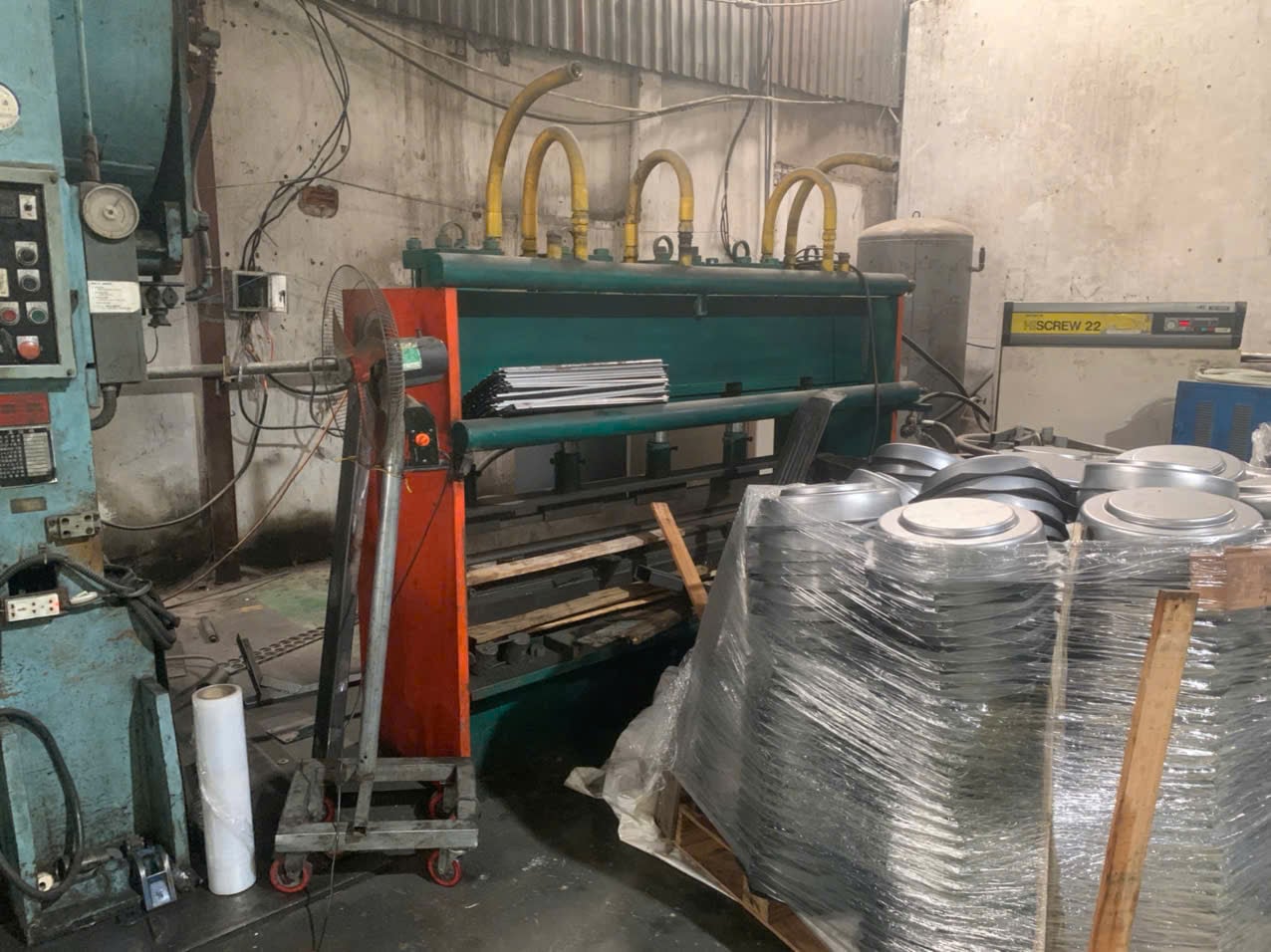
Lever 1: Why Does Nesting Efficiency Matter Most?
Because material dominates the footprint, the single most productive conversation you can have with a fabricator is about material utilization. Modern Vietnamese shops running fiber lasers with offline nesting software achieve utilization that manually-nested shops can’t — and every percentage point of utilization comes off both your material cost and your material carbon.
What this looks like in practice with sheet metal suppliers:
- Ask for the nest report. Shops with real CAM workflows can show utilization per job; if your parts nest badly, they’ll know why.
- Consolidate part families onto shared sheets. Ordering brackets, panels, and small clips together lets the nester fill gaps that single-part orders waste.
- Match design to stock sizes. A panel dimensioned 30 mm over a standard sheet division forces a whole extra strip of scrap; small dimension changes sometimes rescue entire layouts.
- Ask where scrap goes. Segregated steel, stainless, and aluminum offcuts re-enter the recycling stream at high value; mixed scrap doesn’t. Segregation is visible in a thirty-second factory walk-through — the kind of housekeeping our Dolphin Audit Facility & Safety pillar covers alongside other environmental basics.
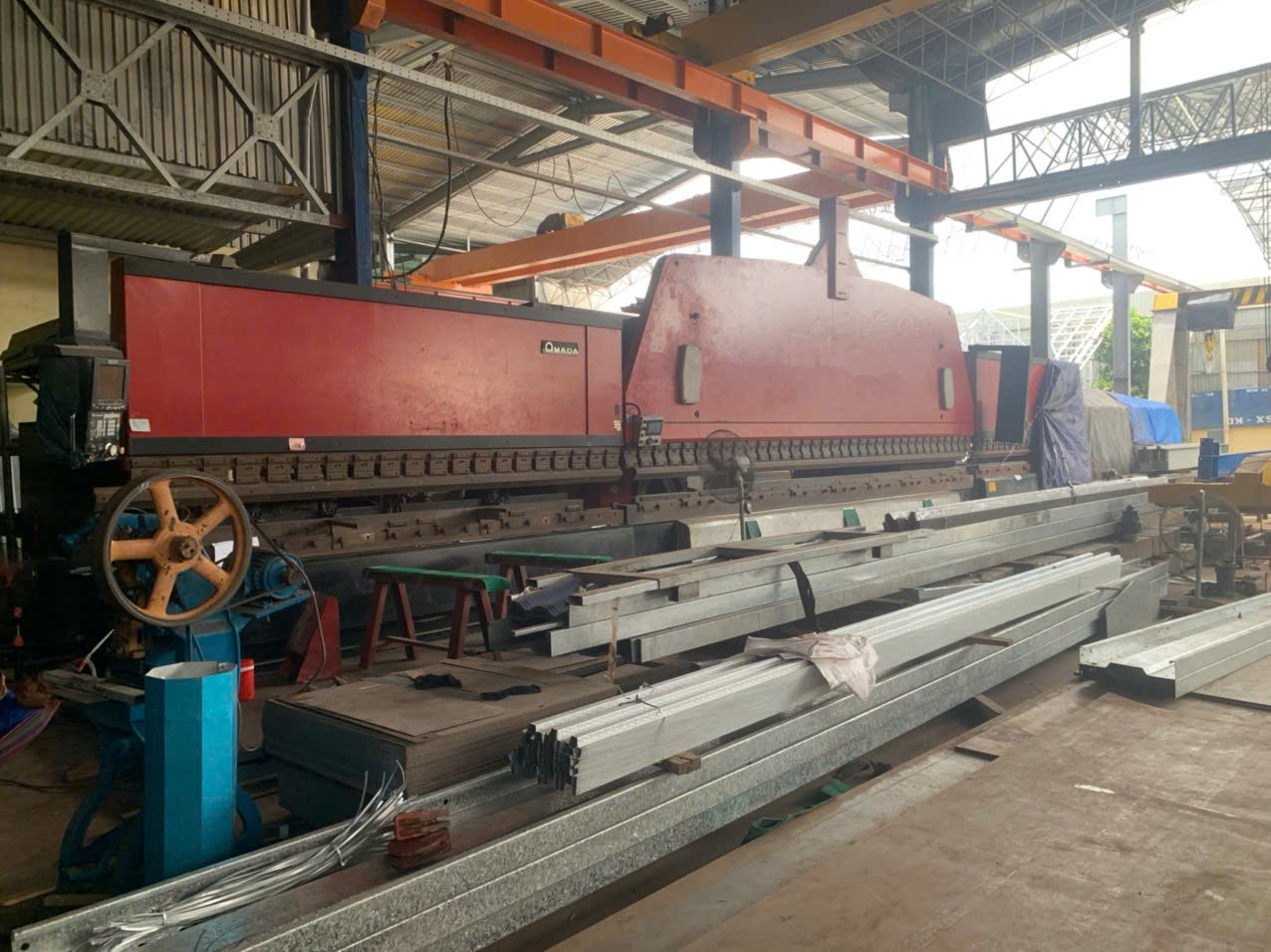
Lever 2: How Much Does Freight Mode Really Matter?
Freight is the lever buyers control most directly, and the numbers are stark:
| Decision | Typical CO2 effect | Cost effect |
|---|---|---|
| Sea freight instead of air | ~10–40x lower emissions per tonne-km | Dramatically cheaper per kg |
| Consolidated monthly shipment vs weekly LCL | Fewer part-loaded moves; better container utilization | Lower per-unit freight |
| Realistic lead-time planning (no air-freight rescues) | Eliminates the single worst emissions event | Avoids the single worst cost event |
| Denser packaging (nested/knocked-down parts) | More product per container | Directly lower freight per part |
The pattern is hard to miss: on freight, carbon and cost point the same direction. This is why unglamorous planning disciplines — accurate lead times, safety stock, consolidated release schedules — are legitimately sustainability measures. For current ocean shipping economics, see our analysis of ocean freight rates and their manufacturing impact.
Vietnamese ports have direct services to both US coasts and Europe, and DEWIN ships DDP — one consolidated, sea-freighted, door-delivered flow rather than fragmented shipments.
Freight is the lever you control most directly: sea freight emits roughly 10–40x less CO2 per tonne-kilometre than air, so planning that eliminates air-freight rescues, consolidating shipments, and packing parts densely all cut carbon and cost in the same direction.
Lever 3: Does Local Material Sourcing in Vietnam Help?
A part’s material footprint includes the journey the raw sheet took before cutting. Vietnam’s domestic steel industry — Hoa Phat, Formosa Ha Tinh, POSCO’s local operations — plus a deep regional import network means Vietnamese fabricators generally buy sheet regionally, giving parts a structurally shorter material journey than programs whose steel crosses an ocean as coil and again as parts.
Vietnam’s 16+ free trade agreements and relief from Section 301 Chinese punitive tariffs for qualifying goods exposure are why programs move here; the shortened logistics chain is a quiet carbon benefit that comes along free.
Lever 4: Which Design Changes Cut Cost and Carbon Together?
Nothing reduces a part’s footprint like removing material from the part. The design moves that engineers already know save money are, almost one-for-one, the moves that save carbon:
- Gauge reduction with formed stiffness. Replacing 3 mm flat plate with 2 mm plus bent flanges or stiffening ribs cuts a third of the material — and its embodied emissions — while a modern CNC bending operation adds the stiffness back for pennies.
- Weldment consolidation. Redesigning a five-piece welded assembly into two formed parts removes weld energy, fixtures, and rework risk along with cost.
- Lightening holes and cutouts where structure allows — fiber lasers cut them almost for free, and every gram removed is a gram never smelted and never shipped.
- Material choice with recycled content. Where aluminum is required, high-recycled-content stock makes a large difference; where steel suffices, its per-kg footprint is inherently lower than primary aluminum’s.
If a redesign conversation is on the table anyway, put carbon on the agenda next to cost — the same DFM review answers both.

What Should I Ask Suppliers — Without Greenwashing?
Here’s what’s realistic to ask a Vietnamese sheet metal supplier in 2026, roughly in order of usefulness:
- “What is your electricity source, and do you have on-site solar?” Rooftop solar is spreading across Vietnamese industrial parks; some factories can already answer with a percentage.
- “Are you ISO 14001 certified, or working toward it?” Some factories in our network hold ISO 14001 — a certified environmental management system, evidence a factory tracks and improves its environmental aspects, not a carbon number. See our certifications guide on verifying certificates.
- “How do you segregate and sell scrap?” Concrete, checkable, and directly tied to the biggest emissions layer.
- “Can you report material utilization on our parts?” Shops with CAM nesting can; this becomes your scrap-reduction baseline.
- “Can you provide per-part carbon data?” Most cannot today, and honest suppliers will say so. Treat a confident-sounding number with no methodology behind it as a red flag, not a green one.
That last point cuts both ways: claiming “carbon-neutral sourcing” on the strength of a sea-freight decision and a supplier’s solar panels builds the same house of cards. The defensible position for most buyers today: we know where our emissions concentrate, we’ve acted on the big levers, and we’re building supplier data over time. That survives an audit. Browse our supplier network to see factory capabilities and certifications documented from in-person visits.
Practical Checklist: Lower-Carbon Sheet Metal Sourcing
- Rank effort: material first, freight second, factory energy third
- Request nest utilization reports on your highest-volume parts
- Consolidate part families into shared releases for better nesting and fuller containers
- Set lead times and safety stock so air freight is never the rescue plan
- Specify recycled-content material where the application allows
- Run one DFM pass targeting gauge reduction and weldment consolidation
- Ask suppliers the five questions above; record the answers as a baseline
- Verify ISO 14001 certificates and check scrap segregation during audits or factory tours
- Write claims you can defend — levers and data, not adjectives
FAQ
What are the main benefits of sourcing sheet metal carbon footprint: vietnam sourcing levers in Vietnam?
Vietnam offers competitive machine-hour rates, a rapidly modernizing precision supplier ecosystem, relief from Section 301 Chinese punitive tariffs for qualifying goods into the United States, and preferential trade terms under EVFTA and CPTPP. Audited suppliers in the DEWIN network maintain ISO 9001, AS9100, and IATF 16949 certifications.
How does DEWIN ensure quality and dimensional accuracy?
Every manufacturing facility undergoes the rigorous 50-point Dolphin Audit evaluating Quality, Cost, Logistics, Delivery, and Management (QCLDM). Critical dimensions are verified using on-site 3D CMM inspection, optical comparators, and full material test reports (MTRs) before shipment.
What file formats and information are required for a streamlined RFQ turnaround and engineering review?
To generate a binding quotation within 24 hours, submit 3D CAD files in neutral STEP (AP214/AP242) or IGES format alongside 2D PDF technical drawings specifying critical tolerances, surface finishes, thread callouts, and raw material grades.