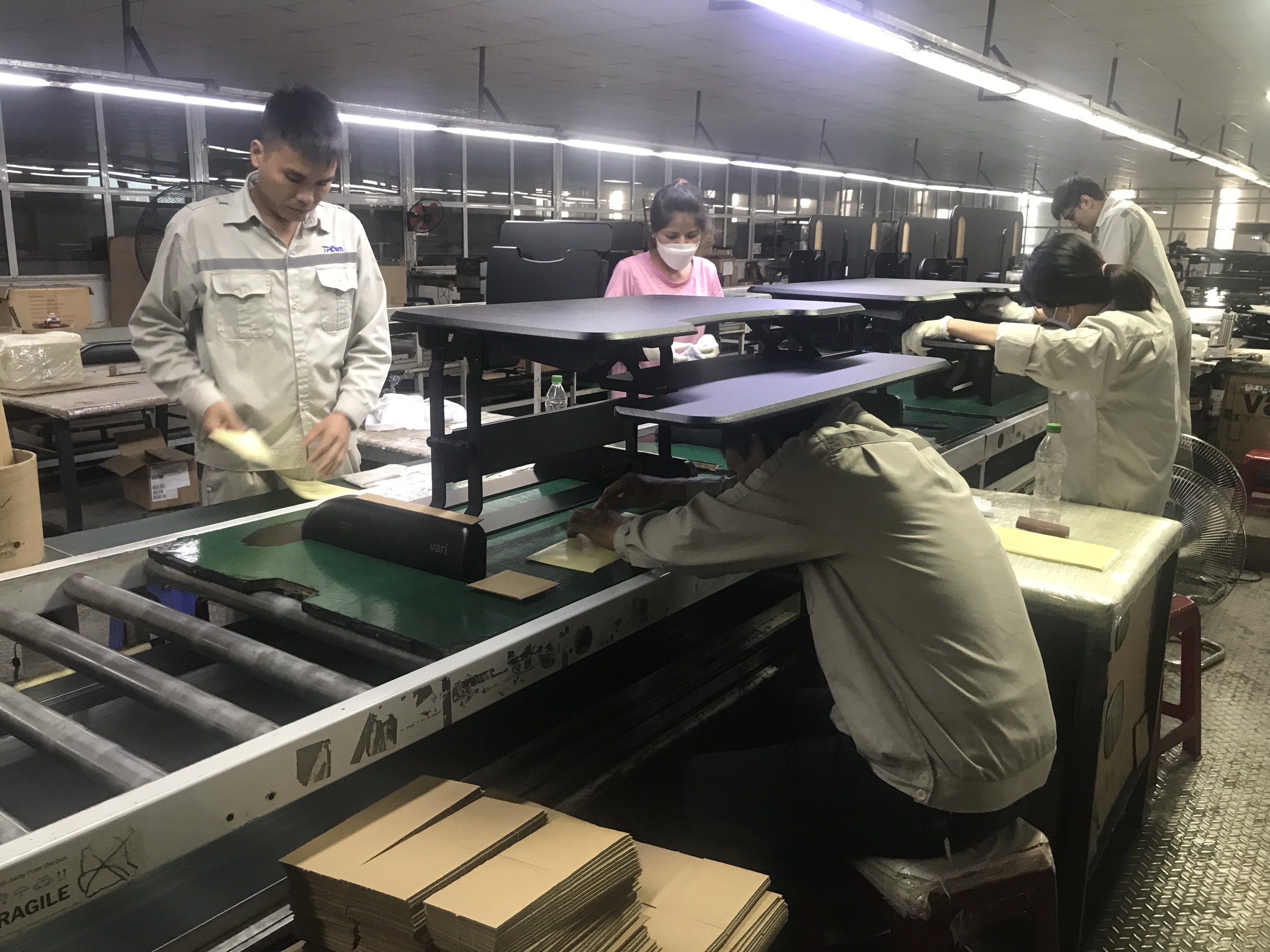
What automotive manufacturing capabilities and locations are expanding in Thailand?
Thailand manufacturing expansion centers around the 2027 Keminsheng facility in Prachin Buri and Bangkok industrial corridors. Managed through DEWIN Dolphin Services, the greenfield plant integrates precision cold and warm forging, 136 robotic CNC lathes, 72 robotic CNC mills, internal spline broaching, continuous CQI-9 carbonitriding furnaces, and high-pressure aluminum and zinc die casting capabilities for driveline systems.
Key Takeaways
- Keminsheng's Thailand facility expands automotive drivetrain manufacturing in the Prachin Buri and Bangkok industrial corridors, supporting CV joint star sleeves, trunnion brackets, and core shafts.
- Driveline production utilizes a 16-stage vertically integrated process flow featuring 160T to 630T closed-die forging, 136 robotic CNC lathes, 4 German EMAG hard-turning centers, high-speed hydraulic spline broaching, and CQI-9 carbonitriding.
- Metrology inspection employs ZEISS 3D CMMs, contour measurement, and eddy-current crack sorting to maintain ±0.008 mm spline pitch concentricity and HRC 58–62 case hardness under IATF 16949 standards.
- DEWIN Dolphin Services manages QCLDM factory audits, pre-quote DFM tolerance reviews, and cross-border production migration through engineering teams based in Singapore, Xi'an, and Ho Chi Minh City.
Automotive buyers coordinating driveline programs across Southeast Asia leverage expanded production hubs in Bangkok and Prachin Buri, Thailand. The 2027 Keminsheng Thailand facility mirrors its 25,000 square meter Ningbo headquarters campus, establishing localized closed-loop production for automotive Tier-1 driveline integrators and OEM platforms.
The platform supports complete component lines, including CV joint star-shaped sleeves ranging from sizes #68-3 to #125, TJ and AAR trunnion brackets, and forged drive shafts. Raw material processing focuses on 20CrMnTi and SAE 5120H carburizing alloy steels, backed by high-pressure die casting for aluminum and zinc housings within the regional supply chain network.
- Thailand Manufacturing Hubs: Bangkok and Prachin Buri industrial locations.
- Core Component Portfolio: CV joint star-shaped sleeves (#68-3 to #125), TJ/AAR trunnion brackets, and forged core shafts.
- Driveline Alloys: 20CrMnTi and SAE 5120H carburizing alloy steels.
- Primary Manufacturing Processes: Cold and warm precision forging, high-pressure aluminum and zinc die casting, robotic turning, spline broaching, and CQI-9 heat treatment.
How do vertical process flows support high-precision automotive drivetrain production?
High-precision driveline manufacturing relies on a vertically integrated 16-stage process flow. Production moves from raw bar cutting, isothermal annealing, saponification, and closed-die cold or warm forging to 136 robotic CNC turning cells and high-speed hydraulic spline broaching. Final operations incorporate automated groove grinding, CQI-9 carbonitriding, eddy-current crack sorting, and ultrasonic cleaning.
Precision driveline parts require sequential metallurgical and machining controls to ensure mechanical durability. Raw steel bars undergo precision cutting, isothermal annealing, shot blasting, and saponification before enterering 160T to 630T closed-die warm or cold forging presses. Isothermal normalizing creates a uniform Ferrite-Pearlite grain structure, optimizing the metal for subsequent machining.
Machining cells utilize automated truss-robot loading across 136 robotic CNC lathes and 4 German EMAG hard-turning centers. Internal splines are cut using high-speed hydraulic pull broaching, followed by 72 robotic CNC milling machines and automated groove grinding. Parts then pass through continuous carbonitriding furnaces and 100% eddy-current crack sorting before undergoing ultrasonic cleaning and vacuum anti-rust packaging.
- Forging & Material Prep: 160T to 630T closed-die precision cold/warm forging with isothermal annealing, shot blasting, and saponification/phosphating.
- Robotic CNC Machining: Turning on 136 robotic CNC lathes and 4 German EMAG hard-turning centers.
- Spline Broaching & Milling: High-speed hydraulic pull broaching and milling on 72 robotic CNC mills.
- Thermal & Surface Treatment: Continuous CQI-9 carbonitriding furnace quenching followed by 100% eddy-current crack sorting.
- Final Part Preparation: Automated groove grinding, ultrasonic cleaning, and anti-rust vacuum packaging.
Which technical standards and metrology inspections control part quality across ASEAN supply chains?
Part quality across Southeast Asian corridors is verified using ZEISS and Mitutoyo 3D coordinate measuring machines alongside contour and metallographic testing labs. Driveline components follow DIN 5480 and JIS B 1603 spline standards, holding ±0.008 mm concentricity and pitch tolerances with HRC 58–62 case hardness under IATF 16949 and CQI-9 automotive frameworks.
Precision component manufacturing across China, Vietnam, and Thailand operates under quality frameworks such as IATF 16949:2016 and CQI-9 heat-treatment standards. Metrology laboratories employ ZEISS 3D CMMs and Mitutoyo Crysta-Apex S coordinate measuring equipment to confirm strict dimensional parameters across complex internal raceways and spline profiles.
Spline geometries adhere to DIN 5480 and JIS B 1603 specifications, maintaining raceway concentricity and spline pitch tolerances within ±0.008 mm. Metallographic labs verify effective carburized case depths between 0.85 and 1.25 mm with surface hardness of HRC 58 to 62. Nondestructive testing incorporates automated magnetic particle inspection and eddy-current crack detection prior to final release.
- 3D Coordinate Metrology: ZEISS and Mitutoyo Crysta-Apex S CMM lab verification.
- Dimensional & Surface Tolerances: ±0.008 mm spline pitch concentricity and standardized surface roughness checking.
- Spline Geometry Standards: Execution per DIN 5480 and JIS B 1603 module specifications.
- Metallographic & Hardness Controls: Core and case hardness verification (HRC 58–62) with 0.85 to 1.25 mm effective case depth.
- Nondestructive Evaluation: Automated magnetic crack detection and eddy-current sorting.

Precision Manufacturing & Sourcing Specification Matrix
| Technical Dimension | Standard Commercial Grade | High-Precision OEM Export Grade | DEWIN Verification Protocol |
|---|---|---|---|
| Machining & Forming Tolerance | ISO 2768-m (±0.10 mm nominal) | ISO 2768-f (±0.01 mm – ±0.025 mm critical bores) | Calibrated 3D CMM & Air/Pin Gauging |
| Surface Roughness & Finish | Ra 1.6 – 3.2 µm as-machined / standard coat | Ra 0.4 – 0.8 µm precision ground / MIL-A-8625 anodized | Profilometer & Coating Thickness Gauge |
| Material & Alloy Certification | Supplier Mill Test Report (MTR) | Independent OES chemical & mechanical verification | EN 10204 3.1 + RoHS/REACH Compliance |
| Batch Inspection & Packaging | ISO 2859-1 (AQL 1.0 Major / 2.5 Minor) | Zero-defect critical features + VCI export crating | Pre-Shipment Inspection (PSI) Report |
Frequently Asked Questions
What automotive driveline components are produced at the Thailand facility?
The 2027 Thailand plant manufactures CV joint star-shaped sleeves (#68-3 to #125), TJ/AAR trunnion brackets, and forged core shafts using 20CrMnTi and SAE 5120H carburizing alloy steel.
What dimensional tolerances and hardness levels are maintained during spline broaching and forging?
Internal spline broaching and CNC turning hold ±0.008 mm raceway concentricity and spline pitch under DIN 5480 and JIS B 1603 standards, while CQI-9 carbonitriding delivers an effective case depth of 0.85 to 1.25 mm with HRC 58 to 62 surface hardness.
How does DEWIN Dolphin Services coordinate quality control and audits across Asian hubs?
DEWIN coordinates quality control via a 26-person engineering center in Xi'an, China, and a 7-person team in Ho Chi Minh City, Vietnam. The organization conducts QCLDM factory audits, pre-quote DFM tolerance reviews, and ZEISS 3D CMM metrology inspections across regional facilities.
What high-pressure casting and precision machining processes are available within the regional supplier network?
The supplier network provides aluminum and zinc high-pressure die casting, progressive sheet metal stamping, 5-axis CNC machining, powder metallurgy sinter-hardening, and fluoropolymer cleanroom fabrication.