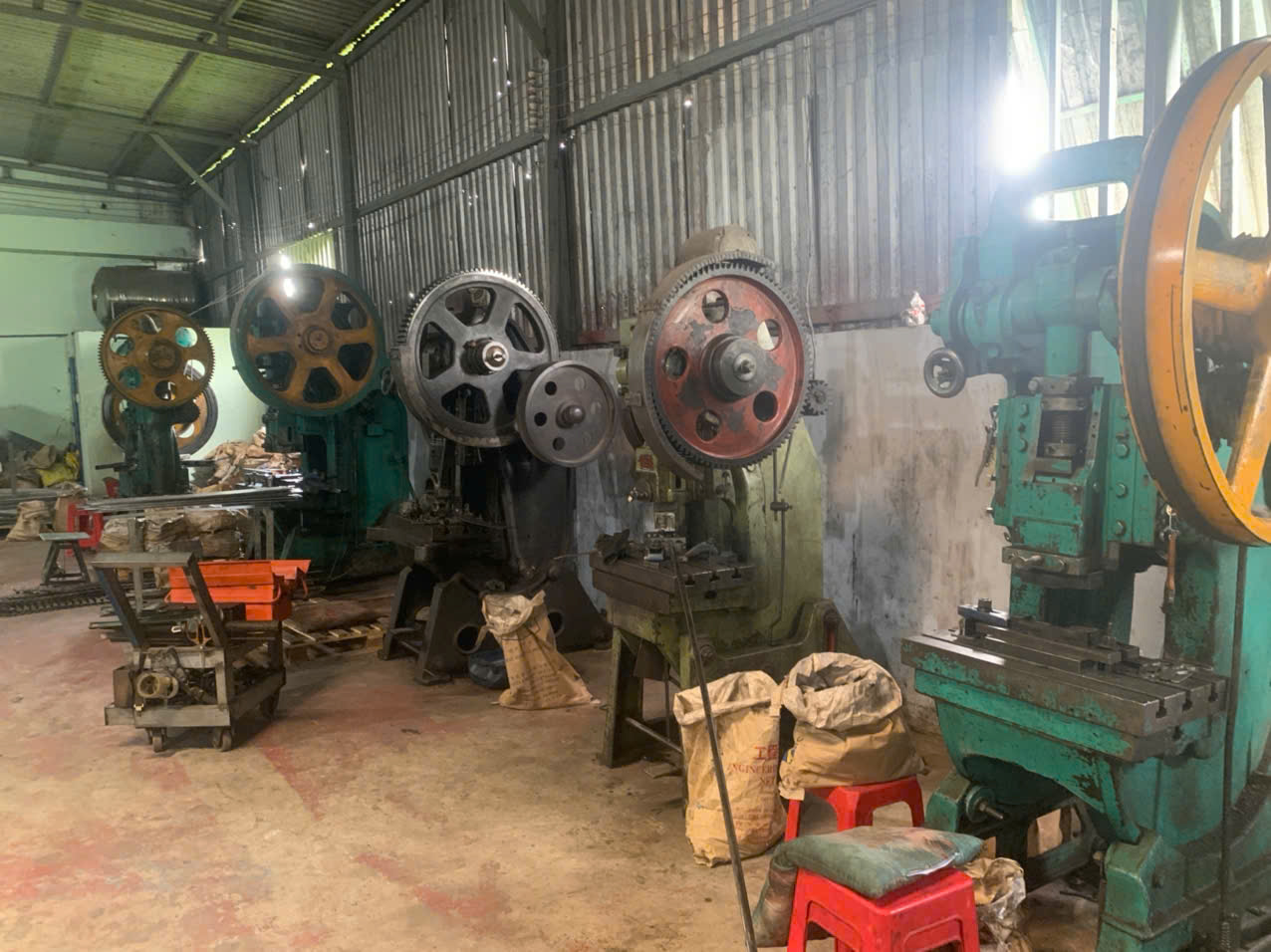

Every week, our sourcing team fields RFQs where the buyer’s only benchmark is the lowest piece price on stamping parts — and every time, I know the real cost conversation hasn’t started yet.
Tier suppliers should prioritize quality over piece price for stamping parts because poor quality creates hidden costs — rework, scrap, delivery delays, and OEM penalties — that typically exceed 10–15% of the total program value, making “cheap” the most expensive choice.
The tension between price and quality is real. Margins are thin. But over years of managing custom part programs from Asia to the United States, I have seen one pattern repeat itself: the supplier who wins on price alone almost always loses on Total Cost of Ownership 1. Let me walk you through why — and how to make smarter sourcing decisions.
How Do I Balance Cost Savings With Quality Requirements When Sourcing Stamping Parts?
A conversation with a U.S. purchasing manager last year crystallized this issue for me — he had saved $0.08 per piece on a stamped steel bracket, then spent three months and tens of thousands of dollars sorting defective inventory at a third-party warehouse Geometric Dimensioning and Tolerancing 2.
Balance cost savings with quality by evaluating Total Cost of Ownership — including tooling amortization, scrap, rework, inspection, freight, and potential OEM penalties — rather than comparing suppliers on piece price alone.

Why Piece Price Is Only the Tip of the Iceberg
When our team reviews a stamping quote for a client, we break it down into at least seven cost buckets Production Part Approval Process 3. The piece price is just one of them. Here is how the real costs stack up:
| Cost Element | Visible on Quote? | Typical Impact on Total Program Cost |
|---|---|---|
| Piece price | Yes | 40–55% |
| Tooling (progressive die, transfer die) | Sometimes | 10–20% |
| Secondary operations (deburring, tapping) | Sometimes | 5–10% |
| Plating or powder coating | Sometimes | 5–8% |
| Inspection and PPAP documentation | Rarely | 2–5% |
| Scrap and rework | Never | 5–15% |
| Freight, packaging, and duties | Sometimes | 5–10% |
A supplier who quotes $0.35 per piece but delivers parts with poor tolerances will generate rework costs that push the effective price well above $0.40. We see this pattern repeatedly when clients come to us after a failed low-cost sourcing attempt.
The Lean Manufacturing Connection
Lean manufacturing principles teach us to eliminate waste. In stamping, waste shows up as material scrap rates 4, overproduction to compensate for rejects, and excessive inspection labor. A supplier with tight process controls may quote a higher piece price but deliver near-zero scrap. That means fewer replacement orders, less warehouse clutter, and a predictable production schedule.
How We Help Clients Compare Apples to Apples
When we manage an RFQ for a U.S. buyer, we require every supplier to itemize tooling, surface treatment, packaging, and inspection costs separately. We also ask for historical PPM data and on-time delivery rates. This forces a true comparison. The supplier with the lowest line item often falls to the middle — or the bottom — once all costs are visible.
The key takeaway: cost savings and quality requirements are not opposites. They converge when you balance price, quality, and lead time effectively.
What Hidden Costs Should I Watch for When Choosing a Low-Price Stamping Supplier?
One of the hardest lessons I learned early in my career was that a purchase order is not a contract for quality — it is a contract for parts, and what shows up on the dock can be very different from what was promised.
Hidden costs from low-price stamping suppliers include premature tooling failure, high material scrap rates, unplanned secondary operations, expedited freight for replacements, sorting labor, OEM chargebacks, and the long-term cost of damaged customer relationships.

The Cost Iceberg Below the Waterline
Most procurement teams understand direct costs. The danger lies in indirect costs that never appear on an invoice but destroy margins just the same. Here is a breakdown of the most common hidden costs we encounter when auditing programs that started with a low-price supplier.
| Hidden Cost Category | How It Appears | Why It Hurts |
|---|---|---|
| Tooling rework or replacement | Die cracks, excessive wear after low production runs | Delays program by 4–8 weeks; adds unbudgeted capital cost |
| Material substitution | Supplier uses lower-grade steel to protect margins | Parts fail OEM quality standards; entire lot rejected |
| Dimensional drift | No SPC or Cpk monitoring; parts slowly go out of spec | Downstream assembly issues; warranty claims |
| Sorting and containment | Third-party inspection at port or warehouse | $2,000–$10,000+ per incident |
| Expedited freight | Air shipment to cover late delivery | Can exceed the value of the parts themselves |
| Lost business | OEM downgrades your supplier rating | Future RFQs go to competitors |
Tool and Die Design: Where Quality Starts
I cannot emphasize this enough — tool and die design is the first influence on both price and quality for precision metal stamping. A supplier who cuts corners on die steel grade or skips simulation will produce a tool that wears fast and drifts out of tolerance. We always verify whether a supplier has in-house tooling capability or outsources to a third-party shop. In-house control means faster corrections and tighter feedback loops.
The Domino Effect of a Single Defect
In automotive and industrial supply chains, a single defective stamping part 5 can halt an OEM assembly line. The cost of a line stoppage is measured in thousands of dollars per minute. As a Tier supplier, you bear that liability. Our clients in the U.S. understand this risk intimately, which is why they prioritize supply chain resilience over marginal unit savings.
When we onboard a new stamping supplier in Vietnam or elsewhere in Asia, we run a trial production lot and perform a full dimensional inspection against Geometric Dimensioning and Tolerancing 6 callouts before approving mass production. This step catches problems before they become expensive.
How Can I Evaluate a Stamping Supplier's Quality Control Process Before Placing an Order?
During a supplier audit in Southeast Asia last quarter, I asked a factory manager to show me their SPC charts for a running stamping job. He handed me a binder with blank pages. That told me everything I needed to know.
Evaluate a stamping supplier's quality control by requesting IATF 16949 certification, reviewing Cpk data and PPM records for similar parts, verifying in-house CMM and measurement capability, and conducting an on-site audit before committing to a production order.

A Step-by-Step Qualification Process
Our team follows a three-stage vendor selection criteria framework when qualifying a new stamping supplier. This process has helped our U.S. clients avoid costly mistakes repeatedly.
Stage 1: Desktop Pre-Qualification
Before anyone boards a plane, we collect basic data. This includes the supplier's certifications, press list, annual revenue, major customers, and export history. If they lack IATF 16949 certification for automotive work — or at minimum ISO 9001 7 — they do not advance. We also verify that their press tonnage range matches the part requirements. A supplier running 80-ton presses cannot produce a part that needs 400 tons of forming force.
Stage 2: Capability Verification
At this stage, we request specific evidence of quality performance:
- Process capability studies (Cpk ≥ 1.33 for critical dimensions)
- PPM defect data for the last 12–24 months on similar part families
- First Article Inspection Reports showing actual vs. nominal measurements
- Material test certificates with traceable heat numbers
- PPAP documentation samples from prior programs
We also ask about their measurement equipment. A CMM (Coordinate Measuring Machine), optical comparator, and height gauge are table stakes. Some advanced suppliers now use AI-powered vision inspection systems that can reduce scrap by up to 15% — a clear indicator of investment in OEM quality standards.
Stage 3: On-Site Audit
Nothing replaces walking the factory floor. During site visits, our engineers look for housekeeping, die maintenance schedules, material storage practices, and how operators handle non-conforming parts. We check whether statistical process control is actually running — not just documented in a manual. We also assess the three pillars of supplier evaluation:
| Evaluation Pillar | What We Look For | Red Flags |
|---|---|---|
| Stability | Consistent production lines, regular press maintenance, trained operators | High operator turnover, no maintenance logs |
| Transparency | Open discussion of QC methods, willingness to share improvement plans | Reluctance to share data, evasive answers |
| Sustainability | Investment in new equipment, technology upgrades, environmental compliance | Aging presses with no upgrade plan, no ESG awareness |
Why PPAP Readiness Matters
For any Tier supplier serving the automotive or heavy industrial sectors, PPAP (Production Part Approval Process 8) documentation is not optional. We require our suppliers to deliver Level 3 PPAP packages — including dimensional results, material certifications, process flow diagrams, control plans, and capability studies — before we ship a single production part to a U.S. customer. This discipline catches problems at the source and builds the kind of traceable quality record that protects everyone in the supply chain.
Why Might Paying More for Stamping Parts Actually Reduce My Total Sourcing Risk?
A client once told me, "I don't have the budget to pay for quality." My response was simple: "You don't have the budget to pay for failure, either."
Paying more for stamping parts reduces total sourcing risk because premium suppliers invest in better tooling, tighter process controls, traceable materials, and reliable delivery — all of which prevent the rework, recalls, and OEM penalties that erode margins far more than a higher piece price.

The Risk Equation Tier Suppliers Cannot Ignore
Every sourcing decision is a risk decision. When you choose the cheapest stamping supplier, you are betting that their quality will hold, their tooling will last, and their deliveries will arrive on time. In my experience managing supply chains from Asia to the United States, that bet fails more often than it succeeds.
Here is how the risk math works. Suppose you source a stamped bracket at $0.30 per piece from Supplier A (low cost) versus $0.35 from Supplier B (higher quality). On 100,000 pieces, that is a $5,000 savings. But if Supplier A delivers a lot with 3% rejects, you face:
- Sorting costs at the warehouse
- Replacement parts on expedited freight
- Potential OEM chargeback or line stoppage fine
- Damage to your supplier scorecard rating
Those costs easily exceed $5,000 — sometimes by a factor of five or ten. The "savings" evaporate.
The Certification Shield
IATF 16949 certification exists for a reason. It is not bureaucratic paperwork. It is a system that forces suppliers to monitor, measure, and improve their processes continuously. When we source stamping parts for clients, we treat this certification as a baseline filter. Suppliers without it may deliver acceptable parts for a while, but they lack the systematic controls to prevent quality drift over time.
Building Long-Term Partnerships Over Short-Term Savings
The most successful Tier suppliers I work with have moved away from chasing the cheapest partner. Instead, they invest in long-term relationships with suppliers who demonstrate consistent quality, transparent communication, and the ability to co-develop solutions. This aligns with the broader industry shift toward supply chain resilience — the understanding that a reliable, slightly more expensive supply chain is worth far more than a fragile, cheap one.
Our team in Vietnam and China has seen this firsthand. When we invest time in qualifying a supplier properly, the first production run goes right. That "right first time" outcome eliminates the rework cycles and fire-fighting that consume procurement teams and destroy margins.
The ESG and Sustainability Factor
OEMs are increasingly evaluating suppliers on Environmental, Social, and Governance metrics 9. Stamping suppliers who invest in energy-efficient servo presses, proper waste management, and safe working conditions may charge slightly more per part, but they meet the sustainability requirements that OEMs now demand. This is not a trend that will reverse. Tier suppliers who ignore it risk losing contracts to competitors who embrace it.
Digital Twin technology in stamping simulation is another area where higher-capability suppliers deliver value. By simulating forming operations before cutting steel, these suppliers optimize material usage and predict tool wear. The result is fewer surprises in production — and a better price-quality balance from day one.
Conclusion
Quality is not a luxury for stamping parts — it is a financial strategy. Prioritize Total Cost of Ownership, qualify suppliers rigorously, and invest in partnerships that deliver right the first time.
Frequently Asked Questions
How Do I Balance Cost Savings With Quality Requirements When Sourcing Stamping Parts?
A conversation with a U.S. purchasing manager last year crystallized this issue for me — he had saved $0.08 per piece on a stamped steel bracket, then spent three months and tens of thousands of dollars sorting defective inventory at a third-party warehouse Geometric Dimensioning and Tolerancing 2 .
What Hidden Costs Should I Watch for When Choosing a Low-Price Stamping Supplier?
One of the hardest lessons I learned early in my career was that a purchase order is not a contract for quality — it is a contract for parts, and what shows up on the dock can be very different from what was promised.
How Can I Evaluate a Stamping Supplier's Quality Control Process Before Placing an Order?
During a supplier audit in Southeast Asia last quarter, I asked a factory manager to show me their SPC charts for a running stamping job. He handed me a binder with blank pages. That told me everything I needed to know.
Footnotes
1. Defines TCO concept referenced as the key metric for comparing stamping suppliers beyond piece price. ↩︎
2. Official ASME page for the Y14.5 standard, which governs dimensioning and tolerancing in engineering drawings. ↩︎
3. Wikipedia entry explaining the standardized process used in the automotive supply chain to approve production parts. ↩︎
4. EPA resource outlining sustainable materials management and the hierarchy of waste management in industrial production. ↩︎
5. Government guidance on reporting defective products and managing recalls to ensure consumer safety and compliance. ↩︎
6. Explains the GD&T standard used to verify stamped part dimensional accuracy before production. ↩︎
7. ISO’s official overview of the ISO 9001 standard for quality management systems and its benefits. ↩︎
8. AIAG defines PPAP, the documentation standard required before shipping production stamping parts. ↩︎
9. Background on ESG metrics OEMs use to evaluate supplier sustainability and compliance performance. ↩︎