Titanium CNC Machining in Vietnam: Grades, Costs & Complete Sourcing Guide
February 27, 2026 · 16 min read
Titanium is the material procurement managers love to specify and machine shops dread to cut. Its strength-to-weight ratio is unmatched — 40% lighter than steel at comparable strength — but its thermal conductivity is only 7.2 W/m·K (vs. 167 for aluminum and 16 for SS304), meaning cutting heat concentrates directly at the tool edge. Add chemical reactivity above 500°C that causes galling and tool welding, and you have a material that separates capable shops from pretenders.
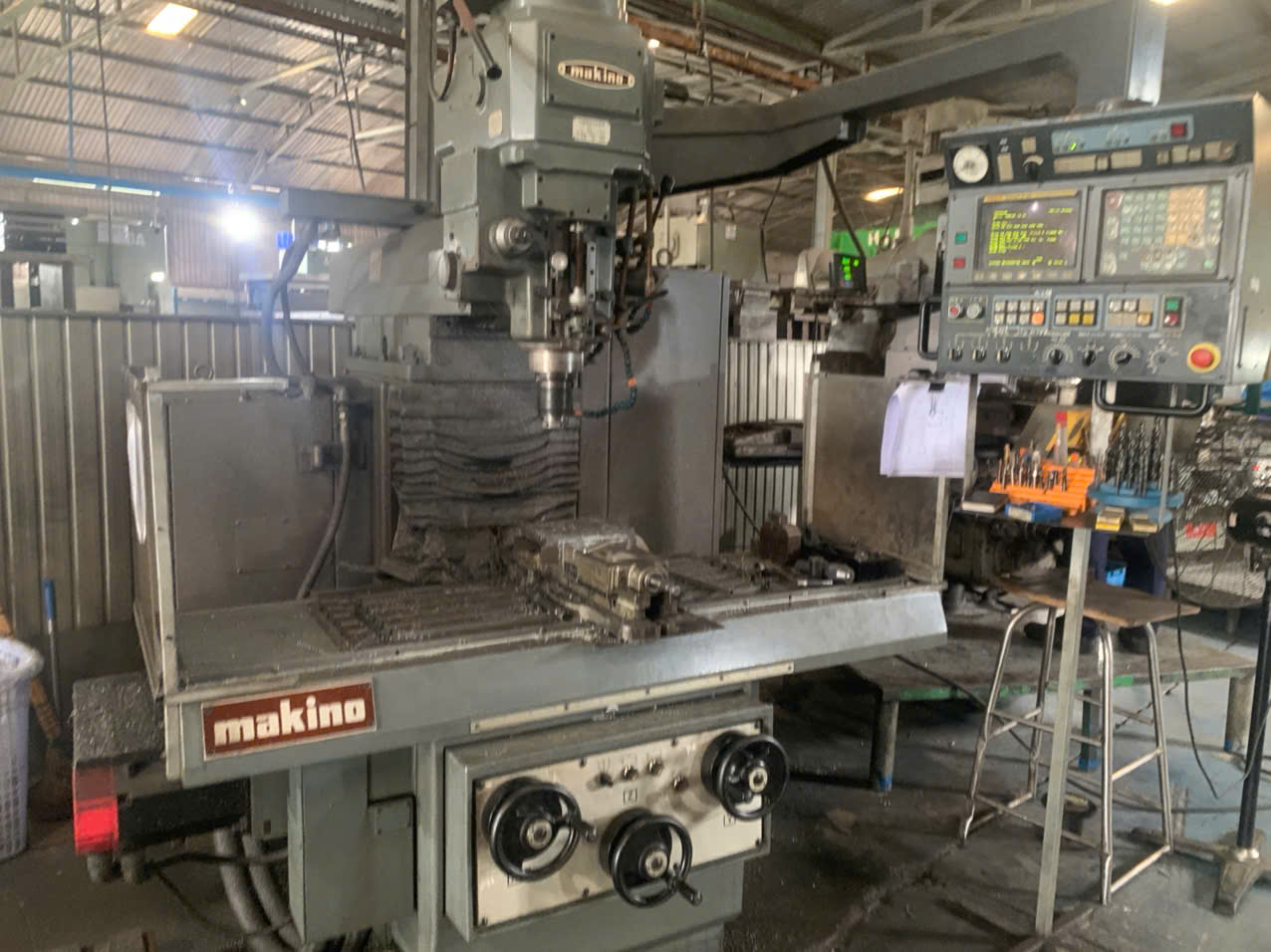
Vietnam's aerospace and medical device supply chains have driven a new generation of CNC shops to invest in titanium-capable equipment — rigid Okuma, Mazak, and DMG Mori machines with high-pressure coolant (HPC) systems running at 70–100 bar. This guide covers everything US buyers need to know about sourcing titanium CNC parts from Vietnam, from grade selection to realistic cost expectations.
Vietnam CNC shops machine titanium — CP Grade 2, Grade 5 (Ti-6Al-4V), Grade 23 ELI, and Grade 9 — on rigid Okuma, Mazak, and DMG Mori machines with 70–100 bar high-pressure coolant. Vietnam-origin titanium parts also avoid China's 25% Section 301 tariff, entering the US at standard MFN rates.
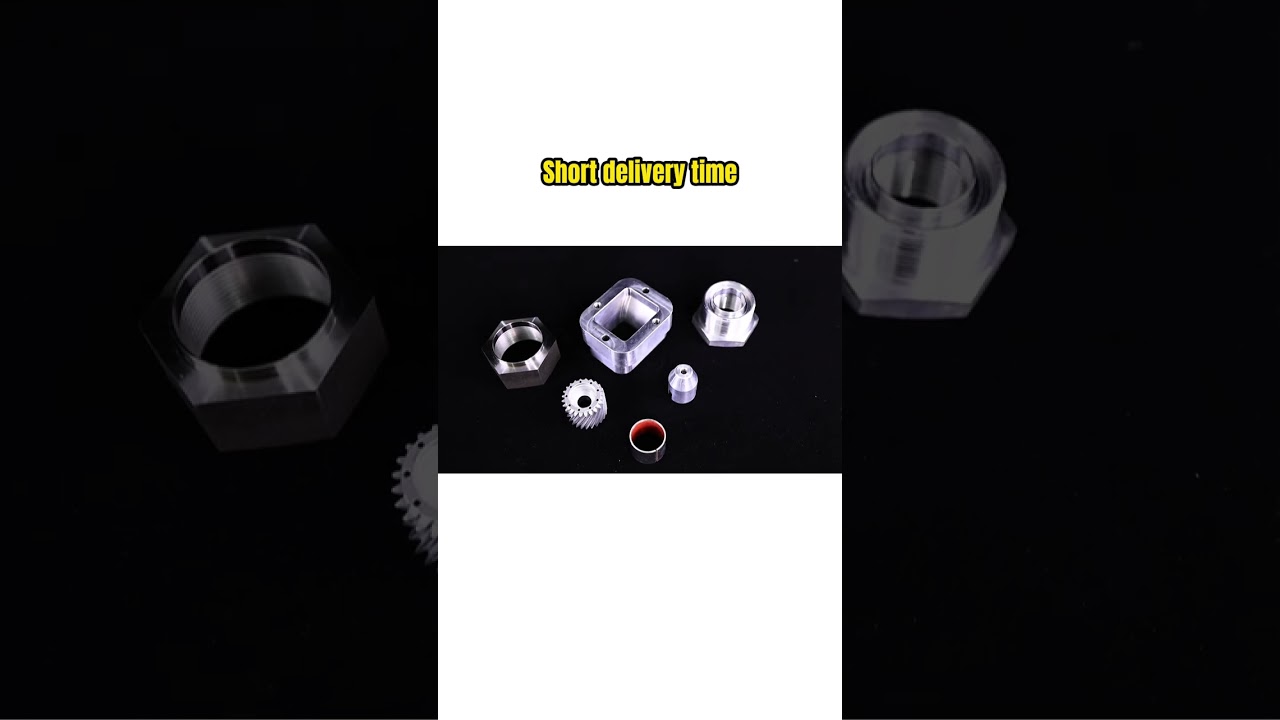
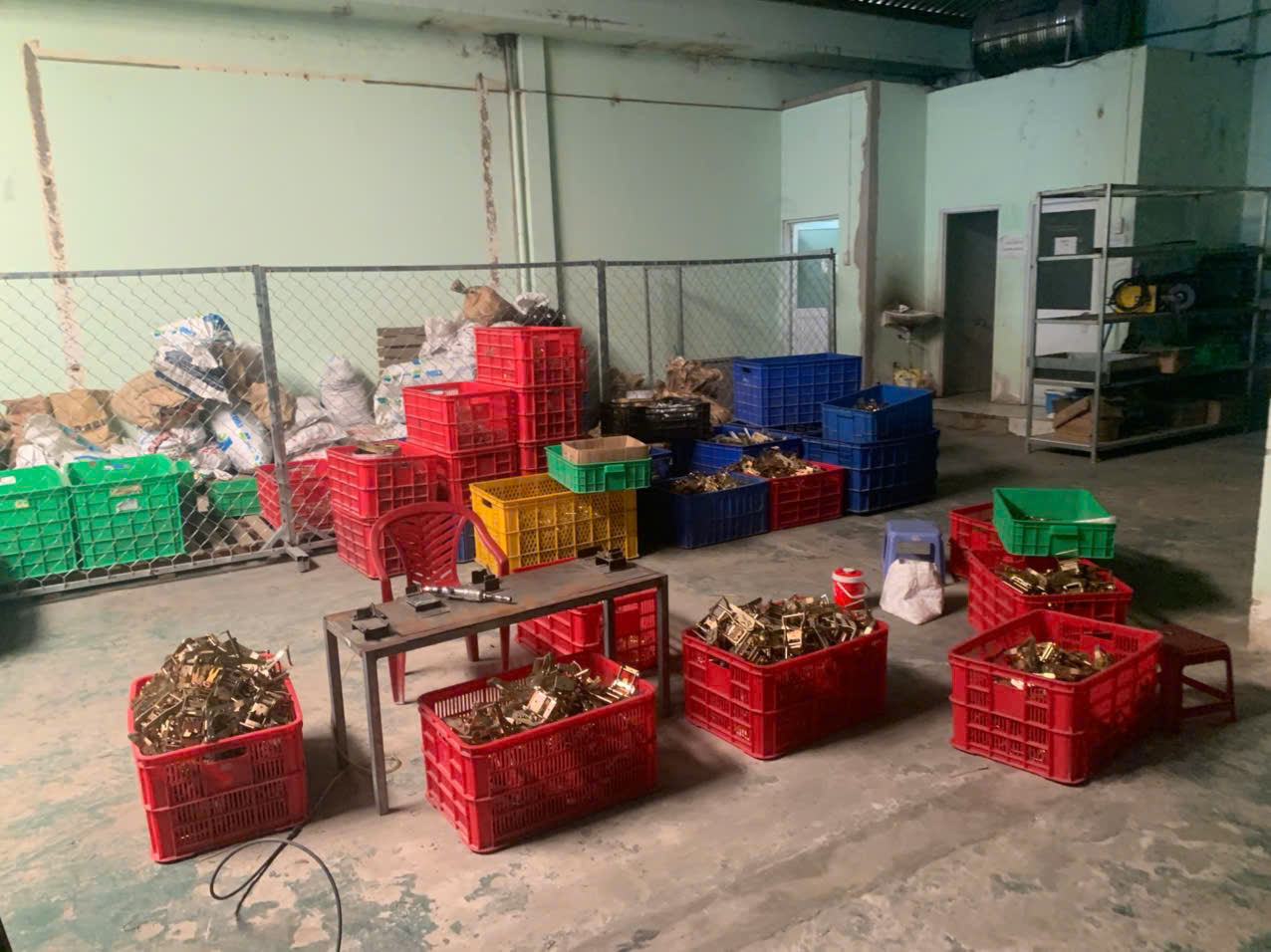
Real Vietnam Factory Samples — Custom Machined & Metal Parts
Watch on YouTube
Real footage from an audited DEWIN partner factory in Vietnam.
Titanium Grades: Choosing the Right Alloy for Your Application
Titanium grades split into two families: commercially pure (CP) grades for corrosion resistance, and alpha-beta alloys for structural strength. Here's what's available from Vietnam suppliers:
Grade 2 (CP Titanium) — The Corrosion Workhorse
- Tensile strength: 345 MPa min | Yield: 275 MPa min
- Density: 4.51 g/cm³ (56% of steel)
- Machinability: 30% relative to 1212 free-machining steel — easier to machine than Ti-6Al-4V but still challenging
- Key advantage: Outstanding corrosion resistance in seawater, chloride environments, and oxidizing acids — outperforms SS316L in marine applications
- Applications: Heat exchangers, marine hardware, chemical processing equipment, medical implants (ASTM F67)
- Vietnam material cost: $25–35/kg (bar stock) — sourced primarily from VSMPO-AVISMA (Russia), Baoji (China), or TIMET/ATI (US/UK)
- When to choose: Corrosion resistance is the primary driver and tensile strength under 400 MPa is sufficient
Grade 5 (Ti-6Al-4V) — The Aerospace Standard
- Composition: 6% Aluminum, 4% Vanadium — the most widely used titanium alloy (50%+ of all titanium production)
- Tensile strength: 895 MPa min (annealed) | up to 1,170 MPa (STA condition)
- Machinability: 22% — one of the most difficult common alloys to machine. Tool life drops 80% compared to SS304
- Applications: Aerospace structural brackets, turbine blades, orthopedic implants (ASTM F136 for ELI variant), racing components, high-performance fasteners
- Vietnam material cost: $40–65/kg (bar stock), $55–80/kg (plate) — availability is good through Korean and Japanese distributors
- Critical note: Always specify annealed (mill-annealed) or STA (solution treated and aged) condition. STA increases hardness to HRC 36+ and dramatically reduces machinability
Grade 23 (Ti-6Al-4V ELI) — Medical & Aerospace Premium
- Composition: Same as Grade 5 with extra-low interstitials — oxygen ≤0.13%, iron ≤0.25%
- Key advantage: Superior fracture toughness and biocompatibility — required for surgical implants per ASTM F136
- Vietnam material cost: $55–85/kg — premium over standard Grade 5 reflects tighter chemistry controls
- When to choose: Medical implants, cryogenic applications (maintains ductility to -196°C), fatigue-critical aerospace parts
Grade 9 (Ti-3Al-2.5V) — The Tubing Specialist
- Tensile strength: 620 MPa — positioned between CP Grade 2 and Grade 5
- Key advantage: Excellent cold formability and weldability — the best titanium grade for hydraulic tubing and thin-wall parts
- Applications: Bicycle frames, hydraulic lines, aircraft tubing, sports equipment
- Machinability: 28% — slightly easier than Grade 5
- Vietnam availability: Moderate — typically requires pre-ordering for tube stock, readily available in bar
Why Titanium Is So Hard to Machine — And Why It Matters for Sourcing
Understanding titanium's machining challenges is essential for evaluating suppliers. A shop that quotes titanium at the same markup as stainless steel either doesn't know what they're doing or will cut corners on tooling.
The Four Challenges
- Low thermal conductivity (7.2 W/m·K): Heat doesn't dissipate into the workpiece or chips — 80% stays at the cutting edge. Compare: aluminum conducts heat 23× better. This demands high-pressure coolant (70+ bar) directed precisely at the cutting zone, not just flood coolant.
- Chemical reactivity: Above 500°C, titanium reacts with cutting tool materials, causing diffusion wear and built-up edge (BUE). This limits cutting speeds to 30–60 m/min for carbide tools (vs. 200–400 m/min for aluminum).
- Low modulus of elasticity (114 GPa, half of steel): Titanium deflects under cutting forces, causing chatter and dimensional inaccuracy. This requires rigid machine tools, short tool overhangs (≤3× diameter), and aggressive workholding.
- Strain hardening: If the tool rubs instead of cutting (dwell, too-light cuts), the surface hardens and rapidly destroys subsequent passes. Feed rates must be maintained — never let the tool dwell in the cut.
What to Look for in a Vietnam Titanium Supplier
- High-pressure coolant: 70 bar minimum, ideally 100 bar through-spindle. Standard flood coolant at 5–10 bar is insufficient for titanium
- Rigid machines: BT40/BT50 or HSK-A63 spindle taper minimum. Cat 40 is acceptable. Avoid shops running titanium on light-duty machines designed for aluminum
- Dedicated tooling: Carbide inserts with PVD TiAlN or AlCrN coatings rated for titanium. Shops using general-purpose inserts will burn through tools 3× faster
- Chip management: Titanium chips are combustible — the shop must have proper chip evacuation and fire suppression rated for reactive metals
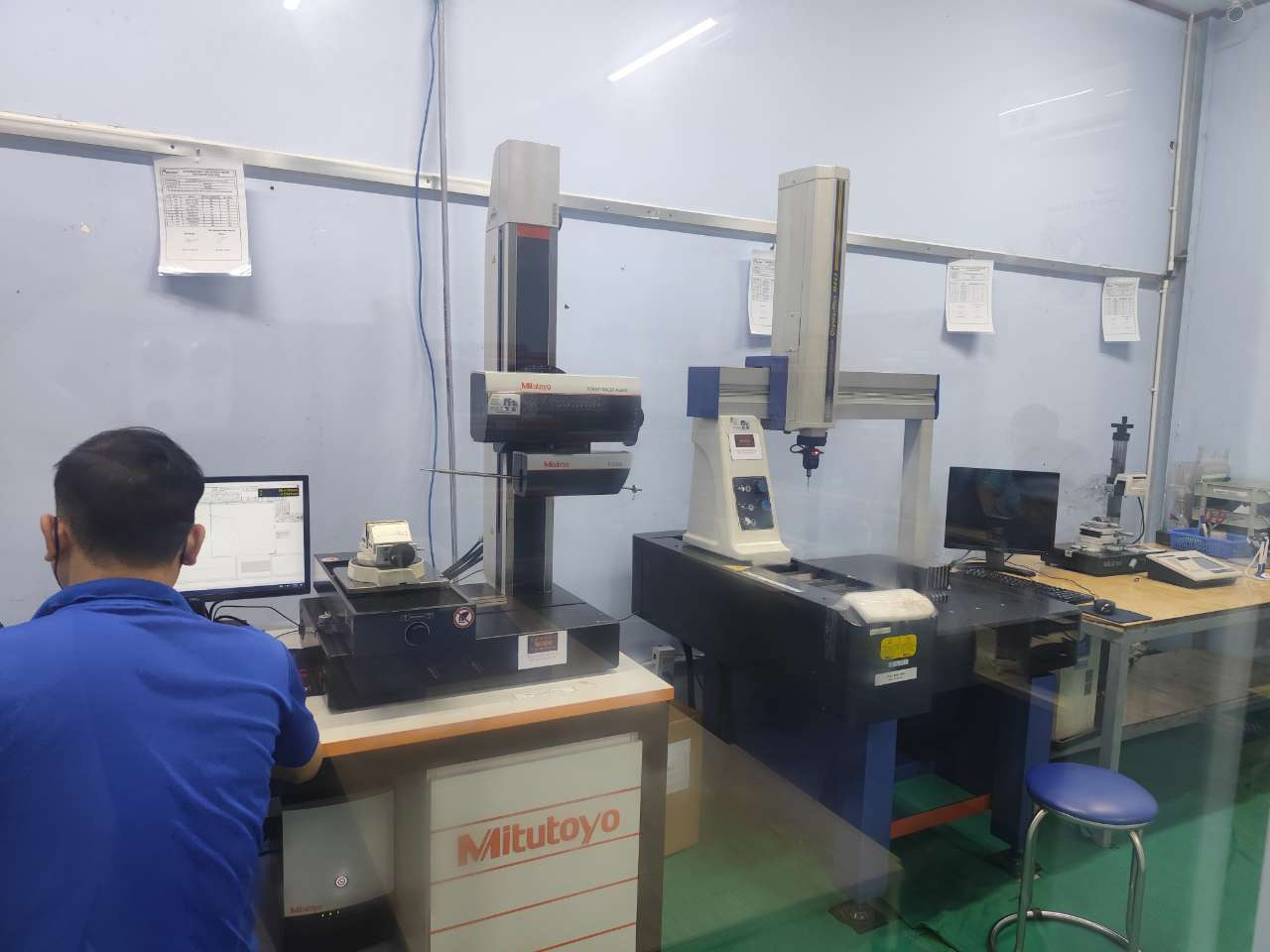
- Material traceability: Mill test certificates (MTCs) per EN 10204 3.1 for every heat lot — non-negotiable for aerospace and medical applications
Titanium Machining Cost: Vietnam vs. US vs. China
Titanium amplifies regional cost differences more than any other material because cycle times are long (slow cutting speeds) and tooling costs are high. Here's what we see across our supplier network in early 2026:
Titanium amplifies regional cost gaps because slow cutting speeds mean long cycle times. Vietnam titanium-capable machine-hour rates run roughly $28–48/hr versus $85–140/hr in the US. Add the tariff gap, and Vietnam titanium parts typically land well below both US and China-origin equivalents.
Machine Hour Rates (Titanium-Capable 3-Axis CNC)
| Region | Machine Hour Rate | Typical Setup Fee | Tooling Markup |
|---|---|---|---|
| US (Midwest/South) | $85–140/hr | $150–400 | 15–25% |
| China (Shenzhen/Dongguan) | $35–55/hr | $50–120 | 10–20% |
| Vietnam (DEWIN network) | $28–48/hr | $40–100 | 8–15% |
Real Part Cost Examples (Ti-6Al-4V, Grade 5)
| Part Description | US Quote | China Quote | Vietnam (DEWIN) | Vietnam Savings |
|---|---|---|---|---|
| Aerospace bracket, 120×80×25mm, ±0.025mm | $185–240/pc | $85–115/pc | $72–95/pc | 55–62% |
| Medical implant housing, ∅45×30mm, ±0.01mm, Ra 0.8 | $320–450/pc | $140–195/pc | $115–165/pc | 58–64% |
| Turned shaft, ∅20×100mm, ±0.015mm | $65–95/pc | $28–42/pc | $22–35/pc | 60–66% |
| Complex 5-axis impeller, ∅150mm, ±0.05mm | $800–1,200/pc | $350–480/pc | $280–400/pc | 60–67% |
Pricing based on 100-piece order quantities, Q1 2026. Includes material, machining, and inspection. Excludes shipping and import duties.
Tariff Advantage: Vietnam vs. China
Under Section 301, titanium machined parts from China face 25% additional tariffs (HTS 8108.90 — articles of titanium). Vietnam-origin parts enter at standard MFN rates of 0–5.5% depending on classification. For a $100 titanium part:
- From China: $100 + 25% Section 301 = $125 landed (before freight)
- From Vietnam: $100 + 3.7% MFN = $103.70 landed (before freight)
- Net advantage: Vietnam titanium parts land 17–20% cheaper even at identical FOB pricing
Combined with Vietnam's lower manufacturing costs, the total landed cost advantage typically reaches 40–55% vs. US sourcing and 15–25% vs. China for titanium parts.
DFM Tips: Reducing Titanium Machining Cost by 20–40%
Titanium is expensive enough that small design changes yield big savings. Here are the highest-impact DFM techniques:
1. Maximize Corner Radii
Internal corners must accommodate the end mill radius. For titanium, use corner radii ≥3mm wherever possible. A 1mm internal corner requires a ∅2mm end mill running at 15,000+ RPM with tiny step-overs — quadrupling cycle time for that feature. A 3mm radius allows a ∅6mm tool at standard parameters.
2. Limit Pocket Depth
Deep pockets in titanium require multiple shallow passes (axial depth of cut typically 0.5–1× tool diameter). Keep pocket depth-to-width ratio below 4:1. A 50mm deep × 10mm wide pocket in Ti-6Al-4V adds 25–35 minutes of cycle time vs. the same pocket in aluminum at 3–5 minutes.
3. Relax Tolerances Where Possible
Every ±0.01mm tolerance in titanium requires a finishing pass at reduced speeds. Audit your tolerance callouts:
- ±0.1mm: Standard roughing achieves this — minimal cost impact
- ±0.05mm: One finishing pass — adds 10–15% to feature cost
- ±0.025mm: Multiple finishing passes with tool compensation — adds 25–35%
- ±0.01mm: Grinding or lapping may be required — adds 50–100% to feature cost
4. Specify Near-Net Shape Stock
Titanium raw material is $25–85/kg. Every gram you machine away is waste. If your final part is 200g and you're machining from a 1.5kg billet, that's $30–75 in wasted material alone. Consider:
- Forged preforms for quantities >500 — reduces buy-to-fly ratio from 8:1 to 3:1
- Extruded profiles for symmetric cross-sections
- Cast preforms (investment casting) for complex geometries — machine only critical surfaces
5. Design for Workholding
Titanium's low modulus means aggressive clamping is essential. Design flat reference surfaces or boss features for clamping that can be removed in a final operation. Parts without good clamping features require custom fixtures — adding $500–2,000 in NRE and increasing setup time.
Surface Finishing Options for Titanium Parts
- As-machined (Ra 1.6–3.2 µm): Standard finish for most structural and mechanical parts. No additional cost.
- Fine machined (Ra 0.4–0.8 µm): Achievable with carbide tools at reduced feed. Adds 15–25% to machining cost.
- Anodizing (Type II): Creates a protective oxide layer, available in colors. $2–5/part for small components. Popular for aerospace and consumer applications.
- PVD coating (TiN, TiCN, DLC): Adds wear resistance for moving parts. $5–15/part. Available from specialized Vietnam coaters.
- Passivation (per ASTM A967/AMS 2700): Removes free iron contamination. Essential for medical and aerospace. $1–3/part in batch processing.
- Electropolishing: Achieves Ra 0.1–0.2 µm for medical implants and fluid handling. $8–20/part depending on geometry.
How to Write an RFQ for Titanium CNC Parts
A complete RFQ eliminates quote variance and ensures you get accurate pricing. Include:
- 3D CAD model (STEP preferred) + 2D drawing with GD&T
- Titanium grade and condition: "Ti-6Al-4V per AMS 4928, annealed" — not just "titanium"
- Quantity and annual forecast: Titanium tooling costs amortize significantly at volume. Quote 50, 200, and 1,000 pieces
- Surface finish requirements: Ra callout on critical surfaces, general finish elsewhere
- Inspection requirements: First article (FAI per AS9102?), CMM reports, material certs (EN 10204 3.1?)
- Certifications required: ISO 9001, AS9100 (aerospace), ISO 13485 (medical)?
- Post-processing: Anodizing, passivation, coatings, laser marking?
- Delivery terms: FOB, DDP, or EXW? Sea freight vs. air for urgent orders?
Lead Times: What to Expect
| Stage | Timeline | Notes |
|---|---|---|
| Material procurement | 5–15 business days | Grade 2 and Grade 5 bar stock usually in-country. ELI and Grade 9 may require import (add 10–15 days) |
| First article (prototype) | 7–12 business days | After material arrives. Includes programming, setup, machining, and FAI report |
| Production (100 pcs) | 10–18 business days | Depends on complexity. Titanium cycle times are 4–6× longer than aluminum |
| Surface treatment | 3–5 business days | Anodizing, passivation, or coatings |
| Shipping (sea freight) | 18–25 days to US West Coast | Air freight available: 3–5 days at ~$5–8/kg |
Total lead time (material in stock): 6–8 weeks door-to-door for first production order. Repeat orders: 4–5 weeks with established tooling and programs.
Common Mistakes When Sourcing Titanium Parts
- Not specifying the grade condition: Ti-6Al-4V annealed vs. STA can mean a 40% cost difference and completely different mechanical properties. Always specify.
- Over-tolerancing non-critical features: ±0.01mm on a mounting hole that only needs ±0.05mm adds cost with zero functional benefit.
- Ignoring buy-to-fly ratio: A complex bracket machined from solid billet can waste 85% of expensive raw material. Explore near-net-shape alternatives for volumes >500.
- Choosing suppliers on price alone: The cheapest titanium quote often means corners cut on tooling, coolant, or inspection. Failed titanium parts are expensive — $200+ per scrap part in material alone.
- Skipping material certification: Always require mill test reports (MTR/MTC) per EN 10204 3.1. Uncertified titanium may be the wrong grade or recycled with trace contaminants.
Ready to Source Titanium Parts from Vietnam?
DEWIN connects US buyers with vetted Vietnam CNC shops that have proven titanium machining capability — high-pressure coolant, rigid machines, material traceability, and aerospace-grade quality systems. Send us your 3D model and specifications for a detailed quote within 48 hours.
Frequently Asked Questions
Should I specify Ti-6Al-4V in annealed or STA condition?
Grade condition must be called out alongside the titanium grade, because annealed versus STA Ti-6Al-4V can mean a 40% cost difference and completely different mechanical properties. Annealed Grade 5 gives 895 MPa minimum tensile strength; STA reaches up to 1,170 MPa but raises hardness to HRC 36+ and dramatically reduces machinability. Write it as "Ti-6Al-4V per AMS 4928, annealed".
Which titanium grades are stocked in Vietnam and which need importing?
Grade 2 and Grade 5 bar stock is usually held in-country in Vietnam, while Grade 23 ELI and Grade 9 may require import and add 10–15 days on top of the normal 5–15 business day material procurement window. Grade 9 tube stock typically needs pre-ordering, although Grade 9 in bar form is readily available.
Why do titanium quotes vary so much between shops?
Titanium quote spread usually reflects differences in tooling, coolant, and inspection rather than supplier margin. A shop quoting titanium at the same markup as stainless either does not understand the material or will cut corners, since tool life drops 80% compared to SS304. The cheapest quote usually means those compromises — and a scrapped titanium part costs $200+ in material alone.
At what volume does near-net-shape titanium beat machining from billet?
Forged preforms become worth considering above 500 pieces, where they cut the buy-to-fly ratio from 8:1 down to 3:1. With titanium raw material at $25–85/kg, a 200g finished part machined from a 1.5kg billet wastes $30–75 in material alone. Extruded profiles suit symmetric cross-sections, and investment cast preforms suit complex geometries where only critical surfaces need machining.