
When procurement teams source die-cast aluminum and zinc parts from Vietnam, the factory floor tells you everything the sales deck won’t. After auditing 179+ Vietnamese factories through our 50-point Dolphin Audit system, here is what separates a reliable die casting supplier from one that will cost you six months of rework.
To audit a Vietnamese die casting factory, verify machine tonnage, age, and documented shot-weight consistency, demand alloy test certificates for recent batches, confirm climate-controlled mold storage, and require X-ray or CT porosity inspection on any pressure-tight or structural casting before you commit tooling.
Key takeaways:
- The machine fleet, not the quote, sets your quality ceiling — check tonnage, machine age, and documented shot-weight consistency first.
- Tooling is 40–60% of your upfront cost; how a factory stores and maintains molds predicts whether you get 100,000 shots or 30,000.
- Demand alloy test certificates. A factory that cannot show incoming-inspection certs for its last three batches is one to walk away from.
- Integrated secondary operations — CNC, deburring, surface treatment — under one roof cut supply-chain risk and keep parts under one Certificate of Origin.
- Porosity is the silent killer of die-cast parts; verify X-ray/CT capability for any pressure-tight or structural casting.
Why Vietnam for Die Casting?
Vietnam’s die casting sector has grown strongly since 2022, driven by three structural advantages:
- Cost arbitrage — Vietnamese die casting typically runs well below Chinese equivalents at comparable quality tiers, with the gap widest in labor-intensive secondary operations.
- FTA coverage — CPTPP, EVFTA, RCEP, and UKVFTA give Vietnamese die-cast parts preferential tariff access to dozens of countries, and Vietnam-origin goods currently carry a relief from Section 301 Chinese punitive tariffs for qualifying goods.
- Young workforce — a low median factory-worker age translates into fast adoption of new equipment and processes.
But cost savings mean nothing if the factory cannot hold tolerances or control porosity. That is where the audit comes in. For a landed-cost comparison against China, see our Vietnam vs China breakdown, and for process fundamentals the die casting complete guide.
What Are the 5 Critical Die Casting Checkpoints?
The five checkpoints that decide a die casting supplier are machine tonnage and age, mold storage and maintenance, alloy verification, integrated secondary operations, and quality systems — each one is a place a weak factory quietly costs you months of rework.
1. Machine tonnage and age
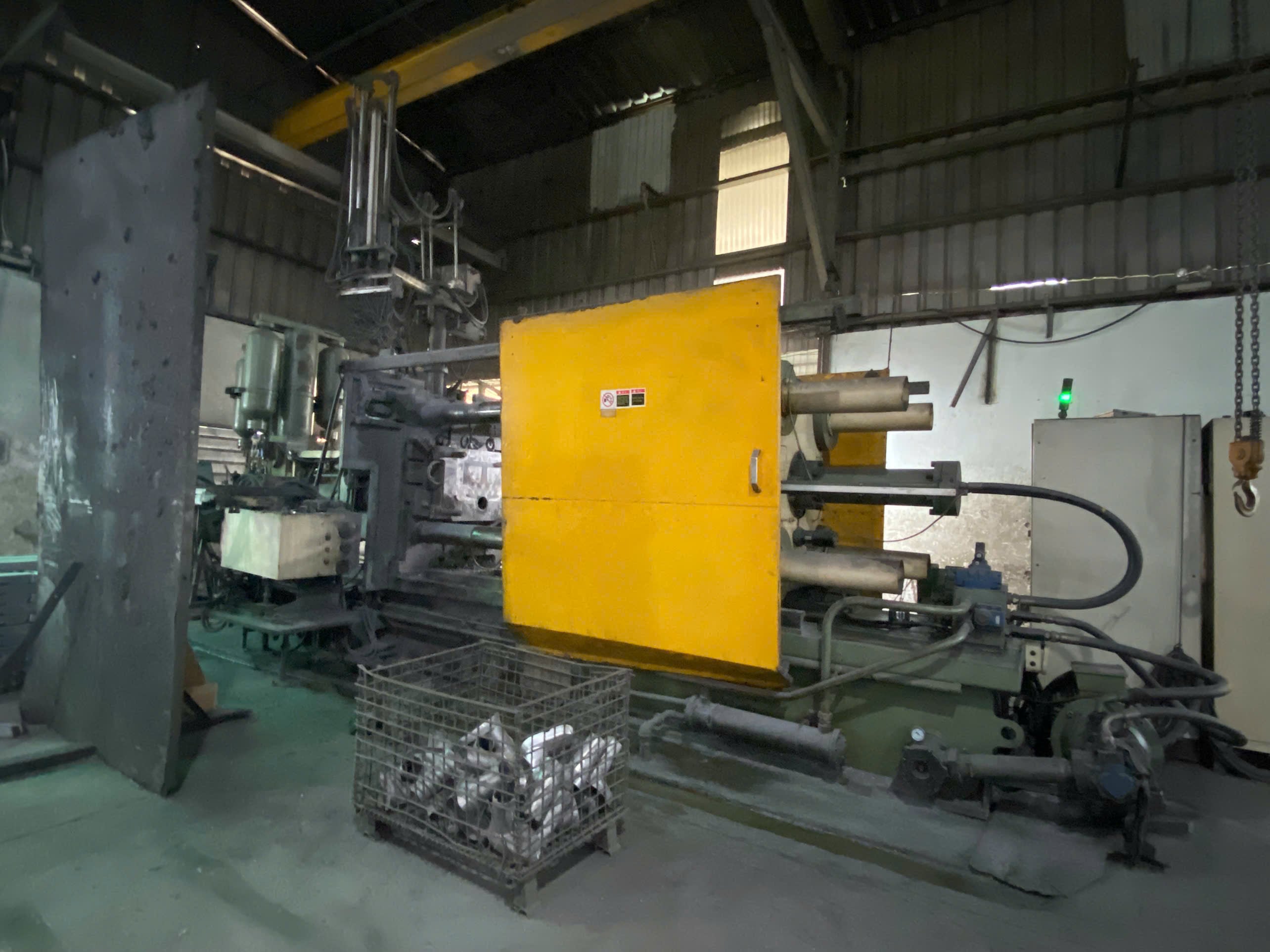
The first thing our Dolphin Audit team checks is the die casting machine fleet. We photograph every machine and record:
- Clamping force (measured in tons) — determines maximum part size
- Machine brand and model — Toshiba, LK, Yizumi, and Buhler are the benchmarks
- Year of manufacture — machines older than 15 years need careful inspection of hydraulic systems
- Shot consistency — request the last 100 shot-weight records
A factory running a 400T cold-chamber machine from LK (manufactured post-2018) with documented shot-weight logs is operating at a fundamentally different level than one running a no-name 200T machine with no records.
2. Mold storage and maintenance
Die casting molds represent 40-60% of your upfront tooling investment. How a factory stores and maintains molds tells you whether your tooling will last 100,000 shots or 30,000.
What we look for:
- Dedicated mold storage racks (not stacked on the floor)
- Mold maintenance logs with shot counts
- In-house mold polishing and repair capability
- Climate control in the mold storage area (prevents rust on steel molds)
3. Alloy verification
Vietnam’s die casting factories primarily work with:
| Alloy | Application | Key Property |
|---|---|---|
| ADC12 | General purpose | Good fluidity, machinability |
| A380 | Structural parts | High strength |
| A360 | Pressure-tight | Superior corrosion resistance |
| Zamak 3 | Zinc die casting | Excellent surface finish |
Our auditors verify alloy incoming-inspection procedures. A factory that cannot show you an alloy test certificate for the last 3 batches is a factory you should walk away from — substituted or contaminated alloy is a defect you cannot see until the part fails in service.
4. Secondary operations
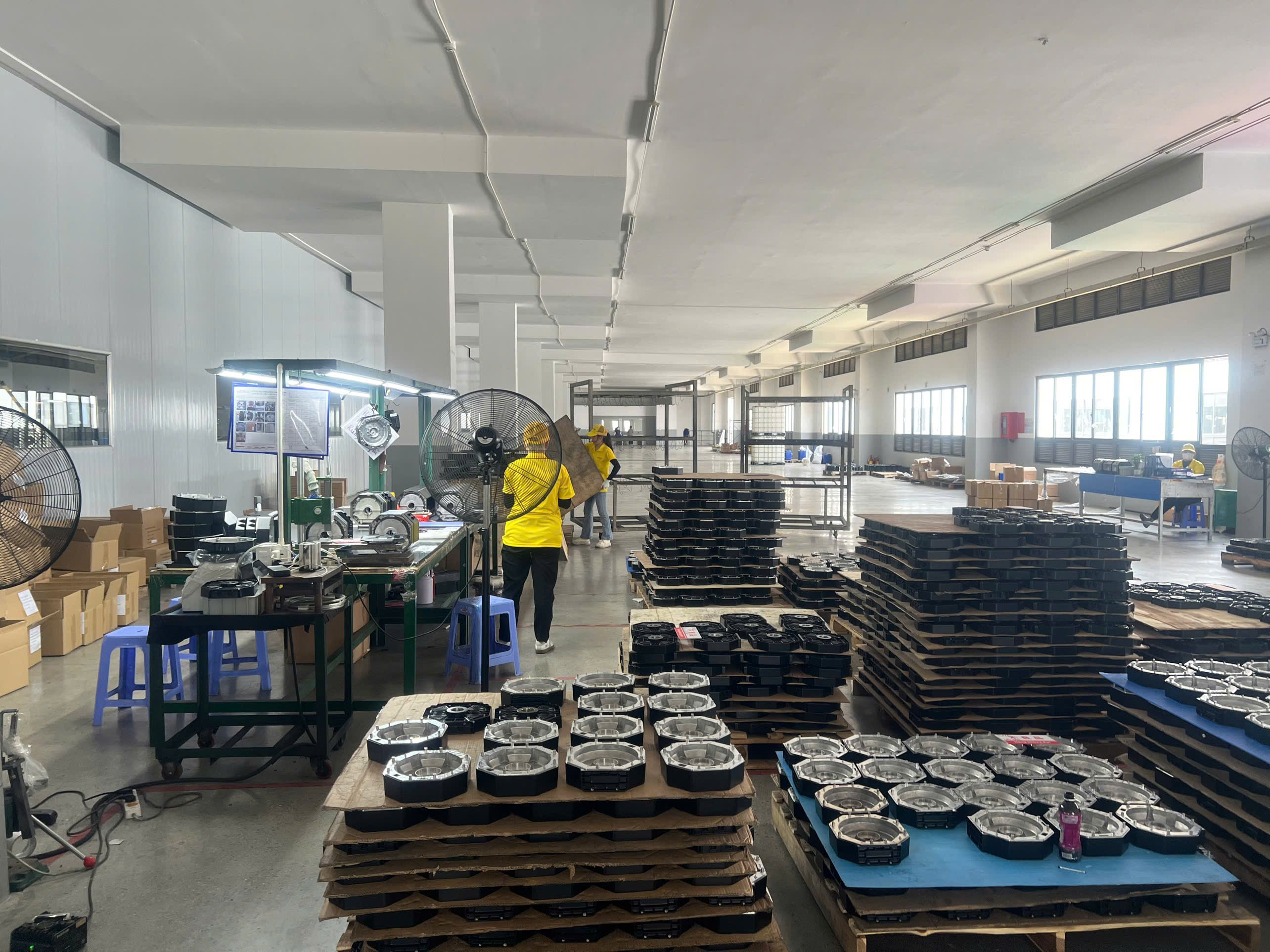
The best Vietnamese die casting factories offer integrated secondary operations under one roof:
- CNC machining for critical surfaces and threaded holes
- Vibratory deburring for edge finishing
- Surface treatment — anodizing, powder coating, chromate conversion
- Assembly — insert installation, sub-assembly
Single-factory integration reduces your supply chain risk, eliminates inter-factory transport damage, and keeps everything under one Certificate of Origin for FTA compliance. If your part needs tight machined interfaces on cast surfaces, confirm the CNC machining line and the die casting cells are genuinely in the same facility.
5. Quality systems
At minimum, we expect:
- Incoming material inspection with spectrometer verification
- First Article Inspection (FAI) reports
- SPC charts for critical dimensions
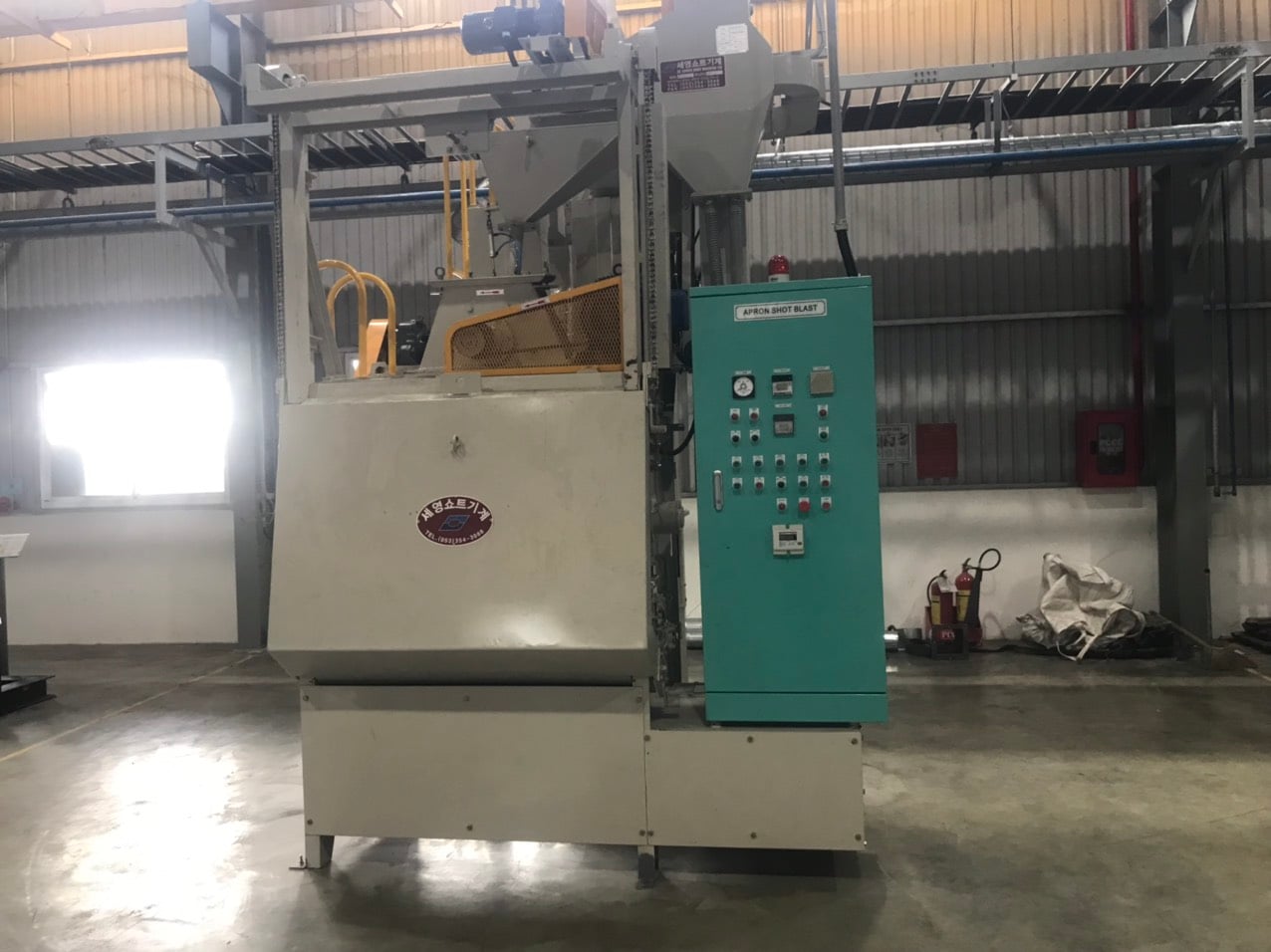
- X-ray or CT inspection capability for porosity detection (for high-integrity castings)
- Segregated NG (reject) product area with clear labeling
How Do I Keep Porosity Out of a Die-Cast Part?
Gas and shrinkage porosity is the failure mode that sinks die-cast programs, because a part can look perfect and still leak or crack under load. Controlling it is a process discipline, not a lucky shot:
Porosity is controlled by process discipline, not luck: vacuum-assisted casting for pressure-tight parts, gate and vent design that evacuates air ahead of the melt, and X-ray or CT inspection to catch internal voids before parts ship. Treat it as a pass/fail audit item.
- Vacuum-assisted die casting for pressure-tight parts that must hold fluid or gas
- Controlled gate and vent design to evacuate air ahead of the melt front
- X-ray or CT inspection to catch internal voids before parts ship
- Pressure/leak testing on any casting that seals a fluid path
If your part is structural or pressure-tight, treat porosity control as a pass/fail audit criterion — not a nice-to-have. A factory without X-ray capability should not be quoting high-integrity castings.
How the Dolphin Audit Scores a Factory
Every checkpoint above rolls into our 50-point Dolphin Audit, organized around five pillars:
| Pillar | What it covers |
|---|---|
| Facility & Safety | Building condition, fire/electrical safety, housekeeping |
| Equipment & Capacity | Machine list, age, tonnage, utilization headroom |
| Quality Management | Inspection equipment, SPC, traceability, alloy certs |
| Workforce & Management | Skills, retention, engineering depth |
| Export Compliance | Documentation, Certificate of Origin, FTA readiness |
Scores roll up into a QCLDM rating: only Tier 1 (90–100) and Tier 2 (75–89) suppliers are quoted. That single filter removes the most common offshore failure — a trading company posing as a foundry. See the full Dolphin Audit methodology for how each point is scored.
Die Casting Audit Checklist
Take this to the shop floor:
- Machine tonnage suits your part, with age and hydraulic condition documented
- Shot-weight logs available for the last 100 shots
- Molds racked, logged with shot counts, and stored climate-controlled
- Alloy test certificates for the last 3 batches
- Integrated CNC, deburring, and surface treatment on site
- X-ray/CT and leak testing for pressure-tight or structural parts
- SPC charts and FAI reports for critical dimensions
- Segregated, clearly labeled NG (reject) area
- Dolphin Audit report and QCLDM tier on file
The DEWIN Difference
Most sourcing platforms show you a factory name and a price. We show you the machines, the mold racks, the alloy test certs, and the NG segregation area — because we were there.
Every factory in the DEWIN network has been physically audited by our on-ground team using our 50-point Dolphin Audit system. No exceptions. No stock photos. No virtual tours pretending to be real audits.
vetted Vietnamese manufacturing facilities. 6 manufacturing categories. Zero brokers.
Frequently Asked Questions
Aluminum or zinc die casting — which should I specify?
Aluminum (ADC12, A380, A360) suits lightweight structural and thermal parts; zinc (Zamak) casts at lower temperatures, holds tighter tolerances, and gives a superior as-cast finish, at higher density. Match the alloy to function — for zinc-specific guidance see the zinc die casting guide.
How do I keep porosity out of a pressure-tight casting?
Specify vacuum-assisted casting, require X-ray or CT inspection, and add leak testing to the acceptance plan. Make porosity control a pass/fail audit item — a factory without internal-void inspection should not be quoting high-integrity parts.
Who owns and stores the die casting tool?
Contract tool ownership and storage explicitly, and require shot-count logging with scheduled maintenance. Working through a single accountable counterparty — DEWIN contracts via a US Delaware LLC — keeps the tooling agreement under US jurisdiction rather than with an overseas entity.
How much can I actually save versus China?
Savings are largest on labor-intensive secondary operations and on tariff structure (tariff-mitigated Section 301 on Vietnam-origin goods). The honest number is part-specific — model yours with our instant quoting portal.
Ready to source die-cast parts from verified Vietnamese factories? Get an instant quote or browse our audited die casting suppliers.