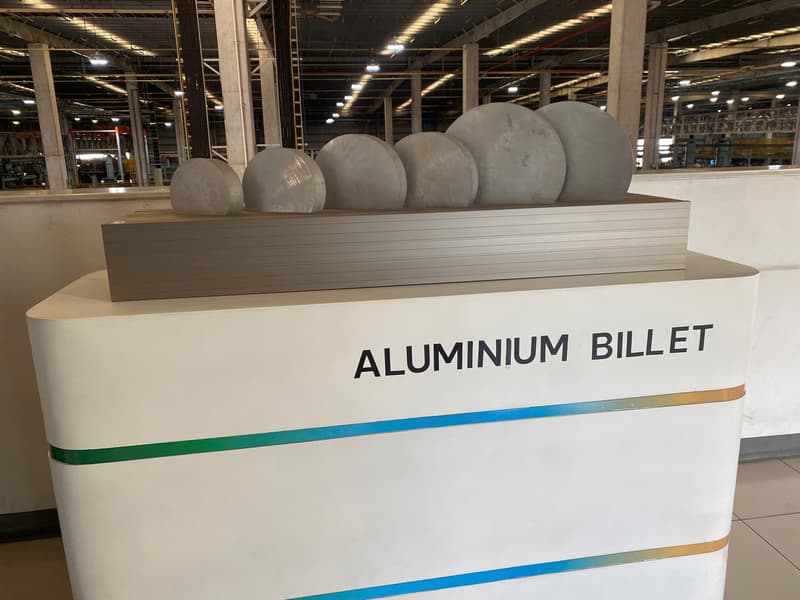
For global industrial manufacturers sourcing custom mechanical components from Southeast Asia, regulatory compliance is no longer limited to dimensional tolerances, metallurgical grain structure, or RoHS/REACH chemical disclosures. The European Union’s Carbon Border Adjustment Mechanism (EU CBAM, established under Regulation (EU) 2023/956) fundamentally reshapes international supply chains by attaching a carbon liability to carbon-intensive goods imported into the EU customs territory.
As CBAM transitions from quarterly informational reporting into its definitive operational regime, European importers and multinational original equipment manufacturers (OEMs) face stringent carbon accounting rules. Importers must surrender CBAM certificates reflecting the verified embedded greenhouse gas (GHG) emissions generated during manufacturing.
In Vietnam’s metal manufacturing ecosystem—spanning precision CNC machining, aluminum extrusion, high-pressure die casting, and sheet metal fabrication—understanding how to quantify Scope 1 (direct), Scope 2 (indirect electricity), and Scope 3 (upstream precursor) emissions is essential for safeguarding export contracts and mitigating carbon border duties.
1. Regulatory Scope: How EU CBAM Affects Vietnam Metal Products
EU CBAM covers six carbon-intensive sectors: Iron and Steel, Aluminum, Fertilizers, Cement, Hydrogen, and Electricity. For mechanical procurement engineers, the critical product classifications fall under Chapters 72, 73, and 76 of the EU Combined Nomenclature (CN codes):
- Iron and Steel (CN 72 & 73): Unalloyed, alloy, and stainless steel ingots, billets, hot-rolled coils, cold-drawn bars, seamless and welded tubing, structural sections, fasteners (bolts, nuts, screws under CN 7318), and fabricated assemblies.
- Aluminum (CN 76): Unwrought aluminum billets, extrusion profiles (CN 7604), tubes/pipes (CN 7608), sheets/plates (CN 7606), forgings, and aluminum structures.
flowchart TD
    A["Raw Material / Smelting<br>(Billet, Ingot, Slab)"] -->|"Precursor Scope 3 Emissions"| B["Vietnam Tier-1 / Tier-2 Facility<br>(Machining, Stamping, Extrusion)"]
    C["Factory Energy Consumption<br>(EVN Grid Electricity, Natural Gas, LPG)"] -->|"Scope 1 & Scope 2 Emissions"| B
    B -->|"Specific Embedded Emissions (SE_total)"| D["Finished Metal Component<br>(Flanges, Profiles, Brackets, Castings)"]
    D -->|"Export to EU Port of Entry"| E["Authorized EU CBAM Declarant<br>(Quarterly / Annual CBAM Surrender)"]
Simple vs. Complex Goods Under CBAM
The European Commission categorizes covered goods into two accounting classes:
- Simple Goods: Goods produced exclusively from zero-emission materials or raw inputs that have zero precursor emissions (e.g., crude steel produced directly from iron ore and coke, or primary unwrought aluminum).
- Complex Goods: Goods whose production process consumes other CBAM-covered goods as input precursors. Most precision metal parts sourced from Vietnam—such as CNC-machined aluminum housings, fabricated stainless steel enclosures, or forged steel flanges—are complex goods. Their embedded emissions calculation must aggregate both the facility’s internal manufacturing emissions and the upstream embedded emissions of the purchased alloy raw materials.
2. GHG Scope 1, 2, and 3 Accounting Architecture
Under international standards ISO 14064-1 (organizational GHG accounting) and ISO 14067 (product carbon footprints), alongside the CBAM technical guidance rules, greenhouse gas emissions are categorized into three reporting tiers:
flowchart LR
    subgraph Scope1["Scope 1: Direct Facility Emissions"]
        direction TB
        S1A["Furnace fuel combustion (LPG, Natural gas, Diesel)"]
        S1B["Melting and degassing process off-gases"]
        S1C["Internal transport & emergency generators"]
    end

    subgraph Scope2["Scope 2: Indirect Energy Emissions"]
        direction TB
        S2A["EVN National Grid electricity consumption"]
        S2B["Substation transformer transmission losses"]
    end

    subgraph Scope3["Scope 3 / Precursor Inputs"]
        direction TB
        S3A["Primary / Secondary aluminum billet production"]
        S3B["Hot-rolled / Cold-drawn steel coil and rod"]
        S3C["Subcontracted heat treatment & anodizing"]
    end

    Scope1 --> EMB["Total Specific Embedded Emissions<br>(tCO2e per tonne of finished parts)"]
    Scope2 --> EMB
    Scope3 --> EMB
Scope 1: Direct On-Site Emissions
Direct emissions result from combustion and chemical processes within the physical boundaries of the manufacturing installation:
- Smelting & Reheat Furnaces: Natural gas, liquefied petroleum gas (LPG), or heavy fuel oil used in die casting holding furnaces, aluminum extrusion pre-heat log ovens, and powder coating curing lines.
- Process Emissions: Oxidation of carbon electrodes, reaction gases in foundries, and chemical reactions during fluxing.
- Calculated Metric: Mass of fuel consumed multiplied by its Net Calorific Value (NCV) and fuel-specific emission factor ($t\text{CO}_2/\text{TJ}$).
Scope 2: Indirect Energy Emissions & Vietnam’s Grid Factor
Scope 2 emissions quantify the greenhouse gases generated off-site to produce the electricity consumed by factory machine tools, compressors, ventilation, and lighting.
In Vietnam, electricity is supplied predominantly by the state utility Vietnam Electricity (EVN). The national grid relies on a hybrid generation mix of coal-fired thermal plants, natural gas turbines, large-scale hydroelectric reservoirs, and utility solar/wind installations.
- Vietnam National Grid Emission Factor: For CBAM calculation purposes, where facility-specific renewable power purchase agreements (DPPAs) are not in place, suppliers utilize Vietnam’s official national grid factor (typically fluctuating between 0.72 and 0.78 tCO₂e/MWh depending on the specific seasonal water flow and coal dispatch balance).
- Rooftop Solar Mitigation: Vietnamese factories that install on-site rooftop solar photovoltaic (PV) arrays can deduct behind-the-meter solar generation from their total grid consumption, directly lowering their Scope 2 embedded carbon intensity. However, the solar installation must be equipped with dedicated revenue-grade meters and inverter dataloggers to withstand third-party CBAM audit verification.
Scope 3: Upstream Precursor Footprints (The Decisive Cost Driver)
For complex goods, upstream precursor material selection exerts the single largest influence on final carbon accounting. The embedded emissions of raw billets vary by an order of magnitude depending on smelting technology:
| Material & Smelting Route | Primary Precursor Process | Representative Embedded Carbon ($t\text{CO}_2\text{e} / t$) | Impact on Final CBAM Exposure |
|---|---|---|---|
| Coal-Powered Primary Aluminum | Alumina refining + Hall-Héroult reduction via coal power | 12.0 – 16.0 | Extremely high CBAM certificate liability |
| Hydro-Powered Primary Aluminum | Alumina refining + Hall-Héroult reduction via hydro power | 4.0 – 6.0 | Moderate CBAM certificate liability |
| Secondary Recycled Aluminum Billet | Post-consumer & industrial scrap remelting | 0.5 – 1.5 | Lowest carbon duty; preferred for export |
| BF-BOF Primary Carbon Steel | Blast Furnace - Basic Oxygen Furnace (Iron ore + Coke) | 1.8 – 2.4 | Standard blast-furnace baseline |
| EAF Scrap-Based Steel | Electric Arc Furnace (100% recycled scrap steel) | 0.4 – 0.9 | Significantly reduced carbon footprint |
When sourcing CNC-machined aluminum parts or laser-cut sheet assemblies, procurement teams that specify high-recycled-content secondary billets (e.g., certified >70% recycled scrap content) reduce total embedded carbon by up to 80%, drastically outperforming suppliers using unverified primary coal-smelted stock.
3. Mathematical Formula for Embedded Emissions
Under Annex IV of Regulation (EU) 2023/956, the specific embedded emissions of a complex good ($SE_g$) are calculated on a unit-mass basis ($t\text{CO}_2\text{e}$ per metric ton of product):
$$SE_g = \frac{AttrEmg_{dir} + AttrEmg_{indir}}{AL_g} + \sum_{i=1}^n \left( M_i \times SE_i \right)$$
Where:
- $AttrEmg_{dir}$: Attributed direct Scope 1 emissions of the production process over the reporting period ($t\text{CO}_2\text{e}$).
- $AttrEmg_{indir}$: Attributed indirect Scope 2 emissions from consumed electricity ($t\text{CO}_2\text{e}$).
- $AL_g$: Activity level, represented by the total net production quantity of the good produced during the reporting period (metric tons).
- $M_i$: Specific mass ratio of precursor material $i$ consumed per unit of final good ($t_{precursor} / t_{finished_good}$), accounting for machining scrap, flashing, and trimming losses.
- $SE_i$: Embedded specific emissions of precursor material $i$ ($t\text{CO}2\text{e} / t{precursor}$).
The Scrap Factor ($M_i$) in Machining Operations
In subtractive CNC machining, a billet weighing 5.0 kg may be machined down into a finished housing weighing 1.0 kg (an 80% buy-to-fly scrap ratio). If the factory segregates clean turnings and returns them to a closed-loop smelter, the credited scrap value helps offset net material consumption under EU communication rules. Conversely, if scrap is unmetered or contaminated, the buyer must absorb the full precursor emissions of the original raw billet weight.
4. Documentation Protocol: The European Commission CBAM Communication Template
To transmit primary data from a Vietnamese factory floor to an EU customer, suppliers must populate the European Commission CBAM Communication Template for Installations.
sequenceDiagram
    autonumber
    participant Buyer as EU Importer / Procurement Team
    participant Platform as DEWIN Engineering & Platform
    participant Factory as Vietnam Manufacturing Facility
    participant Auditor as Accredited ISO 14065 Verifier

    Buyer->>Platform: Submit RFQ with CBAM & Material Specs (BOM)
    Platform->>Factory: Audit Shop Floor Boundaries & Energy Meters
    Factory->>Factory: Compile Fuel Bills, EVN Invoices, Mill Test Certificates
    Factory->>Platform: Populate EC CBAM Communication Template (Excel)
    Auditor->>Factory: Verify Installation Data & ISO 14064 Compliance
    Platform->>Buyer: Deliver Verified CBAM Data Pack & Inspection Dossier
    Buyer->>Buyer: Submit Declaration to EU CBAM Transitional Registry
Essential Data Fields Required from Vietnamese Facilities
- Installation Identification: Exact facility coordinates, UN/LOCODE, primary NACE / ISIC codes, and physical perimeter description.
- Aggregated Goods Category: Exact 8-digit CN code classification of finished parts.
- Production Routes & Technology: Electric Arc Furnace (EAF), Induction Furnace, Cold Bending, CNC Machining, or Surface Treatment.
- Specific Direct Emissions ($SE_{dir}$): Net $t\text{CO}_2\text{e}$ per ton, derived from primary fuel consumption records.
- Specific Electricity Consumption: Megawatt-hours (MWh) consumed per ton of finished product, segregated into EVN grid draw and self-generated renewable energy.
- Precursor Material Records: Mill Test Certificates (MTCs) identifying mill origin, heat number, precursor CN code, and supplier-provided $SE_{precursor}$ data.
5. Factory Quality Verification & On-Site Audits
Collecting an Excel spreadsheet from an overseas supplier is insufficient without rigorous verification. Inaccurate reporting exposes importers to penalties under Article 16 of Regulation (EU) 2023/956, ranging from €10 to €50 per unreported ton of emissions, escalating for repeated or intentional infractions.
Verification Standards
- ISO 14064-1: Organizational GHG inventory verification conducted by an accredited third-party certification body.
- ISO 14064-3: Specification with guidance for the verification and validation of greenhouse gas statements.
- ISO 14067: Carbon footprint of products—Requirements and guidelines for quantification.
- Third-Party Auditor Accreditation: Verifiers must be accredited under ISO 14065 or registered with an EU National Accreditation Body (NAB).
Shop Floor Verification Points
Within the DEWIN supplier directory, listed Vietnamese supplier profiles can be inspected across specialized capabilities such as Precision CNC Machining, Aluminum Die Casting, and Sheet Metal Fabrication.
When evaluating facility-level environmental claims, engineering teams should evaluate:
- Dedicated Sub-Metering: Verify whether energy-intensive equipment (e.g., melt furnaces, 5-axis machining cells, compressed air systems) have dedicated sub-meters or rely on crude, plant-wide estimates.
- Scrap Segregation & Traceability: Inspect physical bins for strict separation of distinct alloy grades (e.g., separating 6061-T6 aluminum chips from 7075 turnings) to preserve secondary remelt purity.
- Calibration Records: Inspect calibration certificates for gas flow meters, scales, and CMM inspection equipment.
- Facility Credentials: Specific supplier credentials, quality certifications (e.g., ISO 9001, ISO 14001, ISO 50001), production capacities, and equipment models vary across individual plants and must be verified on a per-facility basis during project onboarding.
For comprehensive inspection protocols, review the Dolphin Quality Audit Framework, which integrates environmental traceability and operational controls into physical plant assessments.
6. Sourcing Playbook: How Buyers Can De-Risk CBAM Compliance
To insulate procurement budgets from unexpected carbon border tariffs, engineering and supply chain managers should implement a five-step sourcing protocol:
flowchart TD
    Step1["1. Engineering Bill of Materials (BOM) Audit<br>Map CN/HTS codes and net component weights"] --> Step2["2. Raw Material Specification<br>Mandate low-carbon EAF steel or secondary recycled aluminum"]
    Step2 --> Step3["3. Contractual Carbon Reporting Clauses<br>Require quarterly EC CBAM template submissions"]
    Step3 --> Step4["4. Factory Energy Traceability<br>Audit sub-meters and verify renewable solar generation"]
Step4 --> Step5["5. Automated Quoting & DFM Verification<br>Benchmark supplier pricing and carbon intensity"]- Audit Drawing Title Blocks & BOMs: Ensure engineering drawings clearly specify raw material ASTM/EN designations, alloy compositions, and expected finished part mass. Map each line item to its corresponding EU CN code before placing production orders.
- Mandate Low-Carbon Raw Materials: Instruct Vietnamese contract manufacturers to procure raw stock from certified low-emission mills. For aluminum profiles and CNC components, mandate secondary extrusion billet stock with verified scrap content certificates.
- Incorporate Carbon Transparency Clauses: Update master purchase agreements (MPAs) to require Vietnamese suppliers to deliver completed, verifier-ready EC CBAM communication tables with every production batch or quarterly shipment.
- Leverage Vietnam’s Clean Energy Shift: Prioritize manufacturing plants located in industrial zones with integrated rooftop solar power, high-efficiency induction melting furnaces, and proactive water recycling systems.
- Conduct Upfront Technical RFQ Reviews: Submit your CAD models, 2D drawings, and material specifications through our Instant RFQ Portal to obtain engineering reviews, tolerance assessments, and supplier manufacturing capability analyses.
Frequently Asked Questions
Which metal manufacturing processes in Vietnam are most exposed to EU CBAM?
Iron, steel, and aluminum processing facilities face the greatest exposure. Foundries operating fossil-fuel-fired melt furnaces for die casting and sand casting encounter substantial direct Scope 1 obligations. Heavy CNC machining facilities and sheet metal stamping plants draw significant grid power (Scope 2) and consume high-emission metal stock (Scope 3 precursors).
Can Vietnamese suppliers use default carbon emission factors instead of actual data?
During the early transitional phase, default values established by the European Commission were permitted as temporary placeholders. However, under the permanent operational regime, the EU mandates actual primary installation data. Importers relying on default values face higher punitive default carbon calculations and compliance penalties.
What is the difference between ISO 14064 and ISO 14067?
ISO 14064-1 specifies organizational-level requirements for quantifying and reporting an entire manufacturing enterprise’s greenhouse gas emissions (Scope 1, 2, and 3). ISO 14067 focuses specifically on the product carbon footprint (CFP), measuring the lifecycle greenhouse gas emissions associated with an individual manufactured part or assembly from cradle to gate.
How does on-site rooftop solar affect a Vietnamese factory’s CBAM calculation?
On-site rooftop solar reduces the factory’s net electricity draw from the national EVN grid. Because solar power has an operational emission factor of zero, every kilowatt-hour generated behind the meter directly reduces the installation’s Scope 2 emissions, lowering the total specific embedded emissions ($SE_g$) declared to EU customs authorities.
To review facility production equipment, inspect factory profiles, or request manufacturing capability assessments, browse the DEWIN Supplier Directory or submit your production drawings through the DEWIN Quoting Engine.