Waterjet vs Laser Cutting: Cost, Capabilities & Vietnam Sourcing Guide
March 5, 2026 · 12 min read
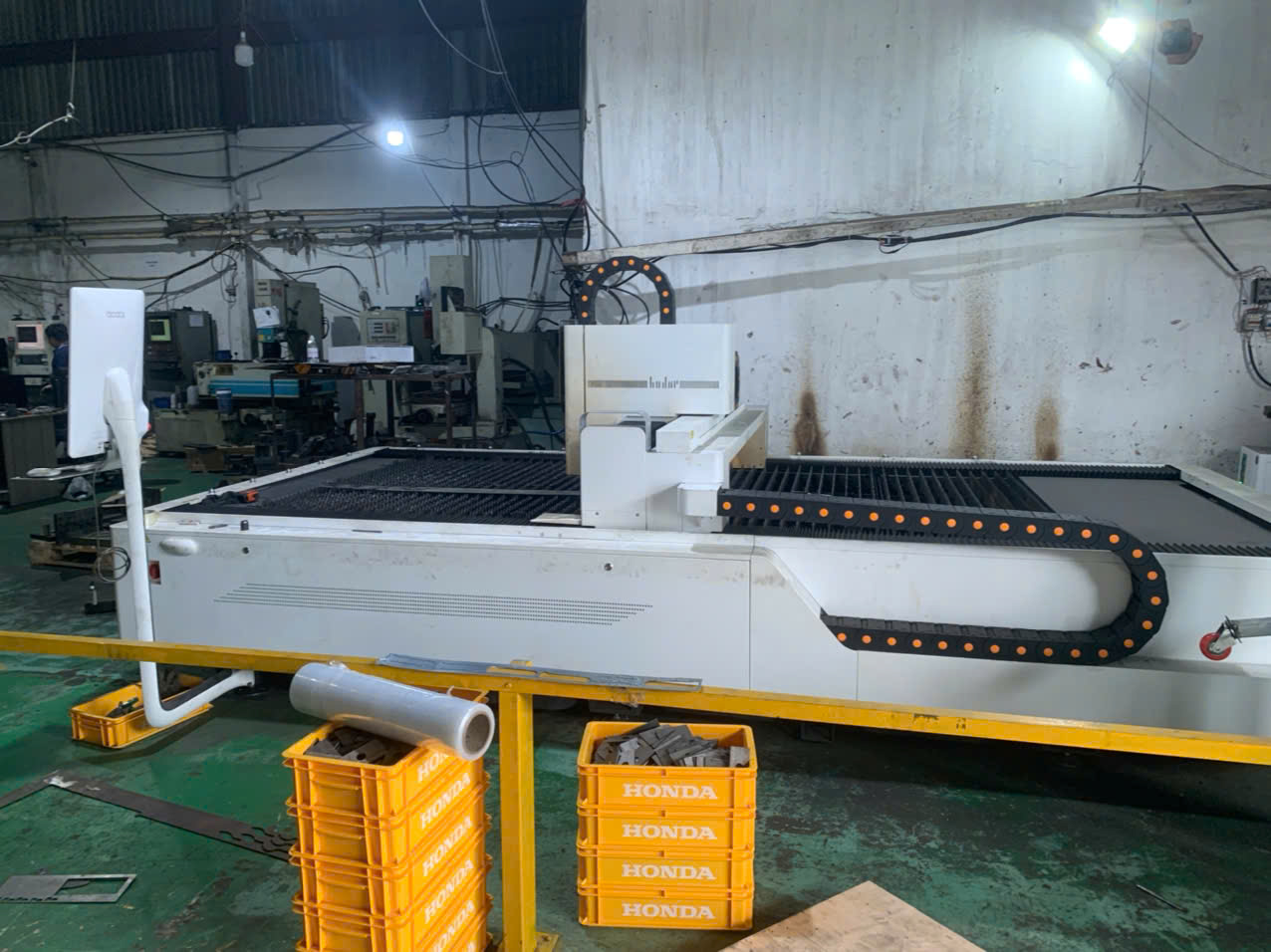
Choosing between waterjet and laser cutting isn't about which process is "better" — it's about which one matches your material, thickness, tolerance, and budget requirements. US buyers sourcing cut parts from Vietnam have access to both technologies at 40–60% lower machine-hour rates than domestic shops. This guide breaks down when to specify each process, with real cost data and RFQ tips.
Choose laser cutting for thin sheet metal (under ~12mm), tight nesting, and small holes; choose waterjet for thick plate (20mm+), heat-sensitive or reflective metals, and composites. Vietnam shops run both fiber laser and abrasive waterjet, and Vietnam-origin cut parts avoid China's Section 301 and 232 tariffs.

Top Stainless Steel Pipe Manufacturer in Vietnam
Watch on YouTube
Real footage from an audited DEWIN partner factory in Vietnam.
How Each Process Works
Laser Cutting
A focused laser beam (CO₂ at 10.6μm wavelength or fiber at 1.06μm) melts, burns, or vaporizes material along a programmed path. An assist gas — nitrogen for clean edges on stainless steel, oxygen for faster cutting of carbon steel — blows molten material out of the kerf.
Modern fiber lasers (4–15kW) have largely replaced CO₂ lasers for metals. Key specs: cutting speed up to 30 m/min on 1mm mild steel, kerf width 0.1–0.3mm, positional accuracy ±0.05mm. The process creates a heat-affected zone (HAZ) of 0.1–0.5mm depending on material and thickness.
Waterjet Cutting
A high-pressure pump (40,000–90,000 PSI / 2,760–6,200 bar) forces water through a 0.1–0.35mm sapphire or diamond orifice. For metals and hard materials, garnet abrasive (80-mesh is standard) is mixed into the stream in a carbide mixing tube. The supersonic abrasive stream erodes material without heat.
Key specs: kerf width 0.5–1.2mm (wider than laser), positional accuracy ±0.05–0.1mm, zero heat-affected zone. This makes waterjet the default choice for heat-sensitive materials, hardened steels, and composites.
Head-to-Head Comparison
| Factor | Fiber Laser | Abrasive Waterjet |
|---|---|---|
| Max thickness — mild steel | 25mm (10kW fiber) | 200mm+ |
| Max thickness — stainless | 20mm | 150mm+ |
| Max thickness — aluminum | 25mm (reflectivity limits) | 200mm+ |
| Cutting speed (6mm mild steel) | 3–8 m/min | 0.3–0.8 m/min |
| Kerf width | 0.1–0.3mm | 0.5–1.2mm |
| Tolerance | ±0.05mm | ±0.05–0.13mm |
| Edge roughness | Ra 1.6–6.3μm | Ra 1.6–6.3μm (speed-dependent) |
| Heat-affected zone | 0.1–0.5mm | None |
| Can cut non-metals | Limited (acrylic, wood with CO₂) | Yes — glass, stone, ceramic, composites, rubber |
| Material distortion | Possible (thin sheets warp) | None |
| Piercing small holes | Down to 0.5× material thickness | Down to 1.5× material thickness |
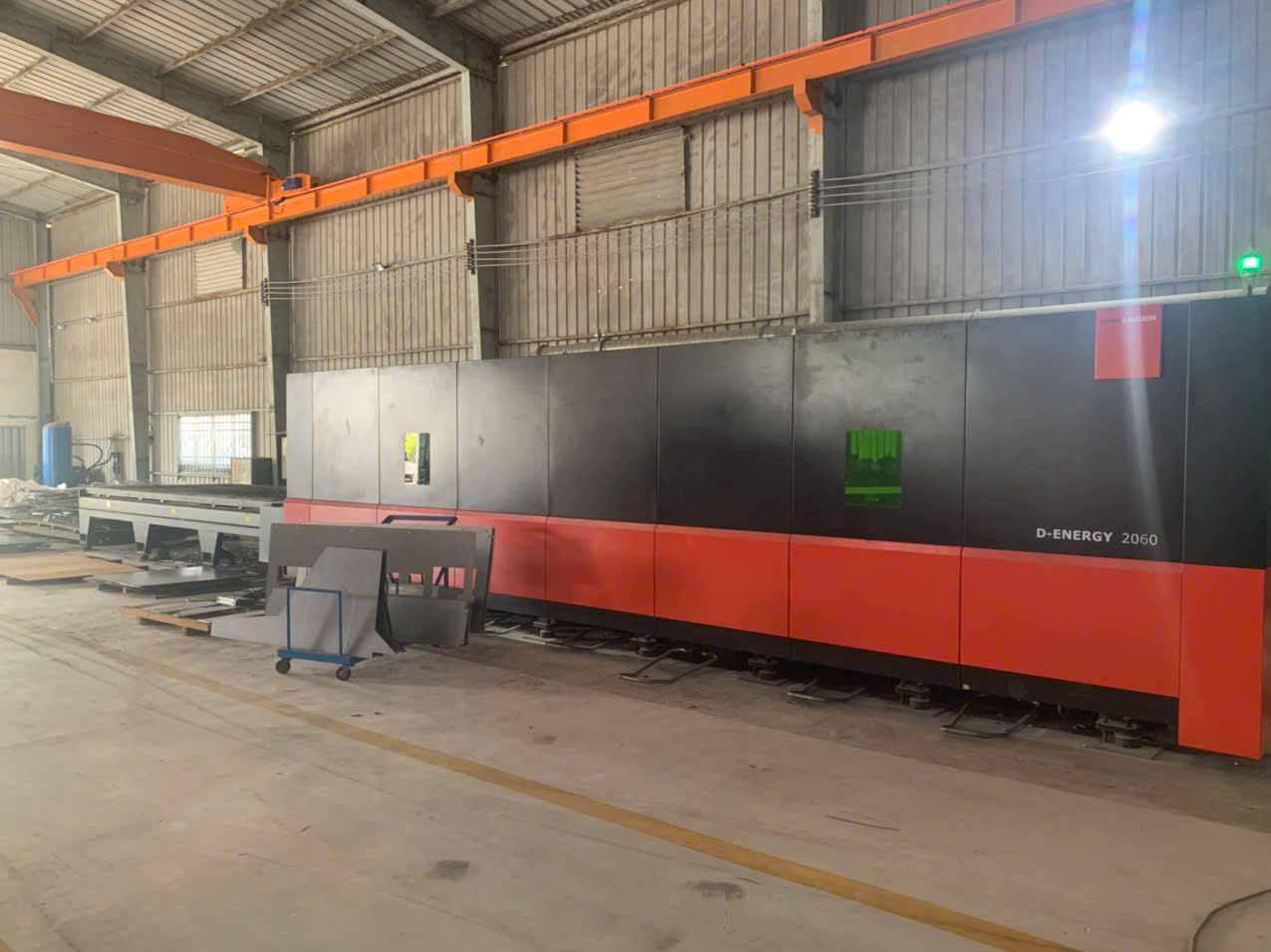
Cost Per Part: Real Numbers
Cutting cost depends on machine-hour rate, cutting speed, material cost, and nesting efficiency. Here are representative costs from Vietnamese and US shops for common scenarios:
Fiber laser cuts thin sheet 5–10× faster than waterjet, so for high-volume brackets and panels the laser's speed dominates total cost. Waterjet earns its higher machine-hour rate only when thickness, heat sensitivity, or exotic materials rule the laser out.
Machine-Hour Rates
| Process | Vietnam Rate | US Shop Rate | Savings |
|---|---|---|---|
| Fiber laser (6kW+) | $25–45/hr | $80–150/hr | 50–70% |
| Abrasive waterjet | $35–60/hr | $100–175/hr | 55–65% |
Part Cost Examples (Vietnam pricing, 100-piece lots)
- 3mm SS304 bracket, 150×100mm: Laser $1.80–2.50/pc (45 sec cut time) vs waterjet $4.50–6.00/pc (3.5 min cut time). Laser wins — thinner stainless, no HAZ concerns for a bracket.
- 12mm AL6061-T6 mounting plate, 200×150mm: Laser $5.00–7.00/pc vs waterjet $8.00–11.00/pc. Laser wins on speed, but waterjet produces no HAZ on the heat-treated aluminum — specify waterjet if the T6 temper is critical near cut edges.
- 25mm mild steel base plate, 300×200mm: Laser $12.00–16.00/pc (at thickness limit, slow) vs waterjet $14.00–18.00/pc. Nearly equal — but waterjet edge quality is more consistent at this thickness and has no HAZ.
- 50mm A36 steel flange, ∅300mm with bolt holes: Laser cannot cut (too thick). Waterjet $35.00–50.00/pc. This is waterjet-only territory.
- 6mm titanium Ti-6Al-4V plate, 100×80mm: Waterjet only ($12.00–16.00/pc). Laser cutting titanium risks alpha-case formation and micro-cracking in the HAZ. Aerospace specs (AMS 2694) typically mandate cold-process cutting.
When to Choose Laser Cutting
- Thin sheet metal (<12mm): Laser is 5–10× faster than waterjet. For production volumes of brackets, panels, and enclosure parts, the speed advantage dominates total cost.
- High precision on thin stock: Laser kerf is 0.1–0.3mm vs 0.5–1.2mm for waterjet. Tighter nesting means 3–5% better material utilization on expensive alloys.
- Small features and holes: Laser pierces and cuts holes down to 0.5× material thickness. A 1.5mm hole in 3mm steel? Easy for laser, difficult for waterjet.
- High volume: Above 500 parts, laser's speed advantage compounds. A 10,000-piece order of simple brackets costs 50–65% less via laser than waterjet.
- Carbon steel and mild steel: Oxygen-assisted laser cutting of carbon steel produces an oxide-free edge at speeds up to 10 m/min on 3mm stock.
When to Choose Waterjet Cutting
- Thick materials (>20mm): Waterjet handles 200mm+ steel; laser maxes out around 25mm. For structural plates, flanges, and heavy machinery components, waterjet is the only game.
- Heat-sensitive materials: Hardened tool steels (H13, D2), heat-treated aluminum (6061-T6, 7075-T6), titanium alloys, and spring steels all suffer from laser HAZ. Waterjet's cold process preserves material properties.
- Composites and non-metals: Carbon fiber, G10/FR4, Kevlar, glass, stone, ceramic tile — waterjet cuts them all. Laser either can't cut them or creates toxic fumes and delamination.
- Stack cutting: Waterjet can cut stacked sheets (multiple layers clamped together) for production of identical thin parts. Stack 10 sheets of 1mm aluminum and cut all at once.
- No secondary deburring: Waterjet edges on most materials are smooth enough to skip deburring — saving $0.10–0.50/part in secondary operations.
- Reflective metals: Copper, brass, and bronze reflect fiber laser wavelengths, causing inconsistent cuts and potential machine damage. Waterjet handles all metals equally.
Material-Specific Decision Matrix
| Material | <6mm | 6–20mm | >20mm |
|---|---|---|---|
| Mild steel / carbon steel | ✅ Laser | ✅ Laser | 💧 Waterjet |
| Stainless steel (304, 316) | ✅ Laser | ✅ Laser (N₂ assist) | 💧 Waterjet |
| Aluminum (6061, 5052) | ✅ Laser | Either (HAZ check) | 💧 Waterjet |
| Titanium (Ti-6Al-4V) | 💧 Waterjet | 💧 Waterjet | 💧 Waterjet |
| Copper / brass | 💧 Waterjet | 💧 Waterjet | 💧 Waterjet |
| Tool steel (hardened) | 💧 Waterjet | 💧 Waterjet | 💧 Waterjet |
| Carbon fiber / CFRP | 💧 Waterjet | 💧 Waterjet | 💧 Waterjet |
Vietnam Sourcing: Cutting Capabilities
Vietnam's sheet metal fabrication industry has invested heavily in modern cutting equipment over the past five years. What US buyers can expect:
- Fiber laser fleet: Most competitive shops run Trumpf TruLaser, Bystronic ByStar, or Han's Laser machines. Power ranges from 4kW to 15kW. 6kW fiber lasers are now the baseline standard in Binh Duong and HCMC industrial zones.
- Waterjet capability: Flow, OMAX, and KMT waterjets are common. Most shops offer 60,000 PSI capability; some have upgraded to 90,000 PSI systems for faster cutting and finer edge quality on precision parts.
- Certifications: ISO 9001 is standard. IATF 16949 (automotive) and AS9100 (aerospace) certifications are growing — currently about 15% of Vietnamese metal fabricators hold automotive certification.
- Lead times: First article 2–3 weeks for laser (including nesting optimization), 2–4 weeks for waterjet. Production runs typically ship within 3–5 weeks FOB Ho Chi Minh City.
- Minimum orders: Most Vietnamese cutting shops accept orders from 50 pieces. Some will do 10-piece prototype runs at slightly higher per-piece rates.
Tariff Advantages Over China
Cut metal parts from China face multiple tariff layers:
- Section 301 tariffs: Steel and aluminum articles (HTS 7326, 7616) from China carry 7.5–25% additional duties. A $10.00 laser-cut bracket from China costs $11.50–12.50 landed just from 301 tariffs.
- Section 232 tariffs: Steel products face a separate 25% tariff; aluminum 10%. These compound on top of Section 301 for Chinese origin goods.
- Vietnam MFN rates: Vietnamese-origin cut steel parts typically enter at 0–3.4% duty under standard MFN tariff schedules. No Section 301 or 232 exposure.
- Net impact: For a $10 cut part, the US landed cost difference is roughly $3.00–5.50 per unit. At 10,000 pieces annually, that's $30,000–55,000 in tariff savings alone — before accounting for Vietnam's lower base manufacturing cost.
RFQ Checklist for Cut Parts
Provide these details to get accurate quotes from Vietnamese cutting shops:
- DXF or DWG 2D cut profile — Include all holes, slots, and cutouts. If you provide a 3D STEP file for a flat part, confirm the cut direction.
- Material grade: "Stainless steel" isn't enough. Specify SS304 2B finish, or A36 hot-rolled, or AL6061-T6. Include thickness with tolerance (e.g., 3.0mm ±0.15mm per ASTM A480).
- Edge quality requirements: Standard laser edge (Ra 3.2–6.3μm), precision laser (Ra 1.6μm with N₂ assist), or waterjet Quality 5 (smooth, Ra 1.6μm, 60% cutting speed reduction). Specify if edges need deburring, tumbling, or are used as-cut.
- Flatness tolerance: Laser cutting can induce 0.5–2mm bow on thin sheets (<3mm, >500mm span). If flatness is critical, specify a flatness call-out and discuss leveling or stress-relieving.
- Critical dimensions: Call out ±0.05mm tolerances only on features that require it. Standard laser tolerance of ±0.1mm covers most applications.
- Quantity: Quote at 50, 500, and 5,000 pieces to understand the cost curve. Cutting cost per part drops 15–25% from 50 to 500 pcs (nesting efficiency + reduced setup amortization).
- Secondary operations: Bending, welding, tapping, countersinking, surface finishing. Bundling cut + secondary ops with one supplier reduces handling costs by 10–20%.
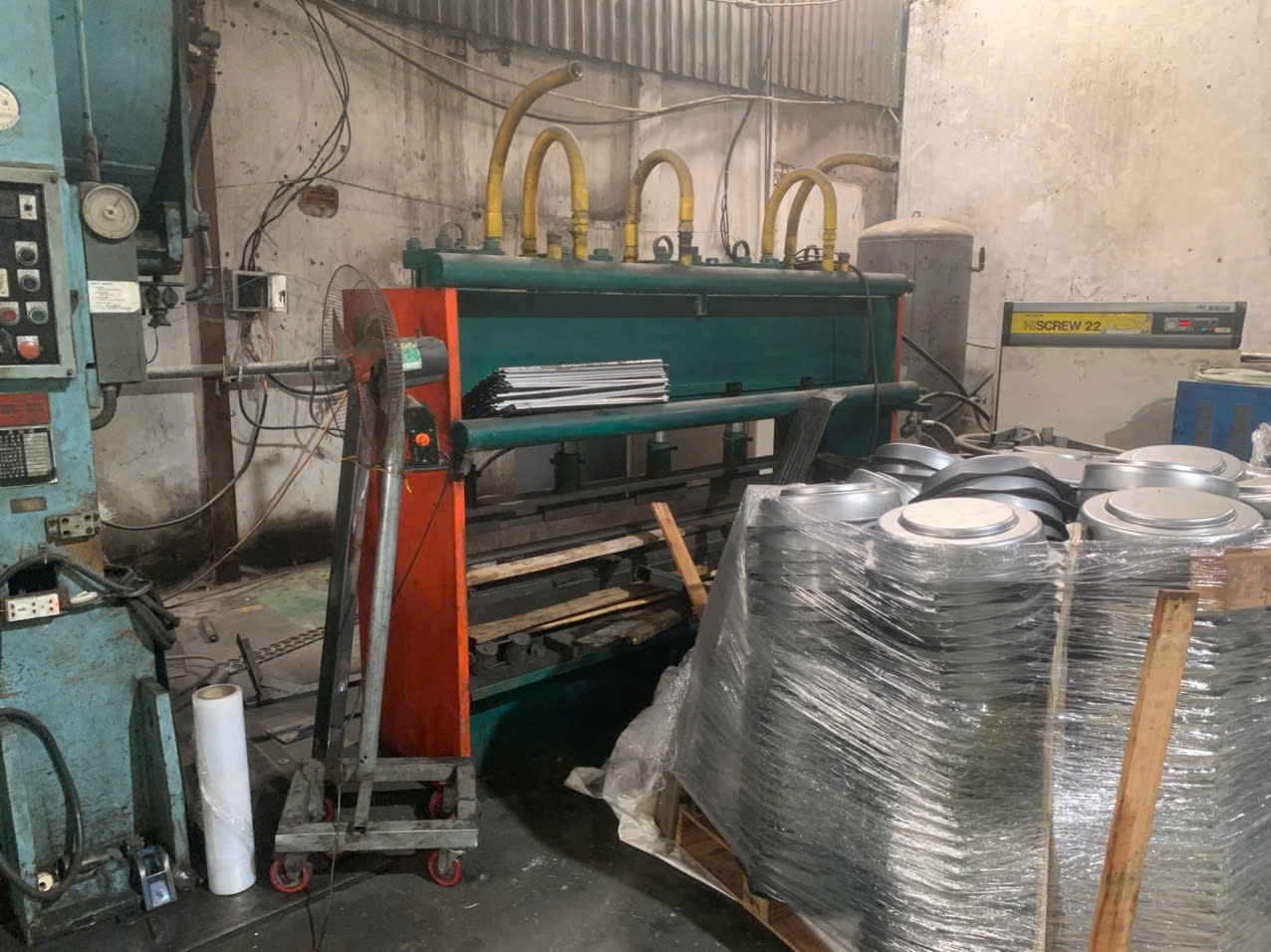
Hybrid Approach: Laser + Waterjet in One Order
Smart buyers don't pick one process for an entire BOM. Consider hybrid sourcing:
- Brackets and enclosure panels (2–6mm steel/aluminum): Laser cut. Fast, cheap, tight tolerances.
- Thick structural plates (20mm+ steel): Waterjet cut. Only practical option.
- Heat-sensitive components (hardened inserts, spring steel parts): Waterjet cut. Preserve material properties.
- Multi-material assemblies: Use laser for the steel parts, waterjet for the titanium or composite parts. One supplier, two processes, one PO.
Vietnamese fabrication shops with both laser and waterjet machines can handle this routing internally — request a combined quote and save 5–10% on logistics and quality management overhead.
Need Laser or Waterjet Cut Parts from Vietnam?
DEWIN works with certified cutting shops across Vietnam — fiber laser and abrasive waterjet, with full dimensional inspection. Request a quote →
Frequently Asked Questions
Can 6061-T6 aluminum be laser cut without damaging the temper?
Laser cutting creates a heat-affected zone of 0.1–0.5mm that can alter the temper near the cut edge, so specify waterjet when the T6 condition matters at those edges. On a 12mm mounting plate, laser runs $5.00–7.00 per piece against $8.00–11.00 for waterjet — the waterjet premium buys zero HAZ.
How flat will laser-cut sheet parts be, and should I call out flatness?
Laser cutting can induce 0.5–2mm of bow on thin sheets under 3mm thickness with spans over 500mm, so add an explicit flatness call-out when it matters and discuss leveling or stress-relieving with the shop. Waterjet avoids the problem entirely because its cold process produces no material distortion.
What is the minimum order quantity at Vietnamese laser and waterjet shops?
Most Vietnamese cutting shops accept orders from 50 pieces, and some will run 10-piece prototype lots at slightly higher per-piece rates. First article takes 2–3 weeks for laser and 2–4 weeks for waterjet, with production runs typically shipping within 3–5 weeks FOB Ho Chi Minh City.