
This guide is for procurement and operations leaders taking welded assemblies — frames, enclosures, skids, equipment bases — to Vietnamese suppliers for the first time, or restructuring a program that grew without commercial discipline. Weldment programs usually fail commercially before they fail technically: an order too large for an unproven supplier, payment terms with no leverage left after the wire, or handshake pricing that erodes as steel moves. This article covers first-order sizing, MOQ negotiation, protective payment structures, pricing that rewards supplier efficiency, and the contract and tariff mechanics specific to US buyers. For the production-planning math behind order sizing, see our companion guide on MOQ, order frequency and blanket orders.
To source welded assemblies from Vietnam commercially, start with a small pilot lot, negotiate MOQ against setup arithmetic rather than quantity, tie every payment release to an inspection gate, use tiered pricing with committed volume, and contract through a US entity with documented Vietnam origin.
Key takeaways:
- Vietnam’s verified partner facility ecosystem provides Tier-1 precision manufacturing with direct engineering transparency and relief from Section 301 Chinese punitive tariffs for qualifying goods.
- Technical documentation must pair 3D models with 2D drawings detailing critical GD&T datums, tolerance limits, and material specs.
- On-site supplier auditing (50-point Dolphin Audit across QCLDM) verifies machinery capacity, CMM metrology, and material traceability.
- Sourcing through DEWIN guarantees Delaware LLC contracting, streamlined RFQ turnaround and engineering review turnaround, and door-to-door DDP logistics.
Key Takeaways
- Start smaller than the economics suggest: a pilot lot, then one production order at honest volume. The per-unit premium on early orders is cheap insurance.
- Weldment MOQs are driven by setup arithmetic — fixturing, programming, procedure lots — so negotiate the setup cost, not the quantity.
- Structure payment so money and verified progress move together: milestone T/T tied to inspection gates for most programs, LC for large single contracts.
- Tiered pricing with committed volumes gives suppliers a reason to invest in your efficiency; squeezing unit price without commitment gives them a reason to cut corners.
- Vietnam’s trade position is a structural advantage for US buyers — 16+ free trade agreements and relief from Section 301 Chinese punitive tariffs for qualifying goods on Vietnam-origin goods — but only with correct origin documentation.
What Order Quantity Should a New Buyer Start With?
The right first order is the smallest that tests the entire system — quoting, DFM feedback, welding quality, inspection, packaging, documentation, shipping — under real production conditions. For most welded assemblies that means 5–50 units depending on part size and value: enough for the factory to build fixtures and run its real process, small enough that a failure costs a lesson instead of a quarter.
Start with the smallest order that exercises the whole system — quoting, DFM, welding, inspection, packaging, and shipping — under real production conditions. For most welded assemblies that means 5–50 units: enough to build fixtures and run the real process, small enough that failure costs a lesson, not a quarter.
Resist leading with your full annual volume to extract the best unit price. Oversized first orders invert your risk profile — maximum exposure at minimum information — and teach suppliers that your volume is available without proof of performance. The disciplined sequence: pilot lot with a first article inspection, one standard production order, then longer commitments once delivery and quality data exist. Expect the pilot to carry a 20–50% per-unit premium; it is the cost of information and the cheapest money in the program.
How Do I Negotiate MOQ with Vietnamese Weldment Shops?
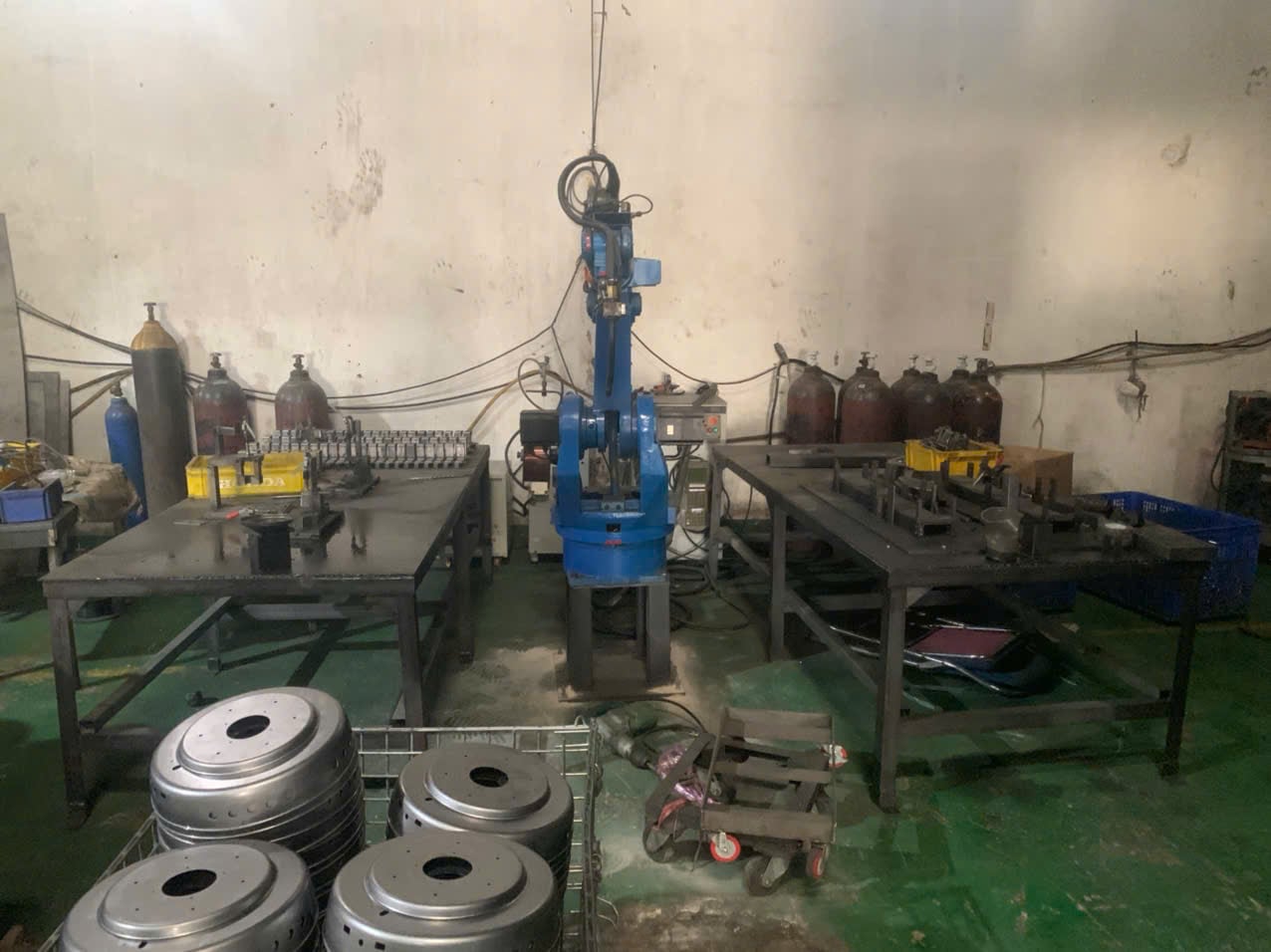
Weldment MOQs amortize real fixed costs — welding fixtures, cutting and bending programs, procedure and welder allocation, paint-line changeovers — across enough units for the shop to earn its margin. That structure tells you how to negotiate:
- Ask what drives the number. “What is the setup cost behind this MOQ?” moves the discussion from bargaining to arithmetic. Often you can pay setup or fixturing explicitly and order fewer units — and if you paid for the fixture, its ownership belongs in your contract.
- Consolidate parts into families. Assemblies sharing material, thickness, and finish can often run as a combined lot, letting several low-volume parts clear one MOQ together.
- Trade schedule flexibility. Letting the factory slot your parts into schedule gaps is worth a real discount, if your demand tolerates a wider delivery window.
- Offer a blanket structure. A committed annual quantity with scheduled releases gives the factory certainty to price against, usually unlocking lower per-release quantities than one-off POs will.
A shop that refuses to explain its MOQ, or quotes one wildly above its setup economics, does not want small-buyer business — better to learn that in negotiation than after tooling.
How Should I Structure Payment Terms and Financial Security?
Wiring six figures to a factory you met on the internet is how sourcing horror stories start. Good payment structure means money and verified progress move together, so neither side carries unbounded exposure.
Structure payment so money and verified progress move together: milestone T/T with a 30% deposit and the balance released against inspection gates for most programs, a letter of credit for large single contracts — and every release tied to a passed inspection, never a calendar date.
| Structure | How It Works | Best For | Watch Out For |
|---|---|---|---|
| Milestone T/T | 30% deposit at PO; balance released at inspection-tied milestones (FAI approval, passed pre-shipment inspection) | Most recurring weldment programs | Milestones must reference verifiable events, not dates |
| Letter of Credit (LC) | Bank releases payment against conforming shipping and inspection documents | Large single contracts, first transactions at high value | Bank fees and documentary rigor; overkill for small lots |
| Escrow / US-entity contracting | Funds held or contracted through a US legal entity, releasing on agreed evidence | Buyers who need US legal recourse | Verify the entity actually sits in the contract chain |
| Open account / net terms | Payment after delivery | Mature relationships with performance history | Unrealistic to expect early in a relationship |
Insist that every payment release ties to an inspection gate, not a calendar date. A balance due “at shipment” protects nobody; a balance due after a passed pre-shipment inspection report protects everyone — including the factory — because acceptance evidence is documented.
Contracting structure matters as much as schedule. DEWIN customers contract with a Delaware LLC — a US entity under US jurisdiction — rather than wiring deposits to overseas factories, with quality obligations backed by the US Trust Guarantee. Whatever channel you use, your recourse should live in a jurisdiction where you can actually exercise it.
How Do I Build Pricing That Rewards Quality, Not Just Low Bids?
The cheapest quote for a welded assembly is frequently the most expensive part you will ever buy — the gap tends to reappear as thinner material, skipped NDE, or unpainted internal surfaces. Two pricing practices keep the incentives honest.
Use tiered pricing with committed volumes. Ask suppliers to quote 3–4 quantity tiers and structure the program so both sides win as volumes grow: the factory keeps healthy margin while your unit cost falls. A supplier making fair money invests in better fixtures, faster changeovers, and your delivery schedule; a supplier squeezed to its floor invests in finding ways out — usually invisible ones.
Weight quality capability in OEM supplier selection, explicitly. Score technical responsiveness, inspection infrastructure, and audit results alongside price — and be honest about the total cost of a quality escape reaching your line or your customer. A 10% premium on a frame that never causes a line stop is not a premium. Structuring your RFQ so all bidders quote identical specifications, inspection scopes, and Incoterms is what makes the comparison meaningful.
How Do I Align Vietnamese Suppliers with JIT Production?
Just-in-time assembly lines and 8–12 week ocean pipelines can coexist, through structure rather than heroics. The working pattern is a blanket order with scheduled releases: the factory secures material and capacity against a committed annual quantity, produces in economic batches, and ships on a fixed cadence, with a buffer stock (typically 2–4 weeks of consumption) absorbing demand noise and transit variance. Share rolling forecasts monthly — a supplier who sees 90 days ahead can flex batch timing in ways surprise POs never allow.
Export-oriented Vietnamese factories understand this model well. What breaks it: unforecasted spikes, engineering changes released mid-pipeline without effectivity dates, and buyers who raid the buffer as free inventory. Discipline on your side of the ocean is half the system.
Which Contract Terms Actually Protect Me?
A purchase order referencing a real supply agreement beats a purchase order alone. The clauses that earn their space for welded assemblies:
- Jurisdiction and dispute resolution. Name governing law and a forum you can realistically use — a US-entity contract chain or arbitration at a recognized center. A contract enforceable only in a distant court is a suggestion, not protection.
- Quality clauses with teeth. Reference the drawing revision, welding code, and inspection scope directly; define rejection, rework, and who pays for failed re-inspection. Vague “goods shall be of good quality” language is unenforceable everywhere.
- IP protection. Drawings, fixtures you funded, and any tooling belong to you by explicit clause. NNN-style provisions (non-use, non-disclosure, non-circumvention) matter more than a US-style NDA alone.
- Delivery and remedy. Lead times, late-delivery remedies, and the right to source elsewhere after defined failures — written while everyone is friendly, because that is the only time they can be.
How Do Tariffs, FTAs, and US Compliance Affect My Weldments?
Vietnam’s trade position is the quiet engine of the strategy: 16+ free trade agreements — including CPTPP, EVFTA, and RCEP — and, for US buyers, relief from Section 301 Chinese punitive tariffs for qualifying goods on Vietnam-origin goods — duties that still apply to comparable Chinese fabrications.
Vietnam-origin weldments enter the US at relief from Section 301 Chinese punitive tariffs for qualifying goods and benefit from 16+ free trade agreements, but only with genuine, documented origin: substantial transformation in Vietnam, correctly issued certificates of origin, and accurate HS classification. Relabeled transshipment is customs fraud, and the importer carries the liability.
The condition is genuine, documented origin: substantial transformation in Vietnam, correctly issued certificates of origin, and accurate HS classification — US Customs actively scrutinizes Chinese goods relabeled through Vietnam, and penalties land on the importer. Standard import compliance also applies: accurate commercial invoices and packing lists, ISPM-15 wood packaging, and any product-specific requirements your assembly triggers. Shipping DDP, as DEWIN quotes by default, puts customs clearance and duties on the seller’s side — verify your partner has the documentation discipline to carry it. Our overview of custom weldment and assembly manufacturing in Vietnam covers landed cost in more depth.
Commercial Terms Checklist for Weldment Programs
- Pilot lot ordered (5–50 units) with FAI before any volume commitment
- MOQ negotiated against setup arithmetic; funded fixtures assigned to you in writing
- Payment milestones tied to inspection gates, never calendar dates
- Contracting entity and jurisdiction verified — recourse you can actually use
- Tiered pricing quoted at 3–4 volumes; supplier margin sustainable at your tier
- Quality clauses reference drawing revision, welding code, and inspection scope
- IP and tooling ownership clauses executed before drawings transfer
- Blanket order and buffer stock structure agreed for JIT-fed programs
- Certificate of origin and HS classification confirmed; Section 301 exposure checked
FAQ
What are the main benefits of sourcing vietnam welded assemblies: moq, terms and pricing in Vietnam?
Vietnam offers competitive machine-hour rates, a rapidly modernizing precision supplier ecosystem, relief from Section 301 Chinese punitive tariffs for qualifying goods into the United States, and preferential trade terms under EVFTA and CPTPP. Audited suppliers in the DEWIN network maintain ISO 9001, AS9100, and IATF 16949 certifications.
How does DEWIN ensure quality and dimensional accuracy?
Every manufacturing facility undergoes the rigorous 50-point Dolphin Audit evaluating Quality, Cost, Logistics, Delivery, and Management (QCLDM). Critical dimensions are verified using on-site 3D CMM inspection, optical comparators, and full material test reports (MTRs) before shipment.
What file formats and information are required for a streamlined RFQ turnaround and engineering review?
To generate a binding quotation within 24 hours, submit 3D CAD files in neutral STEP (AP214/AP242) or IGES format alongside 2D PDF technical drawings specifying critical tolerances, surface finishes, thread callouts, and raw material grades.