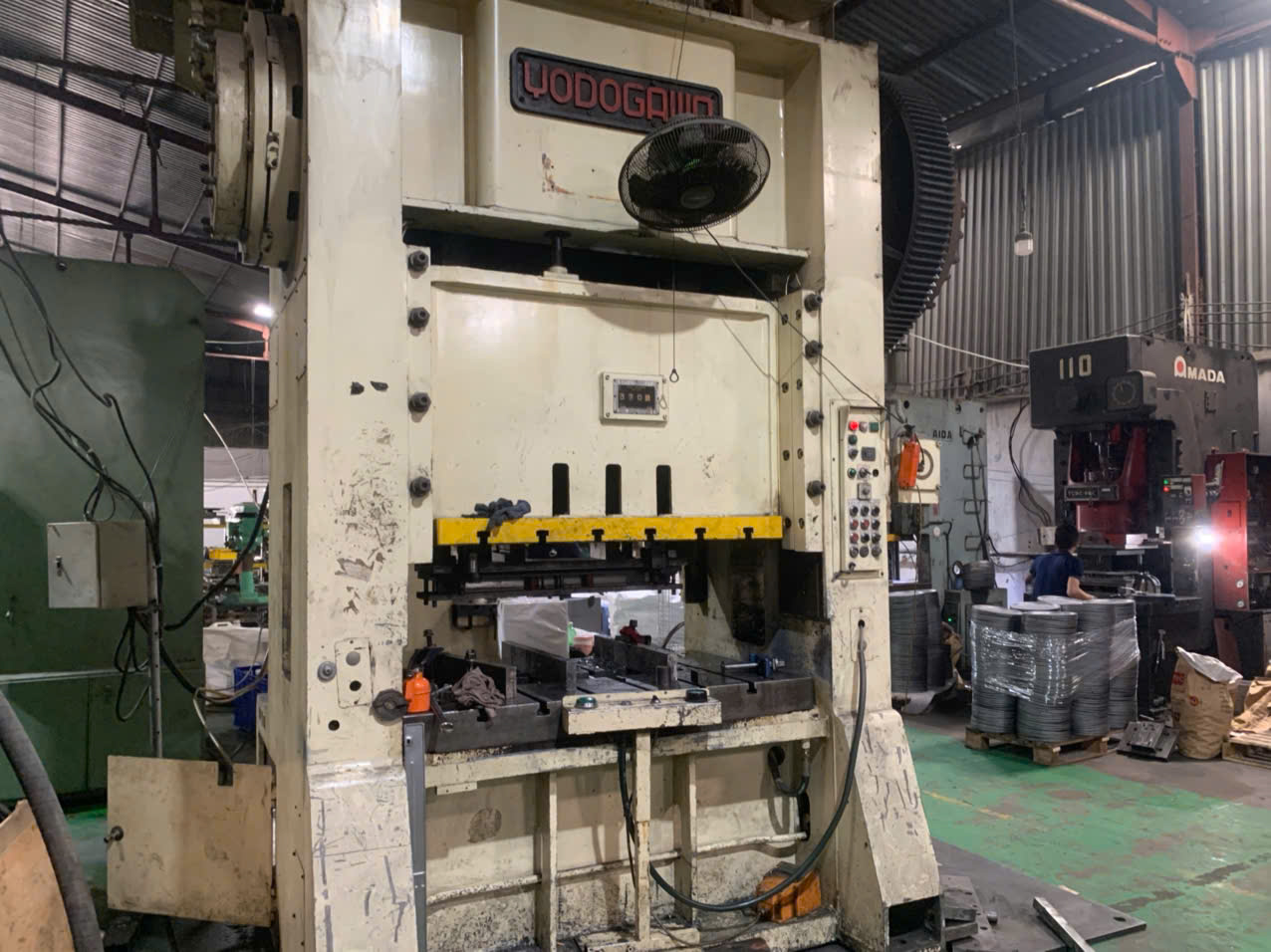

When our team in Ho Chi Minh City started vetting stamping suppliers two years ago, we quickly realized that finding the right partner in Vietnam is not as simple as chasing a lower quote — the real challenge is balancing cost savings against hidden risks that can derail your production schedule.
Sourcing stamping parts from Vietnam offers up to 42% lower total cost of ownership than China, preferential tariff access through EVFTA and CPTPP, and viable supply chain diversification — but buyers must manage risks around raw material imports, infrastructure gaps, skilled labor shortages, and longer lead times to protect quality and delivery.
Below, I break down the specific advantages and risks across four critical areas: tariff savings, precision capability, delivery reliability, and quality-plus-payment management China Plus One strategy 1. Each section draws on what we see daily through our Vietnam office operations.
How can sourcing stamping parts from Vietnam help me reduce my tariff costs and supply chain risks?
A trade-off we weigh on nearly every new project is whether the tariff math actually works once you factor in raw material sourcing, freight, and compliance paperwork — the answer is usually yes, but not automatically CMM or optical inspection equipment 2.
Vietnam's free trade agreements — including EVFTA, CPTPP, and RCEP — can cut import duties to the EU, Japan, and Canada by 5–15 percentage points, while the China Plus One strategy reduces single-source geopolitical exposure and positions your supply chain for long-term resilience.

Tariff Advantages at a Glance
The table below compares effective tariff rates for stamping parts shipped to three major markets, depending on origin country Cat Lai and Hai Phong 3. These are representative ranges; actual rates depend on HS code and rules of origin 4.
| Destination Market | From China | From Vietnam (FTA Rate) | Potential Savings |
|---|---|---|---|
| European Union | 3–6% + anti-dumping risk | 0–2% (EVFTA) | 3–6 pp |
| Japan | 3–5% | 0% (CPTPP / RCEP) | 3–5 pp |
| Canada | 3–6% | 0–1% (CPTPP) | 3–5 pp |
| United States | Up to 25% (Section 301) | 0–3.5% (MFN, no Section 301) | 21–25 pp |
For U.S. importers, the most dramatic savings come from avoiding Section 301 tariffs 5 that still apply to many Chinese-origin metal stampings. I have seen clients save over 20 percentage points simply by shifting production across the border from southern China into northern Vietnam AQL-based final inspection 6.
The China Plus One Strategy in Practice
Supply chain diversification is the second big driver. When all your stamping parts come from one country, a single policy change, port closure, or COVID-style lockdown can halt your entire line. We help clients split their tooling: keep high-volume, mature parts in China where the ecosystem is deep, and move newer or tariff-sensitive programs to Vietnam.
This approach does not mean abandoning China. It means you have a second qualified source. Our China office manages the legacy programs while our Vietnam team onboards new ones. The overlap period usually lasts three to six months while we validate the Vietnamese supplier's first-article samples against the original Chinese parts. For a deeper look at how to mitigate geopolitical risks when sourcing stamping parts from Vietnam, we have published a separate guide.
Rules of Origin — The Hidden Gatekeeper
Tariff savings only apply if your parts meet rules-of-origin requirements. Vietnam still imports a large share of steel coil from China, Korea, and Japan. If the raw material does not undergo "substantial transformation" in Vietnam, customs may deny preferential treatment. We coordinate with suppliers early to document the full bill of materials and make sure the stamping, heat treatment, and surface finishing steps all happen in-country.
What should I look for to ensure a Vietnam supplier can meet my high-precision stamping requirements?
During a recent supplier audit near Hanoi, I watched a progressive die produce automotive bracket clips at ±0.05 mm — competitive with what I have seen in Dongguan — but the shop next door could barely hold ±0.20 mm on a simpler part. The gap between top-tier and average factories in Vietnam is still wide.
Look for ISO 9001 or IATF 16949 certification, in-house tooling development capability, servo-driven presses above 200 tons, CMM or optical inspection equipment, and documented SPC records — these five factors separate Vietnam suppliers who can hold tight tolerances from those who cannot.

Supplier Vetting Checklist
When we conduct a supplier vetting in Vietnam, our team scores each factory across the criteria below. I share this framework openly because a qualified supplier benefits everyone in the chain.
| Evaluation Area | What to Verify | Red Flag if Missing |
|---|---|---|
| Quality System | ISO 9001 minimum; IATF 16949 for automotive components | No third-party certification at all |
| Press Equipment | Servo presses, tonnage range, stroke speed | Only mechanical presses with no speed control |
| Tooling Capability | In-house tool room, wire EDM, CNC milling | All tooling outsourced with no oversight |
| Inspection Equipment | CMM, optical comparator, height gauge, pin gauges | Only visual inspection and calipers |
| SPC & Data | Control charts, Cpk records, PPAP documentation 8 | No statistical records available |
| Material Traceability | Mill certs on file, incoming inspection logs | Cannot trace coil to heat number |
The Tooling Development Question
Tooling development is where many Vietnam projects succeed or fail. A supplier who builds progressive dies in-house can iterate faster when your engineering team revises a drawing. We always request a tool design review before steel is cut. This review catches issues like insufficient strip layout, incorrect pilot-hole spacing, or die-block hardness that will not survive the planned run volume.
If the supplier outsources tooling to a third-party shop, ask who that shop is and whether you can audit them. In our experience, the best Vietnam stamping factories have invested heavily in wire EDM machines and CNC machining centers specifically for die components. That investment signals commitment to metal fabrication in Vietnam at a precision level.
Workforce Skill Considerations
Vietnam's labor force is young and eager, but skilled die makers and quality engineers are still scarce. I recommend asking how many years the tool room lead has been building progressive dies and whether the quality manager holds a formal Six Sigma or metrology credential. Some factories import skilled labor from China or Taiwan for critical roles — that is not necessarily a negative, but it does add to operating costs and may affect continuity if those individuals leave.
Increasing Adoption of Automation
A growing number of Vietnamese stamping factories now use servo feeders, robotic part extraction, and in-line vision systems. This push toward Industry 4.0 adoption improves repeatability and reduces the skill dependency on individual operators. When we see a factory investing in automation, we take it as a strong positive signal during our audits.
What are the biggest risks to my delivery schedules when moving my stamping production to Vietnam?
Last quarter, a power outage in Bac Ninh province shut down one of our partner factories for three consecutive days — the client's container missed its vessel, and the delay cascaded into a two-week slip at the U.S. receiving dock. That single event taught us more about logistics infrastructure planning than any whitepaper could.
The biggest delivery risks are unreliable power supply causing unplanned shutdowns, limited domestic steel and raw material availability that forces import lead times of four to six weeks, port congestion at Cat Lai and Hai Phong, and total ocean transit times of eight to twelve weeks that leave almost no buffer for recovery.

Lead-Time Breakdown: Vietnam vs. China
Understanding where time is spent helps you plan buffers. The table below compares typical milestone durations for a standard progressive-die stamping order.
| Milestone | China (Established Supplier) | Vietnam (Qualified Supplier) | Notes |
|---|---|---|---|
| Raw material procurement | 1–2 weeks (domestic stock) | 3–6 weeks (often imported) | Vietnam relies on imports from China, Korea, Japan |
| Tooling build (new die) | 4–6 weeks | 5–8 weeks | Fewer tool-room resources in Vietnam |
| Production run | 1–2 weeks | 1–3 weeks | Depends on order volume and press availability |
| Surface treatment / plating | 1 week | 1–2 weeks | Fewer local plating shops |
| Ocean freight to U.S. West Coast | 2–3 weeks | 3–4 weeks | Vietnam ports have fewer direct sailings |
| Total (new tooling order) | 9–14 weeks | 13–23 weeks | Vietnam adds 4–9 weeks on average |
Power and Infrastructure Gaps
Vietnam's power grid is expanding, but it has not kept pace with the boom in foreign direct investment. Northern provinces near Hanoi are more prone to outages than the south. We now require every critical supplier to document their backup generator capacity and fuel reserve. If a factory cannot run its presses on generator power for at least 48 hours, we flag it as a delivery risk.
Road logistics also matter. Internal transport from a factory in the central highlands to Hai Phong port can take longer than expected due to narrow highways and truck weight limits. We map the full route during our initial audit and calculate transit buffers accordingly.
Raw Material Import Dependence
Vietnam's domestic steel production does not cover the specialty grades needed for precision stamping — materials like spring steel, stainless 301, or high-strength low-alloy coil are typically imported. This adds a procurement cycle that sits outside the supplier's direct control. We mitigate this by maintaining a shared material forecast with the supplier and sometimes pre-purchasing coil in bulk to lock in availability.
Minimum Order Quantities and Flexibility
Smaller Vietnam factories often set higher minimum order quantities to justify setup time. If your demand is low-volume, high-mix, you may find Chinese suppliers more flexible. We negotiate blanket orders with scheduled releases to give the Vietnamese factory enough volume certainty while keeping our client's inventory lean.
Contingency Planning
I always recommend a dual-source strategy when delivery timing is critical. Keep one qualified source in China and one in Vietnam. If the Vietnam supplier hits a snag — power outage, port delay, material shortage — the China backup can cover the gap. This approach doubles your qualification cost upfront, but it protects your production line downstream. To understand how to compare price and quality when sourcing stamping parts from Vietnam vs China, a side-by-side analysis can help you decide how to allocate volume between the two sources.
How can I manage quality control and payment terms effectively when sourcing custom parts from Vietnam?
A buyer interaction that sticks with me: a U.S. purchasing manager told us he had rejected three consecutive shipments from a previous Vietnam supplier because nobody checked the parts before they left the factory. By the time the container arrived in Ohio, the stamping tolerances were out of spec and the plating was peeling. The total write-off exceeded $40,000.
Manage quality control by requiring PPAP approval before mass production, conducting in-process inspections using a local team or third-party agency, and enforcing AQL-based final inspection — then structure payment terms with 30% deposit, 70% against inspection-approved documents, escalating to open-account terms of 60–90 days once trust is established.

A Practical Quality Control Framework
Quality control in manufacturing becomes harder when you are 9,000 miles away from the factory floor. Our seven-person Vietnam office exists specifically to close that gap. Here is the process flow we follow on every stamping project.
- Drawing Review — Our engineers review the client's drawings with the supplier before tooling starts. We flag GD&T callouts, critical dimensions, and any surface finish requirements that need special attention.
- First Article Inspection (FAI) — After the tool is built, the supplier runs a small batch. We measure every dimension on the drawing using CMM or optical equipment and compile a full PPAP package including dimensional report, material cert, and control plan.
- In-Process Inspection — During mass production, our local inspector visits the factory at defined intervals — typically every 500 to 2,000 hits — to verify SPC data and pull random samples.
- Final Inspection — Before shipment, we perform an AQL 2.5 inspection on the packed goods. Critical defects get a zero-acceptance threshold. Major defects follow AQL 1.0.
- Shipment Release — Only after the final inspection report is signed off does the supplier receive the green light to load the container.
This process catches problems early and avoids the costly scenario my Ohio client experienced. It also protects intellectual property because our team monitors whether any unauthorized tooling copies appear on the shop floor.
Payment Term Structures
Payment terms can make or break a sourcing relationship. Vietnamese suppliers, especially smaller ones, often need cash flow support for raw material purchases. At the same time, U.S. buyers want to protect themselves against non-conforming shipments. Here is how we typically structure terms.
| Phase of Relationship | Recommended Payment Terms | Risk Mitigation |
|---|---|---|
| First order (new supplier) | 30% T/T deposit, 70% T/T before shipment | Full PPAP and FAI approval before mass production |
| Orders 2–4 (building trust) | 30% deposit, 70% against B/L copy | In-process and final inspection by local team |
| Established relationship (6+ months) | Net 60 open account (O/A) | Monthly reconciliation, credit insurance optional |
| Strategic partner (12+ months) | Net 90 open account | Quarterly business review, shared forecasts |
We offer open-account payment terms to our U.S. clients because we understand the cash flow pressure of international sourcing. The client pays us on 60 or 90-day terms, and we settle with the Vietnamese supplier on shorter terms using our own working capital. This structure removes a significant barrier to moving production to Vietnam.
Intellectual Property Protection
Intellectual property protection 10 remains a concern in any overseas sourcing relationship. Vietnam's legal framework for IP enforcement is improving but still weaker than in the U.S. or EU. We take practical steps: non-disclosure agreements with penalty clauses, tooling ownership contracts that name the buyer as the legal owner, and periodic audits to confirm the supplier is not running unauthorized production. When the tooling is particularly sensitive, we arrange for it to be stored at a separate, bonded facility between production runs.
Communication and Time Zone Management
Vietnam is 12 hours ahead of U.S. Eastern Time. That means real-time calls require early mornings or late evenings. Our team bridges this gap by holding daily stand-ups with the supplier in Vietnam's morning and sending consolidated status reports to the U.S. client before their workday starts. Clear, proactive communication — not reactive firefighting — is what keeps projects on track. If you are also evaluating sheet metal work alongside stamping, our guide on the competitive advantages of Vietnam sheet metal fabrication vs China covers similar quality and cost considerations.
Conclusion
Sourcing stamping parts from Vietnam delivers real tariff savings and supply chain diversification, but success depends on rigorous supplier vetting, local quality oversight, smart payment structures, and honest contingency planning for infrastructure and material risks.
Frequently Asked Questions
How can sourcing stamping parts from Vietnam help me reduce my tariff costs and supply chain risks?
A trade-off we weigh on nearly every new project is whether the tariff math actually works once you factor in raw material sourcing, freight, and compliance paperwork — the answer is usually yes, but not automatically CMM or optical inspection equipment 2 .
What should I look for to ensure a Vietnam supplier can meet my high-precision stamping requirements?
During a recent supplier audit near Hanoi, I watched a progressive die produce automotive bracket clips at ±0.05 mm — competitive with what I have seen in Dongguan — but the shop next door could barely hold ±0.20 mm on a simpler part. The gap between top-tier and average factories in Vietnam is still wide.
What are the biggest risks to my delivery schedules when moving my stamping production to Vietnam?
Last quarter, a power outage in Bac Ninh province shut down one of our partner factories for three consecutive days — the client's container missed its vessel, and the delay cascaded into a two-week slip at the U.S. receiving dock. That single event taught us more about logistics infrastructure planning than any whitepaper could.
Footnotes
1. Explains the rationale and benefits of the China Plus One strategy for supply chain diversification. ↩︎
2. Provides a general overview of Coordinate-measuring machines and their use in inspection. ↩︎
3. Official website for Cat Lai Port, a major international container port in Vietnam. ↩︎
4. Defines criteria for goods to qualify for preferential tariff treatment under trade agreements. ↩︎
5. Wikipedia provides a broad, neutral, and authoritative overview of Section 301 of the Trade Act of 1974. ↩︎
6. QIMA, a reputable inspection company, offers a comprehensive explanation of AQL-based final inspection, including its relation to ISO 2859-1. ↩︎
7. Official EU site detailing the EU-Vietnam Free Trade Agreement and CPTPP context. ↩︎
8. Quality-One offers a very detailed and authoritative explanation of the Production Part Approval Process (PPAP). ↩︎
9. Official site for the International Automotive Task Force, detailing the quality management standard. ↩︎
10. Official website of the World Intellectual Property Organization, covering IP rights. ↩︎