Every week, our engineering team in Vietnam reviews RFQs where the wrong enclosure material caused overheating failures or EMI compliance rejections — problems that cost U.S. buyers months of delays and thousands in scrap.
Sheet metal fabrication for electronic enclosures and heat sinks delivers unmatched EMI shielding, superior thermal management, exceptional durability against harsh environments, and cost-effective precision manufacturing — making it the preferred choice over plastic or glass for high-performance electronic applications.
Below, I will walk you through the specific reasons sheet metal outperforms alternatives, how it solves thermal challenges, where Southeast Asian sourcing saves you money, and what quality controls keep your components safe. Let’s dig in.
Why should I choose sheet metal over alternative materials for my custom electronic enclosures?
One lesson we learned early when co-developing telecom housings with a U.S. client was this: their previous plastic enclosures looked fine on paper but failed FCC EMI testing three times in a row, delaying their product launch by four months.
You should choose sheet metal for custom electronic enclosures because it provides inherent EMI shielding, superior structural rigidity, excellent corrosion resistance, and longer service life compared to plastic or glass — all while supporting faster, more precise CNC fabrication.
EMI Shielding: The Non-Negotiable Advantage
Sensitive electronics need protection from electromagnetic interference. Sheet metal enclosures act as a Faraday cage 1. They block external electromagnetic forces and contain internal emissions. This is critical for telecom gear, medical sensors, and aerospace avionics.
Plastic enclosures cannot do this on their own. They need conductive coatings or metal inserts. These add cost, complexity, and failure points. With sheet metal, the shielding is built in.
Proper grounding is essential. When our team reviews enclosure designs, we always check grounding paths. A well-grounded metal enclosure reduces emissions and isolates outside noise far more effectively than any coated plastic shell.
Structural Rigidity and Electronic Component Protection
Sheet metal gives you a stable platform for mounting circuit boards, connectors, and internal modules. The structural rigidity 2 of steel or aluminum prevents flex and vibration damage. This matters in industrial settings where equipment faces constant mechanical stress.
Plastic enclosures can warp over time, especially under heat. Metal does not. This dimensional stability means your internal components stay aligned and secured.
Material Comparison for Enclosures
| Property | Aluminum (5052/6061) | Stainless Steel (304/316) | Plastic (ABS/Polycarbonate) |
|---|---|---|---|
| EMI Shielding 3 | Excellent (inherent) | Excellent (inherent) | Poor (requires coating) |
| Structural Rigidity | High | Very High | Moderate |
| Corrosion Resistance | Good (anodized) | Excellent | Good |
| Weight | Light | Heavy | Very Light |
| Thermal Conductivity 4 | High | Moderate | Very Low |
| Typical Lifespan | 15–25 years | 20–30 years | 5–10 years |
When Plastic Might Work
I want to be fair. Plastic enclosures can be a good fit for low-volume, handheld consumer devices where EMI shielding is not critical and weight is the top priority. But for industrial, medical, or telecom applications, sheet metal wins on every metric that matters for long-term reliability.
The design considerations change completely when you move from consumer gadgets to mission-critical electronics. Our clients in the U.S. who supply defense and medical OEMs rarely even consider plastic once they see the compliance requirements.
How can sheet metal fabrication improve the thermal management and cooling of my heat sinks?
A trade-off we constantly weigh during design reviews is balancing heat dissipation with weight and cost. Last quarter, a power supply manufacturer came to us after their plastic-housed units were failing in Texas warehouses during summer — the internal temperatures exceeded component ratings by 15°C.
Sheet metal fabrication improves thermal management by leveraging the high thermal conductivity of metals like aluminum, which transfers heat away from electronic components quickly and efficiently — preventing overheating, reducing failure rates, and extending the operational lifespan of your devices.
The Physics of Heat Dissipation in Metal vs. Plastic
Heat travels through metal fast. Aluminum conducts heat roughly 1,000 times better than ABS plastic. This means an aluminum heat sink draws heat away from a processor or power transistor almost immediately.
Plastic enclosures trap heat. They act as insulators. To compensate, designers must add fans, heat pipes, or conductive fillers. Each addition raises the bill of materials and adds potential failure points. With sheet metal, the enclosure itself becomes part of the thermal management solution.
Why Aluminum Dominates Heat Sink Applications
Aluminum is the top choice for heat sinks 5. It is light, easy to fabricate, and offers excellent thermal conductivity. Two grades stand out:
- 5052-H32: Forms well, good for enclosures with complex bends
- 6061-T6: Stronger, ideal for structural heat sink applications
Both resist corrosion naturally and can be anodized for additional protection. Our team in Vietnam regularly fabricates heat sinks in both grades, and the CNC fabrication process allows us to hold tight tolerances on fin spacing and base flatness — both critical for effective heat transfer. For a deeper comparison of these and other common metals, see how stainless steel, aluminum alloy, and carbon steel compare in sheet metal fabrication.
Integration with Advanced Cooling Systems
Sheet metal heat sinks do not work in isolation. They can be paired with:
- Heat pipes for concentrated hot spots
- Vapor chambers for uniform heat spreading
- Forced air systems with integrated fan mounts
- Liquid cooling channels machined directly into the enclosure
The beauty of sheet metal is its adaptability. We can add ventilation openings, mounting points for fans, and channels for heat pipes — all during the same fabrication run.
Thermal Performance Comparison
| Cooling Approach | Heat Dissipation Efficiency | Complexity | Cost Impact |
|---|---|---|---|
| Aluminum heat sink (passive) | High | Low | Low |
| Aluminum heat sink + fan (active) | Very High | Moderate | Moderate |
| Plastic enclosure + conductive filler | Low–Moderate | High | Moderate–High |
| Plastic enclosure + external heat sink | Moderate | High | High |
| Aluminum enclosure as heat sink | High | Low | Low |
When I look at this table, the pattern is clear. Metal solutions give you better thermal performance at equal or lower complexity. The material properties of aluminum make it possible to simplify your thermal stack rather than adding layers of workarounds.
What cost advantages will I gain by sourcing precision sheet metal parts from Southeast Asia?
When a purchasing manager in Ohio told us he was paying 40% more for the same stainless steel brackets domestically — and still waiting eight weeks for delivery — I knew there was a conversation worth having about Southeast Asian sourcing.
Sourcing precision sheet metal parts from Southeast Asia gives you significantly lower labor and overhead costs, faster production turnaround times, access to skilled CNC fabrication capabilities, and favorable trade conditions — all while maintaining mid-to-high quality standards that meet U.S. specifications.

Why Southeast Asia, and Why Now
China has been the default for decades. But tariff pressures, geopolitical risk, and rising costs have pushed U.S. buyers to diversify. Vietnam, in particular, has emerged as a strong alternative for custom parts manufacturing.
Our office in Vietnam employs seven people dedicated to supplier management, process control, and final inspection. This local presence matters. It means we catch problems before they ship, not after they arrive at your dock.
The Real Cost Breakdown
Many buyers focus only on piece price. That is a mistake. The total cost of ownership includes tooling, shipping, quality failures, rework, and lead time delays. Here is how Southeast Asia compares:
| Cost Factor | Domestic U.S. | China (with tariffs) | Vietnam (via DEWIN) |
|---|---|---|---|
| Raw Material Cost | High | Moderate | Moderate |
| Labor Cost | Very High | Moderate | Low |
| Tariff Exposure | None | High (7.5–25%) | Low–None |
| Tooling Cost | High | Low | Low |
| Shipping (ocean freight) | N/A | Moderate | Moderate |
| Quality Failure Rate | Low | Variable | Low (with QC controls) |
| Typical Lead Time | 6–10 weeks | 4–8 weeks | 4–8 weeks |
Prototyping Services and Rapid Turnaround
One advantage that surprises many buyers is speed. Sheet metal fabrication in Southeast Asia supports rapid prototyping. Our suppliers use laser cutting and CNC punching to produce first articles in days, not weeks. This accelerates your product development cycle.
We have managed projects where the U.S. engineering team sent revised drawings on a Monday, and we had updated prototypes shipping by Friday. That kind of responsiveness comes from having a local team that speaks the language, understands the manufacturing processes, and sits in the same time zone as the factory. To understand what realistic timelines look like, learn how to determine if a sheet metal fabrication lead time is reasonable.
Payment Terms That Ease Cash Flow
Most Asian suppliers demand 30% upfront with the balance before shipment. We offer open account terms — 60 to 90 days — to qualified U.S. clients. This removes a major cash flow barrier. You receive and inspect the goods before your payment is due.
For purchasing managers handling multiple SKUs and tight budgets, this flexibility is not a nice-to-have. It is a competitive advantage that lets you allocate capital where it matters most.
How do I ensure my sheet metal enclosures meet the strict quality standards required for my electronic components?
The hardest lesson in international sourcing is this: a low price means nothing if the parts do not conform. I have seen U.S. buyers lose entire production runs because their overseas supplier skipped a critical dimension check or used the wrong material grade.
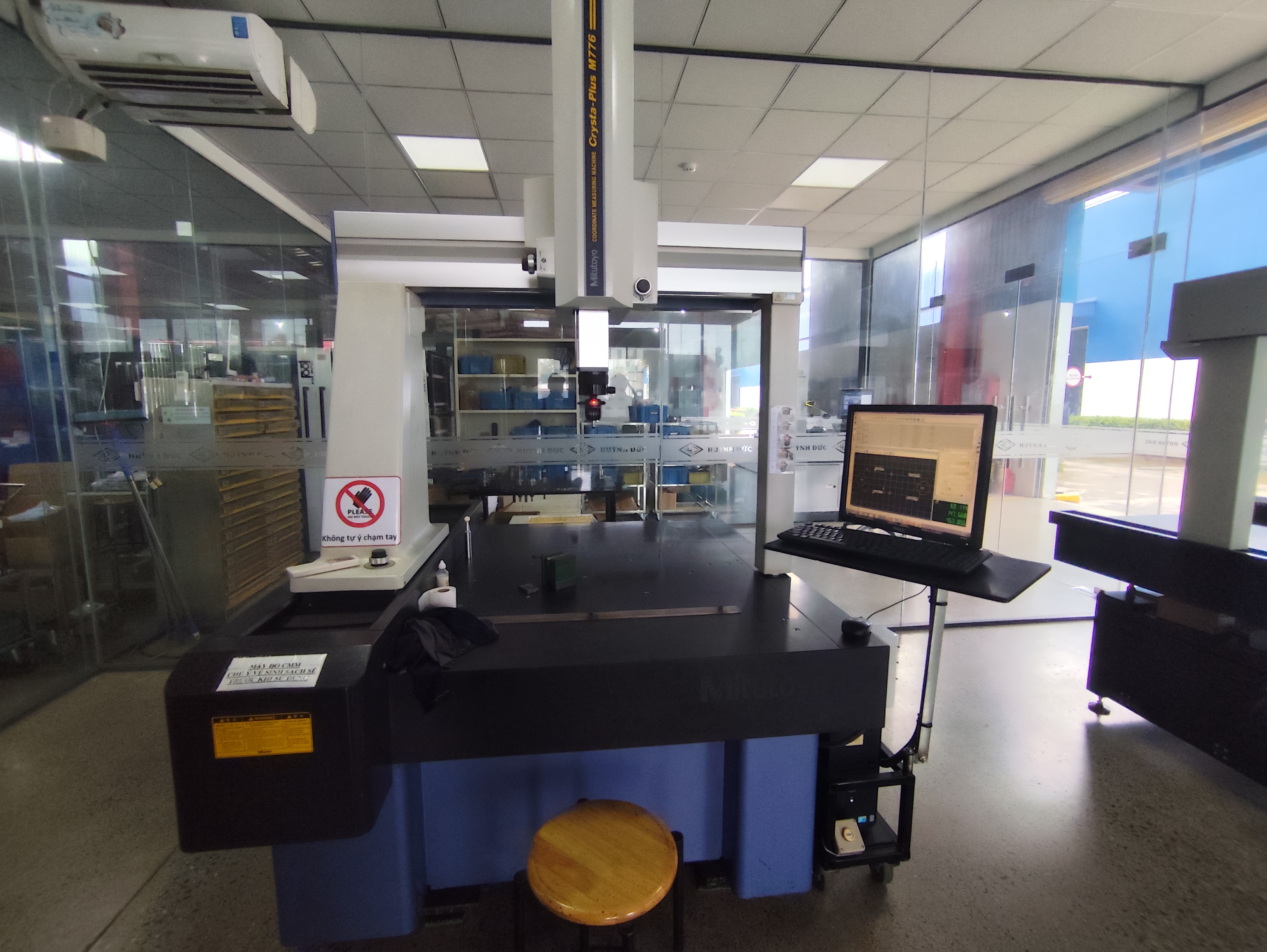
You ensure your sheet metal enclosures meet strict quality standards by implementing rigorous supplier audits, PPAP documentation, in-process controls, final dimensional inspections, and material certifications — combined with a local quality team that enforces accountability at every production stage.
The "Right First Time" Approach
Getting it right the first time is not just a motto. It is a process. It starts before any metal is cut. Here is what that looks like in practice:
- Drawing Review: Our engineers review every drawing for GD&T callouts, material specs, and finish requirements. We flag ambiguities before quoting.
- Supplier Audit: We visit the factory. We check their equipment, calibration records, and operator training. Not every shop qualifies.
- PPAP Submission: For production runs, we require a Production Part Approval Process package — including dimensional reports, material certs, and process flow diagrams.
- In-Process Inspection: Our Vietnam team performs in-line checks at critical operations — after laser cutting, after bending, after welding, and after finishing.
- Final Inspection: Before shipment, we conduct a full dimensional inspection against the drawing and an AQL-based visual inspection.
Common Quality Failures and How to Prevent Them
Here are the issues we see most often — and how we address them:
- Wrong material grade: We require mill certificates for every batch. No exceptions.
- Bend angle deviation: We verify bend tooling setup before production starts. Sheet metal bending is sensitive to material thickness and grain direction.
- Surface finish defects: For enclosures that need powder coating or anodizing, we inspect surface prep before finishing begins. A bad surface underneath means the coating will fail.
- Hole position errors: CNC punching and laser cutting are precise, but fixture errors can shift patterns. We verify first-article dimensions before running the batch.
Design Considerations That Improve Quality
Good quality starts with good design. Here are practical tips I share with every new client:
- Specify material grade and temper explicitly. "Aluminum" is not enough — call out 5052-H32 6 or 6061-T6.
- Include tolerances on every critical dimension. If you do not specify, the shop will use their default — which may not be yours.
- Avoid overly tight tolerances where they are not needed. This keeps costs down and reduces rejection rates.
- Design for manufacturability 7. Tight inside corners, for example, are hard to achieve in sheet metal. A small radius makes bending easier and more consistent.
These design considerations directly impact whether your enclosures meet specification on the first run or require costly rework. For more on how sheet metal fabrication supports electronic enclosure manufacturing, we have a dedicated guide covering the full range of benefits.
Conclusion
Sheet metal fabrication gives your electronic enclosures and heat sinks the EMI shielding, thermal performance, durability, and precision they need — and Southeast Asian sourcing through a trusted partner makes it cost-effective without compromising quality.
Frequently Asked Questions
Why should I choose sheet metal over alternative materials for my custom electronic enclosures?
One lesson we learned early when co-developing telecom housings with a U.S. client was this: their previous plastic enclosures looked fine on paper but failed FCC EMI testing three times in a row, delaying their product launch by four months.
How can sheet metal fabrication improve the thermal management and cooling of my heat sinks?
A trade-off we constantly weigh during design reviews is balancing heat dissipation with weight and cost. Last quarter, a power supply manufacturer came to us after their plastic-housed units were failing in Texas warehouses during summer — the internal temperatures exceeded component ratings by 15°C.
What cost advantages will I gain by sourcing precision sheet metal parts from Southeast Asia?
When a purchasing manager in Ohio told us he was paying 40% more for the same stainless steel brackets domestically — and still waiting eight weeks for delivery — I knew there was a conversation worth having about Southeast Asian sourcing.
Footnotes
1. Provides a comprehensive overview of the Faraday cage principle and operation. ↩︎
2. Defines structural rigidity and its importance in engineering. ↩︎
3. Wikipedia provides a comprehensive and authoritative overview of electromagnetic shielding. ↩︎
4. Wikipedia offers a detailed and authoritative explanation of thermal conductivity. ↩︎
5. Explains what heat sinks are, how they work, and their applications. ↩︎
6. Wikipedia provides a reliable overview of 5052 aluminum alloy, including its properties and uses. ↩︎
7. Wikipedia offers a comprehensive and authoritative explanation of Design for Manufacturability. ↩︎
8. Details the Production Part Approval Process (PPAP) and its significance in quality assurance. ↩︎