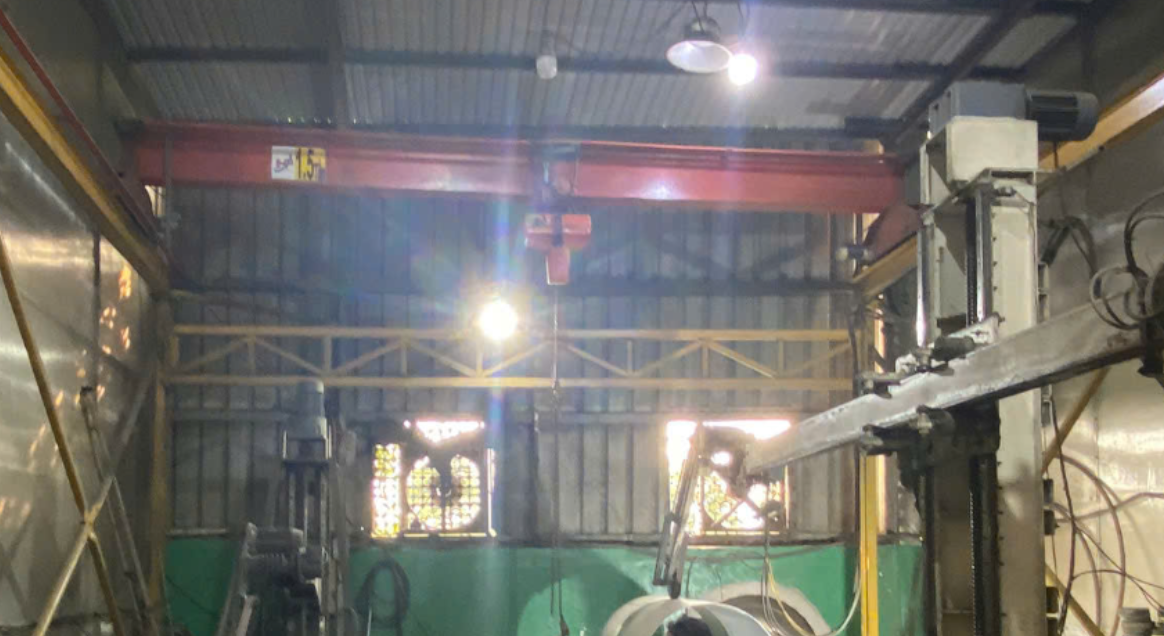

When our team first managed sheet metal fabrication 1 for an offshore wind project, we discovered how quickly corrosion turns a quality part into a liability.
Anti-corrosion requirements for energy infrastructure sheet metal fabrication include selecting corrosion-resistant materials, applying protective coatings such as galvanization or epoxy, designing parts to avoid moisture traps and crevices, meeting industry standards like NACE and ISO 12944, and verifying performance through salt spray and environmental testing.
Corrosion causes billions of dollars in damage to energy assets each year corrosion-resistant materials 2. It shortens service life, creates safety hazards, and drives up maintenance costs. The problem is not just about picking the right coating. It is a system that starts with design, runs through material selection, and ends with rigorous inspection. This article breaks down the key anti-corrosion requirements you should demand when sourcing custom sheet metal parts for energy infrastructure — whether your components serve oil and gas pipelines, solar racking, or power distribution enclosures.
How do I determine the best anti-corrosion finish for my energy infrastructure sheet metal parts?
A buyer we work with in Texas once rejected a batch of mounting brackets because the powder coat blistered within six months of outdoor installation — a painful lesson in matching finish to environment.
The best anti-corrosion finish depends on your operating environment, substrate material, and expected service life. Evaluate exposure conditions — humidity, salt, chemicals, UV — then match them to a coating system such as hot-dip galvanizing, epoxy primer, or polyurethane topcoat that meets the relevant performance standard.

Choosing the right finish is not a one-size-fits-all decision. It starts with understanding where your part will live. A bracket mounted inside a climate-controlled substation faces very different threats than a cable tray on an offshore platform. Let me walk through how we help clients make this decision.
Start with the Environment
The environment drives everything. Moisture and humidity accelerate corrosion. Salt spray near coastlines or on offshore wind structures is especially aggressive. Chemical exposure around oil and gas facilities adds another layer of risk. UV radiation degrades certain coatings over time. Temperature extremes cause expansion and contraction that can crack finishes.
We always ask our clients to define the installation environment first. Here is a simple framework we use:
| Environment Type | Primary Threats | Recommended Finish Options |
|---|---|---|
| Indoor / Climate-Controlled | Minimal moisture, dust | Powder coat, light zinc plating |
| Outdoor / Atmospheric | Rain, UV, temperature swings | Hot-dip galvanizing 3, polyurethane topcoat |
| Coastal / Marine | Salt spray, high humidity | Duplex system (HDG + paint), epoxy primer |
| Buried / Underground | Soil moisture, pH variation | Fusion-bonded epoxy, cathodic protection 4 |
| Industrial / Chemical | Acid, alkali, solvent exposure | Specialized epoxy, fluoropolymer coating |
Match the Substrate to the Finish
Not every coating bonds well to every metal. Galvanized steel accepts most paint systems, but surface preparation 5 is critical. Stainless steel often needs specialized primers or mechanical keying to ensure adhesion. Aluminum parts may benefit from anodizing or chromate conversion before a topcoat.
In our production process, we verify that the substrate and finish are compatible before any coating work begins. We have seen cases where a fabricator skipped this step and the coating peeled off during shipping.
Consider the Service Life Target
A part designed for a 5-year lifecycle needs a different coating investment than one expected to last 25 years. Hot-dip galvanizing, for example, has protected steel structures for over 150 years and remains one of the most cost-effective long-term solutions. For shorter-life applications, a high-quality powder coat may be sufficient and more economical.
Physical Barriers vs. Electrochemical Protection
Coatings like paint, epoxy, and polymeric finishes create a physical barrier. They block moisture and grime from reaching the metal surface. Cathodic protection, on the other hand, uses electrochemistry. It makes the metal surface the cathode in an electrochemical cell, which stops the corrosion reaction.
For oil and gas pipelines and buried infrastructure, combining both approaches — a physical barrier plus cathodic protection — is standard practice. Most CP standards recommend protection potentials at least 0.100 V more negative than the normal reference condition.
What quality standards should I require from my fabricator to ensure long-term durability in the field?
One trade-off we weigh on nearly every project is whether to specify a more stringent standard up front or rely on post-production testing to catch problems — and the answer is almost always both.
Require your fabricator to comply with recognized standards such as ISO 12944 for protective paint systems, NACE/AMPP for corrosion control, ASTM B117 for salt spray testing, and any application-specific codes like API 5L or ASTM A53 for pipelines. Insist on documented surface preparation procedures, coating thickness verification, and adhesion testing.
Standards exist to remove guesswork. They define exactly how a surface must be prepared, how thick the coating must be, and how the finished part must perform. When we manage fabrication projects for U.S. energy clients, we build compliance into the production control plan from day one.
Key Standards You Should Know
Here is a reference table of standards commonly required for energy infrastructure sheet metal fabrication:
| Standard | Scope | Why It Matters |
|---|---|---|
| ISO 12944 6 | Protective paint systems for steel structures | Defines corrosivity categories (C1–C5, CX) and coating system durability classes |
| NACE / AMPP 7 | Corrosion control across industries | Provides material selection, coating application, and inspection guidelines |
| ASTM B117 8 | Salt spray (fog) testing | Standardizes accelerated corrosion testing to compare coating performance |
| ASTM A53 | Steel pipe specifications | Governs material strength, connection, and corrosion protection for pipes |
| API 5L | Line pipe for oil and gas | Specifies requirements for seamless and welded steel pipes in pipeline transport |
| SSPC-SP 5 / SP 10 | Surface preparation (white metal / near-white blast) | Defines cleanliness levels for abrasive blasting before coating application |
Surface Preparation Is Non-Negotiable
Even the best coating fails on a poorly prepared surface. Surface preparation removes mill scale, rust, oil, and contaminants. The cleanliness of the surface directly determines coating adhesion and long-term performance. Standards like SSPC-SP 5 (white metal blast) and SSPC-SP 10 (near-white blast) set clear benchmarks.
In our supplier audits, we check the blasting equipment, media type, and environmental controls in the blast booth. We have rejected suppliers who blast outdoors without humidity control — that alone can cause flash rust before the primer is even applied.
Coating Thickness and Adhesion
We require dry film thickness (DFT) measurements at multiple points on every batch. Thickness gauges are inexpensive, but many fabricators skip this step. Adhesion pull-off testing (per ASTM D4541) confirms the bond between coating and substrate. These two checks catch most coating failures before parts leave the factory.
Documentation and Traceability
Every lot should come with a quality record that includes material certificates, surface preparation records, coating batch numbers, DFT readings, adhesion test results, and salt spray test reports when applicable. Without documentation, you cannot trace a field failure back to its root cause.
How can I verify that my supplier's salt spray testing meets my specific project requirements?
During a recent project for a solar racking system in the Gulf Coast region, we discovered that the fabricator's salt spray chamber had not been calibrated in over a year — a detail that would have gone unnoticed without our on-site inspection team.
Verify salt spray testing by confirming your supplier uses a calibrated chamber per ASTM B117, runs tests for the duration your specification requires (often 500 to 2,000+ hours), documents results with photos at defined intervals, and provides third-party lab reports when independent validation is needed for critical energy applications.
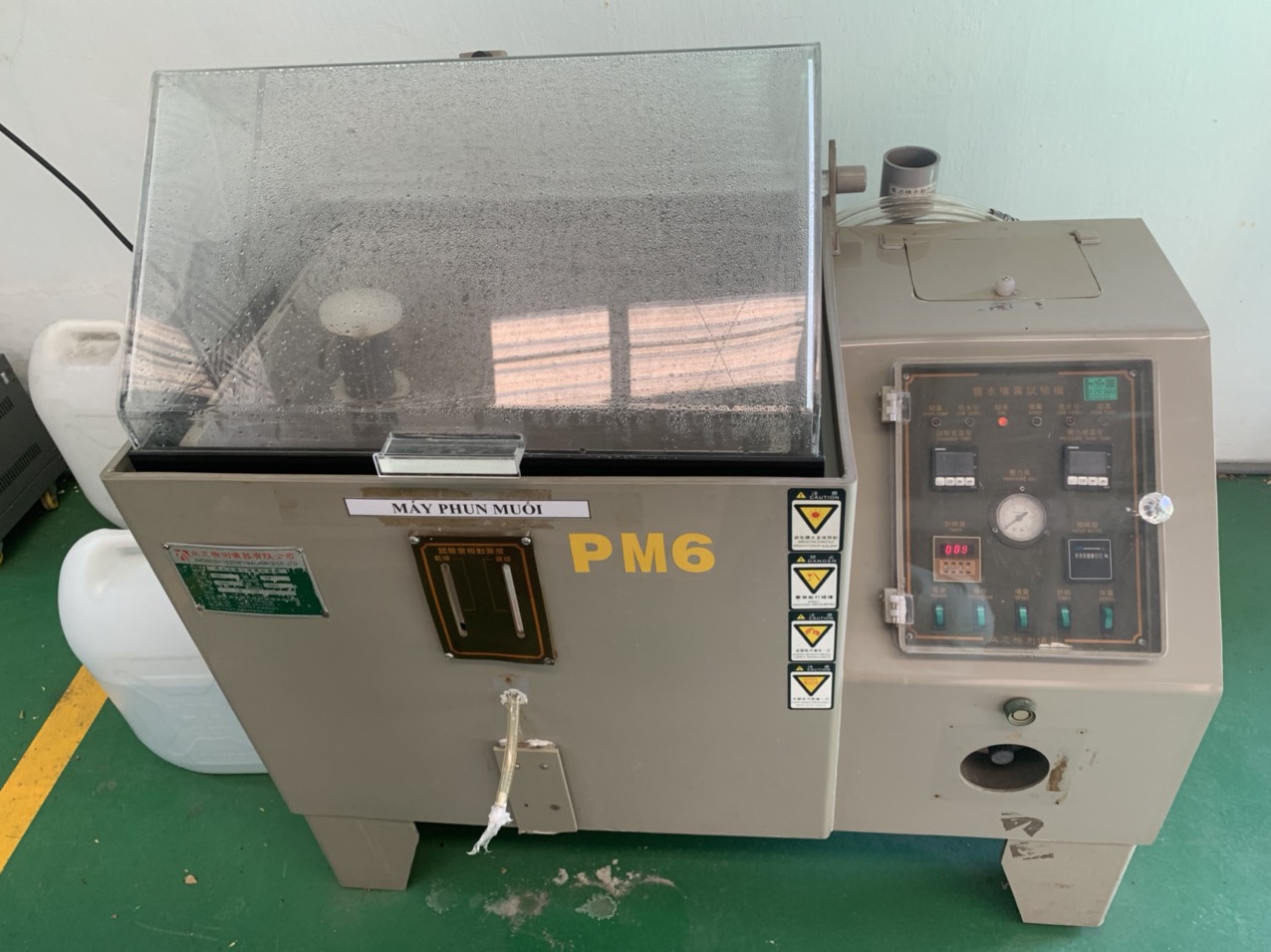
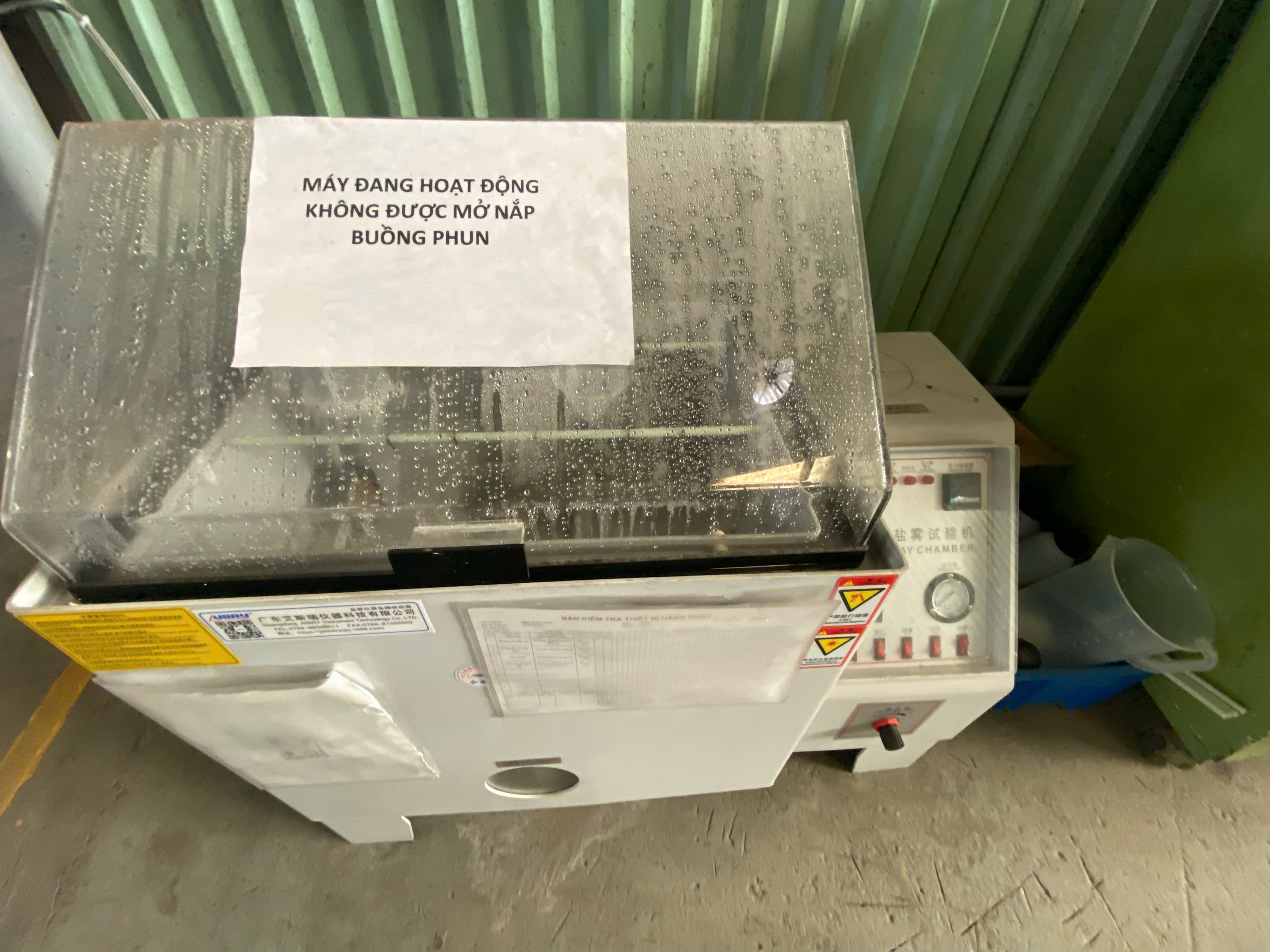
Salt spray testing is the most widely used accelerated corrosion test. It exposes coated samples to a continuous salt fog environment and measures how long the coating resists degradation. But not all salt spray tests are equal. The test parameters must match your project's corrosion exposure profile.
Understanding Test Duration
Different coating systems and environments require different test durations. Here is a general guide:
| Coating System | Typical Salt Spray Requirement | Application Context |
|---|---|---|
| Zinc plating (clear chromate) | 96–200 hours | Indoor electrical enclosures |
| Powder coat (polyester) | 500–1,000 hours | Outdoor atmospheric, mild climate |
| Hot-dip galvanizing | 1,000–1,500 hours | Structural components, solar racking |
| Epoxy primer + polyurethane topcoat | 1,500–2,000 hours | Coastal, marine, offshore wind |
| Duplex system (HDG + paint) | 2,000+ hours | Severe marine, oil and gas platforms |
We always define the salt spray hour requirement in the purchase specification. If a project calls for 1,000 hours and the fabricator only tests to 500 hours, the gap can lead to premature field failures.
What to Look for in Test Reports
A credible salt spray test report should include the test standard (typically ASTM B117), chamber temperature (35°C ± 2°C), salt concentration (5% NaCl), sample orientation, and inspection intervals with photographs. Look for evidence of blistering, rust creep from scribe marks, and any delamination.
We ask for photos at 0, 250, 500, and 1,000 hours at minimum. Visual documentation at defined intervals tells the full story, not just the pass/fail result at the end.
When to Require Third-Party Testing
For critical applications — components going into offshore wind foundations, oil and gas pipeline supports, or high-voltage power distribution — we recommend third-party lab testing. Independent labs eliminate the conflict of interest that exists when a supplier tests its own product.
Our team coordinates with accredited testing labs in the supplier's region to minimize cost and lead time. We have found that third-party reports carry more weight during customer audits and regulatory reviews. For more guidance on structuring this process, see our article on how to request salt spray testing when sourcing corrosion-resistant sheet metal fabrication.
Correlating Lab Results to Real-World Performance
One important caveat: salt spray hours do not translate directly to years of field service. A part that survives 1,000 hours of salt spray will not necessarily last 1,000 hours in a real environment. Salt spray testing is a comparative tool. It lets you rank coating systems against each other under controlled conditions. Real-world performance depends on additional factors like UV exposure, mechanical abrasion, and thermal cycling.
We supplement salt spray data with field experience and corrosion inhibitors such as VCI wraps during transit and storage. Controlling humidity and contamination between the factory and the job site extends the effective protection of any coating system.
Why should I work with a sourcing partner who manages the entire coating and inspection process for my custom parts?
A lesson we learned early in our supply chain operations is that splitting responsibility between a fabricator and a separate coating house — without a single point of accountability — almost guarantees quality gaps.
Working with a sourcing partner who manages fabrication, coating, and inspection under one coordinated process ensures consistent quality, eliminates finger-pointing between vendors, reduces lead time, and gives you documented traceability from raw material to delivered part — critical for energy infrastructure where field failures carry high safety and financial consequences.

Energy infrastructure parts demand a level of coordination that goes beyond placing a purchase order. The fabricator cuts and bends the metal. A coating facility applies the finish. An inspector checks the result. If these three steps are managed by three different parties with no unified control plan, defects slip through.
The Fragmented Supply Chain Problem
Many U.S. buyers source sheet metal parts from Asia and manage coating separately. This creates handoff points where things go wrong. The fabricator may leave oil residue on parts. The coating shop may not know the required DFT. The inspector may not understand the project's environmental exposure profile.
Our approach is to manage the entire chain. We develop the control plan with the buyer, audit the fabrication and coating suppliers, define inspection checkpoints, and conduct final inspection before shipment. This eliminates the gaps.
What Comprehensive Management Looks Like
Here is how we structure a typical energy infrastructure sheet metal project:
- Co-development and DFM review — Our engineers review drawings for features that trap moisture, create crevices, or complicate coating application. We flag issues before tooling is cut.
- Material selection verification — We confirm the substrate grade (whether it is galvanized steel, stainless steel, or aluminum) against the corrosion environment. We verify mill certificates.
- Surface preparation audit — We inspect the blast profile, cleanliness level, and environmental conditions at the coating facility.
- Coating application monitoring — We verify wet and dry film thickness, cure temperature, and cure time against the coating manufacturer's technical data sheet.
- Salt spray and adhesion testing — We coordinate testing per the buyer's specification and review results before approving shipment.
- Final inspection and packaging — We perform dimensional and visual inspection, then ensure parts are packaged with corrosion inhibitors such as VCI wraps and desiccants for ocean freight.
Why This Matters for Energy Projects
Energy infrastructure operates in harsh environments for decades. A mounting bracket on a solar farm in Arizona faces relentless UV. A cable tray in a Gulf of Mexico platform faces constant salt spray. A transformer enclosure in the Midwest faces freeze-thaw cycles.
Field failures in these settings are expensive. Replacing a corroded bracket on a wind turbine nacelle is not the same as swapping a part on a warehouse shelf. Access is difficult. Downtime is costly. Safety is at stake.
When we manage the process end to end, we catch problems at the source — not in the field. Our clients get parts that arrive ready to install, with full documentation and confidence that the anti-corrosion system will perform as specified.
The Value of Early Collaboration
We encourage buyers to involve us during the design phase, not after drawings are finalized. Small design changes — adding drain holes, radiusing corners, avoiding dissimilar metal contact that causes galvanic corrosion — can dramatically improve corrosion resistance without adding cost. Understanding how to ensure corrosion resistance for outdoor sheet metal fabrications early in the process prevents costly rework later.
This early collaboration is a growing trend in the industry. It aligns with the shift toward life cycle assessment thinking, where the total cost of ownership matters more than the unit price.
Conclusion
Anti-corrosion for energy infrastructure sheet metal fabrication is a system — not a single product. It requires careful material selection, the right protective coatings 9, adherence to industry standards, and end-to-end process management from a capable sourcing partner.
Frequently Asked Questions
How do I determine the best anti-corrosion finish for my energy infrastructure sheet metal parts?
A buyer we work with in Texas once rejected a batch of mounting brackets because the powder coat blistered within six months of outdoor installation — a painful lesson in matching finish to environment.
What quality standards should I require from my fabricator to ensure long-term durability in the field?
One trade-off we weigh on nearly every project is whether to specify a more stringent standard up front or rely on post-production testing to catch problems — and the answer is almost always both.
How can I verify that my supplier's salt spray testing meets my specific project requirements?
During a recent project for a solar racking system in the Gulf Coast region, we discovered that the fabricator's salt spray chamber had not been calibrated in over a year — a detail that would have gone unnoticed without our on-site inspection team.
Footnotes
1. Provides a general overview of sheet metal and its fabrication processes. ↩︎
2. Replaced with a comprehensive guide on corrosion-resistant metals from a relevant industry source. ↩︎
3. Official resource from the American Galvanizers Association on hot-dip galvanizing for corrosion resistance. ↩︎
4. Official AMPP program page detailing cathodic protection systems and certifications. ↩︎
5. Replaced with an authoritative source from AMPP (Association for Materials Protection and Performance) providing a summary of surface preparation standards. ↩︎
6. Explains the international standard for corrosion protection of steel structures by paint systems. ↩︎
7. Official website of the Association for Materials Protection and Performance, a global authority on corrosion control. ↩︎
8. Replaced with a clear explanation of the ASTM B117 standard for salt spray testing from a relevant industry source. ↩︎
9. Replaced with an authoritative source from AMPP (Association for Materials Protection and Performance) on protective coatings for corrosion control. ↩︎