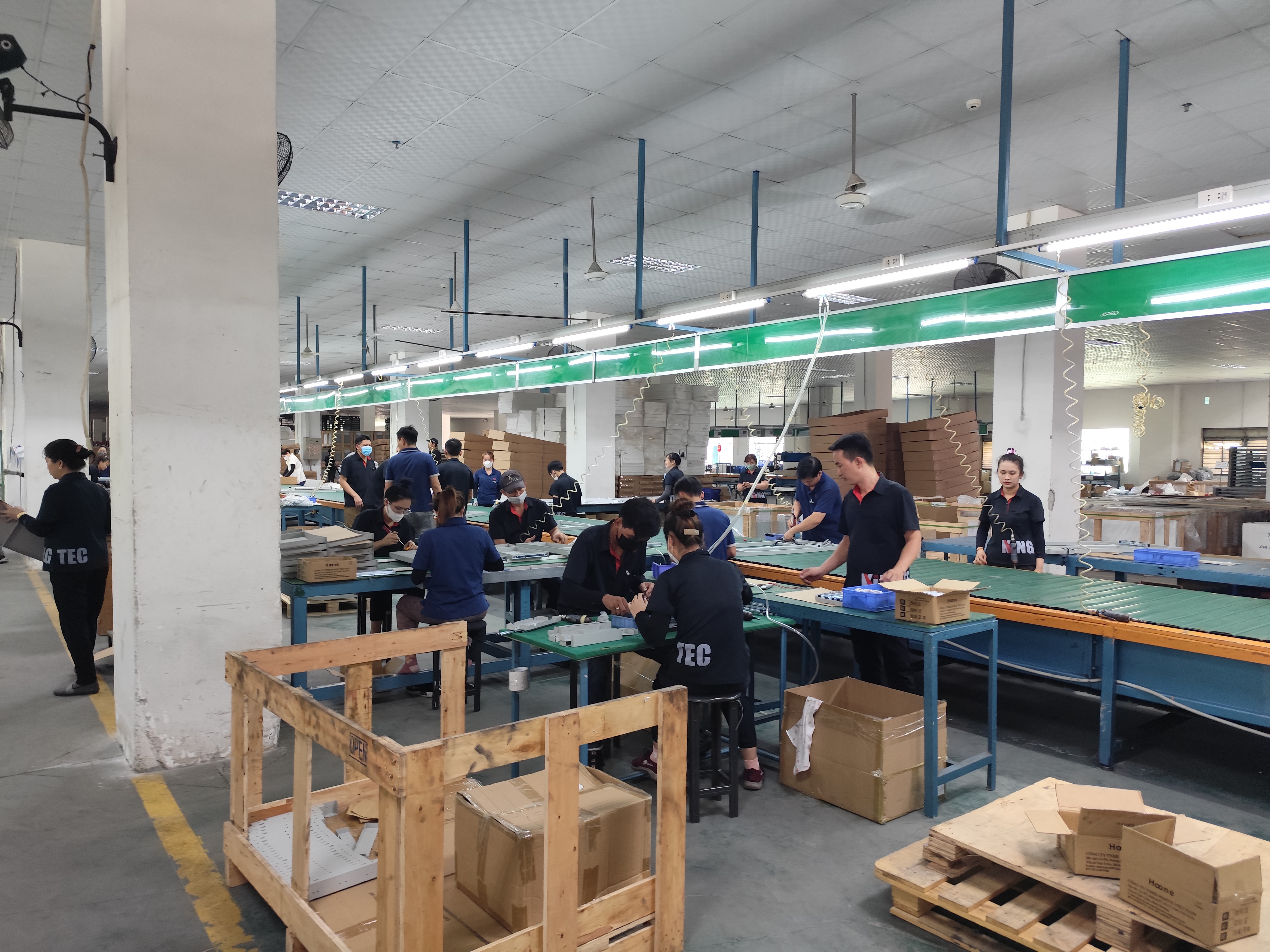

Last year, one of our U.S. clients nearly lost $180,000 on a single shipment of stamping brackets—not because of quality issues, but because customs flagged the parts for an anti-dumping investigation.
Anti-dumping duty risks when sourcing stamping parts from Vietnam include transshipment allegations on Chinese-origin steel, unpredictable duty rates reaching 40–88%, retroactive tariff exposure on unliquidated shipments, and the “all-others” penalty rate applied to suppliers who fail to cooperate with investigations.
These risks are real, growing, and often invisible until it is too late. Below, I walk through the specific threats, the documentation gaps that create exposure, and the steps our team uses to protect clients from costly surprises.
How Can I Determine If My Vietnam-Sourced Stamping Parts Are Subject to Anti-Dumping Duties?
A few months ago, a purchasing manager asked our Singapore office a simple question: "Are my stamping brackets safe from tariffs if they're made in Vietnam?" The honest answer was not simple at all.
To determine if your Vietnam-sourced stamping parts face anti-dumping duties, check the active trade orders in your destination country's tariff database, verify the HTS code classification of your specific parts, and confirm whether the raw material origin triggers any circumvention investigation or scope ruling.

Start With the HTS Code
Every stamping part enters a country under a specific Harmonized Tariff Schedule 1 code. Custom stamped brackets, clips, and mounting hardware often fall under broad "basket" categories like "Other articles of iron or steel." This is where the trouble starts. Wide-reaching trade investigations target entire HTS chapters, not just individual part numbers. If your stamping part shares an HTS code with a product already under an anti-dumping order, you may get swept in.
Our team in Vietnam reviews HTS classifications before we even quote a project. We cross-reference each part's code against the active U.S. and EU trade remedy databases. A small misclassification can mean the difference between zero duty and an 88% penalty.
Check Active Trade Orders and Investigations
The U.S. Department of Commerce 2 and the EU Commission publish lists of all active anti-dumping and countervailing duties 3 orders. You need to check these regularly—not just once.
| Check Point | Where to Look | What to Search |
|---|---|---|
| U.S. anti-dumping orders | U.S. International Trade Commission 4 (USITC) database | Your HTS code + "Vietnam" |
| EU trade defense instruments | EU Trade Defence website | Product description + country of origin |
| Vietnam's early warning list | Vietnam Ministry of Industry and Trade (MOIT) | Your raw material type (steel, aluminum) |
| Pending investigations | U.S. Federal Register notices 5 | Initiation notices mentioning your product category |
Understand the Two-Direction Risk
There are two distinct risks. First, your destination country (like the U.S.) may impose duties on stamping parts exported from Vietnam. The U.S. has set preliminary anti-dumping duties of 40–88% on Vietnamese galvanized steel products. Second, Vietnam itself imposes duties on imported raw materials. Vietnam currently charges 23.10–27.83% anti-dumping duties on Chinese hot-rolled steel, and 2.85–35.58% on Chinese aluminum. If your supplier uses Chinese steel coils, their costs go up—and yours follow.
The Non-Market Economy Factor
The U.S. still classifies Vietnam as a non-market economy 6. This means investigators use "surrogate" production costs from third countries to calculate dumping margins. These surrogate values often produce inflated margins that bear little resemblance to actual Vietnamese production costs. The result is unpredictable and often punishingly high duty rates.
I have seen cases where a supplier's actual selling price was competitive and fair, but the surrogate calculation produced a dumping margin above 50%. This is not a theoretical risk. It happens regularly.
What Documentation Do I Need to Prove Country of Origin and Avoid Anti-Dumping Penalties?
One lesson we learned early in our Vietnam operations is that the burden of proof always falls on the importer. Customs authorities do not assume your parts are clean—you must prove it.
To prove country of origin and avoid anti-dumping penalties, you need mill test reports tracing raw material to a non-sanctioned source, certificates of origin, production records showing substantial transformation in Vietnam, and complete commercial documentation including invoices, packing lists, and bills of lading.

The "China + 1" Documentation Gap
Many companies shifting production from China to Vietnam fail to maintain the rigorous traceability customs now demands. When our team onboards a new Vietnamese stamping supplier, the first thing we audit is their raw material sourcing paper trail. We need to see mill test reports that trace every steel coil back to its country of melt and manufacture.
This is where many supply chains break down. A Vietnamese stamper may buy steel from a local distributor. That distributor may source from multiple mills—some Chinese, some not. Without a clear MTR linking each coil to a specific non-Chinese mill, your parts are vulnerable.
Essential Document Checklist
For a deeper look at what paperwork is required at the border, see our guide on what US customs documentation is needed when sourcing stamping parts from Vietnam.
| Document | Purpose | Who Provides It |
|---|---|---|
| Mill Test Report (MTR) | Proves country of melt and manufacture of raw steel/aluminum | Steel mill, via supplier |
| Certificate of Origin 7 (CO) | Certifies the part was manufactured in Vietnam | Vietnam Chamber of Commerce (VCCI) |
| Production records / work orders | Proves substantial transformation occurred in Vietnam | Your supplier |
| Commercial invoice with unit pricing | Demonstrates fair market value (not dumped pricing) | Your supplier |
| Bill of Lading 8 | Confirms shipping origin and routing | Freight forwarder |
| Customs entry summary | Records HTS classification and declared origin | Your customs broker |
| Quality inspection reports | Corroborates that real manufacturing took place | Your QC team or third-party inspector |
What "Substantial Transformation" Actually Means
Country of origin rules require that a product undergo "substantial transformation" in the declared country. For stamping parts, this generally means the raw material must be significantly changed in form, character, or use. Simply cutting a Chinese steel coil into blanks in Vietnam is not enough. But stamping, bending, punching holes, applying surface treatments, and assembling multiple stamped components into a finished bracket—that sequence typically qualifies.
Our Vietnam office documents every production step with photographs, time stamps, and operator records. We treat this documentation as insurance. If a customs compliance audit ever occurs, we can demonstrate that real, value-adding manufacturing happened on Vietnamese soil.
Keep Records for at Least Five Years
Anti-dumping duties can be applied retroactively to all unliquidated shipments after an investigation is initiated. This means shipments already at sea or sitting in a bonded warehouse can suddenly face duties. If you cannot produce documentation proving origin and fair pricing for those older shipments, you pay the penalty rate.
I recommend keeping all origin-related documents for a minimum of five years. This aligns with the typical duration of an anti-dumping order and covers the review period.
How Do I Verify That My Supplier Isn't Transshipping Chinese Parts Through Vietnam?
During a supplier audit at a stamping factory outside Ho Chi Minh City last year, our Vietnam team noticed something odd—brand-new stamping presses still in their shipping crates, untouched, while finished parts sat boxed and ready to ship. That was a red flag.
To verify your supplier is not transshipping Chinese stamping parts through Vietnam, conduct unannounced factory audits, demand full raw material traceability, cross-check production capacity against export volumes, and require mill test reports that confirm non-Chinese steel origin at the coil level.

Why Transshipment Is the Biggest Risk
The U.S. and EU have made it clear: Vietnam is under a microscope. When import volumes of a specific product category surge from Vietnam while declining from China, trade authorities see a pattern World Trade Organization 9. They launch circumvention investigations. If your supplier is caught relabeling or minimally processing Chinese parts, you—the importer—bear the financial consequences. The Vietnam-wide entity rate for non-cooperating exporters has reached 88.12% in recent cases.
Red Flags to Watch For
Not every Vietnamese supplier is a transshipment risk. But certain warning signs should trigger deeper investigation:
- The supplier's stated production capacity does not match their claimed export volume.
- The factory has limited equipment relative to the complexity of parts being produced.
- Raw material invoices show purchases from Chinese trading companies, not Vietnamese or third-country mills.
- The supplier cannot show work-in-progress on the shop floor during your visit.
- Shipping records indicate goods arriving from China shortly before export shipments leave for the U.S.
A Practical Verification Process
Here is the process our team follows when vetting a new Vietnamese stamping supplier:
Step 1: Pre-audit document review. We request the supplier's business license, equipment list, employee roster, and raw material purchase records before we visit.
Step 2: Unannounced or semi-announced factory visit. Our Vietnam-based team conducts the audit. We walk the production floor, check die storage, inspect raw material inventory labels, and photograph coil tags showing mill origin.
Step 3: Capacity cross-check. We calculate the supplier's theoretical output based on their press tonnage, number of shifts, and die cycle times. We compare this to their claimed monthly shipment volume. If the numbers do not add up, we dig deeper.
Step 4: MTR verification. We trace mill test report numbers back to the issuing mill. We confirm the mill is not Chinese. We verify the steel grade matches what our part requires.
Step 5: Ongoing monitoring. We do not audit once and forget. Our team revisits quarterly and reviews raw material purchase records each shipment cycle.
The Cost of Getting It Wrong
| Scenario | Potential Duty Rate | Financial Impact on $500K Annual Spend |
|---|---|---|
| Supplier fully compliant, no AD order in effect | 0% | $0 additional cost |
| AD order in effect, supplier cooperates as mandatory respondent | 1–15% | $5,000–$75,000 |
| AD order in effect, supplier is non-selected (receives "all-others" rate) | 20–50% | $100,000–$250,000 |
| Transshipment found, Vietnam-wide entity rate applied | 88%+ | $440,000+ |
The difference between a compliant and non-compliant supplier can be hundreds of thousands of dollars per year. This is why we invest heavily in third-country processing verification before we ever place a production order.
What Steps Should I Take If My Stamping Parts Get Flagged for Anti-Dumping Investigation?
The call came on a Tuesday morning. A client's customs broker reported that their latest shipment of stamping brackets was being held pending review. The parts matched the scope description of a newly initiated anti-dumping investigation. Panic set in.
If your stamping parts are flagged for an anti-dumping investigation, immediately engage a trade remedy attorney, preserve all origin and pricing documentation, file for a scope ruling if your product differs from the investigated merchandise, and prepare to cooperate fully with investigators to avoid the punitive "all-others" rate.

Do Not Ignore the Notice
The worst thing you can do is nothing. When an anti-dumping investigation is initiated, the U.S. Department of Commerce publishes a Federal Register notice. This notice defines the product scope, the investigation period, and the countries involved. If your product falls within that scope, provisional duties can be imposed within approximately 60 days. These provisional measures can last up to 120 days. The full investigation typically takes 12 months or more.
Every day you delay is a day you lose leverage.
Immediate Action Plan
Day 1–3: Assess exposure. Determine how much product you have in transit, in bonded warehouses, or with unliquidated customs entries. Anti-dumping duties are retroactive to the initiation date. All those shipments are potentially liable.
Day 4–7: Engage legal counsel. Hire a trade remedy attorney experienced in anti-dumping cases. This is not optional. The procedural requirements are strict, deadlines are firm, and mistakes are irreversible.
Day 7–14: Compile documentation. Gather every mill test report, certificate of origin, production record, commercial invoice, and shipping document related to the investigated product. Your attorney will use these to build your defense.
Day 14–30: File a scope exclusion request (if applicable). If your stamping part differs materially from the product under investigation—different material, different end use, different manufacturing process—you may be able to obtain a scope ruling that excludes your product. This is your strongest defense if the facts support it.
Cooperate or Pay the Penalty
In every anti-dumping investigation, the Department of Commerce selects a few "mandatory respondents"—usually the largest exporters. These companies must submit detailed questionnaire responses. All other exporters receive the "all-others" rate, which is typically calculated from the mandatory respondents' data.
Here is the critical point: if your supplier refuses to cooperate or provides incomplete data, they receive the highest possible rate—often based on adverse facts available. In recent Vietnam cases, this has meant rates of 88% or higher.
Our approach is to work with suppliers who understand these obligations and are willing to cooperate. We build this expectation into our supplier agreements from the start.
Contractual Protections
Smart buyers build anti-dumping contingencies into their supply contracts. Consider these clauses:
- Duty-sharing provisions that allocate a portion of any imposed duty between buyer and supplier.
- Origin warranty clauses requiring the supplier to warrant that all raw materials are from non-sanctioned sources.
- Termination triggers if anti-dumping duties exceed a specified percentage threshold.
- Document retention obligations requiring the supplier to maintain all production and material records for five or more years.
These contractual tools do not eliminate the risk, but they distribute it fairly and create accountability. For a broader understanding of how tariff policies interact with these risks, see our overview of how Section 301 tariffs affect sourcing costs for stamping parts from Vietnam.
Conclusion
Anti-dumping duty risks when sourcing stamping parts from Vietnam are serious but manageable. Verify HTS codes, audit suppliers, demand full material traceability, and build contractual protections. Proactive compliance is always cheaper than retroactive penalties.
Frequently Asked Questions
How Can I Determine If My Vietnam-Sourced Stamping Parts Are Subject to Anti-Dumping Duties?
A few months ago, a purchasing manager asked our Singapore office a simple question: "Are my stamping brackets safe from tariffs if they're made in Vietnam?" The honest answer was not simple at all.
What Documentation Do I Need to Prove Country of Origin and Avoid Anti-Dumping Penalties?
One lesson we learned early in our Vietnam operations is that the burden of proof always falls on the importer. Customs authorities do not assume your parts are clean—you must prove it.
How Do I Verify That My Supplier Isn't Transshipping Chinese Parts Through Vietnam?
During a supplier audit at a stamping factory outside Ho Chi Minh City last year, our Vietnam team noticed something odd—brand-new stamping presses still in their shipping crates, untouched, while finished parts sat boxed and ready to ship. That was a red flag.
Footnotes
1. Explains the classification system underlying HTS codes referenced for stamping parts. ↩︎
2. Authoritative agency that publishes anti-dumping investigation notices discussed in the article. ↩︎
3. Clarifies the related trade remedy mechanism mentioned alongside anti-dumping orders. ↩︎
4. Official source for anti-dumping order databases mentioned in the checklist. ↩︎
5. Official government source for investigation initiation notices referenced in the article. ↩︎
6. Background concept explaining Vietnam’s classification affecting duty calculations. ↩︎
7. Updated to the live International Trade Administration resource page for origin documentation. ↩︎
8. Background reference for the shipping document used to confirm origin and routing. ↩︎
9. Governs international trade remedy rules relevant to anti-dumping enforcement. ↩︎