
Last quarter, our Vietnam office flagged a sudden 25% cost spike on cold-rolled steel coils for a client’s bracket order — anti-dumping duties on Chinese inputs had just kicked in.
Anti-dumping duty risks when sourcing stamping parts from Vietnam include hidden raw material cost increases from duties on Chinese steel and aluminum imports, transshipment scrutiny by the Department of Commerce, origin verification failures, and retroactive duty claims that can financially devastate unprepared buyers.
These risks are not hypothetical. They are active, evolving, and affect every buyer who sources metal stamping parts 1 from Vietnam today. This article breaks down each risk layer and gives you practical steps to protect your supply chain.
How Do I Determine If My Stamping Parts Are Subject to Anti-Dumping Duties When Sourced From Vietnam?
A few months ago, a U.S. client asked our team to quote a powder-coated L-bracket — a simple part, or so it seemed China Plus One strategy 2. When we traced the steel substrate back to its origin, we discovered the hot-rolled coil came from a Chinese mill currently under active trade remedy measures in both the U.S. and Vietnam.
To determine if your stamping parts face anti-dumping duties, check the Harmonized Tariff Schedule (HTS) codes for both the finished part and its raw materials, then cross-reference those codes against active anti-dumping and countervailing duty orders in your destination market and in Vietnam itself.

Start With the HTS Code
Every stamping part has an HTS classification 3. This code determines whether the part falls within the scope of an existing anti-dumping order. The Department of Commerce (DOC) maintains a public list of all active orders. Your first step is to classify your part accurately.
For metal brackets 4, post bases, and flanges like the ones we regularly produce, the relevant codes often fall under chapters 72 (iron and steel), 73 (articles of iron or steel), or 76 (aluminum). But the risk doesn't stop at the finished part. You must also check the input materials.
The Input Material Trap
Vietnam now imposes anti-dumping duties on nine product groups covering 74 HTS codes of goods originating from China. The most critical ones for stamping parts are:
| Material | HTS Chapter | Vietnam AD Duty Rate (on Chinese Origin) | Duration |
|---|---|---|---|
| Hot-Rolled Steel (HRC) | 7208 | 23.10% – 27.83% | 5 years (from July 2024) |
| Cold-Rolled Steel (CRC) | 7209 | Varies | Extended to Dec 2030 |
| Aluminum Products | 7604–7616 | 2.85% – 35.58% | Extended to Oct 2029 |
These duties hit your Vietnamese supplier's cost of raw materials. Even if the finished stamping part itself is not under an anti-dumping order in the U.S., the cost to produce it in Vietnam jumps when the steel coil is Chinese-origin.
The Dual-Layer Risk
Think of it as two separate exposure layers. Layer one is the risk that the finished stamping part triggers an anti-dumping or countervailing duty when it enters the U.S. or EU. Layer two is the risk that Vietnam's own duties on Chinese steel raise the production cost, eroding the price advantage you sought in the first place.
Our Vietnam team now runs a pre-quote HTS screening for every new stamping project. We check the finished part code against U.S. and EU active orders, and we check the raw material code against Vietnam's domestic trade remedy measures. This takes about two business days but has saved clients from surprise cost increases multiple times.
How to Run Your Own Check
- Get the exact HTS code for your finished part from a licensed customs broker.
- Search the DOC's AD/CVD order database for that code.
- Ask your Vietnamese supplier for the HTS code and country of origin of the raw material.
- Search Vietnam's Ministry of Industry and Trade (MOIT) database for active duties on that material code.
- If either search returns a hit, engage trade counsel before placing the order.
A scope ruling from the DOC can clarify whether your specific part falls within an existing order. This is especially useful for parts that sit on the boundary — like a welded bracket assembly that might or might not qualify as an "article of steel" under a particular order's scope language.
What Documentation Do I Need to Prove My Vietnam Stamping Parts Aren't Transshipped From China?
During a recent supplier audit at a factory outside Ho Chi Minh City, I asked to see their steel purchase records. The procurement manager hesitated. It turned out they were buying pre-cut blanks from a trader in Binh Duong — and neither the trader nor the factory could confirm the steel's true origin.
You need a complete chain-of-custody paper trail including mill test certificates showing non-Chinese origin, commercial invoices for raw materials, production records proving substantial transformation in Vietnam, and a Certificate of Origin (Form D or equivalent) issued by Vietnamese authorities.

Why Documentation Matters More Than Ever
The U.S. Department of Commerce 5 and U.S. Customs and Border Protection (CBP) are intensifying circumvention investigations. The core question they ask is simple: Was this part genuinely manufactured in Vietnam, or was it merely transshipped through Vietnam to avoid anti-dumping duties on Chinese goods?
If your documentation is weak, the default assumption works against you. CBP can apply "all-others" duty rates — sometimes exceeding 400% — to suspected transshipments. This is not a marginal risk. It is the most financially destructive outcome in the entire anti-dumping landscape.
The Documentation Checklist
Here is the minimum documentation package our team assembles for every stamping project shipped from Vietnam to the U.S.:
| Document | Purpose | Who Issues It |
|---|---|---|
| Mill Test Certificate (MTC) | Proves the steel/aluminum origin and grade | Raw material mill |
| Commercial Invoice (raw material purchase) | Shows the transaction between supplier and mill | Raw material supplier |
| Bill of Lading (raw material) | Proves the material was shipped from a non-Chinese origin | Freight forwarder |
| Production Work Order | Links the raw material lot to the finished stamping part | Vietnamese manufacturer |
| In-Process Inspection Records | Proves stamping, welding, finishing occurred in Vietnam | Vietnamese manufacturer / third-party QC |
| Certificate of Origin (C/O) | Official government confirmation of Vietnamese origin | Vietnam Chamber of Commerce (VCCI) 6 |
| Packing List & Commercial Invoice (finished goods) | Documents the export transaction | Vietnamese manufacturer |
The Substantial Transformation Standard
Country of origin rules require that the product undergo a "substantial transformation" in Vietnam. Simple operations like repackaging, relabeling, or minor assembly do not qualify. For stamping parts, the transformation must be meaningful — think blanking, progressive die stamping, deep drawing, welding, surface treatment, and final assembly.
Our production reports typically document every major step: coil slitting, blanking, stamping, deburring, welding (if applicable), powder coating or plating, and final inspection. Each step is logged with operator ID, machine number, and timestamp. This level of detail is what holds up under a CBP audit.
What Gets You in Trouble
The most common failure I see is when a Vietnamese factory imports semi-finished blanks from China, punches a few holes, and calls it "Made in Vietnam." Under third-country processing rules, that is not enough. The DOC looks at whether the processing in Vietnam fundamentally changes the character, name, or use of the article. Punching holes in a pre-formed Chinese bracket does not pass that test.
If your supplier cannot show that the stamping operation itself — the forming of flat sheet into a three-dimensional part — happened in Vietnam, your parts are at risk of being reclassified as Chinese origin.
How Can I Verify My Vietnamese Supplier Has Genuine Manufacturing Capabilities to Avoid Anti-Dumping Penalties?
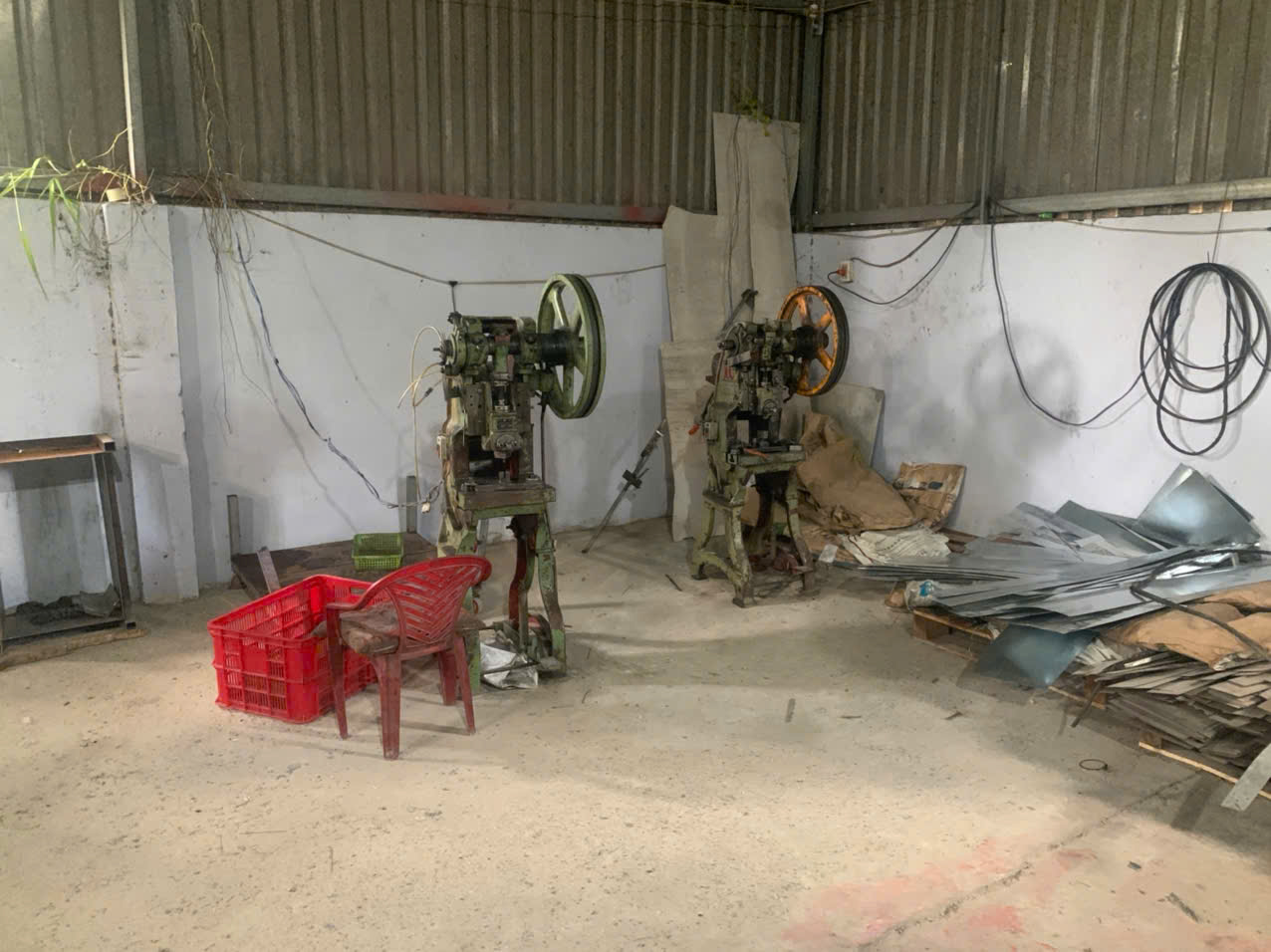
One lesson that cost a client months of delay: they selected a Vietnamese "stamping factory 7" based on an Alibaba listing. When our team visited the site, we found a warehouse with two manual press brakes and no die storage. The parts were actually stamped at a subcontractor in Dongguan, China, shipped to Vietnam, and re-exported with Vietnamese paperwork.
Verify genuine manufacturing by conducting an on-site factory audit that inspects stamping presses, progressive dies, raw material inventory with MTCs, production flow from coil to finished part, and quality control systems — then cross-reference production capacity against the order volume they claim to handle.

What to Look for on the Factory Floor
A real stamping factory has specific, hard-to-fake equipment. When our auditors walk a Vietnamese facility, we look for these indicators:
- Coil storage and decoiling equipment. If the factory starts from coil stock, it is doing real stamping. If it only has pre-cut blanks with no decoiling line, ask where the blanks come from.
- Stamping presses with tonnage appropriate to the part. A bracket like the powder-coated L-bracket in our product range requires at least a 110-ton press. If the factory only has 25-ton bench presses, it cannot produce that part.
- Die storage and die maintenance area. Progressive dies are expensive and factory-specific. A supplier with 50+ dies on racks is a real manufacturer. A supplier with no dies is a trader.
- In-house surface treatment. Powder coating lines, plating tanks, or painting booths confirm value-added processing happens on-site.
A Practical Audit Framework
We use a structured checklist that covers five areas. Here is a simplified version:
| Audit Area | Key Questions | Red Flags |
|---|---|---|
| Equipment | What press tonnages are installed? Are dies on-site? | No presses above 50T; dies "stored off-site" |
| Raw Materials | Can they show MTCs for current steel inventory? What country is the steel from? | No MTCs; all steel labeled "imported" with no country detail |
| Production Flow | Can they walk you from coil to finished part in one facility? | Parts arrive semi-finished from an unnamed subcontractor |
| Quality Systems | Do they have PPAP capability? CMM or other measurement tools? | No inspection records; no calibrated instruments |
| Workforce | How many production operators vs. office staff? | Skeleton crew relative to claimed capacity |
The China Plus One Reality Check
Many buyers adopt a China Plus One strategy 8 to diversify away from China. Vietnam is the most popular "Plus One" destination. But the strategy only works if the Vietnamese supplier is genuinely manufacturing — not just relabeling.
Our China office has 21 employees and deep knowledge of Chinese manufacturing. When we audit a Vietnamese supplier, we can tell whether their equipment, processes, and material flow are consistent with genuine production or whether they are simply a pass-through. This cross-border visibility is something most buyers lack.
Buyer-Provided Tooling: A Hidden Risk
If you send your own dies or molds to Vietnam, be aware that these "assists" can be legally classified as countervailable subsidies during a trade investigation. The value of the tooling you provide for free may be added to the calculated export price, potentially increasing the dumping margin. Document the tooling arrangement carefully and disclose it to your customs broker.
What Steps Should I Take to Protect My Business From Retroactive Anti-Dumping Duty Claims on Vietnam-Sourced Parts?
The call came on a Thursday afternoon. A long-standing client's customs broker informed them that CBP had initiated a circumvention investigation on a category of steel brackets. Every unliquidated entry from the past 18 months was now subject to potential retroactive duties. The client had no contingency plan.
Protect your business by monitoring active and pending trade remedy investigations, building contractual duty-adjustment clauses into supplier agreements, maintaining comprehensive origin documentation, diversifying raw material sources away from China, and setting aside financial reserves for potential retroactive duty assessments.

Understanding Retroactive Exposure
Retroactive duty collection is one of the most dangerous features of the U.S. anti-dumping system. When the DOC initiates an investigation, it can impose duties on all unliquidated entries — meaning shipments that have already arrived but whose duty status has not been finalized. This can reach back months or even years.
Provisional duties can be imposed within 120 to 180 days of investigation initiation. Final duties follow after approximately one year and typically last five years. The financial exposure is immediate and often enormous.
A Five-Step Protection Plan
Here is the framework our team recommends to every client sourcing stamping parts from Vietnam:
Step 1: Monitor trade remedy filings. Subscribe to the DOC's Federal Register notices 9. Track pending investigations that cover steel articles, aluminum articles, or any HTS codes relevant to your parts. Our team sends quarterly alerts to clients when new filings appear.
Step 2: Audit your supplier's raw material sourcing. Require quarterly disclosure of raw material origin, including MTCs and purchase invoices. If your supplier switches from Korean steel to Chinese steel mid-contract, you need to know immediately.
Step 3: Build duty-adjustment clauses into contracts. Your purchase agreement should include a clause that allocates responsibility for anti-dumping duties. Specify whether the Vietnamese supplier or the U.S. buyer bears the cost of any duties imposed after the contract is signed. Without this clause, you bear the full risk.
Step 4: Maintain a duty reserve fund. Set aside 5% to 15% of the landed cost of each shipment in a reserve account. If retroactive duties are assessed, this fund provides a financial buffer. If no duties materialize, you release the funds after the liquidation period closes.
Step 5: Engage a trade attorney proactively. Do not wait until CBP contacts you. A trade attorney can file a scope ruling request, participate in an investigation as an interested party, or help you structure your sourcing to minimize exposure. Self-certification programs are increasingly the only way for stampers to avoid blanket 400%+ duties applied to suspected transshipments.
Compliance With FTAs Does Not Protect You
A common misconception is that Free Trade Agreement preferences — such as those under CPTPP or EVFTA 10 — provide a safe harbor from anti-dumping enforcement. They do not. FTA Rules of Origin and anti-dumping rules operate on separate legal tracks. A product can qualify for preferential tariff treatment under an FTA and still be subject to anti-dumping duties if dumping is found.
The Surrogate Country Problem
Vietnam is classified as a non-market economy by the DOC. This means that when calculating dumping margins, the DOC does not use Vietnam's actual production costs. Instead, it uses cost data from a "surrogate country" — often a market economy like Indonesia, India, or the Philippines. This methodology frequently produces inflated dumping margins that do not reflect the real cost of producing stamping parts in Vietnam. The result is higher duty rates than the actual price difference would justify.
Building Long-Term Resilience
The smartest clients I work with treat anti-dumping risk as a permanent feature of their supply chain, not a one-time crisis. They diversify not just their supplier base but their raw material sources. They require Vietnamese suppliers to source steel from Japan, Korea, Taiwan, or domestic Vietnamese mills — not China. They build flexibility into their logistics so they can shift production to alternative countries like India, Thailand, or Mexico if Vietnam becomes uncompetitive.
Our local team in Vietnam conducts ongoing supplier monitoring. We verify raw material origins quarterly, review production records, and flag any changes that could affect origin compliance. This is not a one-time audit. It is a continuous process.
Beyond anti-dumping concerns, buyers should also understand how Section 301 tariffs affect sourcing costs for stamping parts from Vietnam, as these represent a separate but overlapping layer of trade risk. Similarly, if your stamping parts involve welded assemblies, it is worth reviewing what US anti-dumping regulations apply when sourcing welding parts to ensure full compliance across all product categories.
Conclusion
Anti-dumping duty risks when sourcing stamping parts from Vietnam are real, layered, and evolving. Protect yourself with rigorous origin documentation, proactive monitoring, and a supply chain partner with local presence and cross-border expertise. For a broader overview of all US import tariffs that apply when sourcing sheet metal fabrication from Vietnam, consult our detailed tariff guide.
Frequently Asked Questions
How Do I Determine If My Stamping Parts Are Subject to Anti-Dumping Duties When Sourced From Vietnam?
A few months ago, a U.S. client asked our team to quote a powder-coated L-bracket — a simple part, or so it seemed China Plus One strategy 2 . When we traced the steel substrate back to its origin, we discovered the hot-rolled coil came from a Chinese mill currently under active trade remedy measures in both the U.S. and Vietnam.
What Documentation Do I Need to Prove My Vietnam Stamping Parts Aren't Transshipped From China?
During a recent supplier audit at a factory outside Ho Chi Minh City, I asked to see their steel purchase records. The procurement manager hesitated. It turned out they were buying pre-cut blanks from a trader in Binh Duong — and neither the trader nor the factory could confirm the steel's true origin.
How Can I Verify My Vietnamese Supplier Has Genuine Manufacturing Capabilities to Avoid Anti-Dumping Penalties?
One lesson that cost a client months of delay: they selected a Vietnamese " stamping factory 7 " based on an Alibaba listing. When our team visited the site, we found a warehouse with two manual press brakes and no die storage. The parts were actually stamped at a subcontractor in Dongguan, China, shipped to Vietnam, and re-exported with Vietnamese paperwork.
Footnotes
1. Precision Metalforming Association website, the leading industry body for metal stamping. ↩︎
2. Wikipedia entry for the China Plus One strategy, a key supply chain diversification concept. ↩︎
3. Official USITC tariff schedule lets buyers verify HTS codes for anti-dumping exposure. ↩︎
4. Wikipedia entry for metal brackets, providing context for the types of parts discussed. ↩︎
5. Official website of the U.S. Department of Commerce, which manages trade remedy investigations. ↩︎
6. VCCI is the official Vietnamese body issuing Certificates of Origin cited in the documentation table. ↩︎
7. Wikipedia overview of metal stamping processes and manufacturing facilities. ↩︎
8. Background reference explains the sourcing diversification strategy referenced in the article. ↩︎
9. Official government portal for Federal Register notices, where trade investigations are published. ↩︎
10. Official EU trade page clarifies EVFTA terms distinct from anti-dumping enforcement rules. ↩︎