
Every quarter, our Singapore office processes dozens of international wire transfers 1 for clients sourcing custom sheet metal parts from Vietnam — and the questions about T/T bank fees never stop coming.
T/T bank fees for Vietnam sheet metal fabrication typically include a sender-side SWIFT transfer fee of $25–$50, intermediary correspondent bank charges of $15–$50 per bank, and beneficiary bank fees of $10–$20 — collectively adding $50–$120 per transaction and reducing the amount your Vietnamese supplier actually receives.
These costs sound small on a single transfer, but they stack up fast across tooling deposits, progress payments, and balance remittances over a production year. Let me walk you through exactly where these fees come from, how they impact your landed cost, and what our team has learned about keeping them under control.
How much will I actually pay in T/T bank fees for my Vietnam sheet metal order?
A client in Ohio called us last month after discovering his supplier in Ho Chi Minh City received $380 less than what he wired for a tooling deposit — he had no idea three separate banks had each taken a cut along the way.
For a typical Vietnam sheet metal order, you will pay $50–$120 in total T/T bank fees per transfer, broken down into your sending bank's wire fee ($25–$50), one or two intermediary correspondent bank charges ($15–$50 each), and the Vietnamese beneficiary bank fee ($10–$20), plus any currency conversion fees your bank applies.
Where Does Each Fee Come From?
When you initiate a telegraphic transfer 2 from your U.S. bank to a Vietnamese supplier's account, the money rarely travels directly. It passes through a SWIFT network 3. Your bank connects to one or two correspondent banks that act as middlemen before the funds reach the beneficiary bank in Vietnam. Each stop costs money.
Here is how a standard transfer flows:
- You instruct your U.S. bank to send $10,000 to your supplier.
- Your bank charges a wire fee (typically $25–$50).
- The SWIFT message routes through an intermediary bank — often in New York, Hong Kong, or Singapore — which deducts $15–$50.
- A second intermediary may be involved if your bank has no direct relationship with the Vietnamese bank. That adds another $15–$30.
- The Vietnamese beneficiary bank receives the funds and deducts its own fee ($10–$20).
- Your supplier sees $9,870–$9,935 in their account instead of $10,000.
Understanding OUR, SHA, and BEN Charges
When you fill out a wire transfer form, you choose who pays the fees. This is critical. The three options are OUR, SHA, and BEN 4. Most banks default to SHA (shared), which means you pay your bank's fee, and the beneficiary pays theirs — but intermediary charges get deducted from the transfer amount in transit.
| Charge Option | Who Pays Sender Fee | Who Pays Intermediary Fee | Who Pays Receiver Fee | Typical Total Cost to Buyer |
|---|---|---|---|---|
| OUR | Buyer | Buyer (upfront) | Buyer (upfront) | $75–$150 |
| SHA | Buyer | Deducted from transfer | Supplier | $25–$50 (visible) + hidden deductions |
| BEN | Deducted from transfer | Deducted from transfer | Supplier | $0 visible, but supplier receives significantly less |
If you choose OUR, you pay everything upfront. It costs more out of your pocket, but your supplier receives the exact amount you promised. This matters when you are building trust with a new Vietnamese partner.
The Hidden Cost: Currency Conversion Fees
Beyond the explicit wire fees, banks frequently apply exchange rate markups of 2–4%. If your supplier invoices in USD, this markup may not apply directly. But if any leg of the cross-border payment processing chain involves conversion to Vietnamese Dong (VND) and back, you lose money on the spread. Always confirm the invoicing currency with your supplier and instruct your bank to send USD to a USD-denominated account when possible.
Real Numbers on a $100K Annual Order
Let me put this in perspective. Say you source precision sheet metal brackets from Vietnam — parts like the angular mounting brackets with multiple pre-drilled holes and powder-coated finish that we help clients procure regularly. Your annual spend is $100,000, split across 8–10 payments (tooling deposit, progress payments, balance before shipment, repeated over multiple production runs).
| Payment Type | Amount | T/T Fee (SHA) | Intermediary Deduction | Net Received by Supplier |
|---|---|---|---|---|
| Tooling deposit (30%) | $3,000 | $40 | $30 | $2,930 |
| Tooling balance (70%) | $7,000 | $40 | $30 | $6,930 |
| Production deposit (30%) | $7,500 | $40 | $45 | $7,415 |
| Production balance (70%) | $17,500 | $40 | $45 | $17,415 |
| Repeat order 1 | $25,000 | $40 | $45 | $24,915 |
| Repeat order 2 | $25,000 | $40 | $45 | $24,915 |
| Repeat order 3 | $15,000 | $40 | $30 | $14,930 |
| Totals | $100,000 | $280 | $270 | $99,450 |
That is $550 in total international wire transfer costs — roughly 0.55% of your annual spend. Not catastrophic, but not negligible either when margins on custom parts are tight.
Why did my Vietnam supplier receive less than the full amount I wired?
One lesson I learned early in our Vietnam operations is that the gap between "amount sent" and "amount received" creates more supplier disputes than almost any other payment issue.
Your Vietnam supplier received less than the full amount because intermediary correspondent bank charges of $15–$50 per bank were deducted from your SWIFT transfer in transit, and the Vietnamese beneficiary bank also subtracted its own incoming wire fee — none of which you can see from your sending bank's confirmation.
Why This Creates Problems
When our team in Ho Chi Minh City first started coordinating payments for U.S. clients, we noticed a pattern. A client would wire $8,500 for tooling on a 380 aluminum housing — a medium-complexity part at roughly 450 grams, 5,000 pieces per year. The supplier would receive $8,435. Then the supplier would email asking for the remaining $65.
This $65 shortfall seems trivial. But it causes real friction. The supplier thinks the buyer shorted them. The buyer thinks the bank made an error. Neither party understands where the money went. And when you are trying to build a relationship with a new Vietnamese fabricator — one of over 500 metal fabricators in the country — these small misunderstandings can erode trust.
The Correspondent Bank Chain Explained
Most U.S. banks do not have a direct banking relationship with Vietnamese commercial banks. So they route funds through correspondent banks. Think of it like connecting flights: your money stops in New York (often at a major clearing bank like JPMorgan or Citibank) before hopping to a bank in Singapore or Hong Kong, and then finally landing in Vietnam.
Each "layover" costs money. The correspondent bank charges for its role in the chain are not always visible on your outgoing wire confirmation. You see your bank's fee. You see the amount you sent. But you do not see what gets skimmed in between.
Foreign Contractor Tax Considerations
There is another deduction that catches some buyers off guard. Vietnam applies a Foreign Contractor Tax (FCT) 6 to payments made to foreign entities that provide goods and services without a permanent establishment in Vietnam. The FCT includes both a VAT component (2–5%) and a Corporate Income Tax component (0.1–10%). However, this typically applies when the Vietnamese party is paying a foreign service provider — not when a foreign buyer is paying a Vietnamese manufacturer for goods. Still, if your arrangement includes any service components (engineering, design, consulting), the Vietnamese supplier may be required to withhold FCT, further reducing the net payment they retain.
How to Prevent Payment Disputes
Our approach with every new Vietnam sourcing project is simple: put every cost in writing before the first wire goes out. We confirm the exact amount the supplier expects to receive, we specify OUR charges on the first few transfers until trust is established, and we document the banking details — including the supplier's bank's SWIFT code and any intermediary bank information they recommend.
This eliminates the guessing game. It also shows the Vietnamese supplier that you are professional and transparent — qualities that go a long way in building long-term partnerships.
How can I minimize intermediary bank deductions on my international payments?
During a recent project review, our finance team in Singapore compared the total hidden bank fees across three different banking channels for the same $25,000 payment to a Vietnamese fabricator — and the difference was eye-opening.
You can minimize intermediary bank deductions by choosing a sending bank with direct correspondent relationships in Vietnam, specifying OUR charge terms, using digital payment platforms like Wise for smaller transfers, consolidating payments to reduce per-transaction fees, and confirming the supplier's preferred intermediary bank routing on every wire instruction.
Step-by-Step Fee Reduction Checklist
Here is what we recommend to every client sourcing custom sheet metal parts from Vietnam:
1. Ask your supplier for their bank's preferred intermediary routing. Most Vietnamese banks have preferred correspondent banks. If your supplier's bank lists "Citibank New York" as their intermediary, include that information in your wire instructions. This avoids your bank choosing a less efficient route with extra stops and extra fees.
2. Choose OUR for critical payments. Yes, OUR charges cost you $75–$150 per transfer instead of $25–$50. But the supplier receives the full amount. This is especially important for tooling payments and first-order deposits where trust is still being established.
3. Consolidate payments. Instead of sending 10 separate wires of $10,000 each, negotiate milestone payments that reduce the total number of transfers. Fewer transfers mean fewer per-transaction fees.
4. Consider digital platforms for smaller amounts. Platforms like Wise offer lower SWIFT transfer fee 7s and often use mid-market exchange rates with no hidden currency conversion fees 8. For prototype payments or sample tooling under $5,000, this can save 50–70% on banking costs.
5. Negotiate fee absorption with your supplier. Some Vietnamese fabricators, especially larger ones, are willing to absorb their beneficiary bank fees if you commit to consistent order volumes. This is a standard trade finance negotiation in Vietnam.
Traditional Bank vs. Digital Platform Comparison
| Feature | Traditional U.S. Bank (SWIFT) | Digital Platform (e.g., Wise) | Blockchain/DLT (Emerging) |
|---|---|---|---|
| Sender fee | $25–$50 | $5–$15 | $1–$5 |
| Intermediary deductions | $15–$50 per bank | Often none (direct routes) | None |
| Exchange rate markup | 2–4% | 0.3–0.7% | Varies |
| Transfer speed | 2–5 business days | 1–2 business days | Minutes to hours |
| Best for | Large transfers ($10K+) | Small-mid transfers (<$10K) | Future potential |
| AML/CFT compliance | Robust, may cause delays | Robust | Evolving |
When Traditional Banks Still Win
For transfers above $25,000, traditional banks remain the standard. They offer established compliance frameworks for Anti-Money Laundering and Counter-Financing of Terrorism checks. They provide paper trails that satisfy auditors. And for large cross-border payment processing, the absolute dollar cost of wire fees is a smaller percentage of the total. The key is to choose a bank with strong Asian correspondent networks to minimize the number of intermediary hops.
What About Letters of Credit?
Some buyers explore Letters of Credit (LCs) 9 as an alternative to T/T. LCs offer payment security — the bank guarantees payment to the supplier upon presentation of compliant shipping documents. But LCs come with their own fees: issuance charges (0.5–2% of the LC value), amendment fees, advising fees, and negotiation fees. For a $25,000 order, LC banking charges can easily reach $500–$1,000. For most sheet metal fabrication orders under $100K per shipment, T/T with OUR charges is more cost-effective. To learn more, see our guide on how to use letters of credit for secure sheet metal fabrication sourcing from Vietnam.
A local sourcing agent — like our team in Vietnam — can also consolidate Vietnamese supplier payments. If you source multiple parts from different fabricators, we can receive one wire and distribute payments locally, cutting your total number of international transfers in half.
Will these bank fees affect my ability to get 60-day payment terms from my Vietnam partner?
A purchasing manager we work with in Texas once told me bluntly: "I need 60-day terms, and I don't want my supplier nickel-and-diming me on bank fees." That conversation revealed a real tension between payment terms and banking costs that many buyers overlook.
T/T bank fees can indirectly affect your ability to negotiate 60-day payment terms because Vietnamese suppliers absorb the cash flow risk of delayed payment — and if they also lose $50–$100 per transfer to intermediary deductions, they may demand stricter terms or higher unit prices to compensate.
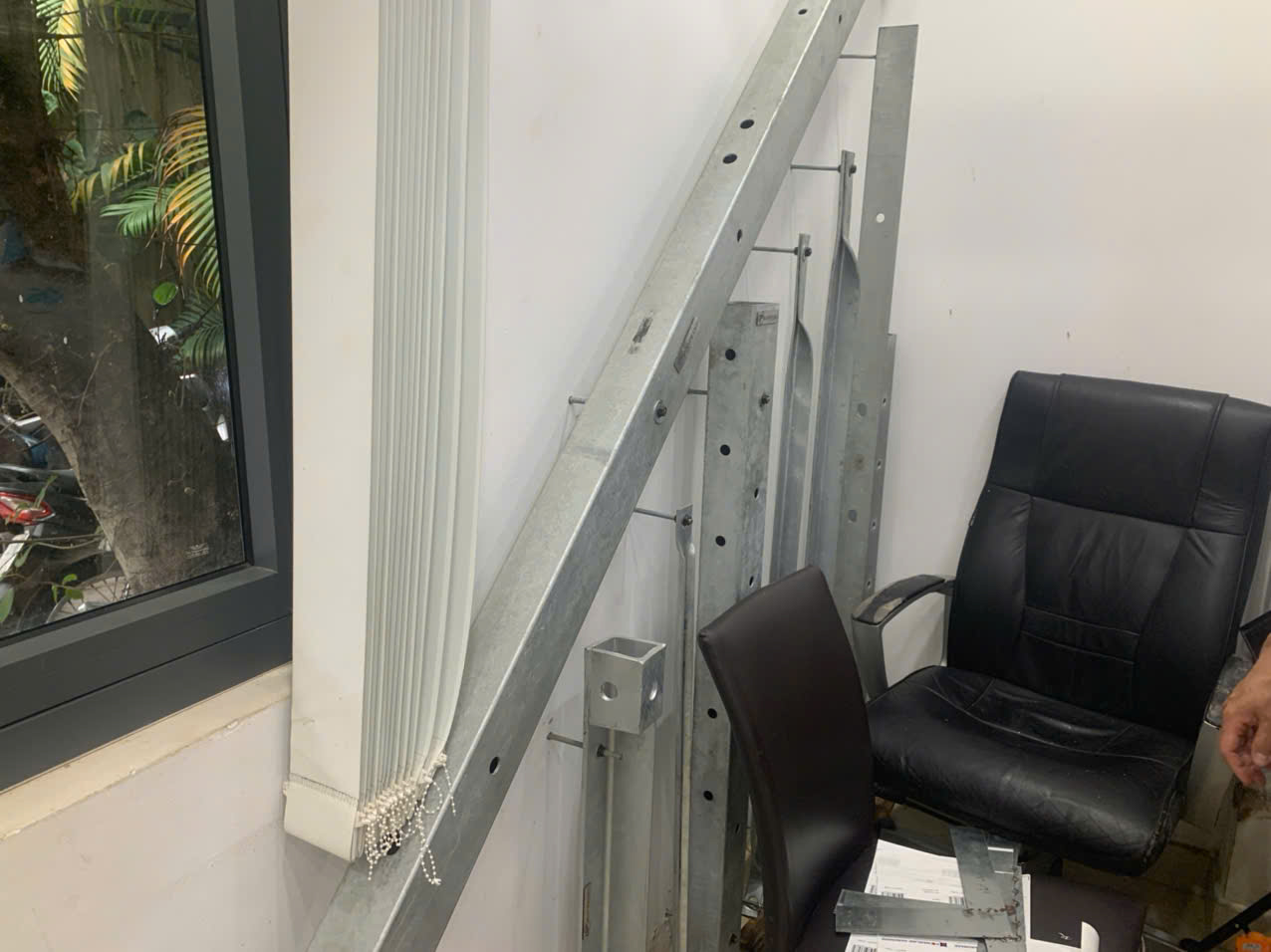
Why Payment Terms and Bank Fees Are Connected
When a Vietnamese sheet metal fabricator offers you 60-day or 90-day open account payment terms, they are essentially financing your purchase. They buy raw materials, run production, ship the goods, and then wait two to three months for payment. This ties up their working capital.
Now add banking friction to the equation. If every payment arrives $50–$100 short due to correspondent bank charges, the supplier's effective margin shrinks. On a unit price of $4.20–$5.80 per part — which is typical for medium-complexity Vietnamese sheet metal brackets — that $100 deduction across a 500-piece order represents a noticeable percentage of their profit.
The Vietnam Sourcing Cost Advantage Still Holds
Even with T/T bank fees factored in, Vietnam remains highly competitive. The $0 Section 301 tariff on Vietnam-origin parts is a massive advantage over China, where precision castings and CNC EDM-finished components face a 25% tariff. Let me put that in a comparison:
| Cost Factor | Vietnam | China |
|---|---|---|
| Tooling (380 aluminum housing, 450g, medium complexity, 5K pcs/yr) | $8,500–$12,000 | $6,000–$9,000 |
| Unit price per part | $4.20–$5.80 | $3.50–$5.00 |
| Section 301 tariff | 0% | 25% |
| T/T bank fees per transfer | $50–$120 | $50–$120 |
| Effective unit cost after tariff (at $5.00 unit price, 5,000 pcs) | $5.00 | $6.25 |
| Annual cost (5,000 pcs) | $25,000–$29,000 | $31,250–$31,250+ |
| Corporate income tax incentives | Available (SEZ, reduced rates) | Limited |
Even if Vietnam tooling costs run 20–30% higher, the zero-tariff advantage wipes out that difference and then some. On a $100,000 annual order, you could save $15,000–$25,000 compared to Chinese sourcing — which dwarfs the $500–$600 in annual T/T bank fees.
How We Structure Payment Terms to Offset Banking Costs
At DEWIN, we offer open account terms — typically 60-day payment terms — to qualified U.S. clients. This is rare among Asian suppliers. We can do it because our Singapore entity manages cash flow risk centrally, and we have established credit assessment processes. For a deeper look at how to structure payment terms to minimize risk sourcing sheet metal fabrication from Vietnam, we have published a dedicated guide.
Here is how we address the bank fee question within that framework:
- We specify OUR charges on the payment agreement, so the supplier always receives the full invoiced amount.
- We consolidate shipments and invoices where possible to reduce the total number of wire transfers per quarter.
- We clearly document the banking route, including the preferred intermediary bank, in every purchase order.
- We absorb the beneficiary bank fees on our end, so clients see one clean number on their invoice.
Evaluating Vietnam Suppliers for Long-Term Relationships
If you are sourcing directly and not using a sourcing partner, vendor evaluation matters immensely. Over 500 metal fabricators operate in Vietnam, and quality varies widely. Platforms like Ensun, Yellowpage Vietnam, and VALO Vietnam can help you build a shortlist. But the real work happens during qualification.
Check client feedback carefully. Confirm response times in writing — quotation turnaround, revision cycles, mold-making timelines, fabrication lead times, and shipping schedules. A supplier who quotes in 24 hours and delivers on time is worth paying a few extra dollars per part. A supplier who saves you $0.30 per unit but ships two weeks late costs you far more in downstream delays.
The growing trend toward online quoting platforms — Sheet Metal Vietnam, Machining Vietnam, and similar services — makes initial price comparison faster. But for mid-to-high quality custom parts like the heavy-duty brackets with complex angular bends and precise weld joints our clients need, you still need boots on the ground. That is why we maintain a seven-person team in Vietnam dedicated to supplier audits, PPAP, process control, and final inspection.
Conclusion
T/T bank fees and intermediary deductions are real costs, but they are manageable — and they pale in comparison to the tariff savings and production advantages Vietnam offers for sheet metal fabrication sourcing.
Frequently Asked Questions
Where Does Each Fee Come From?
When you initiate a telegraphic transfer 2 from your U.S. bank to a Vietnamese supplier's account, the money rarely travels directly. It passes through a SWIFT network 3 . Your bank connects to one or two correspondent banks that act as middlemen before the funds reach the beneficiary bank in Vietnam. Each stop costs money.
What About Letters of Credit?
Some buyers explore Letters of Credit (LCs) 9 as an alternative to T/T. LCs offer payment security — the bank guarantees payment to the supplier upon presentation of compliant shipping documents. But LCs come with their own fees: issuance charges (0.5–2% of the LC value), amendment fees, advising fees, and negotiation fees. For a $25,000 order, LC banking charges can easily reach $500–$1,000. For most sheet metal fabrication orders under $100K per shipment, T/T with OUR charges is more cost-effective. To learn more, see our guide on how to use letters of credit for secure sheet metal fabrication sourcing from Vietnam .
How much will I actually pay in T/T bank fees for my Vietnam sheet metal order?
A client in Ohio called us last month after discovering his supplier in Ho Chi Minh City received $380 less than what he wired for a tooling deposit — he had no idea three separate banks had each taken a cut along the way.
Footnotes
1. Explains the process and definition of sending money globally. ↩︎
2. Defines the term T/T, an electronic method for transferring funds between banks. ↩︎
3. Explains the global messaging network connecting financial institutions for secure transactions. ↩︎
4. Explains the three charge options for international wire transfers and their implications. ↩︎
5. Clarifies the role of intermediary banks facilitating international money transfers. ↩︎
6. Replaced with a recent and comprehensive guide on Vietnam’s Foreign Contractor Tax from a specialized tax and accounting firm. ↩︎
7. Details the costs associated with using the SWIFT network for international payments. ↩︎
8. Explains additional costs related to foreign exchange markups in international payments. ↩︎
9. Defines Letters of Credit as a payment mechanism used in international trade for payment security. ↩︎
10. Explains how digital platforms like Wise facilitate international payments with lower fees. ↩︎