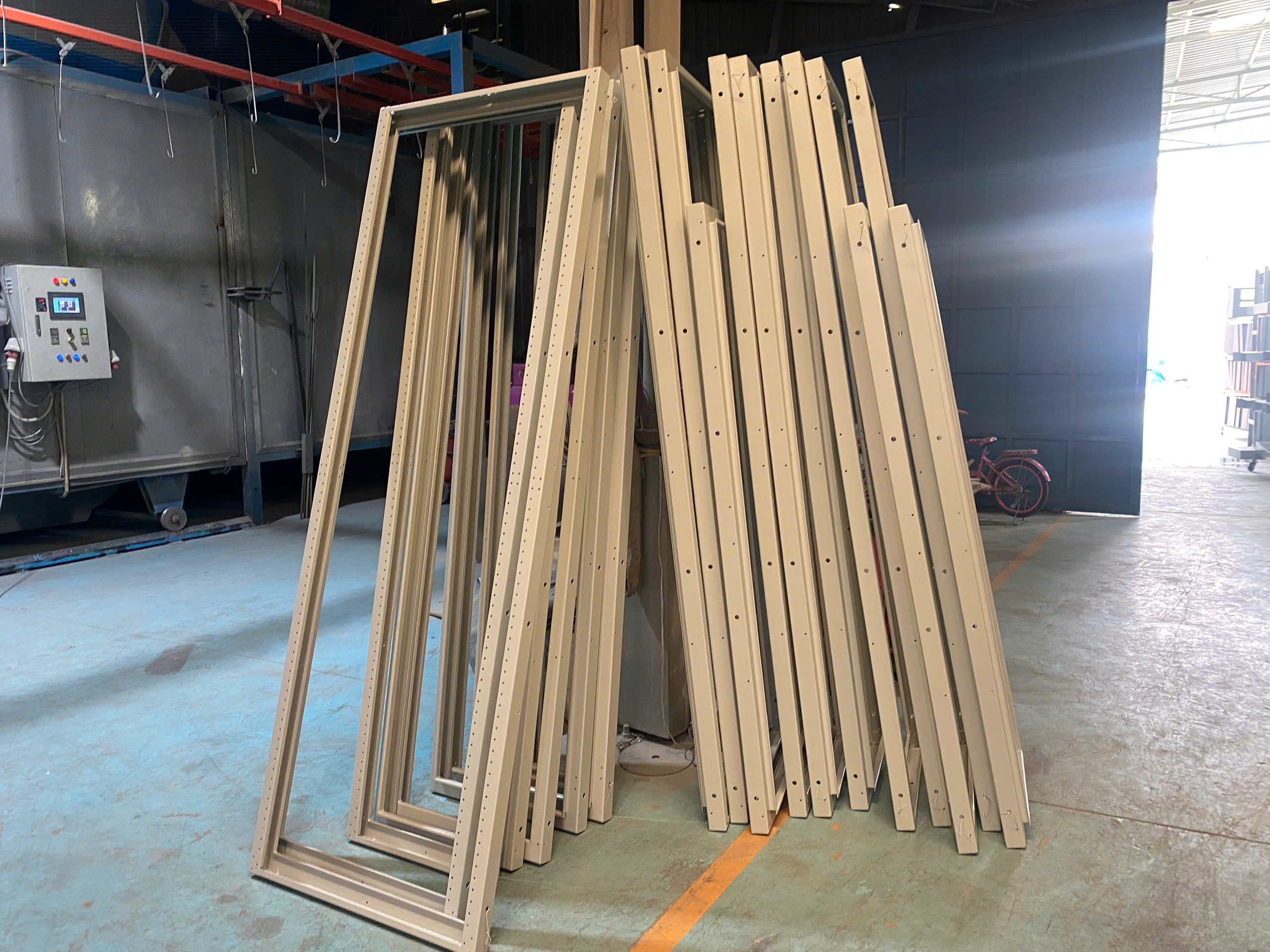

A recurring problem I see when sourcing stamping parts for U.S. clients is confusion about which process fits which part — leading to wasted tooling costs, missed deadlines, and parts that fail inspection on arrival.
Stamping parts are classified by process type (separation vs. forming), die structure (progressive, compound, transfer), material, and application industry. They are used across automotive, electronics, aerospace, and general manufacturing to mass-produce high-precision metal components with repeatable quality and structural integrity.
This guide breaks down every major classification and use case so you can make confident sourcing decisions. Let’s start with the types you need to know before placing your first order.
What Types of Stamping Parts Should I Know Before Sourcing from Asia?
One lesson our team in Vietnam learned early: a buyer once ordered "stamped brackets" without specifying the process. The supplier used a simple die when the part geometry clearly required progressive die stamping. The result was dimensional drift after 5,000 pieces, and the entire lot was rejected.
Before sourcing from Asia, you should know the two fundamental types — separation process parts (blanking and piercing) and forming process parts (bending, deep drawing, embossing) — plus the die structures that produce them, including progressive, compound, transfer, and fine blanking dies.

Separation vs. Forming: The Core Division
Every stamping operation falls into one of two categories. In separation processes, the metal sheet is cut along a defined contour. Blanking and piercing are the most common. The goal is a clean separation section without material tearing or excessive burrs.
Forming processes are different. The sheet metal undergoes plastic deformation 1 — it bends, stretches, or compresses — without breaking. This includes bending flat stock into angles, deep drawing 2 hollow shapes like cups or enclosures, and embossing surface features. When our engineers review a client's drawings, the first question is always: does this part need cutting, shaping, or both? Understanding the core principles of sheet metal stamping is essential before making that determination.
Die Structure Classifications
The die determines how the stamping operation runs. Here is a breakdown of the most common die types and where they fit:
| Die Type | Best For | Typical Volume | Tolerance |
|---|---|---|---|
| Progressive Die | Complex parts with multiple features (brackets, terminals) | 10,000+ units | ±0.05 mm |
| Compound Die | Simple flat parts (washers, spacers) | Low to medium | ±0.10 mm |
| Transfer Die | Large or multi-surface parts (structural auto components) | Medium to high | ±0.10 mm |
| Fine Blanking | Precision flat parts (gears, cams) | Medium to high | ±0.025 mm |
| Four-Slide / Multi-Slide | Intricate wire forms, springs, clips | Medium to high | Varies |
| Short-Run Tooling | Prototypes, low-volume custom runs | Few parts to several thousand | ±0.10–0.25 mm |
Progressive die stamping is what we recommend most often for our U.S. clients who need high-volume production of custom metal hardware like connector terminals 3 or mounting brackets. The metal strip feeds continuously through a multi-station die, and each station performs a sequential operation — blanking, piercing, bending — until the finished part drops out. Production speeds can reach 60 to 1,200 strokes per minute.
Temperature Matters Too
Cold stamping is performed at room temperature. It works well for low-carbon steel 4, stainless steel, and copper alloys. The tooling lasts longer, and unit costs stay low. But for high-strength alloys — the kind used in modern lightweight automotive frames — cold stamping risks cracking.
That is where hot stamping 5 comes in. The material is heated to reduce its yield strength and improve plasticity. This enables the formation of complex shapes in materials that would fracture under cold conditions. The trade-off is higher energy costs and shorter mold life. During our supplier audits, we always confirm whether the factory has the furnace capacity and temperature controls needed for hot stamping jobs.
How Do I Choose the Right Stamping Process for My Custom Parts?
A question our Singapore team fields almost every week from purchasing managers: "We have these drawings — which process do we spec?" The answer is never one-size-fits-all. It depends on three factors: part complexity, production volume, and tolerance requirements.
Choose your stamping process by matching part geometry to die type, confirming your annual volume justifies the tooling investment, and verifying the required tolerances align with the process capability — progressive dies for complex high-volume parts, deep drawing for hollow shapes, and fine blanking for precision edges.

The Process-to-Part Decision Matrix
When a client sends us a bracket design like the powder-coated L-bracket shown in our product catalog — angular, with multiple mounting holes and welded joints — we walk through a simple decision tree. Here is the matrix we use internally:
| Part Type | Recommended Process | Why |
|---|---|---|
| Flat washers, simple rings | Compound Die | Single stroke, low tooling cost |
| Complex brackets with holes and bends | Progressive Die | Sequential operations, tight tolerances |
| Hollow cups, cans, enclosures | Deep Drawing Process | Seamless hollow shapes without joints |
| Large structural panels (car doors) | Transfer Die | Multi-surface operations on big parts |
| Gears, cams, locking mechanisms | Fine Blanking | Smooth, square edges, no secondary grinding |
| Springs, clips, wire forms | Four-Slide Stamping | Multi-directional forming in one cycle |
| Prototypes, short runs | Short-Run Stamping | Lower tooling cost, fast turnaround |
Volume Thresholds Drive Tooling Decisions
Tooling and die design is where most of the upfront cost sits. A progressive die can cost tens of thousands of dollars. That investment only makes sense at volumes above 10,000 units. For a client who needs 500 prototype brackets, we steer them toward short-run stamping with adaptable, lower-cost tooling.
Here is the practical breakdown:
- Under 1,000 units: Short-run stamping or laser-cut sheet metal fabrication with secondary bending.
- 1,000–10,000 units: Compound or simple dies. The tooling pays for itself without excessive per-part cost.
- 10,000+ units: Progressive or transfer dies. The high tooling cost is amortized across the volume, and per-part cost drops significantly.
Tolerance Requirements Narrow Your Options
Not every process can hit every tolerance. If your part needs ±0.025 mm — say a gear tooth profile for a precision assembly — fine blanking is your only realistic option. Standard progressive dies deliver ±0.05 mm, which is excellent for most brackets and connectors. Deep draw and transfer processes sit around ±0.10 mm, which works for structural or enclosure parts where fit is important but not micron-critical.
Our process control team in China documents these tolerance capabilities during every supplier audit. We run PPAP (Production Part Approval Process 6) to confirm the chosen process delivers the required specs before mass production begins. This is how we ensure "right first time" results — the exact approach our U.S. clients need to avoid costly rework or returns.
An Emerging Consideration: In-Die Integration
Some forward-thinking suppliers now offer in-die laser welding, where multi-part assemblies are welded inside the stamping press cycle. This eliminates secondary operations and speeds up delivery. We have started evaluating these capabilities at partner factories in Vietnam for clients who need welded bracket assemblies like the post base mounts in our product range.
Which Industries Rely Most on Custom Stamping Parts for Their Products?
Last year, a purchasing manager from a U.S. automotive distributor asked our team why his chassis brackets kept failing corrosion tests. The root cause was not the stamping process — it was that the supplier treated chassis parts the same as body panels. Different subsystems demand different material specs, surface finishing, and precision levels.
The automotive industry is the largest consumer of custom stamping parts, followed by electronics, aerospace, medical devices, and consumer appliances. Automotive alone uses stamped components across body panels, chassis systems, engine assemblies, and electronic housings — each with unique performance requirements.

Automotive: Four Distinct Subsystems
The automotive sector does not treat all stamped parts equally. Our team categorizes automotive components into four subsystems, each with specific demands:
Body stamping parts include doors, hoods, trunk lids, and roof panels. These require high dimensional precision 7 for panel fit and superior surface finishing for paint adhesion. Appearance matters here — any waviness or dent is visible to the end consumer.
Chassis stamping parts cover suspension brackets, brake system mounts, and steering components. These parts need higher material strength and corrosion resistance because they operate under constant road stress and exposure to moisture, salt, and debris.
Engine stamping parts include cylinder head covers, crankcases, and intake manifolds. They must withstand high temperatures and high pressures. Material selection skews toward heat-resistant alloys.
Electronic stamping parts are the housings for instrument panels, control modules, and navigation systems. Precision metal stamping is critical here because these parts must interface tightly with circuit boards and electronic hardware components.
Beyond Automotive
| Industry | Common Stamped Parts | Key Requirements |
|---|---|---|
| Aerospace | Structural frames, brackets, skin panels | Lightweight, high strength-to-weight ratio |
| Electronics | Connectors, terminals, lead frames, EMI shields | Micro-scale precision, conductivity |
| Medical Devices | Surgical instrument components, implant housings | Biocompatibility, ultra-tight tolerances |
| Consumer Appliances | Cans, enclosures, brackets, mounting plates | Cost efficiency at high volume |
| Construction | Post bases, mounting brackets, flange connectors | Durability, corrosion resistance |
We source stamping parts across all these sectors. Our clients in the U.S. distribute to manufacturers who build everything from HVAC systems to electric vehicle battery enclosures. The common thread is that every industry demands repeatable quality and on-time delivery — two areas where our quality control process and logistics management add the most value.
A Growing Segment: EV Battery Enclosures
Electric vehicle production is driving new demand for deep-drawn aluminum and steel enclosures. These parts must be lightweight yet structurally rigid, and they require precision stamping to ensure airtight seals. Our Vietnam team has been vetting suppliers with deep drawing process capabilities specifically for this application.
What Materials Work Best for My Specific Stamping Part Application?
During a recent co-development project, a client specified mild steel for a bracket that would be exposed to outdoor conditions in the southeastern U.S. Our engineering team flagged this immediately. Mild steel would rust within months without proper surface finishing. We recommended galvanized steel with a powder-coated finish — a small change that saved the client a costly field recall.
The best material depends on your application: low-carbon steel for general structural parts, stainless steel for corrosion resistance, aluminum for lightweight needs, copper and brass for electrical conductivity, and high-strength alloys processed via hot stamping for demanding automotive or aerospace applications.

Material Selection by Application
Choosing the wrong material is one of the most expensive mistakes in stamping. Here is how we guide our clients:
| Material | Properties | Best Applications | Stamping Method |
|---|---|---|---|
| Low-Carbon Steel (C1008–C1020) | Ductile, easy to form, low cost | Brackets, mounting plates, general hardware | Cold stamping |
| Stainless Steel 8 (304, 316) | Corrosion resistant, strong | Medical, food equipment, marine hardware | Cold stamping (may need higher tonnage) |
| Aluminum (5052, 6061) | Lightweight, good thermal conductivity | Aerospace panels, EV enclosures, heat sinks | Cold or cryogenic forming |
| Copper / Brass | Excellent electrical conductivity | Electronic terminals, connectors, bus bars | Cold stamping |
| High-Strength Low-Alloy (HSLA) Steel | High strength, lightweight | Automotive structural frames, safety components | Hot stamping |
| Galvanized Steel | Corrosion-resistant coating | Outdoor construction brackets, post bases | Cold stamping |
The Cold vs. Hot Stamping Material Trade-Off
Cold stamping handles most standard materials at room temperature. The tooling lasts longer, production is faster, and costs stay lower. It works perfectly for the brushed steel post base mounts and L-brackets we produce for construction hardware clients.
But modern automotive design pushes toward thinner, stronger materials to reduce vehicle weight. HSLA steels and advanced high-strength steels 9 require hot stamping. The material is heated — sometimes above 900°C — to make it pliable enough to form without cracking. After forming, it is rapidly cooled (quenched) in the die to achieve its final hardness. This process produces automotive components with exceptional crash resistance.
Surface Finishing Considerations
Raw stamped parts rarely ship without some form of surface treatment. The choice of finish depends on the material and the end-use environment:
- Powder coating: Durable, available in many colors. Used on our black-finished mounting brackets.
- Zinc plating / galvanizing: Corrosion protection for steel parts exposed to moisture.
- Anodizing: For aluminum parts. Adds a hard, corrosion-resistant oxide layer.
- Passivation: For stainless steel. Removes surface contaminants and enhances natural corrosion resistance.
- Nickel plating: For electronic hardware components that need conductivity and corrosion resistance.
Functionally Graded Materials: The Next Frontier
An emerging trend is stamping of functionally graded materials — parts engineered with localized variations in hardness, thermal resistance, or electrical conductivity. While still niche, this technology could reshape how we think about material selection for complex multi-function parts. We are monitoring supplier capabilities in this area as demand grows.
Our approach is to always confirm material certification from the mill before production starts. We verify chemical composition and mechanical properties against the client's spec sheet. This step is part of our standard PPAP documentation, and it catches material substitution issues before they become quality escapes. For guidance on finding a stamping parts supplier that follows these quality protocols from prototyping through mass production, our sourcing team can help.
Conclusion
Stamping parts span a wide range of classifications — by process, die type, material, and industry. Choosing the right combination determines your part quality, cost, and delivery timeline. Reach out to our team at DEWIN to match your next custom project with the right stamping solution.
Frequently Asked Questions
What Types of Stamping Parts Should I Know Before Sourcing from Asia?
One lesson our team in Vietnam learned early: a buyer once ordered "stamped brackets" without specifying the process. The supplier used a simple die when the part geometry clearly required progressive die stamping. The result was dimensional drift after 5,000 pieces, and the entire lot was rejected.
How Do I Choose the Right Stamping Process for My Custom Parts?
A question our Singapore team fields almost every week from purchasing managers: "We have these drawings — which process do we spec?" The answer is never one-size-fits-all. It depends on three factors: part complexity, production volume, and tolerance requirements.
Which Industries Rely Most on Custom Stamping Parts for Their Products?
Last year, a purchasing manager from a U.S. automotive distributor asked our team why his chassis brackets kept failing corrosion tests. The root cause was not the stamping process — it was that the supplier treated chassis parts the same as body panels. Different subsystems demand different material specs, surface finishing, and precision levels.
Footnotes
1. Academic resource explaining the mechanics of plastic deformation in metal forming processes. ↩︎
2. Provides technical details on the deep drawing process for creating hollow metal components. ↩︎
3. Authoritative Wikipedia entry for electronic terminals and connectors. ↩︎
4. Reliable Wikipedia section detailing low-carbon steel properties and classifications. ↩︎
5. Correct technical Wikipedia reference for the metalworking process of hot stamping. ↩︎
6. Detailed guide on the PPAP quality standard used in automotive and manufacturing supply chains. ↩︎
7. Technical Wikipedia entry explaining dimensional precision through engineering tolerances. ↩︎
8. Authoritative Wikipedia overview of stainless steel types and properties. ↩︎
9. Overview of advanced high-strength steels (AHSS) and their applications in modern automotive engineering. ↩︎