

Coating peeling on stamping parts nearly derailed one of our bracket shipments to a U.S. client last year. The parts looked perfect at packing. Weeks later, flakes appeared. The root cause hid upstream.
Coating peeling on stamping parts is usually caused by adhesion failure at the metal interface, not a defective coating. The most common triggers are residual stamping oils, incomplete surface pretreatment, incorrect cure temperature or time, excessive film thickness, and moisture trapped before coating.
Peeling is a symptom, not the disease. The disease almost always starts before the coating touches the part ISO 9001 1. Let me walk you through how to find it, fix it, and prevent it.
How can I identify the root cause of coating adhesion failure on my stamping parts?
A buyer in Texas once emailed me photos of zinc-plated clips shedding flakes like confetti stamping oils 2. Our engineers traced it back in three days—not to the plating bath, but to a skipped activation dip.
To identify the root cause of coating adhesion failure, examine where and how the coating separates. Clean peel-back to bare metal indicates surface contamination or weak pretreatment. Peeling at edges suggests thickness or cure issues. Random, intermittent failures point to inconsistent process control or die wear.

Root-cause analysis starts with reading the failure like evidence at a crime scene. The coating leaves clues. You just need to know what each clue means.
Read the Failure Pattern First
Look at the back side of the peeled flake. If it is clean and shiny, the coating never bonded to the metal. That points to contamination or missing pretreatment. If the flake carries a thin layer of metal or oxide with it, the substrate itself was weak—think loose oxide scale or a poorly prepared surface.
Location matters too. On our stamped brackets with multiple 90-degree bends, we always inspect the formed edges and corners first. Those zones collect drawing lubricant, receive thinner coating coverage, and carry residual stress from springback. They fail first when the process is marginal.
Match the Symptom to the Likely Cause
| Failure Pattern | Most Likely Root Cause | Where It Starts |
|---|---|---|
| Coating peels in large sheets, bare metal underneath | Oil, grease, or silicone contamination | Cleaning stage |
| Peeling concentrated at bends and edges | Thin film, residual stress, or springback | Forming + application |
| Blisters that grow, then peel | Trapped moisture or condensation | Drying / humidity control |
| Flaking under light impact | Over-thick or over-cured brittle film | Application / cure |
| Random parts fail, others pass | Inconsistent pretreatment or die wear | Process control |
| Delayed peeling weeks after production | Lubricant-primer reaction or residual stress | Press shop chemistry |
One more tool we use: timing. Immediate peeling almost always means contamination or cure error. Delayed peeling—the kind that shows up at your customer's dock—often traces to slow chemical reactions between die lubricant residue and the primer, or to residual stress relaxing over time. When we audit finishing lines in Vietnam and across Asia, we always ask to see the time gap between stamping and coating. Long, uncontrolled storage between the press and the finishing line is a silent killer.
What surface preparation mistakes could be causing coating peeling on my parts?
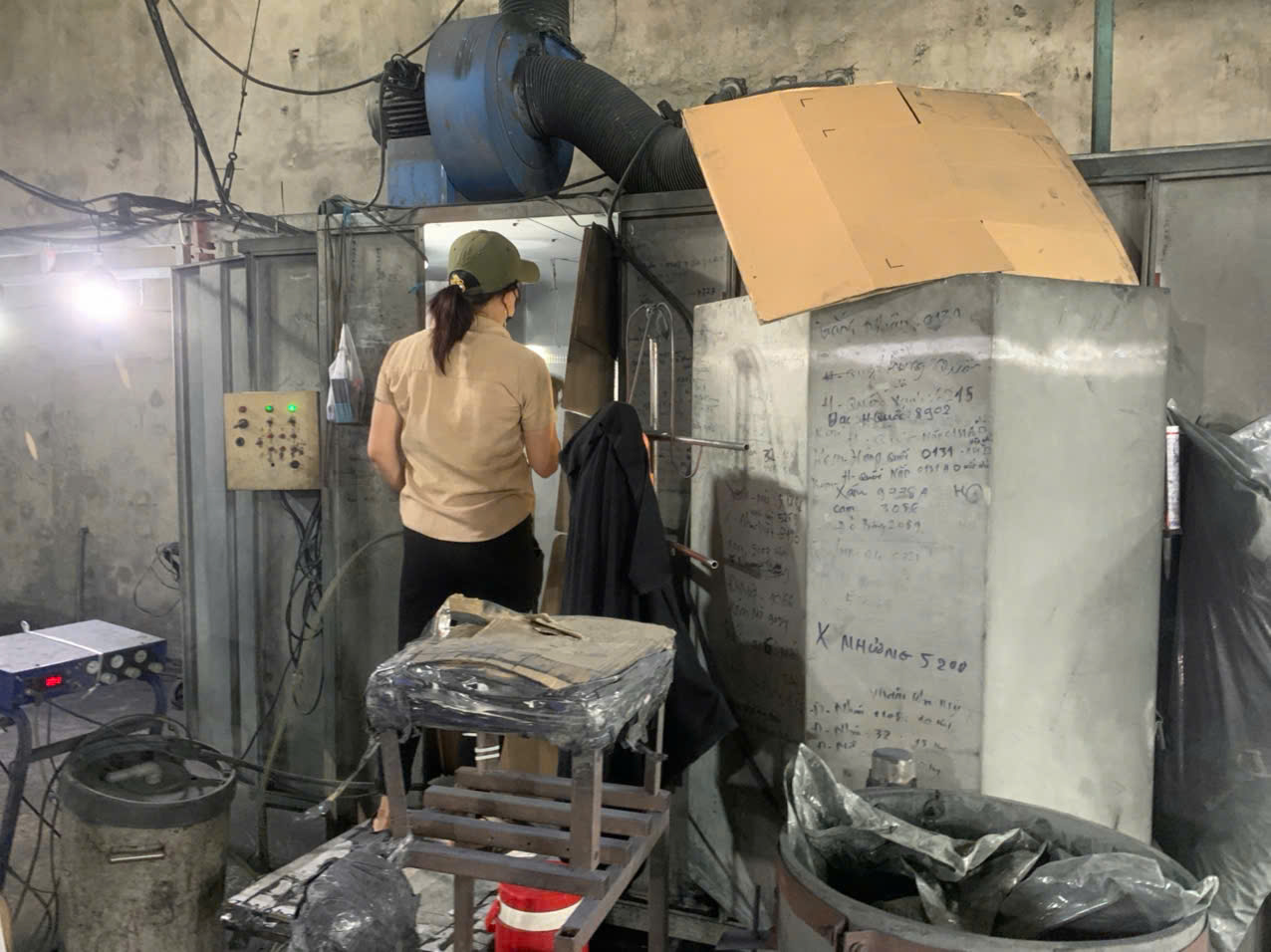
During a supplier audit near Ho Chi Minh City, I watched an operator wipe stamped parts with a rag before powder coating 3. That rag had touched a dozen oily parts already. We flagged it immediately.
The most damaging surface preparation mistakes are incomplete degreasing that leaves stamping oil behind, skipped or weak activation on oxide-prone metals, insufficient surface profile for mechanical bonding, poor rinsing that leaves soap residue, and inadequate drying that traps moisture under the coating.

Surface preparation is where most peeling problems are born. Industry guides commonly report that inadequate surface prep accounts for the overwhelming majority of adhesion failures—some sources cite figures as high as 85 to 90 percent. Those numbers are industry claims, not lab constants, but they match what we see in the field.
The Mistakes We Catch Most Often
Stamping parts arrive at the finishing line carrying baggage. Drawing compounds, press oils, oxide films, and even fingerprints all block bonding. Here are the failure points we check during every process audit:
- Incomplete degreasing. Stamping lubricants are formulated to cling to metal. A quick dip in tired cleaning solution will not remove them. Deep draws and folded flanges hide oil in corners.
- Weak or missing activation. Stainless steel, aluminum, and high-alloy steels form passive oxide layers 4 fast. Without an acid dip or etch, the coating bonds to the oxide, not the metal. The oxide lets go later.
- Surface too smooth. Coatings need an anchor profile. A polished surface gives the film nothing to grip mechanically.
- Poor rinsing. Cleaning chemicals left on the surface are contaminants themselves. Soap residue is a classic hidden cause of peel-off.
- Trapped moisture. Parts that are not fully dried after pretreatment, or cold parts that sweat condensation in a warm booth, will blister and peel.
Stamping-Specific Risk Zones
Formed geometry makes everything harder. On our multi-bend brackets, the inside radii of each fold trap lubricant, and punched holes hold rinse water. We instruct finishing partners to orient parts so liquids drain, and to verify dryness at the geometry—not just on flat faces. Time-to-coat matters as well. Cleaned steel starts re-oxidizing within hours in humid air, so cleaned parts should move to coating promptly, not sit overnight.
How do I know if my supplier's coating process control is strict enough to prevent peeling?
There is a trade-off I weigh on every custom parts project: a supplier with lower pricing but loose process records, versus one who documents every bath check and oven profile. The second one costs less over a year, every time.
A supplier's coating process control is strict enough when they document pretreatment chemistry checks, monitor bath temperature and contamination, verify oven cure profiles with actual part temperature data, measure film thickness against specification, and run routine adhesion tests with traceable records for each production batch.

Process control is the difference between a supplier who gets it right once and one who gets it right every time. When our team audits finishing lines across Vietnam, China, Taiwan, and India, we do not just ask whether controls exist. We ask to see the records, then we watch the line run.
What a Controlled Line Looks Like
A disciplined finishing operation controls variables at every stage. Here is the checklist we use during supplier audits, adapted for coated stamping parts:
| Process Stage | Control Point | What Good Looks Like |
|---|---|---|
| Incoming parts | Oil, rust, burr, moisture check | Documented inspection before parts enter pretreatment |
| Degreasing | Bath concentration and temperature | Logged checks per shift, scheduled bath replacement |
| Activation / etch | Chemistry strength, dwell time | Titration records, defined immersion times |
| Rinsing | Water quality, conductivity | Overflow rinses, conductivity limits, no stagnant tanks |
| Drying | Part dryness before coating | Verified dry-off oven exit temperature |
| Application | Film thickness 5 | Measured on flats, edges, and bends—not just one spot |
| Cure | Oven profile | Data-logger runs on actual parts, not just air temperature |
| Plating (if used) | Bath temperature, contacts | Contact continuity checks, contamination monitoring |
Red Flags That Predict Peeling
Watch for these warning signs. Cleaning tanks that look exhausted or smell of oil. No titration log for the pretreatment chemistry. Oven settings adjusted by operator memory rather than a documented recipe. Thickness measured only on flat, easy surfaces. Adhesion tests done "when the customer asks" instead of per batch.
One lesson from our own supplier development work: ask how the press shop and the finishing line communicate. If nobody controls the storage conditions and time gap between stamping and coating, oxidation and lubricant aging happen in that blind spot. The best suppliers treat stamping and finishing as one linked process, with handoff rules in writing.
What quality checks should I request to catch coating adhesion issues before shipment?
A purchasing manager we work with in the U.S. once told me his previous supplier "inspected everything" yet still shipped peeling parts. When we reviewed the records, no adhesion test had ever been run. Only cosmetics were checked.
Request cross-hatch adhesion tests per batch, film thickness measurements on edges and bends, a bend or impact test on sample parts, salt spray or humidity exposure for at-risk applications, cure verification records, and photo-documented final inspection reports before authorizing shipment.
Cosmetic inspection catches scratches. It does not catch adhesion failure. Peeling often hides beneath a perfect-looking surface, which is why you must specify functional tests in writing—on the purchase order or the control plan, not in a phone call.
The Core Tests to Specify
These are the checks we build into final inspection plans for coated stamping parts before they leave Asia:
| Test | What It Catches | When to Require It |
|---|---|---|
| Cross-hatch adhesion (tape test) | Weak interface bonding | Every batch, minimum |
| Film thickness (multiple points) | Thin edges, over-thick flats | Every batch, including bends |
| Bend or mandrel test | Brittle film, poor flexibility | Per lot on sample parts |
| Impact test | Over-cure brittleness, stress | Periodic or per lot |
| Solvent rub (MEK) | Under-cured powder or paint | When cure is in question |
| Humidity / salt spray 6 exposure | Latent moisture and corrosion risk | Qualification and periodic audit |
| Water-break test (pre-coat) | Residual oil before coating | In-process, every shift |
Make the Checks Match the Part
Generic checks miss stamping-specific risks. Insist that thickness readings include formed edges, inside radii, and areas near punched holes—the exact zones where our brackets and clips are most vulnerable. Ask for cross-hatch tests on a formed area, not only a flat tab, because springback stress lives in the bends.
Timing matters too. Because some adhesion failures are delayed, we recommend a short retained-sample program: the supplier holds coated samples from each lot for several weeks and re-tests them if any field issue appears. Finally, require the inspection report before shipment release, with photos and measured values. In our PPAP 7 and final inspection work, that single document requirement has stopped more bad shipments than any other control. It forces the supplier to actually run the tests, and it gives you traceability if anything surfaces later.
Conclusion
Coating peeling on stamping parts rarely comes down to bad luck. It comes down to contamination, weak pretreatment, cure errors, and loose process control—all preventable with disciplined checks and documented verification.
Here is the uncomfortable truth: by the time flakes appear at your dock, the failure happened weeks earlier and thousands of miles away. That is why we built our sourcing model around supplier audits, process control, PPAP documentation, and final inspection before parts ever board a ship. If recurring peeling is costing you rework, returns, or customer trust, tighten the interface—both the metal-to-coating interface and the buyer-to-supplier one. Get the surface right, verify the cure, test adhesion every batch, and demand the records. Do that, and peeling stops being a mystery and becomes a solved problem.
Frequently Asked Questions
How can I identify the root cause of coating adhesion failure on my stamping parts?
A buyer in Texas once emailed me photos of zinc-plated clips shedding flakes like confetti stamping oils 2 . Our engineers traced it back in three days—not to the plating bath, but to a skipped activation dip.
What surface preparation mistakes could be causing coating peeling on my parts?
During a supplier audit near Ho Chi Minh City, I watched an operator wipe stamped parts with a rag before powder coating 3 . That rag had touched a dozen oily parts already. We flagged it immediately.
How do I know if my supplier's coating process control is strict enough to prevent peeling?
There is a trade-off I weigh on every custom parts project: a supplier with lower pricing but loose process records, versus one who documents every bath check and oven profile. The second one costs less over a year, every time.
Footnotes
1. Quality management standard underlying supplier process control and documentation practices. ↩︎
2. Background on metal stamping process context for residual lub