
Last quarter, our Vietnam office flagged a client shipment that nearly triggered a CBP hold—because one invoice line said “metal parts” instead of the exact stamping description. That single word mismatch almost cost the importer thousands in penalties. U.S. CBP compliance requirements for sourcing stamping parts from Vietnam are not optional fine print. They are the difference between smooth customs clearance 1 and a devastating audit.
U.S. CBP compliance requirements for sourcing stamping parts from Vietnam include proving substantial transformation of raw materials, filing accurate ISF 10+2 declarations 24 hours before loading, matching all entry documents line-by-line, correctly classifying parts under HTS Chapter 73, and permanently marking each article with “Vietnam” as the country of origin.
Each of these requirements has teeth. Miss one, and you face delays, fines up to $5,000 per violation, or retroactive Section 301 duties 2 of 25% or more. Below, I break down the four critical areas where importers most often stumble—and how to protect yourself.
What documentation do I need to prove country of origin for stamping parts from Vietnam?
A few months ago, a U.S. buyer asked our team to help resolve a port hold on a shipment of stamped steel brackets. The root cause was simple: the Certificate of Origin listed one part number, but the commercial invoice listed a slightly different description. That inconsistency alone triggered a full CBP examination.
To prove country of origin for stamping parts from Vietnam, you need four matching documents: a Commercial Invoice with precise part descriptions and HTS codes, a detailed Packing List, a Bill of Lading with consistent shipper and consignee data, and a non-preferential Certificate of Origin (Form B) issued by the VCCI.

The "Four Documents" Rule
CBP does not accept a single document as proof. They cross-reference everything. If your commercial invoice says "cold-rolled steel mounting bracket, stamped" but your packing list says "metal parts," that mismatch alone can delay your shipment by weeks.
Here is what each document must contain:
| Document | Required Details | Common Mistake |
|---|---|---|
| Commercial Invoice | Part description, quantity, unit value, Incoterms, HTS code, seller/buyer info | Vague descriptions like "hardware" or "metal parts" |
| Packing List | Carton-level quantities, net/gross weights, dimensions, traceability labels | Missing per-carton detail or weight discrepancies |
| Bill of Lading | Shipper, consignee, cargo description matching the invoice exactly | Consignee name mismatch with Importer of Record |
| Certificate of Origin (Form B) | Issued by VCCI, stating Vietnam as country of origin | Using a generic factory-issued letter instead of Form B |
Why the Certificate of Origin Is Not Enough
I want to be direct about this. Many suppliers in Vietnam will hand you a Certificate of Origin and tell you it covers everything. It does not. CBP treats the CO as only one piece of evidence. They evaluate the underlying manufacturing process against the substantial transformation test 3 defined in 19 C.F.R. § 134.1(b).
This means the CO must be backed by production records, machine logs, and a clear bill of materials showing what happened inside the factory. A factory address printed on a carton is not evidence. A stamped label saying "Made in Vietnam" is not evidence. The manufacturing process is the evidence.
The ISF 10+2 Filing
On top of the four documents, your customs broker must file an Importer Security Filing 4 at least 24 hours before the container is loaded at the port in Vietnam—not before it arrives in the U.S. Late filing carries a penalty of up to $5,000 per violation. The ISF must include the country of origin, the HTSUS number, the manufacturer name, and the container stuffing location. These data points have no timing flexibility.
Our logistics team in Vietnam coordinates directly with the freight forwarder to make sure the ISF data matches the commercial invoice before the container is even sealed. This step catches errors before they become penalties. For a deeper dive into the full documentation checklist, see our guide on what U.S. customs documentation is needed when sourcing stamping parts from Vietnam.
Customs Value Declaration and Assists
One area importers often overlook is the customs value declaration. If you provided dies, molds, or tooling to the Vietnamese manufacturer, those are classified as "assists" under CBP rules. Their cost must be added to the transaction value for duty calculation. Failing to declare assists can result in undervaluation penalties during an audit.
How can I ensure my Vietnamese supplier meets U.S. tariff and customs classification rules?
When we onboarded a new stamping supplier near Ho Chi Minh City last year, the first thing our quality engineers asked for was not a price sheet—it was the HTS code mapping for every part in the catalog. The supplier had never been asked that before. That gap is where compliance problems begin.
To ensure your Vietnamese supplier meets U.S. tariff and customs classification rules, verify they can provide accurate HTS Chapter 73 codes for each stamped part, confirm their raw material sourcing documentation, validate that the stamping process constitutes substantial transformation under 19 C.F.R. § 134.1(b), and require production records that prove manufacturing occurred in Vietnam.

HTS Code Classification for Stamped Parts
Most stamped steel parts fall under HTS Chapter 73 5. But the specific 8-digit code determines the exact duty rate. Getting this wrong is one of the fastest ways to trigger a CBP review.
| Part Type | Typical HTS Range | Key Considerations |
|---|---|---|
| Steel mounting brackets | 7326.90.xx | Material composition and end use determine subheading |
| Spring clamps / clips | 7320.90.xx or 7326.90.xx | Function (spring vs. static) affects classification |
| Stamped fastener plates | 7318.xx.xx | If threaded, classification shifts significantly |
| Structural support brackets | 7308.90.xx | Size and load-bearing function matter |
I always recommend that importers work with a licensed customs broker to confirm the 8-digit code. Our team provides the broker with engineering drawings, material certificates, and photos of each stamped part. This makes classification faster and more accurate.
The Substantial Transformation Test
Here is the core legal question: does the stamping process in Vietnam create a new article with a new name, character, or use? If you start with a flat coil of cold-rolled steel and transform it into a finished mounting bracket through cutting, punching, bending, and forming, that typically qualifies as substantial transformation.
But if a supplier imports a semi-finished bracket from China and only drills two holes in Vietnam, that does not qualify. The bracket's name, character, and use remain unchanged. CBP will reclassify it as Chinese origin and apply the full Section 301 tariff—currently around 25%. For more on how these origin rules for sourcing stamping parts from Vietnam work in practice, see our detailed breakdown.
Anti-Dumping and Countervailing Duties
Steel and aluminum import monitoring is an active area for CBP. If your Vietnamese supplier uses steel substrates sourced from China, Taiwan, or Korea, those materials may be subject to anti-dumping and countervailing duties 6 with rates exceeding 400% in some cases. Even if the finished stamped part is genuinely made in Vietnam, the steel itself may carry AD/CVD obligations.
Our procurement team requires suppliers to provide mill certificates showing the origin of raw steel. We verify the HS code of the incoming material and cross-reference it against the current AD/CVD orders. This is not optional—it is a fundamental part of importer of record responsibilities. Learn more about the specific anti-dumping duty risks when sourcing stamping parts from Vietnam.
The First Sale Rule
One strategy some importers use is the "First Sale Rule 7." If a middleman purchases parts from a Vietnamese factory and resells them to the U.S. importer, CBP may allow the customs value to be based on the first sale (middleman to factory) rather than the higher resale price. This can reduce the dutiable value. However, the transaction must be a bona fide arm's-length sale, and proper documentation is required.
What compliance risks should I watch for when transshipping stamping parts through Vietnam?
One conversation changed how I think about transshipment risk. A prospective client told us their previous supplier in Vietnam was buying finished brackets from Guangdong, repacking them in Vietnamese cartons, and shipping them to the U.S. with a "Made in Vietnam" stamp. When CBP investigated, the importer—not the supplier—faced the penalties. That story is more common than you would expect.
The biggest compliance risks when transshipping stamping parts through Vietnam include CBP reclassifying goods as Chinese origin with retroactive 25% Section 301 duties, penalties for fraudulent country of origin marking, UFLPA enforcement on steel supply chains, and commingled goods triggering the highest applicable duty rate for entire shipments.

How CBP Detects Transshipment
CBP uses several methods to identify transshipment. They cross-reference shipping data, analyze production timelines, and conduct factory verifications. If a Vietnamese "factory" has five employees but exports ten containers per month, that raises a red flag. If the Bill of Lading shows the container was stuffed at a warehouse rather than a factory, that triggers scrutiny.
Recent enforcement has escalated. CBP now applies a baseline reciprocal tariff on Vietnamese goods, and if they determine the goods were transshipped from China with minimal processing, the effective duty can climb to 40% or more. The burden of proof falls entirely on the U.S. importer of record—not the Vietnamese supplier.
UFLPA and Steel Supply Chain Traceability
The Uyghur Forced Labor Prevention Act 8 adds another layer of risk. Steel and aluminum are high-priority sectors under UFLPA. If any raw material in your stamped parts originated from the Xinjiang region, CBP can detain the shipment at the port. The importer must provide "clear and convincing evidence" that no forced labor was involved.
This is where UFLPA supply chain traceability becomes critical. Our team requires suppliers to provide full material traceability—from the steel mill to the coil to the stamped part. We verify mill certificates and cross-check the steel mill's location against UFLPA entity lists.
Commingled Goods Risk
A lesser-known but serious risk involves commingled goods. If your Vietnamese-stamped brackets are stored in the same warehouse bins as identical brackets from China or another country, CBP can apply the highest applicable duty rate to the entire lot. This means your zero-duty Vietnamese parts could be assessed at the 25% China rate simply because they were mixed together.
| Risk Type | Trigger | Potential Consequence |
|---|---|---|
| Transshipment reclassification | Minimal processing, inconsistent production records | 25–40% retroactive Section 301 duty + penalties |
| UFLPA detention | Steel sourced from Xinjiang-linked suppliers | Shipment seizure, forced re-export, or destruction |
| Commingled goods | Vietnamese and Chinese parts stored together | Highest duty rate applied to entire lot |
| Fraudulent marking | "Made in Vietnam" on Chinese-made parts | Criminal penalties, seizure, debarment |
| ISF late filing | Filing after the 24-hour pre-loading deadline | Up to $5,000 per violation |
The 30-Day Examination Window
When CBP places a hold on your shipment for an origin examination, you have 30 days to provide documentation proving the parts are genuinely Vietnamese. This is not a generous timeline. If your supplier cannot produce dated production records, machine logs, QC inspection reports, and raw material purchase orders within that window, CBP will reclassify the goods.
I have seen importers lose this race because they relied on a supplier who "could not find the paperwork." That is why we maintain a digital archive of production records for every shipment. When a hold happens—and it will happen eventually—we can respond within days, not weeks.
How do I choose a Vietnam supplier that helps me avoid CBP audits and penalties?
The lesson I learned early in our Vietnam operations is this: the cheapest supplier is almost never the most compliant supplier. When we built our team of seven people in Vietnam, the first hires were not salespeople. They were quality engineers and supply chain auditors. That decision has saved our clients more in avoided penalties than any price negotiation ever could.
To choose a Vietnam supplier that helps you avoid CBP audits and penalties, verify they can provide full raw material traceability, confirm they have in-house stamping capability with documented production records, request evidence of prior U.S. export history without origin challenges, and consider obtaining a CBP binding ruling for products with mixed-origin materials.

The Five Questions to Ask Before Signing a Contract
Before committing to any Vietnamese stamping supplier, I recommend asking these five questions. If the supplier cannot answer all of them clearly, walk away.
-
Where are your core raw materials sourced? Ask for the HS code and country of origin for every steel coil, aluminum sheet, or alloy they use. If the answer is vague, that is a warning sign.
-
What manufacturing steps happen in your facility versus subcontracted? A supplier that outsources the actual stamping to another factory—or worse, to a facility across the border in China—is a transshipment risk.
-
Can you produce dated production records, machine logs, and QC records for each order? These records are what CBP actually examines during an audit. Without them, a Certificate of Origin is meaningless.
-
Have you previously shipped stamped parts to the U.S. without origin challenges? A track record of clean entries is strong evidence. A supplier that has never exported to the U.S. may not understand the documentation requirements.
-
Are you willing to support a CBP binding ruling application? If the supplier uses mixed-origin materials, a binding ruling under 19 C.F.R. Part 177 is the gold standard of defense. The supplier must provide a bill of materials, manufacturing process narrative, and facility photos.
The CBP Binding Ruling Strategy
A binding ruling is a formal determination from CBP that a specific product, made through a specific process, at a specific factory, qualifies as a particular country of origin. Once issued, it protects the importer against future origin challenges for that product.
The process works like this: the importer (or their customs broker) submits a detailed application to CBP. The application includes the bill of materials with HS codes for all inputs, a step-by-step manufacturing process description, photos of the factory and equipment, and samples if requested. CBP reviews the submission and issues a ruling—typically within 90 days.
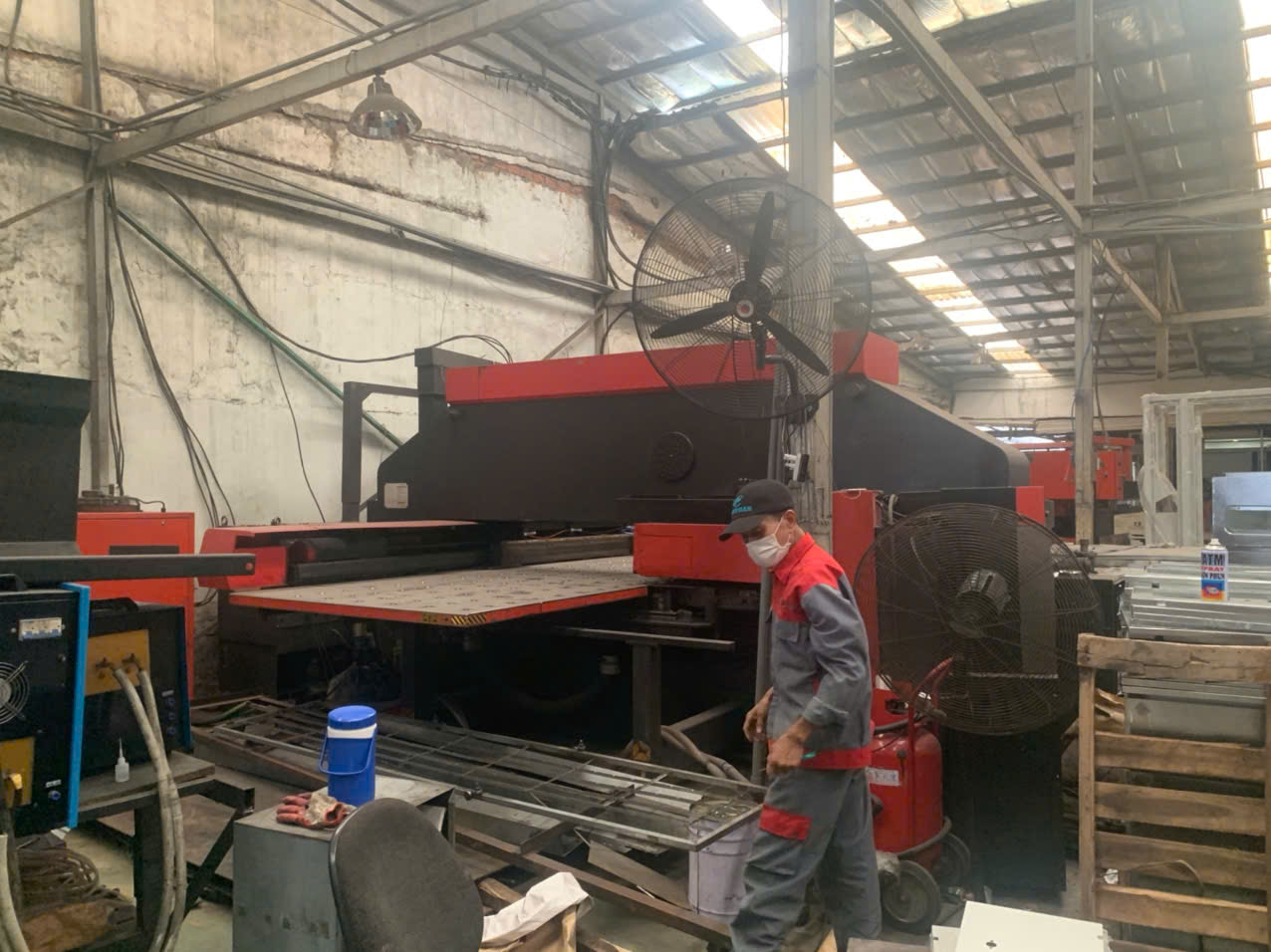
We help our clients prepare these applications. Our Vietnam team visits the factory, photographs the stamping presses, documents the production flow, and verifies the raw material sourcing. This on-the-ground verification is what makes the difference between a ruling that holds up and one that gets challenged.
Country of Origin Marking Requirements
Every stamped part entering the U.S. must be legibly marked with "Vietnam" in English. The marking must be permanent enough to reach the ultimate purchaser. For stamped metal parts, acceptable methods include die-stamping, etching, engraving, or permanent ink printing.
We create ready-to-print origin label files for our suppliers and specify the marking method in the purchase order. This prevents the common problem of a factory using a removable sticker that falls off during shipping—which CBP treats as a marking violation.
C-TPAT and Virtual Validations
For importers with higher volume, joining the Customs-Trade Partnership Against Terrorism (C-TPAT 9) program can reduce physical inspection frequency. CBP now conducts virtual validations for C-TPAT members sourcing from Vietnam, allowing remote supply chain security audits. This can significantly speed up cargo release and reduce port delays.
Steel and Aluminum Import Monitoring
Finally, be aware that CBP maintains an active steel and aluminum import monitoring system. Every entry of stamped steel parts is tracked. Unusual surges in volume from a particular Vietnamese supplier, combined with a corresponding drop in Chinese exports of the same product, will trigger an investigation. This is transshipment risk mitigation at the macro level—and it means your import patterns are being watched even when individual shipments clear without issues.
Conclusion
Sourcing stamping parts from Vietnam offers real tariff savings—but only if you get the compliance right. Match your documents, verify the manufacturing process, trace your raw materials, and consider a binding ruling for complex parts. The cost of doing this properly is a fraction of the cost of getting it wrong.
Frequently Asked Questions
What documentation do I need to prove country of origin for stamping parts from Vietnam?
A few months ago, a U.S. buyer asked our team to help resolve a port hold on a shipment of stamped steel brackets. The root cause was simple: the Certificate of Origin listed one part number, but the commercial invoice listed a slightly different description. That inconsistency alone triggered a full CBP examination.
How can I ensure my Vietnamese supplier meets U.S. tariff and customs classification rules?
When we onboarded a new stamping supplier near Ho Chi Minh City last year, the first thing our quality engineers asked for was not a price sheet—it was the HTS code mapping for every part in the catalog. The supplier had never been asked that before. That gap is where compliance problems begin.
What compliance risks should I watch for when transshipping stamping parts through Vietnam?
One conversation changed how I think about transshipment risk. A prospective client told us their previous supplier in Vietnam was buying finished brackets from Guangdong, repacking them in Vietnamese cartons, and shipping them to the U.S. with a "Made in Vietnam" stamp. When CBP investigated, the importer—not the supplier—faced the penalties. That story is more common than you would expect.
Footnotes
1. Official CBP guide on the basic importing process and clearance requirements. ↩︎
2. Comprehensive overview of Section 301 trade enforcement and tariff regulations. ↩︎
3. Official ITA explanation of the substantial transformation principle for origin determination. ↩︎
4. Reliable summary of the ISF 10+2 filing requirement for ocean cargo. ↩︎
5. The official Harmonized Tariff Schedule of the United States for steel articles. ↩︎
6. Department of Commerce page explaining AD/CVD trade remedies and enforcement. ↩︎
7. Overview of the valuation method allowing duties to be based on the first sale in a transaction chain. ↩︎
8. Official CBP guidance on compliance with forced labor prevention laws. ↩︎
9. Official page for the voluntary supply chain security program. ↩︎
10. Official database for searching and requesting administrative rulings on trade matters. ↩︎