When our team first helped a US client source custom mounting brackets from Vietnam, the order was perfect — until it stalled at customs because the supplier lacked proper certification RoHS and REACH declarations 1. That single delay cost weeks and thousands of dollars. It revealed a truth we now share with every buyer: making good parts is only half the battle. Proving compliance through the right certifications is what actually gets your sheet metal fabrication across borders.
Exporting sheet metal fabrication to Europe and the US requires, at minimum, ISO 9001 for quality management, CE marking for EU market access, and UL certification for US electrical enclosures. Industry-specific standards like ITAR compliance, AS9100D, and IATF 16949 unlock defense, aerospace, and automotive sectors respectively.
The certification landscape is layered. Some standards are universal baselines. Others are region-specific gates. And a few are the keys to the highest-margin work in defense and aerospace. Let me walk you through each layer based on what we see daily managing supply chains between Asia, Europe, and the United States.
Which ISO and quality management certifications should I prioritize for my sheet metal projects?
A few years back, one of our purchasing manager clients in the US asked us a simple question: "Why does my supplier have ISO 9001 but still ships bad parts?" That conversation changed how we evaluate and audit suppliers across Vietnam and China. It taught us that a certificate on the wall means nothing without the systems behind it.
For sheet metal fabrication exports, prioritize ISO 9001:2015 as the absolute baseline for quality management, then add ISO 14001 for environmental compliance and ISO 45001 for workplace safety. These three certifications together satisfy the core requirements of most OEMs and international buyers in both Europe and the US.
ISO 9001: The Entry Ticket
ISO 9001 is not optional. It is the minimum standard that serious buyers expect. This certification covers quality management systems, dimensional accuracy, defect control, and full traceability of parts. Without it, most OEMs will not even begin a conversation with a supplier.
In our supplier audit process, we verify not just that a factory holds ISO 9001 — we check that they actually follow it. We review their inspection records, corrective action logs, and how they handle non-conforming material. A certificate without practice is a red flag.
The industry is also moving toward ISO 9001:2026, which puts greater emphasis on risk-based thinking and supply chain resilience. If your supplier has not started preparing for this transition, it may signal a lack of forward-looking quality culture.
ISO 14001 and ISO 45001: No Longer Optional
European buyers, especially those subject to the EU Green Deal and Carbon Border Adjustment Mechanism, now treat ISO 14001 2 as a gatekeeper for market entry. This standard covers waste management, emissions control, and responsible chemical use in manufacturing. For sheet metal fabrication, where cutting fluids, coatings, and metal waste are common, this certification proves environmental responsibility.
ISO 45001 3 addresses occupational health and safety. Sheet metal shops involve welding, shearing, heavy lifting, and laser cutting — all high-risk activities. Buyers want to know their supply chain does not involve unsafe labor practices.
ISO 27001: Protecting Your Designs
This one surprises many buyers. ISO 27001 4 covers information security management. When you send proprietary design files and engineering drawings to a supplier, you need confidence those files are protected. We have seen cases where a supplier's lax digital security led to design leaks. For high-tech or proprietary custom parts, this certification is becoming a standard requirement.
| Certification | What It Covers | Who Requires It | Priority Level |
|---|---|---|---|
| ISO 9001:2015 5 | Quality management systems | All international buyers | Mandatory |
| ISO 14001 | Environmental management | EU buyers, Green Deal compliance | High (EU), Medium (US) |
| ISO 45001 | Occupational health & safety | Ethical sourcing programs | High |
| ISO 27001 | Information security | High-tech, defense, proprietary parts | Growing |
How do I navigate the specific regulatory differences between US and EU standards for my custom parts?
The trickiest conversation we have with buyers often starts like this: "We need this bracket to ship to both Germany and Texas — what do we need?" The answer is never simple, because Europe and the US have fundamentally different regulatory philosophies. Europe relies on directives and harmonized standards. The US leans on industry-specific safety listings and material specifications.
Europe requires CE marking as a mandatory declaration of conformity under directives like the Machinery Directive, while the US relies on UL certification for electrical enclosures and ASTM standards for material specifications. Exporters must understand that CE marking is a regulatory declaration, not a quality certification like ISO.
The European Gateway: CE Marking and EN Standards
CE marking 6 is the single most important regulatory requirement for selling sheet metal products in the EU and EEA. But here is the critical distinction many exporters miss: CE marking is not a certificate you buy. It is a declaration that you, the manufacturer, make. You are stating that your product meets all applicable EU safety, health, and environmental requirements.
The specific directives that apply depend on your product's end use. A sheet metal electrical enclosure might fall under the Electromagnetic Compatibility (EMC) directive and the Low Voltage Directive. A structural bracket might fall under the Construction Products Regulation, requiring compliance with EN 1090 for steel and aluminum structures.
For welding-intensive fabrication — common in automotive and rail applications — ISO 3834 is often required. This standard certifies that welding processes are controlled and that welders are qualified for the specific procedures used.
A key obligation that many exporters overlook: you must maintain a technical documentation file for at least 10 years. This file includes design reviews, risk assessments, test results, and material certification records. If a market surveillance authority in Europe asks for this file and you cannot produce it, your CE marking is invalid.
The US Gateway: UL, ASTM, and ITAR
In the United States, the regulatory landscape is driven by safety listings and material standards rather than broad directives.
For electrical enclosures and panels, UL 508A is the critical standard. Many US clients require UL-certified Type 1 508A enclosures to ensure compliance with the National Electrical Code. This is not just a preference — in many cases, it is a legal requirement for the end-use application.
Material specifications in the US follow ASTM standards. For example, ASTM A36 defines the chemical and mechanical properties of structural carbon steel. When a US buyer specifies a material grade, they typically reference ASTM designations, and your material certification must match.
For defense-related sheet metal fabrication, ITAR compliance 7 is non-negotiable. ITAR registration, granted by the Directorate of Defense Trade Controls (DDTC), is required for any manufacturer exporting defense articles, technical data, or defense services. Without it, you cannot bid on US government defense contracts or even receive controlled technical drawings.
| Requirement | Europe (EU/EEA) | United States |
|---|---|---|
| Primary regulatory mark | CE marking | UL certification 8 (for electrical) |
| Structural steel standard | EN 1090-1/2 | ASTM A36, AISC standards |
| Welding quality standard | ISO 3834 | AWS welding standards |
| Defense export control | EU dual-use regulations | ITAR registration |
| Electrical enclosures | EMC + Low Voltage Directives | UL 508A |
| Technical file retention | Minimum 10 years | Varies by contract |
| Environmental substance control | REACH, RoHS | EPA regulations, state-level rules |
Understanding Dual-Use Controls
One area that catches exporters off guard is dual-use regulations. Even if a sheet metal component is intended for civilian use, if it has potential military applications, it may require a special export license in both markets. We always advise our clients to evaluate their parts against dual-use item lists early in the project, not after production is complete.
Can I rely on a supplier's PPAP documentation to ensure my quality requirements are met every time?
Last quarter, we completed a PPAP package for a set of heavy-duty custom-fabricated mounting brackets destined for an industrial automation client in Ohio. The package included 18 elements — from dimensional reports and material certifications to process flow diagrams and control plans. It took our quality team two weeks to compile properly. And yet, the buyer still asked: "Does this guarantee I will get good parts every shipment?"
PPAP documentation is a powerful tool for validating a supplier's production process before mass production begins, but it is not a guarantee of ongoing quality. It must be paired with continuous process control, regular audits, and final inspection protocols to ensure consistent conformity across every shipment.

What PPAP Actually Proves
The Production Part Approval Process 9 (PPAP) originated in the automotive industry under IATF 16949 10 requirements. Its purpose is specific: to demonstrate that a supplier's production process can consistently produce parts that meet all engineering design and specification requirements.
A full PPAP submission typically includes design records, process flow diagrams, control plans, measurement system analysis, dimensional results, material test reports, and a Part Submission Warrant. When done right, it is a comprehensive snapshot of a supplier's capability at the point of approval.
But here is what it does not do: it does not monitor what happens after approval. A supplier might pass PPAP with flying colors and then gradually drift — tooling wears, operators change, raw material batches vary. This is where ongoing process control becomes essential.
The Gap Between Approval and Production
In our experience managing production across multiple factories, the gap between PPAP approval and ongoing production quality is where most problems occur. We bridge this gap through several mechanisms:
- Factory Production Control audits at regular intervals, not just at initial qualification
- First Article Inspection on each new production run
- Statistical Process Control data reviews during production
- Final inspection before shipment, covering dimensions, surface finish, and packaging
When PPAP Matters Most
PPAP is most valuable in three scenarios:
- New part launch — validating the supplier can make the part before committing to volume
- Process change — confirming that a tooling change, material substitution, or facility move has not affected quality
- Supplier qualification — providing objective evidence to your end customer that the supply chain is controlled
For industries like aerospace (AS9100D) and medical (ISO 13485), PPAP-equivalent processes are built into the quality standard itself, with even stricter documentation requirements.
| PPAP Element | What It Validates | Ongoing Relevance |
|---|---|---|
| Dimensional results | Part geometry meets drawing specs | Must be repeated per production run |
| Material certification | Raw material meets chemical and mechanical specs | New cert required per material batch |
| Control plan | Process controls are defined and documented | Must be audited periodically |
| Process capability study | Process is statistically capable (Cpk ≥ 1.33) | Must be monitored over time |
| Part Submission Warrant | Supplier formally commits to conformity | Updated with any design or process change |
The bottom line: PPAP is the starting line for quality, not the finish line. Our team treats it as the foundation of a broader quality assurance strategy that includes process control, in-process checks, and pre-shipment inspection. That is how we help buyers achieve "right first time" results consistently.
What environmental and safety compliance documents do I need to request for my international shipments?
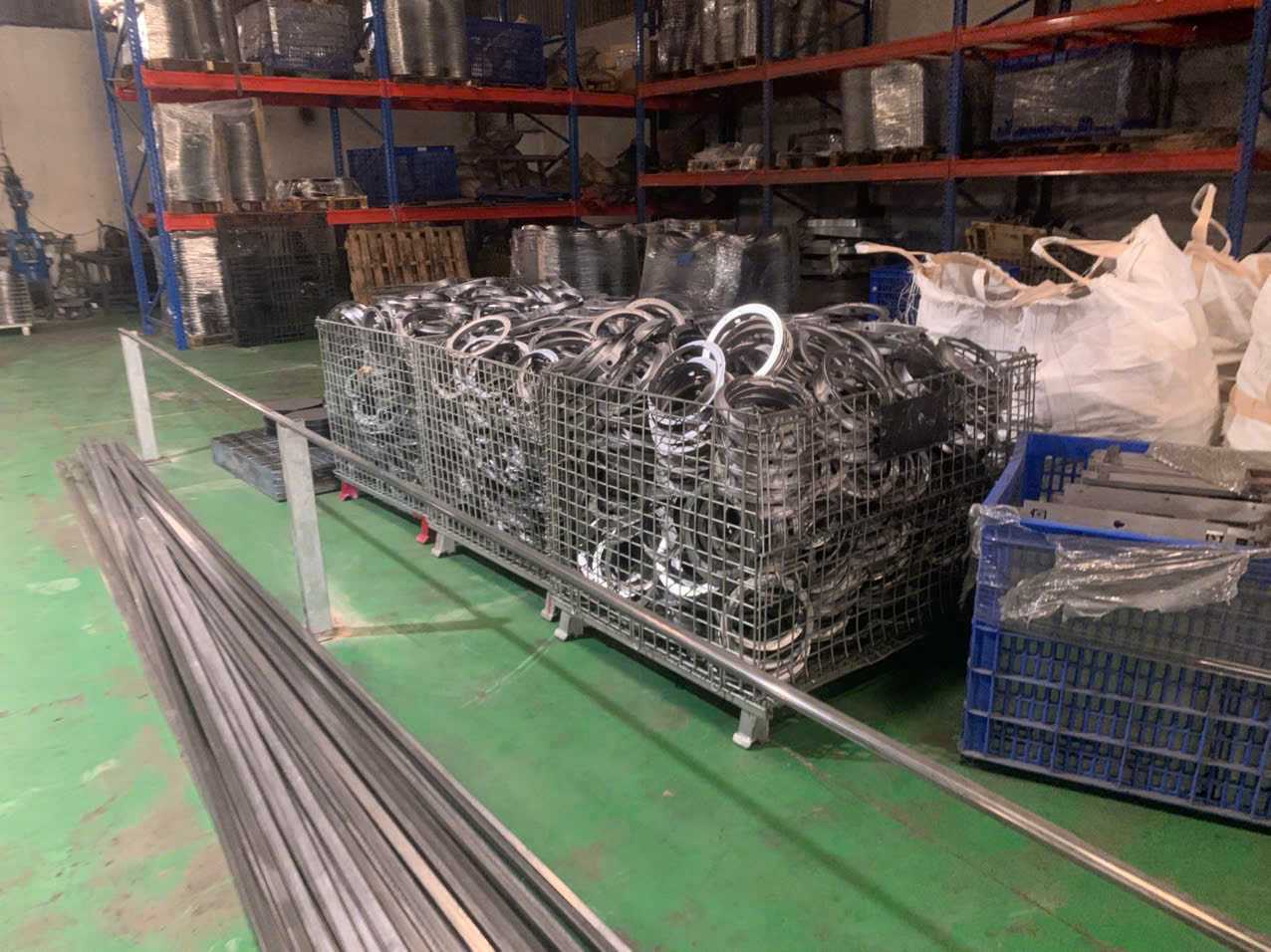
One lesson we learned early in our export operations: a perfectly made custom part can still be rejected at the border — or worse, pulled from the market — if it lacks the right environmental and safety compliance documents. A client once had a shipment of coated sheet metal panels held at a European port because the supplier could not produce RoHS compliance documentation for the powder coating. The parts were fine. The paperwork was not.
For international sheet metal shipments, request RoHS and REACH declarations for EU-bound goods, Safety Data Sheets for coatings and treatments, Certificates of Conformance, material test reports, and country-specific export documentation. These documents prove your parts meet environmental regulations and enable smooth customs clearance.
RoHS and REACH: The EU Environmental Gate
The Restriction of Hazardous Substances (RoHS) directive limits the use of specific hazardous materials in electrical and electronic equipment. Even if your sheet metal part is a simple bracket, if it becomes a component of an electronic product, the entire assembly must comply with RoHS. This means the base metal, surface treatment, plating, and any adhesives must all be verified.
REACH is broader. It covers the Registration, Evaluation, Authorisation, and Restriction of Chemicals used in manufacturing. For sheet metal fabrication, this typically applies to surface treatments like chromate conversion coatings, zinc plating baths, and paint or powder coat formulations. Your supplier must be able to provide a REACH declaration confirming that no Substances of Very High Concern (SVHC) are present above threshold levels.
Material Certifications and Traceability
Every shipment should include material test reports — also called Mill Test Certificates (MTCs). These documents trace the raw material back to the mill and verify chemical composition and mechanical properties. For critical applications, especially aerospace and structural work, full traceability from heat number to finished part is required.
A Certificate of Conformance (CoC) accompanies the shipment and states that the parts meet all specified requirements. This is your supplier's formal declaration. It should reference the drawing revision, material grade, and any applicable standards.
Safety Data Sheets and Hazardous Materials
If your parts undergo chemical processing — anodizing, plating, painting — you may need Safety Data Sheets (SDS) for the chemicals used. These are especially relevant for customs declarations and for your own workplace safety compliance when handling the finished goods.
Export Regulations and Documentation
Beyond product compliance, you need proper export documentation. This includes commercial invoices, packing lists, certificates of origin, and potentially export licenses if the parts are classified as dual-use items. For US-bound shipments, Harmonized Tariff Schedule (HTS) codes must be accurate to avoid duty misclassification.
For defense-related items, export regulations become far more stringent. ITAR-controlled items require specific State Department approvals, and technical documentation sharing itself is regulated. We always verify classification early in the quoting process to avoid surprises later.
| Document | Required For | Who Provides It |
|---|---|---|
| RoHS Declaration | EU-bound electrical/electronic components | Supplier or coating vendor |
| REACH Declaration | All EU-bound products with chemical substances | Supplier with chemical vendor data |
| Mill Test Certificate (MTC) | Material traceability and verification | Raw material supplier |
| Certificate of Conformance (CoC) | Every shipment | Fabrication supplier |
| Safety Data Sheet (SDS) | Parts with chemical coatings/treatments | Chemical or coating supplier |
| Certificate of Origin | Customs clearance, trade agreements | Exporter or chamber of commerce |
| Export License | Dual-use or defense-related items | Government agency (DDTC, BIS) |
The Supply Chain Compliance Chain
Achieving full compliance extends beyond your direct supplier. Sub-suppliers of integrated components, coatings, and finishes must also comply with relevant export regulations. We verify this by requesting compliance declarations from every tier of the supply chain involved in the finished product. A single non-compliant coating from a third-tier vendor can invalidate the entire shipment's compliance status. Understanding how to evaluate sheet metal fabrication supplier capabilities and qualifications across the entire supply chain is essential for ensuring this level of compliance.
Conclusion
Exporting sheet metal fabrication to Europe and the US demands a layered certification strategy. Start with ISO 9001 as your baseline, add CE marking or UL certification for your target region, and pursue industry-specific standards to access high-margin defense, aerospace, and medical markets. For a deeper understanding of the primary ISO quality standards for sheet metal fabrication, review how each standard applies to your specific export requirements.
Frequently Asked Questions
Which ISO and quality management certifications should I prioritize for my sheet metal projects?
A few years back, one of our purchasing manager clients in the US asked us a simple question: "Why does my supplier have ISO 9001 but still ships bad parts?" That conversation changed how we evaluate and audit suppliers across Vietnam and China. It taught us that a certificate on the wall means nothing without the systems behind it.
How do I navigate the specific regulatory differences between US and EU standards for my custom parts?
The trickiest conversation we have with buyers often starts like this: "We need this bracket to ship to both Germany and Texas — what do we need?" The answer is never simple, because Europe and the US have fundamentally different regulatory philosophies. Europe relies on directives and harmonized standards. The US leans on industry-specific safety listings and material specifications.
Can I rely on a supplier's PPAP documentation to ensure my quality requirements are met every time?
Last quarter, we completed a PPAP package for a set of heavy-duty custom-fabricated mounting brackets destined for an industrial automation client in Ohio. The package included 18 elements — from dimensional reports and material certifications to process flow diagrams and control plans. It took our quality team two weeks to compile properly. And yet, the buyer still asked: "Does this guarantee I will get good parts every shipment?"
Footnotes
1. Explains the EU regulation for chemical registration, evaluation, authorization, and restriction, alongside RoHS. ↩︎
2. Covers the international standard for environmental management systems. ↩︎
3. Specifies requirements for an occupational health and safety management system. ↩︎
4. Explains the international standard for information security management systems. ↩︎
5. Explains the international standard for quality management systems. ↩︎
6. Details the mandatory conformity mark for products sold in the European Economic Area. ↩︎
7. Explains US regulations controlling the export of defense-related articles and services. ↩︎
8. Describes the safety certification for products in the United States. ↩︎
9. Replaced with a comprehensive guide from Quality-One, a reputable quality management training and consulting firm, as the original AIAG link was inaccessible. ↩︎
10. Defines the quality management system standard for the automotive industry. ↩︎