Food-grade stainless steel sheet metal fabrication certifications confuse many buyers we work with — most assume the raw metal itself carries an FDA stamp.
Food-grade stainless steel sheet metal fabrication requires no single material certification. Compliance is system-level: the finished equipment must meet FDA, NSF, and often USDA standards, supported by fabricator certifications like ISO 9001:2015, AWS welder qualifications, ASME process standards, and mandatory Mill Test Reports for full material traceability.
This article breaks down every certification, test report, and audit step you need to know ASTM specification 1. Whether you source from domestic shops or overseas fabricators in Vietnam, this guide will help you build a bulletproof compliance strategy.
How do I verify that my custom sheet metal parts meet FDA and NSF food-grade standards?
A purchasing manager we work with in the Midwest once rejected an entire shipment of stainless steel mixing hoppers because the supplier claimed the parts were "FDA approved" — yet had zero documentation to prove it.
To verify FDA and NSF food-grade compliance, request Mill Test Reports confirming approved stainless steel grades, demand surface finish measurements at or below 32 Ra, review weld inspection records from a Certified Welding Inspector, and confirm the fabricator holds ISO 9001:2015 and relevant NSF/ANSI registrations for the finished equipment.
The first thing to understand is that the FDA does not "approve" raw stainless steel. The FDA Food Rule governs food contact materials by requiring that no deleterious substances migrate into food during processing. FDA Food Code 2 This means your finished equipment — not the raw sheet metal — must meet the standard. The same applies to NSF certification. NSF International 3 certifies completed systems and equipment against standards like NSF/ANSI 2 (food equipment) and NSF/ANSI 51 (food equipment materials). The raw stainless steel plate sitting in a warehouse has no NSF stamp.
Understanding the Regulatory Framework
Three main bodies govern food-grade compliance in the United States:
| Regulatory Body | Standard / Rule | What It Covers |
|---|---|---|
| FDA | FDA Food Rule (21 CFR) | No migration of harmful substances from food contact materials into food |
| NSF International | NSF/ANSI 2 and NSF/ANSI 51 | Sanitation and material requirements for food equipment |
| USDA-FSIS 4 | Meat and Poultry Inspection Regulations | Equipment used in USDA-inspected facilities (meat, poultry, egg) |
In our experience exporting custom sheet metal components to U.S. food equipment OEMs, we have seen buyers conflate these three bodies. The FDA sets the baseline rule. NSF provides a voluntary but widely expected testing and certification program. The USDA adds another layer for facilities that process meat and poultry. If your parts go into a dairy processing line, you may also encounter 3-A Sanitary Standards 5, which define hygienic design principles for dairy and beverage equipment.
The Verification Checklist
Here is the practical sequence I recommend to any buyer verifying food-grade compliance:
- Confirm the stainless steel grade. Request the Mill Test Report 6. For standard food contact, 304 stainless steel is the baseline. For environments with chlorides, acids, or aggressive clean-in-place systems, 316 or 316L is required.
- Check surface finish. Food contact surfaces must have a roughness average (Ra) of 32 or lower. Our quality team measures this with a profilometer at incoming inspection and after final polishing.
- Review weld quality. All sanitary welds should use TIG (GTAW) welding for smooth, full-penetration, crevice-free joints. Ask for weld logs and inspection records signed by a Certified Welding Inspector (CWI).
- Ask for the fabricator's quality certifications. ISO 9001:2015 7 is the baseline. AWS and ASME certifications confirm welding process control.
- Request a Certificate of Conformity. This document ties the MTR, weld records, surface finish data, and passivation 8 records into one audit-ready package.
The key insight is that compliance is not a single stamp. It is a chain of evidence. Every link — from raw material to final surface treatment — must be documented and traceable.
What specific material test reports should I demand from my stainless steel fabricator?
One lesson we learned early in our supply chain work was that a missing Mill Test Report can delay a shipment by weeks — or worse, force a buyer to scrap parts that cannot be traced back to a verified alloy.
You should demand Mill Test Reports (MTRs) that confirm the exact alloy composition, mechanical properties, and heat number for every batch of stainless steel used. Additionally, request passivation records, surface finish test results, weld inspection logs with CWI sign-off, and a consolidated Certificate of Conformity for regulatory audit documentation.
What Is a Mill Test Report?
A Mill Test Report (MTR), also called a mill certificate or certified material test report (CMTR), is a document issued by the steel mill that produced the raw material. It certifies the chemical composition and mechanical properties of a specific heat (batch) of steel. For food-grade stainless steel sheet metal fabrication, the MTR is the foundational document for material traceability.
Every MTR should include:
- Heat number — ties the specific sheet to a production batch at the mill.
- Chemical composition — confirms the percentages of chromium, nickel, molybdenum, and other elements match the specified grade (e.g., 304, 316, 316L).
- Mechanical properties — tensile strength, yield strength, elongation.
- ASTM specification — typically ASTM A240 for flat-rolled stainless steel plate and sheet.
The Full Documentation Package
Beyond the MTR, a complete audit-ready package for food-grade components should include:
| Document | Purpose | Who Issues It |
|---|---|---|
| Mill Test Report (MTR) | Verifies alloy composition and material origin | Steel mill |
| Passivation Record | Confirms chromium oxide layer was restored after fabrication | Fabricator or chemical processor |
| Surface Finish Test Report | Proves Ra roughness meets ≤32 Ra requirement | Fabricator QC team |
| Weld Inspection Log / Weld Map | Documents every weld location, process, and CWI inspection result | Certified Welding Inspector |
| Certificate of Conformity (CoC) | Consolidates all evidence into one compliance statement | Fabricator |
In our projects, we treat the documentation package as a deliverable equal in importance to the parts themselves. When we manage fabrication in Vietnam for U.S. buyers, our quality engineers verify each document against the purchase order requirements before the parts ship. This prevents the nightmare scenario where parts arrive at a U.S. port and the buyer's quality team has no way to prove material traceability or corrosion resistance to an auditor.
Why Passivation Records Matter
After cutting, bending, or welding stainless steel, the protective chromium oxide layer is disrupted. Passivation — typically using a nitric or citric acid bath per ASTM A967 — restores this layer. Without it, the surface is vulnerable to corrosion, which is unacceptable for food contact materials. We always require passivation records that include the acid type, concentration, immersion time, temperature, and rinse verification.
Emerging Traceability Trends
Some forward-thinking fabricators now offer blockchain-enabled digital traceability. Each stainless steel batch gets an immutable digital record linking the mill origin, chemical composition, processing steps, and inspection results. While this is not yet mainstream, we see growing demand from large U.S. food equipment OEMs who want supply chain transparency beyond a paper MTR.
How can I audit an overseas supplier to ensure they follow food-safe manufacturing practices?
The trade-off we weigh most often with U.S. buyers is cost savings versus quality risk. Sourcing food-grade stainless steel fabrication from Asia can reduce costs significantly, but only if the supplier actually follows food-safe manufacturing practices.
Audit an overseas supplier by verifying their ISO 9001:2015 certification, inspecting their welding qualifications (AWS-certified welders, CWI on staff), reviewing their surface finish and passivation capabilities, examining past MTRs and weld logs, and conducting an on-site factory audit — ideally with a local team that understands both the fabrication process and regulatory requirements.
The On-Site Audit Process
Remote document reviews are a starting point, but they are not enough. Our team in Vietnam conducts on-site audits that follow a structured protocol. Here is the sequence we use:
Step 1: Certification Review. Before visiting, request copies of ISO 9001:2015, AWS welder qualifications 9, and any ASME certifications. Verify them against the issuing body’s database.
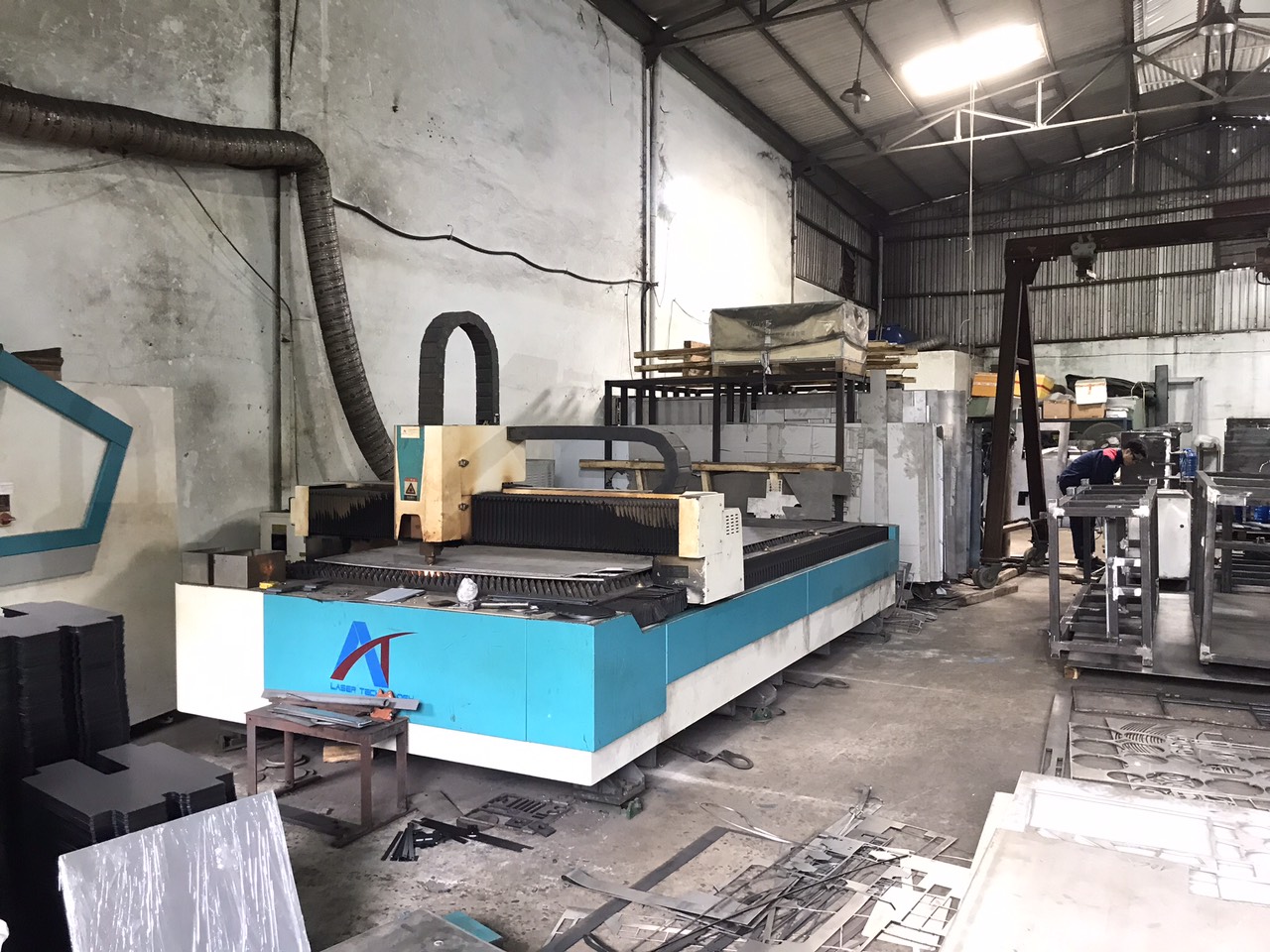
Step 2: Facility Walkthrough. Look at the shop floor. Is it clean and organized? For food-grade work, you want to see dedicated areas for stainless steel fabrication — no carbon steel contamination. Cross-contamination from carbon steel tooling (grinding wheels, brushes, clamps) can embed iron particles into the stainless surface, leading to rust spots that violate hygienic design principles.
Step 3: Welding Capability Check. Confirm that TIG (GTAW) welding is the standard process for sanitary joints. MIG welding produces spatter that requires extensive post-weld polishing and often leaves micro-crevices. Ask to see welding procedure specifications (WPS) and procedure qualification records (PQR). Verify that a Certified Welding Inspector reviews and signs off on weld quality standards.
Step 4: Surface Finish Verification. Ask the supplier to demonstrate their surface finish measurement process. They should have a profilometer and be able to show you readings at or below 32 Ra on food-contact surfaces. Check if they offer electropolishing 10 — this process smooths the surface beyond mechanical polishing and enhances cleanability and corrosion resistance.
Step 5: Documentation System Review. Pull a random past order and trace it backward. Can the supplier show you the MTR for the raw material, the weld log, the passivation record, and the final inspection report? If they cannot, their traceability system has gaps.
Red Flags to Watch For
- No dedicated stainless steel area — carbon steel and stainless steel processed side by side.
- Welders without AWS or equivalent certifications.
- No profilometer or surface roughness tester on site.
- MTRs that look generic or cannot be tied to a specific batch.
- No passivation process or records.
- Resistance to sharing documentation.
Why a Local Team Matters
When we audit suppliers in Vietnam, our seven-person local team handles everything from initial screening to PPAP documentation. They speak the language, understand the local manufacturing culture, and can visit the factory on short notice. For U.S. buyers, this eliminates the cost and time of flying across the Pacific for every audit. It also means issues are caught early — before non-conforming parts ship.
What are the essential quality certifications I need to see before importing food-grade components from Vietnam?
During a recent project involving custom stainless steel brackets for a food processing line, our Vietnam office spent two weeks qualifying a new fabricator — because the buyer's end customer required a specific set of certifications that many Vietnamese shops had never heard of.
Before importing food-grade stainless steel components from Vietnam, verify the supplier holds ISO 9001:2015 certification, provides Mill Test Reports with every shipment, employs AWS-qualified welders inspected by a CWI, follows ASTM A967 passivation standards, and can produce a complete regulatory audit documentation package including weld maps, surface finish reports, and a Certificate of Conformity.
Certification Requirements at a Glance
Here is a consolidated table of the certifications and documents you should require from any Vietnamese fabricator producing food-grade stainless steel sheet metal components:
| Certification / Document | What It Proves | Mandatory or Recommended |
|---|---|---|
| ISO 9001:2015 | Quality management system is in place and audited | Mandatory |
| AWS Welder Qualification | Welders are trained and tested for specific processes (TIG/GTAW) | Mandatory for sanitary welds |
| ASME Certification | Fabrication processes meet pressure vessel / process equipment standards | Recommended for certain equipment |
| Mill Test Report (MTR) | Raw material alloy composition and traceability | Mandatory |
| Passivation Record (ASTM A967) | Corrosion-resistant surface layer restored after fabrication | Mandatory |
| Surface Finish Report | Ra roughness ≤32 on food-contact surfaces verified by profilometer | Mandatory |
| Weld Map / Weld Log | Every weld location documented and inspected by CWI | Mandatory for audit readiness |
| Certificate of Conformity (CoC) | All compliance evidence consolidated in one document | Mandatory |
Navigating the Vietnam Manufacturing Landscape
Vietnam's sheet metal fabrication sector has grown rapidly. Many shops now serve global food equipment OEMs. However, the maturity level varies significantly. Some factories hold genuine ISO 9001:2015 certification from accredited bodies. Others hold certificates from unaccredited registrars that would not survive a buyer's audit.
When our team evaluates a Vietnamese supplier, we verify the ISO certificate against the accreditation body's online database. We also confirm the certificate scope covers stainless steel fabrication — not just general metalwork. A shop certified for carbon steel welding may not have the procedures, clean-room areas, or trained welders needed for food-grade stainless steel work. Understanding how to evaluate sheet metal fabrication supplier capabilities using technical specifications is critical during this qualification process.
Stainless Steel Grades: Choosing the Right One
Grade selection directly affects corrosion resistance and long-term food safety. Here is a quick comparison:
| Grade | Chromium | Nickel | Molybdenum | Best For | Relative Cost |
|---|---|---|---|---|---|
| 304 | ~18% | ~8% | None | Standard food contact, dry environments | Lower |
| 316 | ~16% | ~10% | ~2% | High-chloride environments, acidic foods | Higher |
| 316L | ~16% | ~10% | ~2% | Welded applications in corrosive environments | Highest |
For most food-grade sheet metal parts — brackets, panels, housings, chutes — 304 is sufficient. But if the parts will contact salt-based cleaning solutions or acidic products, 316 is the right choice. For welded assemblies, 316L is preferred because its lower carbon content reduces the risk of sensitization (chromium carbide precipitation at weld zones), which can cause intergranular corrosion. For a deeper dive into how these materials perform in fabrication, see our guide on how stainless steel, aluminum alloy, and carbon steel compare in sheet metal fabrication.
Surface Finish and Hygienic Design
Surface finish requirements for food contact go beyond aesthetics. A surface rougher than 32 Ra has micro-crevices where bacteria can harbor and resist cleaning. The typical finish specification is #4 (equivalent to 2B or better), often followed by electropolishing or passivation.
Electropolishing removes a thin layer of surface material using an electrochemical process. It smooths peaks and valleys at the microscopic level, creating a surface that is easier to clean and more resistant to corrosion. For clean-in-place systems — where equipment is cleaned without disassembly — electropolished surfaces are especially valuable because they reduce chemical and water usage during cleaning cycles.
What About EU Regulations?
If your food-grade components will also enter the European market, be aware of EC 1935/2004, which governs food contact materials in the EU. The requirements are similar in principle — no migration of harmful substances — but the testing and documentation requirements differ. Our team has experience preparing dual-market documentation packages for buyers who distribute in both the U.S. and Europe.
Conclusion
Food-grade stainless steel sheet metal fabrication compliance is not about a single stamp — it is a documented chain from mill to finished part, covering material traceability, weld quality standards, surface finish requirements, and fabricator certifications like ISO 9001:2015 and AWS.
Frequently Asked Questions
What Is a Mill Test Report?
A Mill Test Report (MTR), also called a mill certificate or certified material test report (CMTR), is a document issued by the steel mill that produced the raw material. It certifies the chemical composition and mechanical properties of a specific heat (batch) of steel. For food-grade stainless steel sheet metal fabrication, the MTR is the foundational document for material traceability.
What About EU Regulations?
If your food-grade components will also enter the European market, be aware of EC 1935/2004, which governs food contact materials in the EU. The requirements are similar in principle — no migration of harmful substances — but the testing and documentation requirements differ. Our team has experience preparing dual-market documentation packages for buyers who distribute in both the U.S. and Europe.
How do I verify that my custom sheet metal parts meet FDA and NSF food-grade standards?
A purchasing manager we work with in the Midwest once rejected an entire shipment of stainless steel mixing hoppers because the supplier claimed the parts were "FDA approved" — yet had zero documentation to prove it.
Footnotes
1. Provides details on the ASTM standard for flat-rolled stainless steel. ↩︎
2. Found the current official FDA Food Code landing page, which links to the latest version. ↩︎
3. Provides information on NSF’s role in food equipment certification. ↩︎
4. Details USDA’s regulations for meat and poultry processing equipment. ↩︎
5. Explains hygienic design principles for dairy and beverage equipment. ↩︎
6. Defines what a Mill Test Report is and its purpose. ↩︎
7. Details the international standard for quality management systems. ↩︎
8. Explains the passivation process for stainless steel corrosion resistance. ↩︎
9. Explains the American Welding Society’s welder qualification standards. ↩︎
10. Describes the benefits and process of electropolishing for stainless steel. ↩︎