
Common mistakes novice buyers make sourcing stamping parts from Vietnam cost real money ISO 9001 certificates 1. I have watched brackets arrive with wrong tolerances, and our Vietnam team fixes these failures weekly.
The most common mistakes are sending vague drawings, picking non-specialist suppliers, chasing the lowest unit price, skipping sample approval and factory audits, ignoring tooling ownership, and underestimating lead times, Tet shutdowns, and export paperwork. Most failures come from weak buyer preparation, not from Vietnam itself.
The good news is that every one of these mistakes is preventable. Below, I break down where new buyers go wrong and what to do instead.
How Do I Avoid Choosing the Wrong Stamping Supplier in Vietnam?
A few years back, our Vietnam office audited a factory that had quoted a client's stamped mounting clips. The plant was a CNC shop with one old press. That visit saved the project.
Avoid the wrong supplier by verifying that stamping is the factory's core process, auditing the plant in person or through a local team, checking press capacity and toolroom capability, reviewing sample parts and inspection reports, and matching the supplier's regional cluster to your part type.

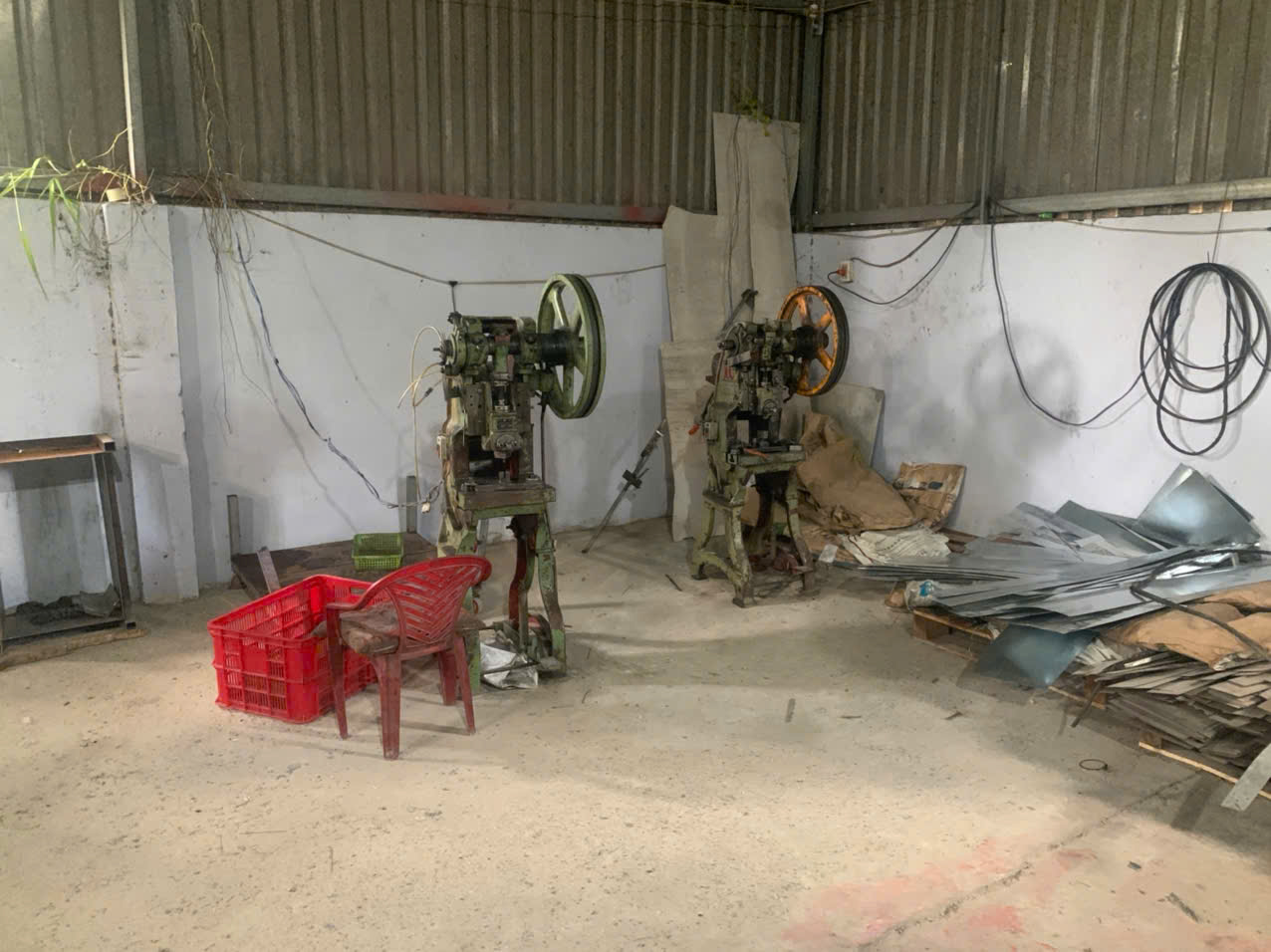
Vietnam has excellent stamping factories. It also has hundreds of general metalworking shops that will say yes to any drawing. The difference matters enormously for stamped brackets, clips, and mounting components, because stamping depends on repeatability. A shop without proper presses, die maintenance, and metrology cannot hold dimensions across ten thousand strokes.
Match the Process, Not Just the Product
A CNC shop can machine one perfect bracket. That does not mean it can stamp fifty thousand consistent ones. When we vet suppliers for our U.S. clients, we ask for the machine list first. We want to see press tonnage, progressive die 2 experience, and an in-house toolroom. If tooling repair goes to an outside shop, downtime multiplies.
Know the Regional Clusters
Vietnam's stamping capability is not evenly spread. Supplier location often signals specialization.
| Region | Typical Strength | Best Fit For |
|---|---|---|
| Hanoi–Bac Ninh–Haiphong | Precision and electronics stamping | Small clips, connectors, thin-gauge parts |
| Ho Chi Minh City–Binh Duong | Automotive and heavier gauge work | Structural brackets, thicker steel parts |
| Emerging provinces | Lower cost, less depth | Simple parts with loose tolerances |
Verify, Do Not Trust Claims
Websites exaggerate. Ask for business registration, ISO 9001 3 certificates, real sample parts, and inspection records from similar projects. Be cautious with suppliers who use only free email accounts and have no verifiable address. Our local team visits factories before we commit any client's die cost, and I recommend every buyer do the same, directly or through a third party.
What Quality Control Mistakes Should I Watch for When Sourcing Stamping Parts?
One trade-off I weigh constantly is inspection cost versus rework cost. A client once skipped a final inspection to save a few hundred dollars. The returned shipment cost him far more.
Watch for skipping first article inspection, treating pre-production samples as proof of mass-production stability, failing to verify the factory's measurement tools, ignoring uncontrolled outsourced finishing like plating, and omitting final AQL lot inspection before shipment. Each gap invites dimensional drift, burrs, and rejected lots.

Quality control for stamped parts is not one checkpoint. It is a chain. Break any link and non-conforming parts reach your dock. In our supply chain work for U.S. engineering firms, we run PPAP, in-process control, and final inspection as separate stages, because each one catches a different failure mode.
The Three Stages You Cannot Skip
| Stage | What It Catches | When It Happens |
|---|---|---|
| First article inspection (FAI) | Tooling errors, wrong material, missed drawing features | Before production release |
| In-process QC | Dimensional drift, burr growth, press setup shifts | During the production run |
| Final AQL inspection | Mixed lots, finish defects, packaging damage | Before shipment |
Why Samples Can Mislead You
Pre-production samples are selling tools. Factories often make them slowly, on their best equipment, with their best operator. Mass production is different. Dies wear. Setups shift. Burrs grow as punches dull. That is why we insist on FAI for every new stamped part and third-party inspection even on small first orders.
Check the Metrology, Not Just the Promises
Ask what measuring equipment the factory owns. Calipers alone are not enough for tight-tolerance brackets. Look for height gauges, pin gauges, and ideally a CMM or optical comparator 4. Also ask which secondary processes are outsourced. Plating and coating sent to uncontrolled subcontractors is one of the most common sources of finish inconsistency we see in Vietnam.
Why Do My Drawings and Specifications Get Misunderstood by Vietnamese Manufacturers?
Our engineers once received a client RFQ that said only "steel bracket, zinc plated." No grade, no thickness tolerance, no burr limit. Three factories quoted three completely different parts.
Drawings get misunderstood because buyers omit material grades, tolerances, surface finish, burr limits, and flatness requirements; because revision control is loose; and because Vietnamese suppliers often say yes without confirming understanding. Factories quote exactly what they receive, so vague inputs always produce vague outputs.

This is the single most common beginner error we correct. It is tempting to blame the factory. But in most disputes I have mediated over the years, the drawing itself was incomplete. A Vietnamese quoting engineer cannot read your mind. If your drawing does not state a burr limit, the factory will not control burrs.
What a Complete Stamping RFQ Must Include
- Material grade and standard (for example, SPCC, SUS304, or a specific galvanized spec)
- Sheet thickness with tolerance
- Critical dimensions with tolerances clearly flagged
- Surface finish, plating, or coating requirements with thickness
- Burr direction and maximum burr height
- Flatness and bend angle tolerances
- Packaging and labeling requirements
- Target annual volume and lot size
The Silent Yes Problem
Communication style matters here. Many Vietnamese suppliers avoid a direct no. They may agree to a requirement they cannot actually meet, expecting to work it out later. Do not accept a verbal yes. Ask for proof instead: sample parts from similar jobs, a process flow chart, and past inspection records. When we manage projects from our Vietnam office, we require written confirmation of every critical drawing feature before tooling starts.
Lock Down Revision Control
Mixed drawing revisions create mixed parts. State the revision number on every email, purchase order, and inspection report. Confirm in writing which revision the factory quoted and which one it is producing. One line of text prevents an entire lot of obsolete parts.
How Can I Prevent Delivery Delays When Sourcing Stamping Parts from Vietnam?
A U.S. purchasing manager we support once planned a January launch around a Vietnamese stamping supplier. Nobody had told him about Tet. Our team rebuilt his schedule with buffer stock, and the launch survived.
Prevent delays by planning realistic lead times of roughly twelve to twenty-two weeks for first tooled orders, scheduling around the Tet shutdown months in advance, confirming raw material availability early, clarifying tooling ownership in writing, and preparing export documents, HS codes, and origin certificates before production ends.

Delivery delays are the top pain point I hear from U.S. purchasing managers. Most delays are predictable. They come from four sources: unrealistic timeline assumptions, holiday shutdowns, material supply gaps, and paperwork problems at export. Each one can be planned around.
Set Realistic Timelines from Day One
| Order Type | Typical First-Order Timeline | Reorder Timeline |
|---|---|---|
| Tooled stamping parts (new die) | 12–22 weeks | 4–8 weeks |
| Simple stamped parts (soft tooling) | 8–14 weeks | 3–6 weeks |
| Repeat orders, die in place | Not applicable | 4–6 weeks plus transit |
First orders always take longer than buyers expect. Die design, die build, trial runs, FAI, and corrections all consume weeks before the first production lot ships.
Plan Around Tet
Tet, the Lunar New Year 5, shuts down most Vietnamese factories for one to three weeks, usually in late January or February. Workers travel home, and production ramps down before the holiday and ramps up slowly after. If your delivery lands anywhere near Tet, order early or build inventory. We start Tet planning with our clients every October.
Watch Raw Material and Paperwork
Many Vietnamese stamping shops import coil steel from China or Korea. That adds hidden lead time and price volatility even when the finished part is labeled Made in Vietnam. Confirm coil availability before you sign the PO. Then verify export details early: correct HS codes, labeling, and certificate of origin documentation. Rules-of-origin compliance under EVFTA 6 and U.S. tariff rules matters, because inconsistent paperwork can trigger shipment holds or transshipment scrutiny at customs. Finally, put tooling ownership, die storage, and maintenance responsibility in writing on the PO, so a supplier dispute never holds your die and your schedule hostage.
Conclusion
Most sourcing failures in Vietnam are preventable process mistakes, not country risk. Send complete drawings, vet real stamping capability, inspect at every stage, and plan around Tet and paperwork.
Frequently Asked Questions
How Do I Avoid Choosing the Wrong Stamping Supplier in Vietnam?
A few years back, our Vietnam office audited a factory that had quoted a client's stamped mounting clips. The plant was a CNC shop with one old press. That visit saved the project.
What Quality Control Mistakes Should I Watch for When Sourcing Stamping Parts?
One trade-off I weigh constantly is inspection cost versus rework cost. A client once skipped a final inspection to save a few hundred dollars. The returned shipment cost him far more.
Why Do My Drawings and Specifications Get Misunderstood by Vietnamese Manufacturers?
Our engineers once received a client RFQ that said only "steel bracket, zinc plated." No grade, no thickness tolerance, no burr limit. Three factories quoted three completely different parts.
Footnotes
1. Official ISO standard reference clarifies what buyers should verify when checking supplier certifications. ↩︎
2. Background on progressive die tooling mentioned in supplier vetting criteria. ↩︎
3. Explains the quality management standard referenced for supplier verification. ↩︎
4. Defines the metrology equipment used for tight-tolerance stamped part inspection. ↩︎
5. Provides context on the holiday causing Vietnamese factory shutdowns. ↩︎
6. Official reference for the EU-Vietnam trade agreement affecting rules of origin. ↩︎