Pricing models for stamping parts can feel like a maze when you’re sourcing from Asia for European end-customers — I’ve watched procurement teams lose weeks untangling quotes that looked simple on the surface but hid costly surprises underneath.
The most common pricing models for stamping parts sold to European OEM buyers are cost-plus pricing, market-based pricing, volume-tiered pricing, and index-based pricing with material surcharge clauses. Each model balances transparency, risk-sharing, and economies of scale differently depending on part complexity and annual volume.
Below, I break down how tooling investments, payment structures, volume thresholds, and regional supplier differences shape the real cost you pay PPAP documentation 1. Every section draws on what our team sees daily while managing stamping projects across China, Vietnam, and into Europe.
How Do Tooling Costs Affect My Total Stamping Parts Pricing?
A lesson we learned early in our supply-chain work: the moment a buyer fixates on piece price alone, tooling costs quietly inflate the Total Cost of Ownership by 15–30% over the first production year.
Tooling costs affect total stamping parts pricing by adding a significant one-time capital expense — ranging from $5,000 for a simple single-hit die to over $150,000 for a complex progressive die — that must be amortized across your production volume, directly raising or lowering per-unit cost.
Why Tooling Is the Hidden Price Driver
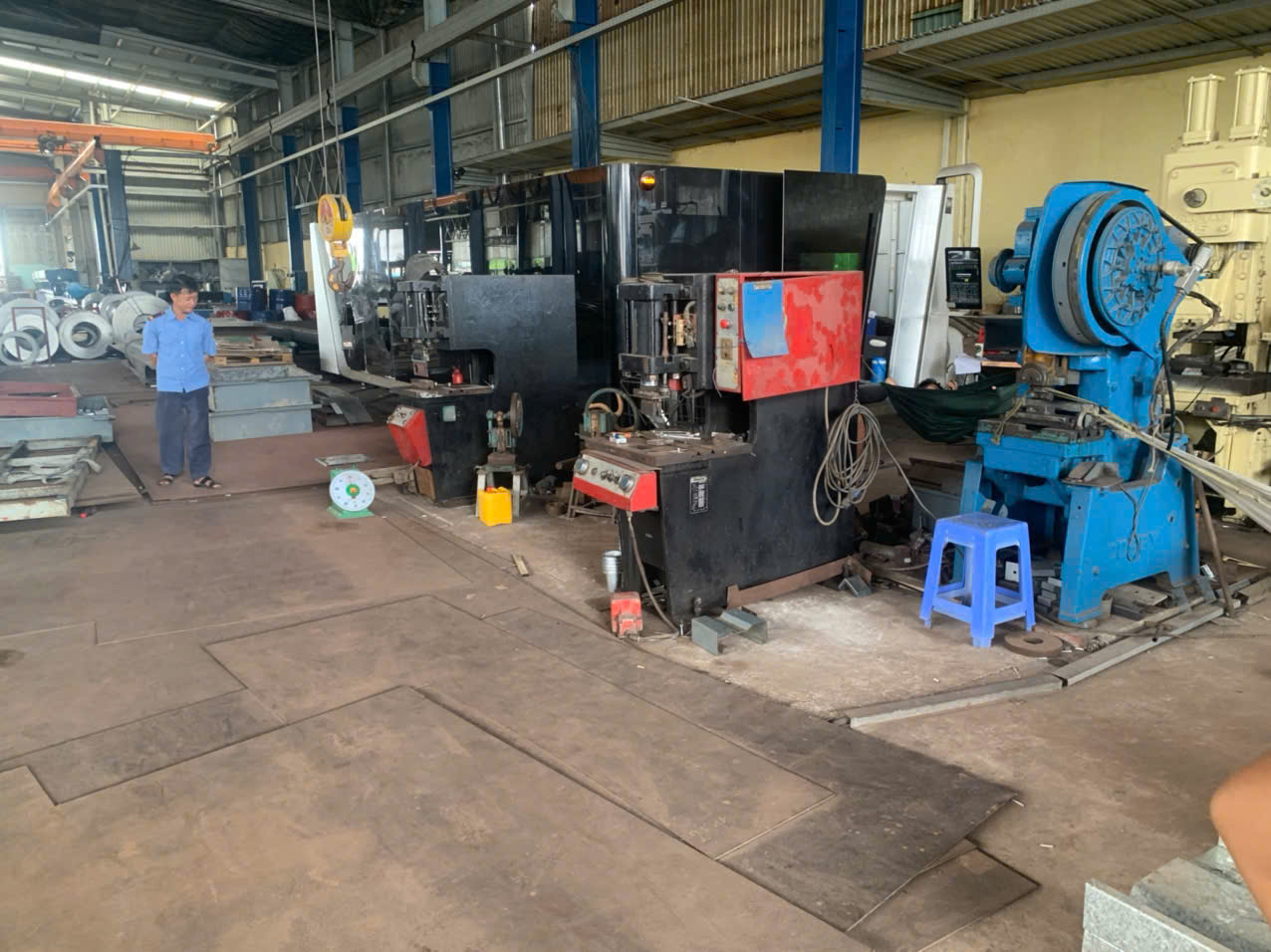
Tooling is the single largest upfront investment in any stamping project. When our engineering team in China reviews a new bracket drawing — like the L-shaped powder-coated mounting bracket or the raw steel post base mount shown in our product range — the first question is always about die type. That choice alone can swing the per-piece cost by 40–60%.
Here is a practical comparison:
| Die Type | Typical Cost Range | Best Volume Band | Tooling Amortization Period |
|---|---|---|---|
| Single-Hit Die | $5,000 – $15,000 | 1,000 – 10,000 pcs | 3 – 6 months |
| Compound Die | $15,000 – $50,000 | 10,000 – 100,000 pcs | 6 – 12 months |
| Progressive Die Stamping 2 | $50,000 – $150,000+ | 100,000 – 5,000,000+ pcs | 12 – 24 months |
Amortization vs. Upfront Payment
European OEMs typically face two tooling payment structures. In the first, the buyer pays 100% of die costs upfront before production begins. This gives the OEM full asset ownership and avoids interest charges. In the second — tooling amortization — the die cost is spread across the first 12 to 24 months of part production, folded into the piece price. The second approach reduces initial capital expenditure but raises per-unit cost during the amortization window.
I've seen buyers save 8–12% on long-term piece price by choosing upfront tooling payment. But that only works when the annual volume justifies the investment. For a cross-shaped four-hole flange running at 500,000 pieces per year, progressive die stamping with upfront payment makes clear financial sense. For a specialty post anchor at 5,000 pieces per year, a simpler die with amortized cost is smarter.
Material Utilization and Scrap Credit
Tooling design also determines your material utilization 3 rate. A well-designed progressive die can achieve 85–92% material utilization, meaning less scrap. Some suppliers offer a scrap credit — returning a portion of the scrap metal value to the buyer — which can offset 2–4% of material costs on high-volume runs. Our Vietnam office always negotiates scrap credit terms during the quoting phase because it directly impacts the cost breakdown analysis. You can learn more about evaluating supplier scrap and yield rates when sourcing from Vietnam.
Who Owns the Tool?
This matters more than most buyers realize. If the OEM pays for the tooling, they own it. That means they can transfer it to another supplier if quality or delivery fails. We manage this process regularly — ensuring digital-ready tooling designs that allow portability across press lines. If the supplier retains ownership, switching costs skyrocket.
What Payment Terms Can I Negotiate With Asian Stamping Suppliers?
One of the first questions a new European buyer asked our Singapore team last quarter was not about quality — it was about cash flow. Payment terms can make or break a sourcing decision, especially for mid-size OEMs managing tight working capital.
European OEM buyers can typically negotiate 30% deposit with balance on shipment for new supplier relationships, transitioning to Net-30 or Net-60 open account terms as trust builds. Letters of Credit are common for large first orders, while established partnerships may secure Net-90 terms to ease cash flow.

Standard Payment Structures
Payment terms vary based on relationship maturity, order size, and risk profile. Here is what we see across our China and Vietnam supplier networks:
| Relationship Stage | Typical Payment Terms | Notes |
|---|---|---|
| First Order (New Buyer) | 30–50% advance deposit, balance before shipment | Supplier bears production risk; deposit covers material purchase |
| Established (6–12 months) | 30% deposit, 70% upon shipment or against B/L | Standard for repeat orders; L/C may replace deposit |
| Long-Term Partner (1+ years) | Net-30 to Net-60 open account 4 | Requires credit assessment; we offer this through our Singapore entity |
| Large/Complex Projects | Letter of Credit (L/C) at sight or 30–60 days | Common for orders above $50,000; bank-guaranteed security for both sides |
Why Open Account Terms Matter
For European OEMs importing stamping parts — whether it's a batch of galvanized L-brackets or heavy-duty trailer-hitch-style mounts — the lag between paying the supplier and receiving payment from their own customer can stretch 90–120 days. Open account terms (Net-60 or Net-90) bridge that gap.
Our business model in Singapore specifically addresses this. We extend credit terms to qualified buyers because we understand the cash flow cycle. Most factories in China or Vietnam will not offer open account to a foreign buyer they've known for less than a year. We absorb that risk.
Incoterms and Their Impact on Payment Timing
The chosen Incoterm changes when money moves. Under FOB (Free on Board) 5, the buyer takes responsibility at the port of origin. Under DDP (Delivered Duty Paid), the supplier handles everything to the buyer's door. DDP quotes look higher, but they simplify budgeting because there are no surprise freight or customs charges.
I always recommend European buyers request quotes in both FOB and DDP. This reveals the true total landed cost. A part quoted at $0.85 FOB Shanghai may end up costing $1.12 DDP Hamburg once you add ocean freight, insurance, customs duties, and local delivery.
Validation and Documentation Add-Ons
European OEMs, especially those requiring IATF 16949 compliance 6, often need PPAP documentation, dimensional reports, and batch traceability. These validation add-ons increase the cost of qualification batches by 5–12%. Payment for these is usually due upfront or with the first production invoice. Our project management team builds these costs into the initial quotation so there are no surprises.
How Do Volume Discounts Work When Sourcing Custom Stamping Parts?
When we quoted a European distributor on a set of powder-coated mounting brackets last year, the price difference between 2,000 pieces and 200,000 pieces was striking — the per-unit cost dropped by over 50%.
Volume discounts in custom stamping work through economies of scale: higher quantities spread fixed costs like tooling, setup, and programming across more parts, while material purchasing power increases. Per-piece costs typically drop 40–60% when volume scales from 1,000 to 100,000 units, with additional 15–25% savings above 10,000-unit thresholds.

The Mechanics of Volume-Based Tiered Pricing
Volume-tiered pricing is pre-negotiated. The buyer and supplier agree on price brackets before production starts. When annual purchase volume hits a specific milestone, the lower price kicks in automatically.
Here is a real-world example based on a standard steel bracket:
| Annual Volume | Estimated Per-Part Cost (USD) | Discount vs. Base Price |
|---|---|---|
| 500 – 1,000 pcs | $12.00 – $18.00 | Base price |
| 1,000 – 5,000 pcs | $6.00 – $10.00 | ~35% reduction |
| 5,000 – 50,000 pcs | $2.50 – $5.00 | ~55% reduction |
| 50,000 – 500,000 pcs | $1.00 – $3.00 | ~70% reduction |
| 500,000+ pcs | $0.50 – $1.50 | ~80% reduction |
Why Setup and Tooling Drive the Curve
The biggest cost drop happens between the first and second volume tier. That is because setup charges — die loading, machine calibration, first-article inspection 7 — are fixed. Whether you stamp 500 parts or 50,000 parts, the setup cost is roughly the same. At 500 parts, that $800 setup fee adds $1.60 per part. At 50,000 parts, it adds $0.016.
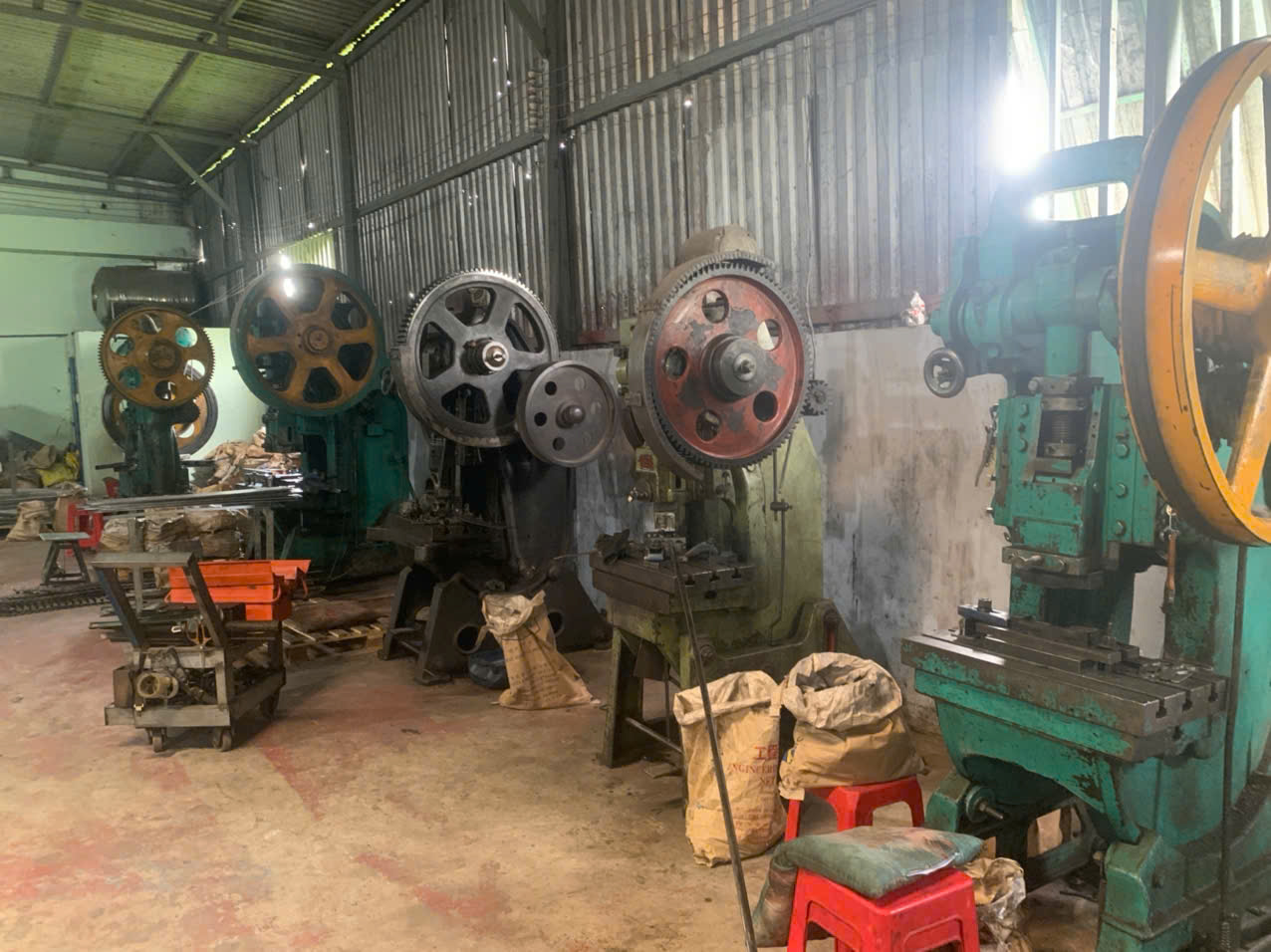
Progressive die stamping amplifies this effect. A progressive die runs multiple operations in a single press stroke. The die is expensive, but the per-cycle cost is extremely low. That is why progressive dies only make economic sense above roughly 50,000 annual pieces.
The Low MOQ Premium
Conversely, low Minimum Order Quantities 8 carry a premium. Orders below standard MOQ can cost up to 20% more per unit. This is because the supplier cannot fully optimize material purchasing, machine scheduling, or labor allocation. For European OEMs needing small batches of specialty parts — say, a post base mount with specific cutout holes — this premium is unavoidable unless they consolidate orders. Understanding how to determine a reasonable budget for procuring stamping parts helps buyers plan for these premiums.
Blanket Orders and Release Schedules
A strategy I recommend to European buyers: place a blanket order for the full annual volume to lock in tier pricing, then schedule releases monthly or quarterly. This gives the supplier volume certainty (which justifies the lower price) while keeping the buyer's inventory lean. We manage release schedules across our Vietnam and China offices for exactly this reason.
Why Do Stamping Part Prices Vary Between Chinese and Vietnamese Suppliers?
A trade-off we weigh every week in our sourcing decisions: a Chinese supplier with deep progressive die stamping capability versus a Vietnamese supplier with lower labor costs but a developing supply chain.
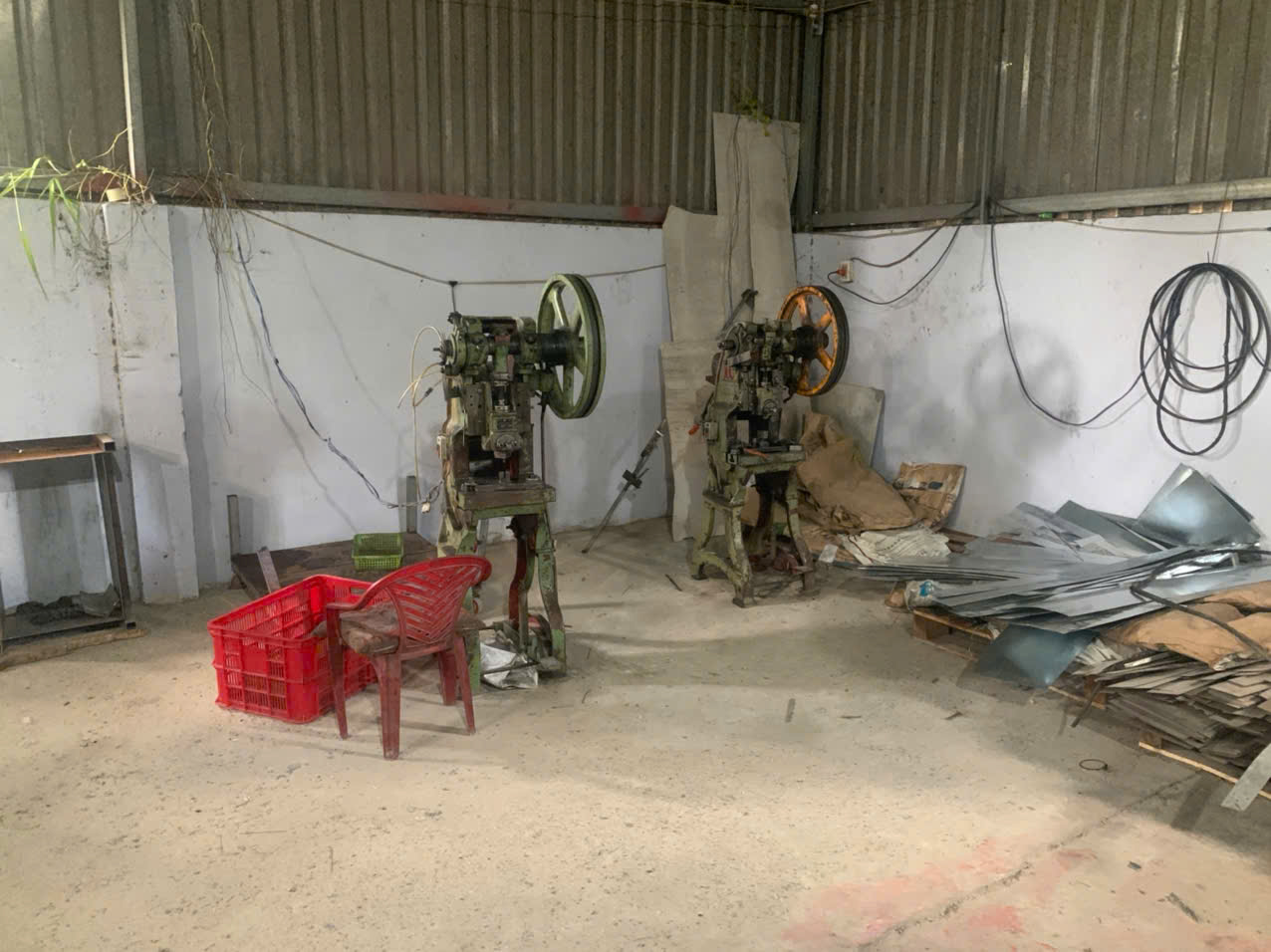
Stamping part prices vary between Chinese and Vietnamese suppliers due to differences in labor costs, raw material supply chains, tooling infrastructure maturity, and trade tariff exposure. Chinese suppliers offer lower piece prices on complex, high-volume parts thanks to mature ecosystems, while Vietnamese suppliers compete on labor cost and tariff advantages for simpler components.
Cost Structure Comparison
The cost breakdown analysis between the two countries reveals distinct advantages:
| Cost Factor | China | Vietnam |
|---|---|---|
| Raw Material Cost | Lower (domestic steel mills, mature supply chain) | Higher (most steel imported, longer lead times) |
| Labor Cost per Hour | $4.50 – $7.00 | $2.50 – $4.50 |
| Tooling Capability | Advanced (complex progressive dies readily available) | Growing (simple to moderate dies; complex tooling often imported from China) |
| Overhead & Energy | Moderate (established infrastructure) | Lower (government incentives, newer facilities) |
| Raw Material Surcharge Risk | Lower (domestic sourcing buffers volatility) | Higher (import dependency amplifies price swings) |
| EU Import Tariff Exposure | Higher (subject to anti-dumping duties on certain steel products) | Lower (EU-Vietnam Free Trade Agreement provides preferential rates) |
When China Wins on Price
For complex parts — like the black cast trailer-hitch-style mount with a thick base plate and central bore — China's ecosystem is hard to beat. The density of press shops, heat treatment facilities, powder coating lines, and plating houses within a single industrial zone means shorter logistics chains and lower secondary operation costs. Open-book accounting from a mature Chinese supplier often shows material costs at 40–50% of the finished part, with secondary operations adding just $0.02–$0.15 per part.
China also wins when the part requires tight tolerances below ±0.05 mm or ultra-thin materials under 0.30 mm. The tooling precision and press tonnage availability in Dongguan, Ningbo, or Suzhou is simply more advanced than most Vietnamese alternatives today.
When Vietnam Wins on Price
Vietnam's advantage shows up in labor-intensive parts with simpler geometry. A flat angled plate with two mounting holes or a basic L-bracket can be produced in Vietnam at 15–25% lower total cost than China once you factor in tariff savings under the EU-Vietnam Free Trade Agreement.
Our Vietnam office with 7 team members manages quality and logistics on the ground. This local presence is critical because Vietnam's supply chain is still maturing. Without on-site process control, defect rates can be higher. We run PPAP and first-article inspection locally to ensure parts meet European quality expectations from day one.
Index-Based Pricing and Material Volatility
Both countries face raw material price swings. But the impact differs. Chinese suppliers can hedge more effectively through domestic steel futures markets. Vietnamese suppliers, relying on imported coil, are more exposed to LME price movements 9.
For European OEMs, I recommend index-based pricing clauses in both cases. These clauses tie the material portion of the piece price to a public metal index (like MEPS or LME). The manufacturing conversion cost stays fixed; only the material component floats. This protects both buyer and supplier from margin compression during rapid price rallies. Understanding how to tell if a supplier’s quote ensures fair long-term cooperation is essential when evaluating these pricing structures.
Conversion-Only Pricing as an Alternative
Some European OEMs use a conversion-only (toll) pricing model. They purchase raw material directly from a European or Asian steel mill and "free-issue" it to the stamper. The stamper charges only for press time, labor, and a fixed management fee. This removes material volatility from the equation entirely. It works best with trusted, long-term suppliers who have proven quality systems — ideally with IATF 16949 compliance or equivalent certifications.
Conclusion
Choosing the right pricing model for stamping parts means looking beyond piece price — consider tooling amortization, payment terms, volume tiers, regional cost structures, and total landed cost to make sourcing decisions that protect both margin and quality.
Frequently Asked Questions
Who Owns the Tool?
This matters more than most buyers realize. If the OEM pays for the tooling, they own it. That means they can transfer it to another supplier if quality or delivery fails. We manage this process regularly — ensuring digital-ready tooling designs that allow portability across press lines. If the supplier retains ownership, switching costs skyrocket.
How Do Tooling Costs Affect My Total Stamping Parts Pricing?
A lesson we learned early in our supply-chain work: the moment a buyer fixates on piece price alone, tooling costs quietly inflate the Total Cost of Ownership by 15–30% over the first production year.
What Payment Terms Can I Negotiate With Asian Stamping Suppliers?
One of the first questions a new European buyer asked our Singapore team last quarter was not about quality — it was about cash flow. Payment terms can make or break a sourcing decision, especially for mid-size OEMs managing tight working capital.
Footnotes
1. Detailed Wikipedia explanation of the Production Part Approval Process (PPAP) requirements. ↩︎
2. Explains the multi-stage die process referenced for high-volume stamping economics. ↩︎
3. Background on sheet metal processing explains the material utilization concept in die design. ↩︎
4. U.S. export credit agency provides authoritative context on open account trade finance terms. ↩︎
5. ICC is the official publisher of Incoterms rules like FOB referenced in payment timing. ↩︎
6. Authoritative Wikipedia overview of the IATF 16949 automotive quality management standard. ↩︎
7. SAE AS9102 is the recognized standard governing first-article inspection procedures referenced. ↩︎
8. Background explanation of the MOQ concept driving the low-volume pricing premium discussed. ↩︎
9. London Metal Exchange is the authoritative source for the metal price index discussed. ↩︎