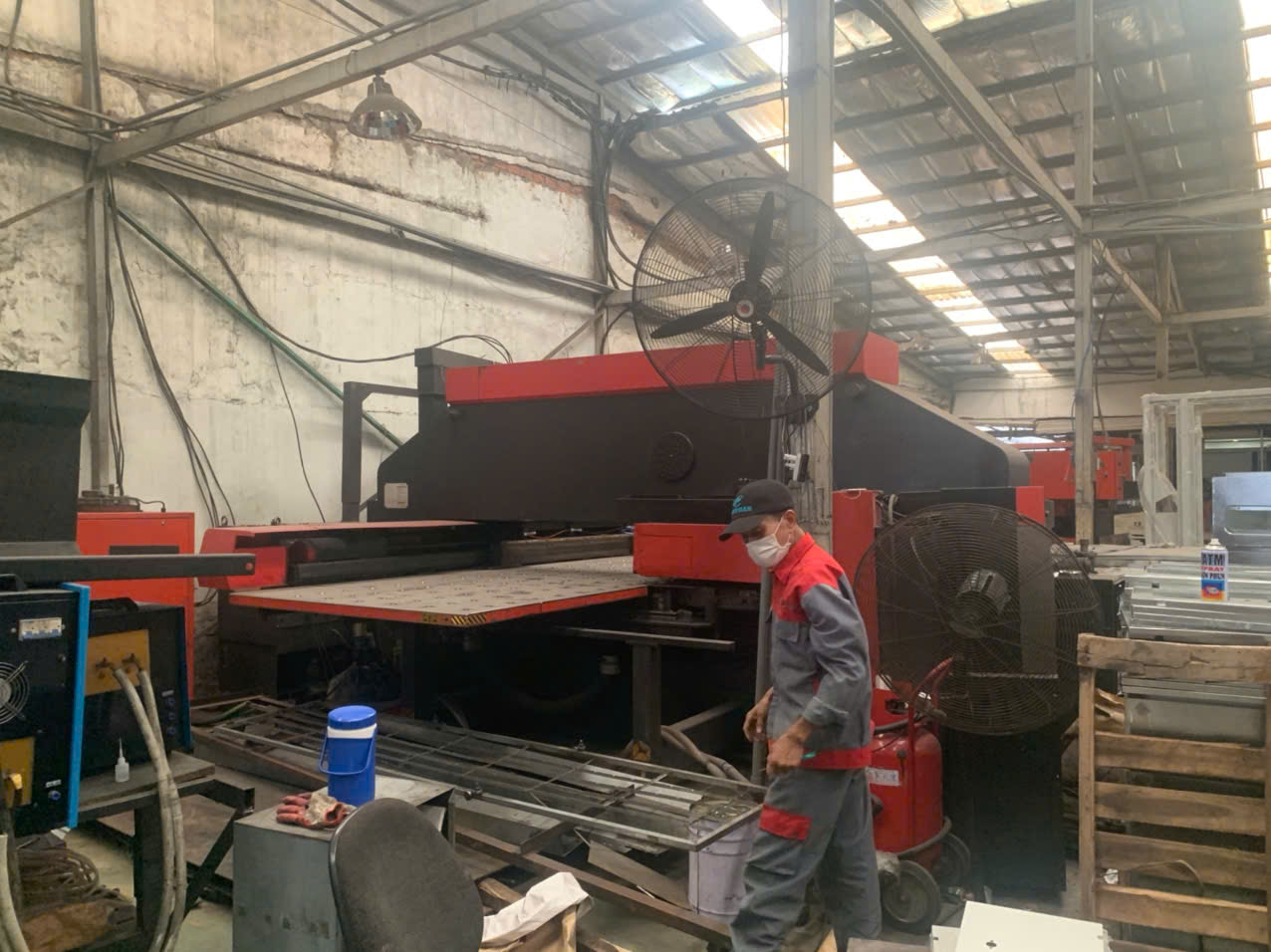

A client once asked us to source stamped steel brackets for a children’s furniture line — and the CPSC compliance questions hit us before the first sample shipped.
CPSC regulations for stamped parts depend on whether the final product targets children 12 and under or general consumers. Children’s products must meet strict lead content limits of 100 ppm, require a Children’s Product Certificate backed by third-party testing, and comply with applicable product safety standards like ASTM F963 and small parts rules.
The rules are detailed, but the logic is straightforward once you understand the classification Consumer Product Safety Improvement Act 1. Below, I walk through the key questions our U.S. clients ask most — and the compliance steps we follow at every stage of sourcing.
How do I determine if my custom stamped parts require a Children's Product Certificate (CPC)?
One lesson we learned early in our supply chain work: the certificate requirement has nothing to do with the stamped part itself — it depends entirely on where that part ends up.
Your custom stamped parts require a CPC if the finished product they go into is designed or intended primarily for children 12 years of age or younger. The Consumer Product Safety Improvement Act defines a "children's product" by four factors: the manufacturer's intent, packaging, advertising, and whether the product is commonly recognized as being for children.

The Four-Factor Test
The CPSC uses a clear four-factor test to classify a product as a children's product. When we help clients source stamped brackets, clips, or fasteners, we always start by running through these factors with them.
| Factor | What the CPSC Evaluates | Example |
|---|---|---|
| Manufacturer's stated intent | Is the product marketed for children? | A toy car marketed for ages 3+ |
| Packaging and decoration | Does the packaging feature child-oriented themes? | Cartoon characters on the box |
| Advertising and promotion | Are ads directed at children or parents of young children? | TV ads during children's programming |
| Age recognition | Is the product commonly recognized as intended for children? | A baby high chair is universally recognized as a children's product |
If the final product meets any combination of these factors pointing toward children 12 and under, it is a children's product. That means every accessible component part — including your stamped metal bracket — falls under the CPC requirement.
General-Use Products: A Different Path
If the stamped part goes into a general-use product, such as office furniture or industrial equipment, you do not need a CPC. Instead, the importer or domestic manufacturer must issue a General Certificate of Conformity (GCC) 2 for the finished product. The GCC is based on reasonable testing, but it does not require third-party lab involvement for the component parts.
Component Parts vs. Replacement Parts
Here is where sourcing gets tricky. The CPSC draws a sharp line between component parts and replacement parts.
- Component parts are intended for assembly into a finished product. Certificates for these are voluntary. They do not need to be eFiled or accompany the shipment.
- Replacement parts are sold directly to consumers as standalone finished products. These must be tested and certified with their own certificate.
In our work managing sourcing from Vietnam and other Asian countries, we always confirm with U.S. clients whether their stamped parts will ever be sold separately as replacements. If yes, the testing and certification burden changes dramatically. The proposed rule under 16 CFR Part 1109 3 aims to codify these distinctions further, so staying ahead of this regulation is critical.
When in Doubt, Classify Conservatively
We advise our clients to classify conservatively. If there is any chance the final product could be used by children, treat it as a children's product. The cost of third-party testing is far less than the cost of a recall.
What are the specific lead and surface coating limits I must enforce with my overseas stamping supplier?
During a recent project, our quality team in Vietnam flagged a batch of stamped brass clips that tested at 140 ppm total lead — well above the children's product limit. Catching that before shipment saved the client from a potential import detention.
For children's products, stamped parts must contain no more than 100 ppm total lead in substrate material and no more than 90 ppm lead in any surface coating or paint. These lead content limits apply to every accessible component part under the Consumer Product Safety Improvement Act, with only narrow exceptions for inaccessible parts or certain exempt materials.

Understanding the Two Lead Limits
The CPSIA establishes two separate lead limits. They apply to different aspects of the stamped part.
| Limit Type | Maximum Allowed | Applies To | Testing Method |
|---|---|---|---|
| Total lead in substrate | 100 ppm | The base metal of the stamped part | XRF screening or wet chemistry (ICP) |
| Lead in surface coatings | 90 ppm | Any paint, lacquer, or coating applied to the part | Solubility testing per CPSC-CH-E1003-09.1 |
The 100 ppm total lead 5 limit was reduced from a previous 300 ppm standard. This is significant for stamped parts because certain alloys — especially brass and zinc alloys — can naturally contain lead at levels exceeding 100 ppm. When we source stamped parts for children's products, we require our suppliers to provide mill certificates showing the alloy composition before production even starts.
High-Risk Materials for Lead
Not all metals carry equal risk. Here is a quick breakdown of common stamping materials and their lead risk level.
| Material | Typical Lead Content | Risk Level for Children's Products |
|---|---|---|
| Stainless steel (304/316) | Very low (<10 ppm) | Low |
| Cold-rolled steel (CRS) | Very low (<10 ppm) | Low |
| Aluminum alloys | Very low (<10 ppm) | Low |
| Brass (C26000/C36000) | Can exceed 2% (20,000 ppm) | Very High |
| Zinc alloys (Zamak) | Can exceed 100 ppm | Moderate to High |
| Copper alloys | Variable | Moderate |
When clients specify brass stamped parts for a children's product, we always raise the lead concern immediately. In most cases, a lead-free brass or stainless steel alternative is the better choice.
Surface Coatings Matter Too
Even if the base metal is compliant, a surface coating can introduce lead. Electroplated finishes, paints, and powder coatings must all meet the 90 ppm lead-in-paint limit 6. We work with our coating suppliers to obtain heavy metal content test reports for every batch of coating material used on children's product components.
Enforcing Limits with Your Supplier
Material traceability is essential. We require our stamping suppliers to maintain lot-level records linking each production batch to a specific material lot. This way, if a test result comes back non-conforming, we can trace exactly which parts are affected. Without this traceability, a single failed test can force a hold on the entire shipment.
For general-use products, there is no mandated lead limit on component parts. However, the final product must still comply with any applicable product safety standards, and issuing a GCC requires reasonable testing.
How can I ensure my manufacturer's quality control process includes the necessary CPSC safety testing for sharp edges?
A buyer we work with once received a small complaint from an end user about a stamped bracket edge that had not been properly deburred. That one complaint triggered a review of the entire production run. It reinforced something we already knew: sharp edge control starts on the production line, not at incoming inspection.
To ensure your manufacturer's QC process covers CPSC sharp edge requirements, you must require documented use-and-abuse testing per ASTM F963 or the applicable product standard, include sharp edge checks in the in-process and final inspection plans, and verify compliance with 16 CFR 1500.48 and 1500.49 sharp point and sharp edge test methods.

Why Sharp Edges Are a Top Concern for Stamped Parts
Stamping is a shearing process. The die cuts through sheet metal, leaving a sheared edge that almost always has a burr. For general industrial parts, this burr might be acceptable or easily managed. But for consumer products — especially children's products — a sharp edge is a safety hazard that the CPSC takes seriously.
The relevant test methods are codified in 16 CFR 1500.48 (sharp point test) and 16 CFR 1500.49 (sharp edge test) 7. For toys, ASTM F963 8 incorporates these tests as part of its mechanical and physical hazard requirements. The standard also requires use and abuse testing, which simulates how a child might misuse a product. After the use and abuse protocol, the product is re-checked for newly exposed sharp edges or small parts.
Building Sharp Edge Controls Into the QC Process
Here is the sequence we follow at our partner factories:
-
Tool design review. Before the stamping die is cut, our engineers review the design to identify edges that will be consumer-accessible. We specify deburring, edge-rolling, or chamfering at the design stage.
-
First Article Inspection (FAI). The first production pieces are checked with a sharp edge tester (a mandrel-type gauge per 16 CFR 1500.49). If any edge fails, the tooling is adjusted before mass production.
-
In-process inspection. Operators perform visual and tactile checks at defined intervals. For higher-risk parts, we use the sharp edge tester at specific sampling frequencies.
-
Final inspection. Our QC team performs a final check using AQL-based sampling. Sharp edge testing is a critical checkpoint — any failure triggers a hold on the lot.
-
Use and abuse simulation. For children's products, the finished assembly undergoes use and abuse testing at a CPSC-accepted third-party lab. This includes drop tests, torque tests, tension tests, and other protocols. After each test, the product is inspected for newly created sharp edges.
The Small Parts Connection
When stamped parts are small enough to fit entirely within the small parts cylinder 9 (per the small parts regulation, 16 CFR Part 1501), they pose a choking hazard for children under 3. This is separate from the sharp edge issue, but it often comes up during the same inspection. If a stamped part breaks free during use and abuse testing and fits in the small parts cylinder, the product fails.
We have seen this happen with stamped decorative elements on children's furniture. The fix usually involves a stronger attachment method — riveting instead of adhesive, for example — rather than changing the stamped part itself.
What documentation do I need from my sourcing partner to prove compliance with the Consumer Product Safety Improvement Act (CPSIA)?
The question I hear most from U.S. purchasing managers is not about the regulations themselves — it is about what paperwork they actually need in hand when customs asks questions.
You need either a Children's Product Certificate (CPC) or a General Certificate of Conformity (GCC) for your finished product, backed by third-party test reports from a CPSC-accepted laboratory, material certifications from your stamping supplier, and documented evidence of supply chain compliance including lot traceability and quality control records.

The Documentation Stack
Think of CPSIA documentation as a layered stack. Each layer supports the one above it. Here is how it breaks down:
| Document | Who Provides It | Purpose | Required or Voluntary |
|---|---|---|---|
| CPC (Children's Product Certificate) | Importer or domestic manufacturer | Certifies the finished children's product meets all applicable rules | Mandatory for children's products |
| GCC (General Certificate of Conformity) | Importer or domestic manufacturer | Certifies the finished general-use product meets all applicable rules | Mandatory for general-use products |
| Third-party test report | CPSC-accepted laboratory | Provides evidence that the product or component meets specific limits (lead, sharp edges, small parts, etc.) | Mandatory for children's products; voluntary for general-use |
| Component part test report or certificate | Supplier or supplier's lab | Shows that a specific component (e.g., a stamped bracket) meets applicable limits | Voluntary, but strongly recommended |
| Material mill certificate | Raw material supplier | Documents the alloy composition and origin of the metal | Voluntary, but essential for material traceability |
| QC inspection records | Manufacturer or sourcing agent | Documents in-process and final inspection results, including sharp edge and dimensional checks | Voluntary, but critical for due care |
How We Structure the Documentation for Our Clients
When we manage a sourcing project from start to finish, we compile a compliance file for each shipment. This file includes:
- The raw material mill certificate showing alloy grade and chemical composition.
- The supplier's internal test report for lead content (typically XRF screening).
- The third-party lab test report from a CPSC-accepted lab, covering lead, lead in paint, and any product-specific standards like ASTM F963.
- Our final inspection report with AQL results, dimensional data, and sharp edge test outcomes.
- A copy of the CPC or GCC, which the importer issues based on all the above.
This approach gives our clients a clear audit trail. If the CPSC or Customs and Border Protection requests documentation, everything is organized and accessible.
Periodic Retesting and Material Changes
Compliance is not a one-time event. Children's products must be retested periodically — typically at least once per year — and whenever a material change occurs. A material change could be a new alloy, a new coating supplier, a different stamping die, or a change in manufacturing location.
We flag material changes proactively. Our team tracks supplier changes at the sub-tier level, so if a metal supplier switches their source of stainless steel, we know about it before the next production run. This level of supply chain compliance oversight is what separates a reliable sourcing partner from one that merely forwards purchase orders.
The Future: Digital Product Passports and Proposed Rule 1109
The industry is moving toward digital solutions for compliance documentation. Digital Product Passports (DPPs) 10 could eventually provide a single, verifiable digital record of a stamped part's compliance data — from the mill certificate to the final test report. The proposed 16 CFR Part 1109 rule would formalize the conditions under which component part testing can support a finished product certificate, adding more structure to the voluntary system that exists today.
For now, the practical advice is simple: demand documentation from your sourcing partner at every tier of the supply chain, verify it independently, and maintain records that can withstand a CPSC audit.
Conclusion
CPSC regulations for stamped parts come down to classification, testing, documentation, and ongoing vigilance. Know your product category, enforce lead content limits, control for sharp edges, and demand a complete compliance file from your sourcing partner.
Frequently Asked Questions
How do I determine if my custom stamped parts require a Children's Product Certificate (CPC)?
One lesson we learned early in our supply chain work: the certificate requirement has nothing to do with the stamped part itself — it depends entirely on where that part ends up.
What are the specific lead and surface coating limits I must enforce with my overseas stamping supplier?
During a recent project, our quality team in Vietnam flagged a batch of stamped brass clips that tested at 140 ppm total lead — well above the children's product limit. Catching that before shipment saved the client from a potential import detention.
How can I ensure my manufacturer's quality control process includes the necessary CPSC safety testing for sharp edges?
A buyer we work with once received a small complaint from an end user about a stamped bracket edge that had not been properly deburred. That one complaint triggered a review of the entire production run. It reinforced something we already knew: sharp edge control starts on the production line, not at incoming inspection.
Footnotes
1. Provides an overview of the landmark U.S. consumer product safety law. ↩︎
2. Explains the purpose and requirements of a General Certificate of Conformity. ↩︎
3. Outlines conditions for relying on component part testing for certification. ↩︎
4. Explains the purpose and requirements of a Children’s Product Certificate. ↩︎
5. Specifies the federal limit for total lead content in children’s products. ↩︎
6. Defines the federal limit for lead in surface coatings on children’s products. ↩︎
7. Outlines technical requirements for determining sharp metal or glass edges in children’s articles. ↩︎
8. Details the mandatory toy safety standard in the United States. ↩︎
9. Describes the test method for identifying choking hazards in children’s products. ↩︎
10. Introduces the emerging concept of digital product traceability for sustainability in the EU. ↩︎