
Vietnam’s stamping industry gets described as both “cutting-edge” and “underdeveloped.” Both labels are true. Our Vietnam sourcing team sees this contradiction every week, and picking wrong costs buyers dearly.
Vietnam’s stamping industry operates on two tiers. Export-oriented Tier 1 plants run modern servo presses, in-house die shops, and IATF 16949 systems serving global OEMs. Domestic Tier 2 shops still rely on conventional presses with limited automation. Supplier selection determines your outcome.
So the real question is not whether Vietnam is capable TÜV Rheinland 1. It is how to find the capable plants. Let me break down what we actually see on factory floors.
How Does Vietnam's Stamping Technology Compare to China's Capabilities?
A purchasing manager from Texas once asked me flatly: "Is Vietnam just China with cheaper labor?" After years of auditing stamping plants in both countries for our clients, my answer is nuanced.
Vietnam's top-tier stamping plants match Chinese mid-to-high capability for progressive dies, tight tolerances, and automotive-grade parts. China still leads in supply chain depth, specialty materials, and ultra-complex tooling. Vietnam wins on tariff exposure, with zero Section 301 duties for US importers.

The honest comparison looks like this. China has decades of accumulated tooling knowledge, thousands of die shops, and instant access to nearly any raw material. Vietnam has a younger industry. But it grew up under Japanese, Korean, and Taiwanese supervision. That matters more than people think.
Where Vietnam Holds Its Own
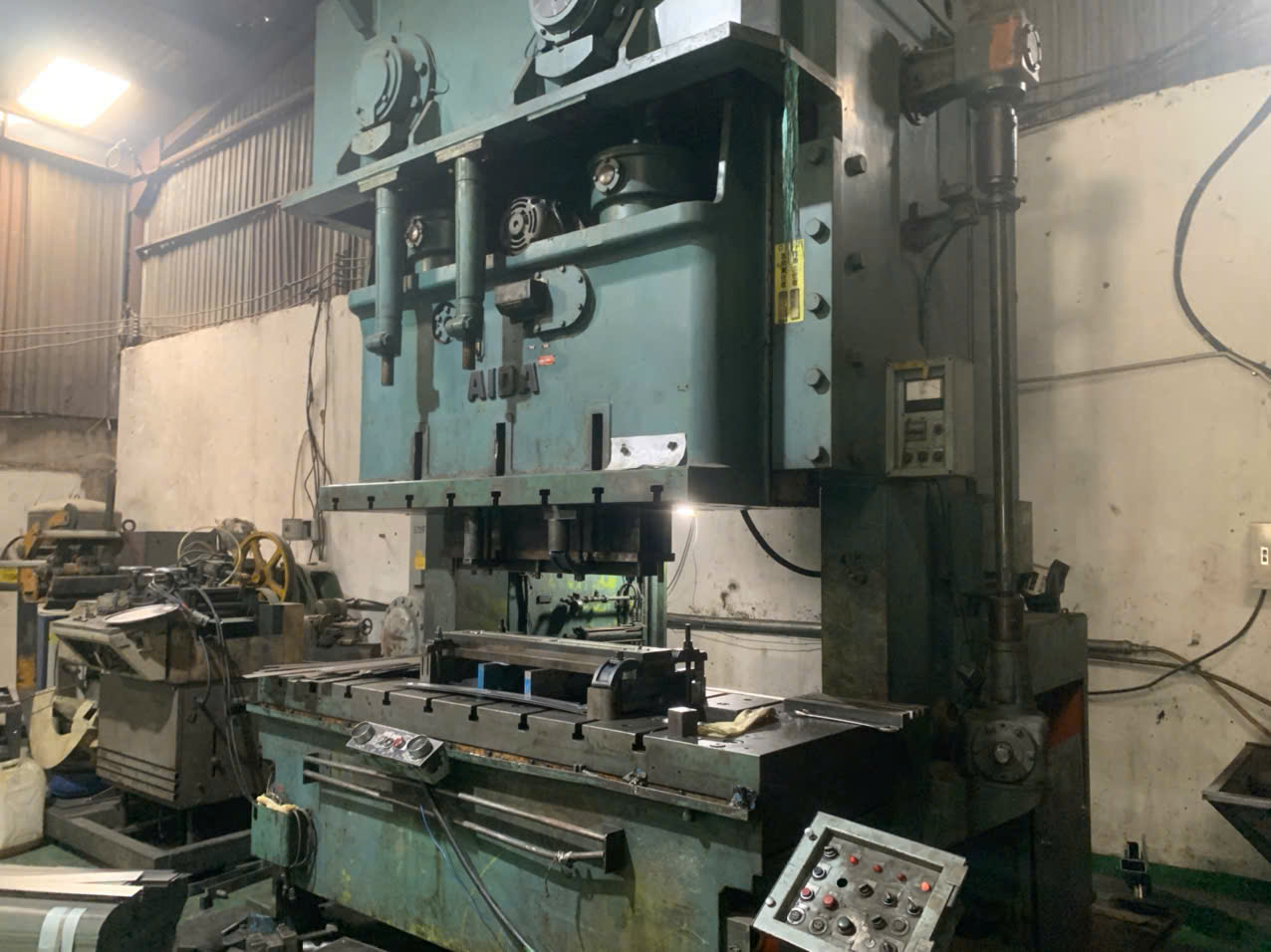
Tier 1 Vietnamese plants feeding Samsung, Canon, Toyota, and Honda supply chains use the same Aida, Komatsu, and Amada presses you would find in Japan. Their engineers were trained by Japanese tooling masters over fifteen or more years. Progressive dies 2 with in-die tapping and coining are routine at these facilities. High-strength steels up to 980 MPa are within reach at established shops.
Where China Still Leads
Material availability is the biggest gap. In China, a specific spring temper or unusual coating ships in days. In Vietnam, it often means importing with longer lead times. We plan material buffers into every Vietnamese stamping project for exactly this reason.
| Factor | Vietnam (Tier 1) | China |
|---|---|---|
| Servo press availability | Yes, at export plants | Widespread |
| In-house die making | Growing, 4–8 week lead times | Mature, faster |
| Specialty material access | Often imported | Local, fast |
| Section 301 tariffs (US) | $0 | Applies |
| Tooling cost vs. US | 40–60% lower | Similar savings, plus tariff risk |
| Simulation software use | Limited outside FDI plants | Common |
The market itself is growing. Vietnam’s stamping sector reached roughly $880.8 million in 2024 and is projected to hit about $1.21 billion by 2033. That growth is driven by exactly the supply chain diversification our US clients are pursuing.
Can Vietnamese Stamping Factories Meet My Tight Tolerance Requirements?
Last year we ran a PPAP for a stamped mounting bracket with a critical hole-position tolerance. Two of the five Vietnamese plants we shortlisted passed capability studies on the first run. That ratio tells the story.
Yes, but only at the right plants. Foreign-invested and export-oriented Vietnamese stampers routinely hold tight tolerances, including sub-0.01mm precision for electronics parts, using wire EDM, CNC die-making, and CMM inspection. Typical domestic job shops cannot reliably achieve this level.

Tolerance capability in Vietnam is not a country question. It is a plant-by-plant question. Precision stamping for automotive and electronics components remains largely concentrated in foreign-invested enterprises 3 clustered around Bac Ninh, Hai Phong, Dong Nai, and Binh Duong. These zones grew around Samsung, Canon, and automotive assembly supply chains, and the precision culture spread outward from them.
What Drives Tolerance Capability
Three things separate a capable plant from a hopeful one:
- Die quality. Tight parts start with tight dies. Plants with in-house wire EDM 4 and CNC machining control this directly. Plants that outsource dies inherit someone else's errors.
- Press condition. A worn mechanical press with loose bearings cannot hold position. Servo presses with real-time tonnage monitoring keep dimensions stable across long runs.
- Measurement discipline. A tolerance you cannot measure is a tolerance you cannot hold. We verify CMM availability, gauge R&R records, and traceable calibration before approving any plant.
How We De-Risk Tolerance-Critical Projects
Our process for clients is straightforward. We audit the plant's die shop first. Then we require a capability study on the critical dimensions before production release. First article inspection and PPAP documentation follow. For our US clients with strict drawing requirements, we also do a drawing review with the plant's engineers before quoting. Missed drawing notes are the number one cause of non-conforming stamped parts we see, and catching them early is far cheaper than rework.
The takeaway: tight tolerances in Vietnam are achievable and repeatable. But the burden of supplier verification sits on the buyer, or on a sourcing partner with boots on the ground.
What Equipment and Automation Levels Should I Expect From Vietnamese Stampers?
Walking two stamping plants in the same industrial park on the same day can feel like time travel. One runs robotic transfer lines with vision inspection. The other hand-feeds blanks into 1980s mechanical presses. Our audit reports capture both realities.
Expect mechanical and hydraulic presses from 20 to 1,000 tons at most plants. Tier 1 facilities add servo presses, progressive die automation, robotic handling, and pilot-stage IIoT monitoring. Domestic SMEs remain largely manual, with servo adoption and Industry 4.0 tools still limited.

Equipment tells you what a plant can physically do. Here is the realistic landscape we encounter during supplier audits.
The Equipment Spectrum
| Capability | Tier 1 (Export-Oriented) | Tier 2 (Domestic) |
|---|---|---|
| Press types | Servo + mechanical, 20–1,000 tons | Conventional mechanical/hydraulic |
| Die making | In-house wire EDM 5, CNC | Outsourced or basic |
| Automation | Coil feeding, transfer, some robotics | Mostly manual feeding |
| Inspection | CMM, automated vision (leading plants) | Calipers, manual checks |
| Simulation software | AutoForm/PAM-STAMP at FDI plants | Rare; trial-and-error tooling |
| IIoT / monitoring | Pilot programs, tonnage monitors | Essentially none |
What This Means for Your Parts
For structural brackets, base plates, and welded stamped assemblies like the hardware we source for furniture and equipment clients, mid-tier plants are often perfectly adequate. A 90-degree bend, drilled or pierced mounting holes, a weld seam, and powder coating do not require servo precision. But the plant still needs consistent tooling and process control to avoid hole misalignment and springback drift across a production run.
For high-volume progressive stamping, insist on plants with in-house die shops. Die lead times run 4 to 8 weeks in Vietnam, and mid-complexity progressive dies typically cost $8,000 to $25,000. That is well below US pricing, and it keeps die maintenance under the same roof as production.
One caution: many Vietnamese firms lack in-house simulation capability. Without AutoForm or similar software, die tryout becomes trial-and-error. We factor extra tryout time into schedules when working with plants that design dies the old way. It protects our clients' launch dates.
Which Quality Certifications Confirm a Vietnamese Stamping Supplier's True Capability?
A hard lesson from our early sourcing years: a framed ISO certificate on the lobby wall guarantees almost nothing. We once found a "certified" plant with no calibrated gauges on the shop floor. Certificates are a starting filter, not a finish line.
ISO 9001 is the baseline. IATF 16949 signals genuine automotive-grade process control, and AS9100 indicates aerospace capability. Beyond certificates, verify OEM SQE approvals, PPAP experience, and traceable calibration records. Third-party audits by SGS, Bureau Veritas, or TÜV Rheinland add real assurance.

Vietnam has built a legitimate quality infrastructure. Thousands of facilities hold ISO 9001. A growing number have achieved IATF 16949 for automotive work, and a smaller group holds AS9100 6 for aerospace. International labs like SGS Vietnam, Bureau Veritas 7, and TÜV Rheinland operate locally, and traceable calibration services exist in all major industrial zones. The ecosystem is real. The question is whether a specific supplier actually lives by it.
Reading Certifications Correctly
| Certification / Signal | What It Actually Tells You |
|---|---|
| ISO 9001 | A documented quality system exists; says nothing about precision capability |
| IATF 16949 | Automotive-level process control, traceability, and continuous improvement |
| AS9100 | Aerospace-grade rigor; rare and meaningful in Vietnam |
| OEM SQE approval | A major customer audited and approved the plant; strongest practical signal |
| PPAP history | The plant has survived formal production part approval processes |
| Calibration records | Measurement results are actually trustworthy |
What We Check Beyond the Paper
When our Vietnam team audits a stamping plant, certificates take ten minutes. The next several hours go to reality checks. We pull calibration stickers on shop-floor gauges and match them to records. We review recent PPAP submissions and customer complaint logs. We watch operators run in-process checks and ask what happens when a part fails. We inspect die storage and maintenance logs, because dies that are poorly maintained produce drift long before anyone notices.
For our US clients, this on-the-ground verification is what turns "certified" into "capable." A supplier that welcomes deep audits is usually a supplier that gets parts right the first time. A supplier that resists them usually has a reason.
Conclusion
Vietnam's stamping industry is genuinely two industries. Choose the export-grade tier, verify capability on-site, and it becomes a precise, tariff-free alternative to China worth building on.
Frequently Asked Questions
How Does Vietnam's Stamping Technology Compare to China's Capabilities?
A purchasing manager from Texas once asked me flatly: "Is Vietnam just China with cheaper labor?" After years of auditing stamping plants in both countries for our clients, my answer is nuanced.
Can Vietnamese Stamping Factories Meet My Tight Tolerance Requirements?
Last year we ran a PPAP for a stamped mounting bracket with a critical hole-position tolerance. Two of the five Vietnamese plants we shortlisted passed capability studies on the first run. That ratio tells the story.
What Equipment and Automation Levels Should I Expect From Vietnamese Stampers?
Walking two stamping plants in the same industrial park on the same day can feel like time travel. One runs robotic transfer lines with vision inspection. The other hand-feeds blanks into 1980s mechanical presses. Our audit reports capture both realities.
Footnotes
1. Official site of the testing and certification organization cited for independent quality verification. ↩︎
2. Background on the stamping process technique used to describe advanced tooling at Tier 1 plants. ↩︎
3. Background on FDI concept driving Vietnam’s precision manufacturing clusters near industrial zones. ↩︎
4. Explains the precision die-making process referenced for tight-tolerance Vietnamese stamping plants. ↩︎
5. Explains the wire EDM process referenced for precision die-making capability. ↩︎
6. SAE International reference for the aerospace quality standard cited in supplier certification checks. ↩︎
7. Official site of the inspection and certification body relied on for third-party plant audits. ↩︎