Choosing between OEM and ODM for stamping parts 1 confuses many buyers I work with ISO 9001 2. Pick wrong, and you overpay for tooling or lose design exclusivity. Our project team sees this mistake weekly.
The difference between OEM and ODM for stamping parts is design ownership. In OEM, the buyer supplies drawings and owns the design and custom dies. In ODM, the supplier owns an existing stamped part design, and the buyer requests only minor changes like finish or branding.
That single sentence hides a lot of money, risk, and lead time. Let me walk you through how this choice plays out in real stamping projects, from tooling to contracts.
How do I know whether I need an OEM or ODM partner for my stamping parts?
Last year, a U.S. purchasing manager sent our team a bracket sketch and asked for "OEM service." After one call, we realized a catalog-style ODM clip covered ninety percent of his need.
You need OEM if you have your own drawings, tight tolerances, and enough volume to justify custom dies. You need ODM if you want an existing stamped part quickly, at low volume, with only small changes such as holes, finish, or a logo.

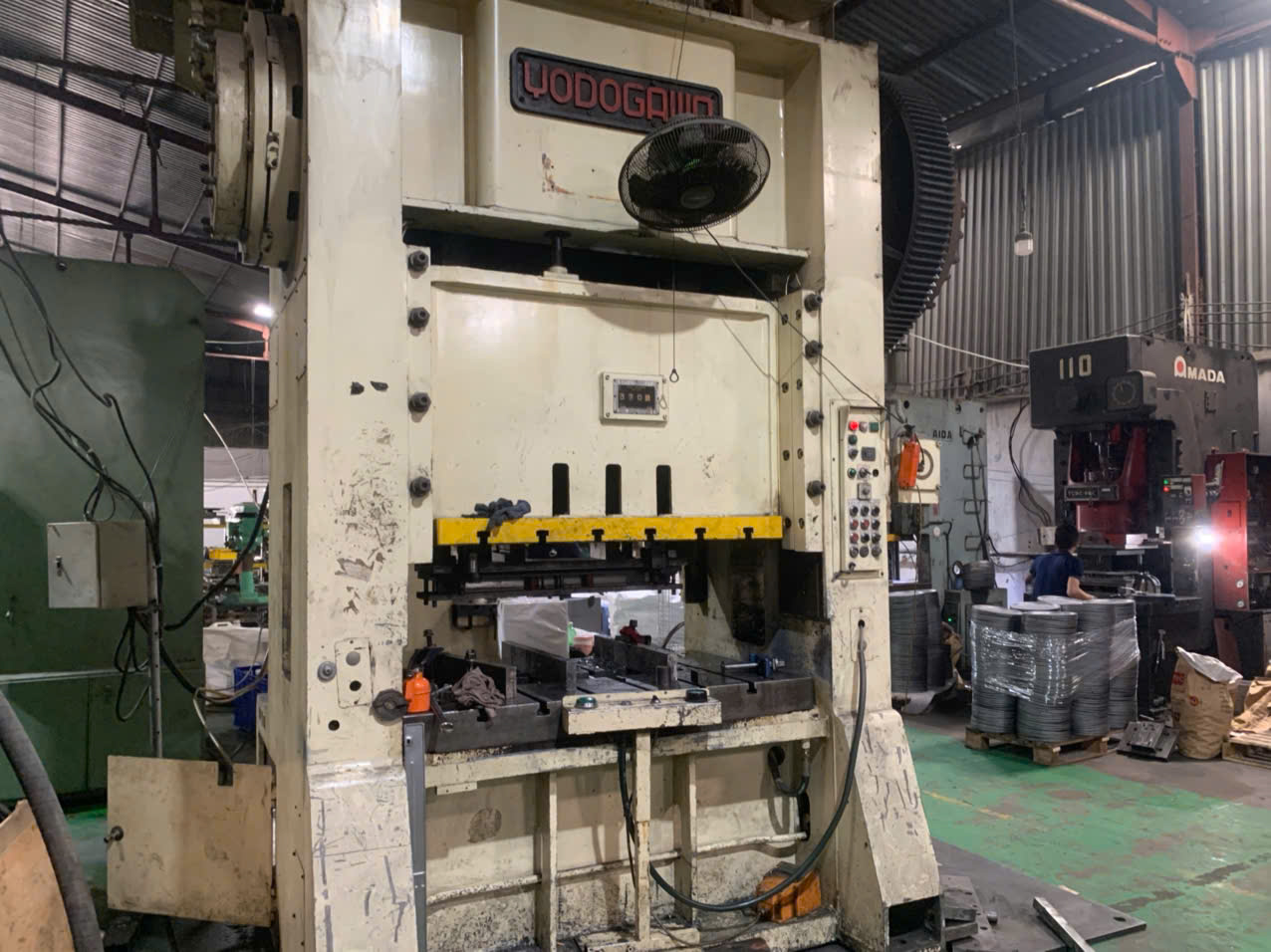
The decision really comes down to three questions. Who creates the design? Who pays for the tooling? How unique does the part need to be? For stamping parts, these questions matter more than in many other product categories. Dies are the economic center of stamping. A dedicated progressive die 3 can cost thousands of dollars and take ten or more weeks to build. Shared or existing dies cost you almost nothing upfront.
Start with your design source
If your engineers have full drawings, a BOM, material specs, and GD&T 4 tolerances, you are already set up for OEM. The factory manufactures exactly to your specification. If you only have a rough idea, a competitor sample, or a functional need, ODM is the natural fit. The supplier brings the design, the die, and the process.
Then check your volume and roadmap
In our sourcing work between Vietnam, Taiwan, and the U.S., we often use a simple rule of thumb. Below roughly 1,000 pieces per year, ODM usually wins financially. Above about 5,000 pieces per SKU annually, OEM starts to pay off, especially if exclusivity matters. Between those points, we look at your product roadmap. Many of our clients start with ODM to test demand, then move to OEM once volume justifies dedicated tooling. That hybrid path is common and smart.
| Your situation | Better fit |
|---|---|
| Full drawings, tight fit with your assembly | OEM |
| No in-house design team | ODM |
| Under 1,000 pcs per year | ODM |
| Over 5,000 pcs per SKU per year | OEM |
| Need market exclusivity | OEM |
| Need parts in weeks, not months | ODM |
What level of design control will I have with OEM versus ODM stamping manufacturing?
A recurring trade-off we weigh with clients is control versus effort. Full design control sounds attractive until you see how much engineering coordination it demands, especially on multi-bend brackets with slotted holes and plating requirements.
OEM gives you full design control: you define geometry, material, tolerances, and finish, and the supplier builds to print. ODM limits you to minor modifications such as hole placement, finish, or logo, because the supplier owns the base design and shared tooling.
Design control in stamping is not abstract. It touches every physical feature of the part. Think about a simple zigzag mounting clip. The bend angles, the flange lengths, the oval punched holes, the steel thickness, and the galvanized coating are all design decisions. In an OEM arrangement, you control every one of them. You supply the drawing. The factory follows it. If the part fails to meet your GD&T callouts, that is a non-conformance, and you have the contractual right to reject it.
What ODM customization really allows
ODM customization sits within the limits of the existing die. Typical changes include surface finish, plating type, color, logo stamping, and sometimes small dimensional tweaks. Anything that requires a new punch, a new bend station, or a new die section pushes the project toward OEM territory. This is a nuance many buyers miss. Even a small change in hole position or bend geometry can require new tooling and process validation. At that point you are paying OEM-style costs without OEM-style ownership.
The spectrum between the two models
Real sourcing rarely sits in a perfect binary. Some suppliers offer "OEM customization" on top of standard parts. There is also a growing hybrid called JDM, or joint design manufacturing. In JDM, you provide functional specs, and the factory co-develops the die design with you. We use this model often in our co-development projects. It balances IP control with lower engineering cost, which suits buyers who have requirements but not full drawing packages.
| Design element | OEM control | ODM control |
|---|---|---|
| Part geometry and bends | Full | Fixed by supplier die |
| Material grade and thickness | Full | Limited options |
| Tolerances and GD&T | Buyer-defined | Supplier-defined |
| Surface finish and plating | Full | Usually flexible |
| Branding and marking | Full | Usually allowed |
| Derivative design changes | Buyer owns | Supplier owns |
Which option gives me better cost efficiency and faster time-to-market for my stamping parts?
Numbers settle this debate faster than opinions do. When our Vietnam office quotes both paths for the same bracket, the cost curves cross at a very visible point, and clients suddenly understand the whole OEM-versus-ODM question.
ODM is cheaper upfront and faster, often sampling in 1 to 4 weeks with low MOQs, because tooling already exists. OEM needs 1 to 8 months of development and higher tooling investment, but delivers lower per-unit cost and exclusivity at higher volumes.

Let me break the economics down. In stamping, the die is the big fixed cost. Everything else, including material, press time, and finishing, is variable. ODM spreads die cost across many customers, so your quote reflects mostly variable cost. OEM makes you carry the full die cost alone, but in return, your per-piece price drops as volume rises, and no one else can order your part.
Where the time goes in OEM development
OEM development is a chain of steps. Each one takes time.
- Drawing review and DFM feedback from the factory.
- Die design and buyer approval.
- Die fabrication, which can take 10 or more weeks for progressive die 5s.
- First article samples and dimensional reports.
- PPAP or equivalent approval, if required.
- Process validation and mass production.
ODM skips steps two through four almost entirely. The design is proven. The die exists. That is why ODM samples can ship in days, not months. For a client racing to hit a retail launch date, that speed is often worth more than exclusivity.
The crossover logic
Here is the simple comparison we share with purchasing managers:
| Factor | OEM stamping parts | ODM stamping parts |
|---|---|---|
| Design source | Buyer provides specs | Supplier's existing design |
| Tooling cost | Buyer-funded, custom dies | Supplier-owned, shared |
| Upfront investment | High | Low |
| Development time | 1–8 months | 1–4 weeks |
| MOQ | Higher | Lower |
| Per-unit cost at volume | Lower | Higher |
| Best for | Proprietary, high-volume parts | Fast launch, low-volume SKUs |
One warning from experience: cheap shared tooling has a hidden cost. If the supplier's die wears out or their schedule fills with other clients' orders, your ODM lead time can slip. Dedicated OEM tooling gives you priority and predictability, which matters when late deliveries cost you customer trust.
How do I evaluate a supplier's OEM and ODM capabilities before signing a contract?
A hard lesson shaped how our audit team works today. Years ago, we found a factory that quoted brilliantly but had no incoming material inspection at all. The quote looked great; the first shipment did not.
Evaluate a supplier by auditing certifications like ISO 9001 or IATF 16949, reviewing die-making and DFM capability, checking PPAP and inspection documentation, confirming tooling and IP ownership terms in writing, and verifying whether they can resell your design to others.

OEM and ODM demand different strengths from a factory, so your evaluation should match the model you plan to use. For OEM, you are buying execution discipline. For ODM, you are buying design competence plus honesty about who else uses that design. When we run supplier audits across Vietnam, Taiwan, and India for our U.S. clients, we split the assessment into capability, quality system, and contract terms.
Capability questions to ask
For OEM projects, ask whether the factory builds dies in-house or outsources them. In-house die shops fix problems faster. Ask about press tonnage range, progressive versus transfer die experience, and their record with your material, whether it is galvanized steel 6, stainless, or aluminum. For ODM projects, ask to see their existing part catalog, request samples, and check how many customization requests they have actually executed.
Quality system checks
Do not accept a certificate PDF at face value. Verify ISO 9001 7 or IATF 16949 registration independently. Then go deeper. Ask for a sample PPAP package, dimensional reports, and their control plan. In OEM, you define and audit the GD&T and documentation. In ODM, the supplier controls their own QA, so independent verification matters even more. We insist on first article inspection and final inspection before every shipment, because catching a wrong hole position in the factory costs dollars; catching it in a U.S. warehouse costs the relationship.
Contract terms that protect you
Put four things in writing before quoting ends. First, who owns the die and whether you can transfer it. Second, who owns the design IP, including derivative changes you request. Third, whether the supplier may sell the same or similar part to competitors, and whether an exclusivity clause is available. Fourth, penalties and remedies for late delivery and non-conformance. ODM buyers especially should secure exclusivity if the part carries their branding, because design commoditization is a real risk when a factory reuses one die for many brands.
Conclusion
Picking wrong between OEM and ODM wastes money and months. OEM buys control and exclusivity; ODM buys speed and low cost. Match the model to your volume, design ownership needs, and roadmap.
Frequently Asked Questions
How do I know whether I need an OEM or ODM partner for my stamping parts?
Last year, a U.S. purchasing manager sent our team a bracket sketch and asked for "OEM service." After one call, we realized a catalog-style ODM clip covered ninety percent of his need.
What level of design control will I have with OEM versus ODM stamping manufacturing?
A recurring trade-off we weigh with clients is control versus effort. Full design control sounds attractive until you see how much engineering coordination it demands, especially on multi-bend brackets with slotted holes and plating requirements.
Which option gives me better cost efficiency and faster time-to-market for my stamping parts?
Numbers settle this debate faster than opinions do. When our Vietnam office quotes both paths for the same bracket, the cost curves cross at a very visible point, and clients suddenly understand the whole OEM-versus-ODM question.
Footnotes
1. WTO trade regulation resource relevant to cross-border sourcing of stamping parts discussed. ↩︎
2. Official standard page to verify certification claims mentioned for supplier quality systems. ↩︎
3. Explains the tooling process referenced when discussing dedicated die costs and lead times. ↩︎
4. Background reference explaining geometric dimensioning and tolerancing referenced repeatedly in the article. ↩︎
5. Explains the progressive stamping die process central to the article’s cost discussion. ↩︎
6. Background reference on galvanized steel material mentioned in supplier capability evaluation. ↩︎
7. ISO 9001 is the international quality management standard referenced for supplier audits. ↩︎