
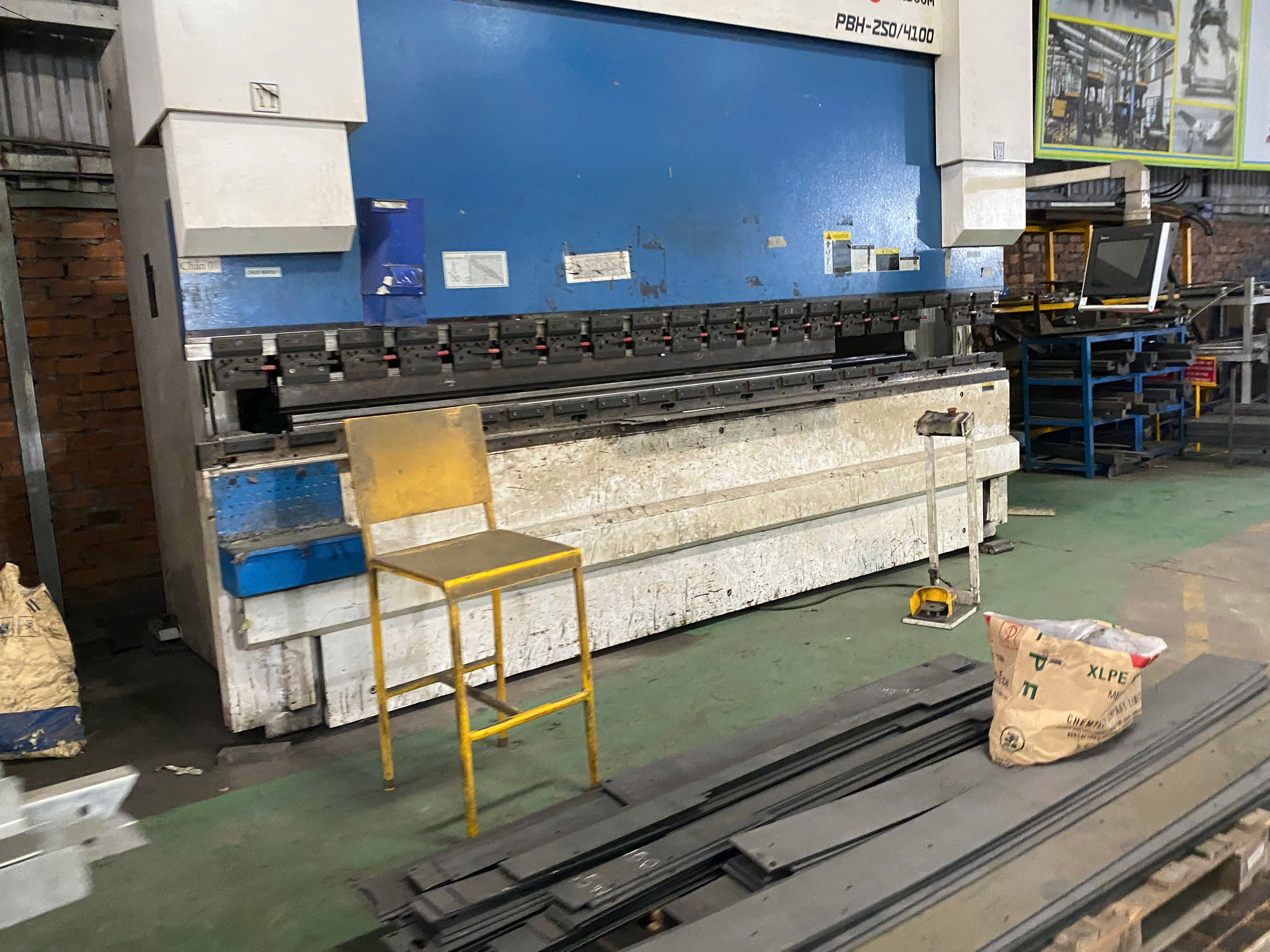
When our engineering team started fielding requests for battery enclosures and solar panel mounting systems three years ago, we realized the new energy sector was about to reshape everything we knew about custom sheet metal work.
Emerging sheet metal fabrication applications in the new energy industry span solar mounting structures, wind turbine components, EV charging station enclosures, battery storage system housings, hydrogen fuel cell frames, and thermal management systems — all demanding tighter tolerances, advanced materials, and corrosion resistance beyond what traditional industries require.
This shift is not small. It touches every stage of fabrication — from material selection to final inspection ISO-certified quality systems 1. Below, we break down the critical areas where sheet metal meets new energy, and what purchasing managers need to know before sourcing these components.
How can I find a reliable partner for custom EV charging station sheet metal enclosures?
A buyer from the Midwest once told me his last supplier shipped 500 electric vehicle charging station enclosures with drain holes punched on the wrong side Statistical Process Control 2. That single error cost his team six weeks and tens of thousands in rework. Finding the right fabrication partner is not just about price — it is about preventing exactly this kind of failure.
To find a reliable partner for custom EV charging station sheet metal enclosures, evaluate suppliers on their experience with outdoor-rated enclosures, their quality control processes (especially PPAP documentation), material certifications for corrosion resistance, and their ability to manage co-development from prototype through volume production.
Why EV Charging Station Enclosures Are Different
EV charging station enclosures are not standard electrical boxes. They sit outdoors in rain, snow, heat, and coastal salt air. They house high-voltage electronics. They must meet strict IP ratings 3 for ingress protection. And they need to look good — because they sit in parking lots and retail spaces where brand image matters.
Our team in Vietnam has worked on enclosure projects where the customer required NEMA 3R ratings 4 and UL-listed materials. The tolerances on door fit and gasket channels were tight — typically ±0.1 mm on critical sealing surfaces. Miss that, and water gets in. Water plus high-voltage electronics equals a recall.
What to Look for in a Supplier
Here is a practical checklist we share with purchasing managers who are sourcing these parts for the first time:
| Evaluation Criteria | What to Check | Why It Matters |
|---|---|---|
| Material Expertise | Can they source and work with 304/316 stainless steel or powder-coated aluminum? | Corrosion resistance is non-negotiable for outdoor enclosures |
| Quality System | Do they follow PPAP, APQP, or similar processes? | Ensures "right first time" results and reduces rework |
| Prototyping Capability | Can they produce 1–5 prototypes before volume runs? | Validates fit, finish, and function before commitment |
| Co-development Support | Do they have engineers who review your drawings proactively? | Catches critical drawing errors early, before tooling |
| Surface Finishing | Do they offer powder coating, anodizing, or e-coating in-house or via vetted sub-suppliers? | Surface finish drives both durability and appearance |
| Logistics Management | Can they handle door-to-door delivery to the US? | Reduces your coordination burden and shipping risks |
Precision Metal Forming for Charging Infrastructure
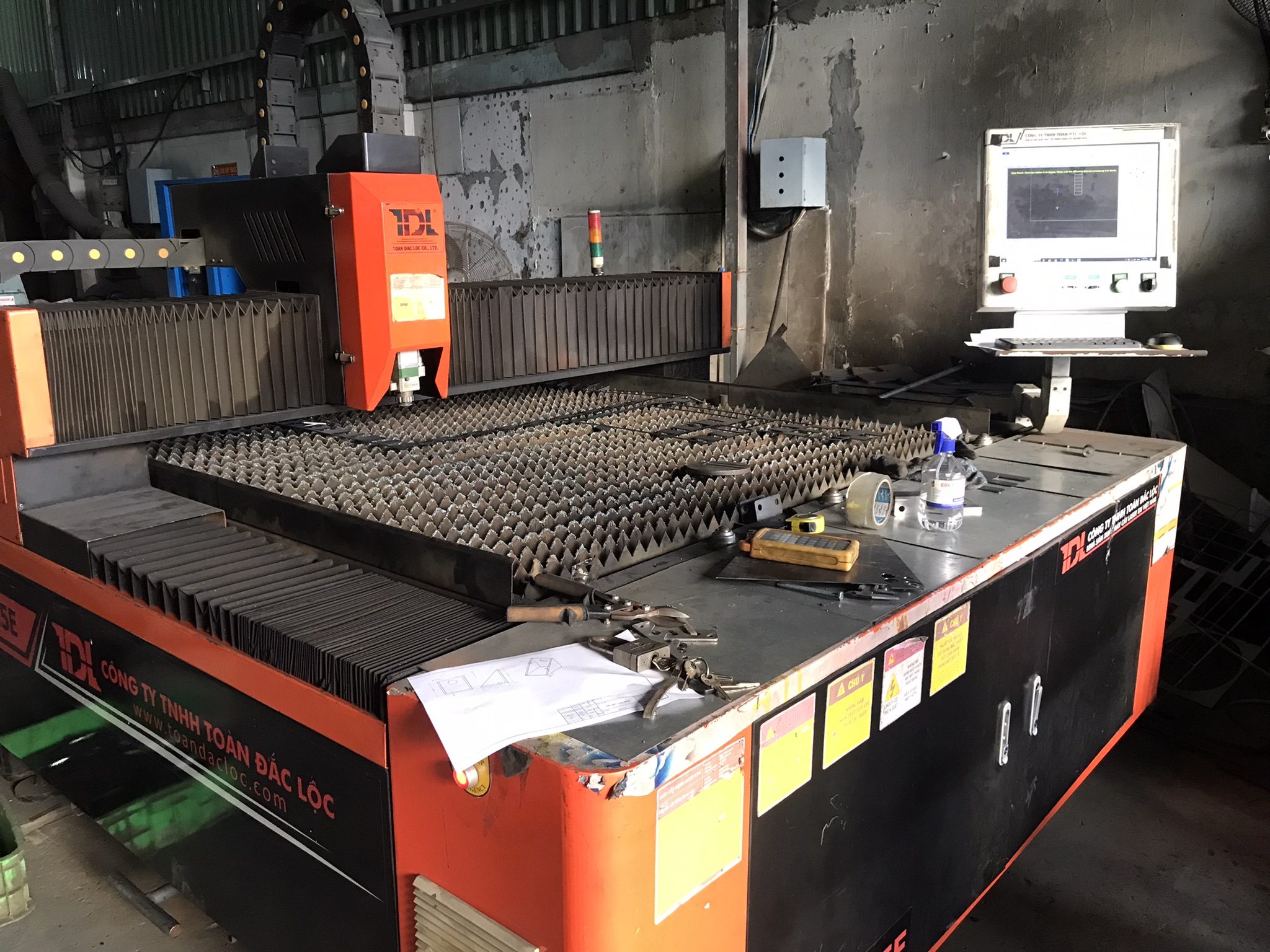
The charging infrastructure market is growing fast. Precision metal forming is at the heart of it. Every enclosure involves laser-cut panels, CNC-bent flanges, welded seams, and hardware insertion. The sequence matters. The tolerances matter. And the communication between your engineering team and the fabricator matters most of all.
One lesson we learned early: always request a DFM (Design for Manufacturability) review before locking your drawings. Our China office caught a case where a customer's design called for a bend radius that would crack the aluminum alloy they specified. A simple material change — or a slight radius adjustment — saved the project.
What are the critical quality requirements I should demand for my battery storage system components?
Last quarter, we audited a supplier producing battery enclosures for a US-based energy storage integrator. The welds looked fine visually — but X-ray inspection revealed porosity in 12% of the samples. For a component that contains lithium-ion cells, that level of weld defect is unacceptable. Quality requirements for energy storage systems are not suggestions. They are safety mandates.
For battery storage system components, demand weld integrity verification (X-ray or ultrasonic testing), dimensional accuracy within ±0.05–0.1 mm on critical interfaces, verified material certifications (mill certs), IP67 or higher sealing, thermal management compatibility, and documented PPAP with full dimensional reports for every production lot.
The Stakes Are Higher with Battery Enclosures
Battery enclosures for energy storage systems are not like typical industrial housings. They contain cells that can experience thermal runaway 5. They must provide structural supports strong enough to handle stacking loads in containerized deployments. They need channels or provisions for thermal management — cooling plates, air ducts, or liquid cooling pathways.
The materials matter, too. Aluminum is popular for lightweight materials in EV battery packs because it reduces overall vehicle weight. But for stationary energy storage, steel often wins because it provides better fire resistance and structural rigidity at lower cost. The choice depends on the application.
Quality Requirements Breakdown
| Requirement | Specification | Test Method |
|---|---|---|
| Weld Integrity | No porosity, no cracks, full penetration | X-ray or ultrasonic inspection |
| Dimensional Accuracy | ±0.05 mm on mating surfaces, ±0.1 mm general | CMM measurement, fixture checks |
| Material Certification | Mill certs matching drawing callouts (e.g., 5052-H32 aluminum, 304 SS) | Document review, PMI verification |
| Sealing Performance | IP67 minimum for outdoor/containerized systems | Water immersion test per IEC 60529 |
| Surface Treatment | Powder coat ≥60 µm, or anodize per MIL-A-8625 | DFT gauge, salt spray test (500+ hours) |
| Thermal Interface | Flatness ≤0.1 mm on cooling plate contact surfaces | Surface plate measurement |
Why PPAP Matters for These Components
Many purchasing managers sourcing from Asia skip PPAP documentation 6 because they think it is only for automotive. That is a mistake. PPAP — Production Part Approval Process — is the single most effective tool for ensuring "right first time" results. It forces the supplier to prove, with data, that their process can consistently produce parts within specification.
Our process control team runs full PPAP for every new battery enclosure project. This includes control plans, process flow diagrams, MSA (Measurement System Analysis), and initial sample inspection reports. When we deliver the first production lot, the customer knows exactly what they are getting — because we already proved it during the approval phase.
Structural Integrity and Thermal Management
Containerized battery storage is a fast-growing segment. These systems stack modules inside standard shipping containers. The sheet metal frames and enclosures must handle vibration during transport, thermal cycling in the field, and potential seismic loads depending on installation location.
Thermal management integration is critical. Some designs require sheet metal cooling plates brazed or welded to the enclosure walls. Others use stamped channels for liquid coolant flow. The fabrication complexity is high, and the quality bar is even higher. A leak in a cooling channel inside a battery enclosure can cause catastrophic failure.
How do I ensure my custom solar mounting hardware meets the precision needed for large-scale projects?
One trade-off we constantly weigh with solar panel mounting systems is speed versus accuracy. A 50-megawatt solar farm might need 200,000 brackets, clips, and rail segments. Every piece must fit the first time, because rework on a remote installation site in Texas or Arizona costs five to ten times more than fixing it at the factory. The precision problem is really a process control problem.
To ensure your custom solar mounting hardware meets large-scale project precision, require suppliers to implement SPC (Statistical Process Control) on critical dimensions, use CNC-automated bending and punching, provide first-article inspection reports per AS9102 or equivalent, and maintain tooling calibration schedules verified through regular audits.
Scale Amplifies Every Error
When you order 500 custom brackets, a 0.3 mm deviation might be tolerable. When you order 200,000, that same deviation means thousands of parts that do not fit the mounting rail. Installers in the field cannot shim or force-fit their way through a utility-scale solar project. The parts must be right.
Solar mounting structures face constant outdoor exposure. Wind loads, thermal expansion, and UV degradation all act on the hardware over a 25-year design life. The materials — typically hot-dip galvanized steel 7 or anodized aluminum — must maintain corrosion resistance for the entire service period.
Process Controls That Matter
Here is how we approach precision for high-volume solar hardware:
- CNC Programming Verification: Every new part number gets a program simulation before the first blank is cut. This catches nesting errors and tool path issues.
- First Article Inspection (FAI): We measure the first 3–5 pieces from a new setup against every dimension on the drawing. First Article Inspection (FAI) 8 The report goes to the customer for approval before we run the batch.
- In-Process SPC: Operators measure critical dimensions every 50–100 pieces and plot the results. If a trend appears, they adjust before parts go out of tolerance.
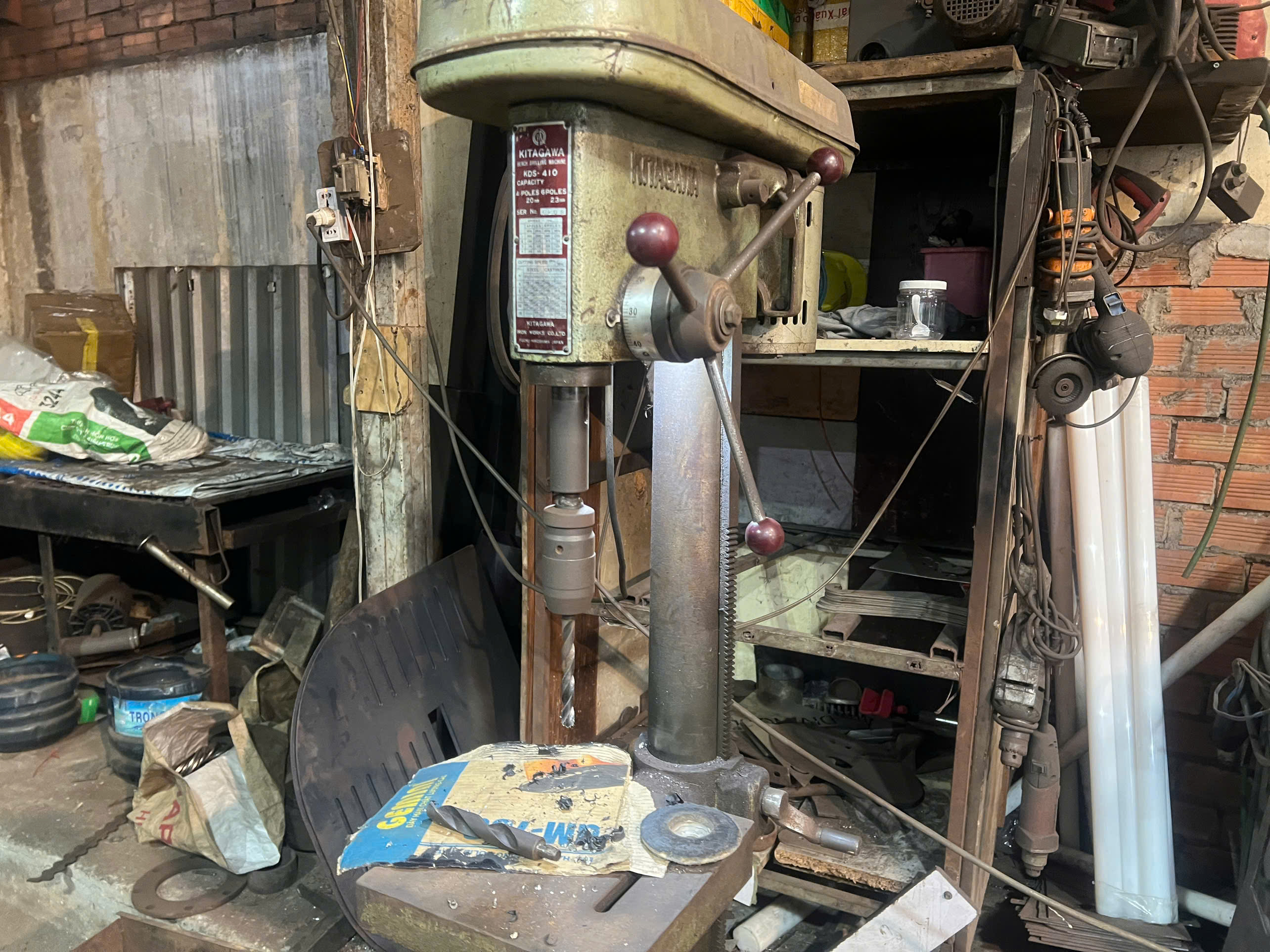
- Tooling Maintenance: Punch dies and press brake tooling wear over time. We track hits per tool and replace or regrind on a schedule — not when parts start failing.
- Final Inspection: Random sampling per AQL tables, plus 100% inspection on safety-critical features.
Material Selection for Solar Mounting
| Material | Advantages | Limitations | Best Application |
|---|---|---|---|
| Hot-Dip Galvanized Steel | Excellent corrosion resistance, high strength, low cost | Heavy, requires zinc coating process | Ground-mount racking, structural supports |
| Anodized Aluminum 9 (6061/6063) | Lightweight, good corrosion resistance, easy to extrude | Lower strength than steel, higher material cost | Rooftop mounts, residential systems |
| Stainless Steel (304) | Superior corrosion resistance, no coating needed | Expensive, harder to form | Coastal installations, corrosive environments |
| Pre-Galvanized Steel | Lower cost than hot-dip, adequate for mild environments | Thinner zinc layer, cut edges exposed | Inland utility projects with moderate exposure |
Wind turbine components and solar mounting hardware share a common challenge: they must survive decades in harsh environments with zero maintenance. The difference is that solar hardware is produced in much higher volumes, so cost per unit is a bigger driver. Steel remains the dominant choice for utility-scale projects because of its strength-to-cost ratio.
Tracking Systems and Mechanical Precision
Single-axis and dual-axis solar tracking systems use fabricated sheet metal for their drive housings, torque tube clamps, and bearing mounts. These components require tighter tolerances than fixed-tilt racking because mechanical movement amplifies any misalignment. Our engineers recommend tolerances of ±0.05 mm on bearing seat diameters and ±0.1 mm on bolt hole patterns for tracking system hardware.
Can I leverage Southeast Asian manufacturing for my new energy sheet metal projects without sacrificing quality?
A client recently asked me point-blank: "Can Vietnam really match the quality I get from my current supplier in the US?" The honest answer surprised him. Our Vietnam facility has been producing precision sheet metal parts — including components for hydrogen fuel cell frames 10 and energy storage systems — that consistently pass incoming inspection at US receiving docks. The key is not geography. It is process.
Yes, you can leverage Southeast Asian manufacturing for new energy sheet metal projects without sacrificing quality by partnering with suppliers who maintain ISO-certified quality systems, employ PPAP-level documentation, conduct supplier audits on sub-tier vendors, and have local quality teams — such as our seven-person team in Vietnam — managing production daily.
Why Southeast Asia Is Gaining Ground
The shift toward Southeast Asian manufacturing for new energy components is driven by several factors. Tariff pressures on Chinese imports have pushed US buyers to explore Vietnam, Thailand, and Malaysia. These countries have invested heavily in CNC equipment, laser cutting systems, and welding automation over the past decade.
But equipment alone does not guarantee quality. What matters is the management system around the equipment. This is where many buyers get burned. They find a shop with a brand-new fiber laser and assume the parts will be good. Without process control, training, and inspection rigor, expensive equipment produces expensive scrap.
Comparing Manufacturing Regions
| Factor | China | Vietnam | US Domestic |
|---|---|---|---|
| Labor Cost | Low | Low | High |
| Equipment Availability | Excellent — wide range of CNC, laser, press brake | Good — rapidly expanding, newer machines | Excellent — but capacity is tight |
| Quality System Maturity | Variable — top suppliers are world-class, others are inconsistent | Growing — best suppliers have ISO and PPAP capability | Generally high, but not immune to issues |
| Lead Time (to US) | 6–10 weeks including ocean freight | 7–11 weeks including ocean freight | 2–4 weeks |
| Tariff Exposure | High — subject to Section 301 tariffs | Low — favorable trade status | None |
| Communication | Good English in top-tier suppliers | Improving — local teams bridge language gaps | Native English |
| Payment Terms | Typically T/T in advance or LC | Some suppliers offer open account terms | Net 30–60 standard |
How We Bridge the Quality Gap
Our approach is straightforward. We do not just source parts — we manage the process. Here is what that looks like for a typical new energy sheet metal project:
- Supplier Audit: Before any PO is issued, our team visits the factory. We check equipment condition, operator training records, calibration logs, and past quality data.
- Co-Development: Our engineers review your drawings alongside the supplier's process engineers. We flag potential issues — like a forming sequence that could cause springback — before tooling begins.
- PPAP Execution: We manage the full PPAP package, including control plans, process FMEAs, and capability studies on critical dimensions.
- In-Process Monitoring: Our local team conducts in-process checks during production. We do not wait for final inspection to find problems.
- Final Inspection and Shipping: Every lot gets a final inspection per the agreed AQL plan. We manage logistics door-to-door, including customs documentation.
Addressing the Real Pain Points
Purchasing managers sourcing from Asia face three recurring problems: delivery delays, missed drawing requirements, and lack of first-time quality. These are not inherent to Asian manufacturing. They are symptoms of poor supplier management.
Delivery delays often come from suppliers who over-commit their capacity. We track supplier loading and flag risks early. Missed drawing requirements happen when the supplier does not fully understand the application. Our co-development process ensures they do. And first-time quality failures drop dramatically when you implement proper PPAP and SPC — regardless of where the factory is located.
The new energy industry demands lightweight materials, tight tolerances, and advanced surface treatments. Whether you are sourcing structural supports for a solar farm, battery enclosures for a containerized storage system, or precision brackets for electric vehicle charging stations, the manufacturing region matters less than the quality system managing the work. With the right partner and the right process, Southeast Asian fabrication delivers mid-to-high quality custom parts at a cost structure that makes your projects viable.
Conclusion
Sheet metal fabrication applications in the new energy industry are expanding rapidly across solar, wind, EV, and energy storage sectors. Success depends on choosing the right materials, enforcing strict quality processes, and partnering with suppliers who understand both precision and your supply chain needs.
Frequently Asked Questions
How can I find a reliable partner for custom EV charging station sheet metal enclosures?
A buyer from the Midwest once told me his last supplier shipped 500 electric vehicle charging station enclosures with drain holes punched on the wrong side Statistical Process Control 2 . That single error cost his team six weeks and tens of thousands in rework. Finding the right fabrication partner is not just about price — it is about preventing exactly this kind of failure.
What are the critical quality requirements I should demand for my battery storage system components?
Last quarter, we audited a supplier producing battery enclosures for a US-based energy storage integrator. The welds looked fine visually — but X-ray inspection revealed porosity in 12% of the samples. For a component that contains lithium-ion cells, that level of weld defect is unacceptable. Quality requirements for energy storage systems are not suggestions. They are safety mandates.
How do I ensure my custom solar mounting hardware meets the precision needed for large-scale projects?
One trade-off we constantly weigh with solar panel mounting systems is speed versus accuracy. A 50-megawatt solar farm might need 200,000 brackets, clips, and rail segments. Every piece must fit the first time, because rework on a remote installation site in Texas or Arizona costs five to ten times more than fixing it at the factory. The precision problem is really a process control problem.
Footnotes
1. Official source for international quality management standards. ↩︎
2. ASQ is a leading authority on quality management and statistical process control. ↩︎
3. IEC is the international standard-setting body for Ingress Protection codes. ↩︎
4. Explains NEMA 3R standard for electrical enclosures from a reputable manufacturer. ↩︎
5. Molicel, a battery manufacturer, explains the critical safety concept of thermal runaway. ↩︎
6. AIAG is the primary authority for the Production Part Approval Process. ↩︎
7. Xometry provides a detailed comparison and properties of hot-dip galvanized steel. ↩︎
8. Verisurf provides a comprehensive guide to First Article Inspection and AS9102. ↩︎
9. Lorin Industries is a recognized leader in the production of anodized aluminum. ↩︎
10. The U.S. Department of Energy provides authoritative information on fuel cell components. ↩︎