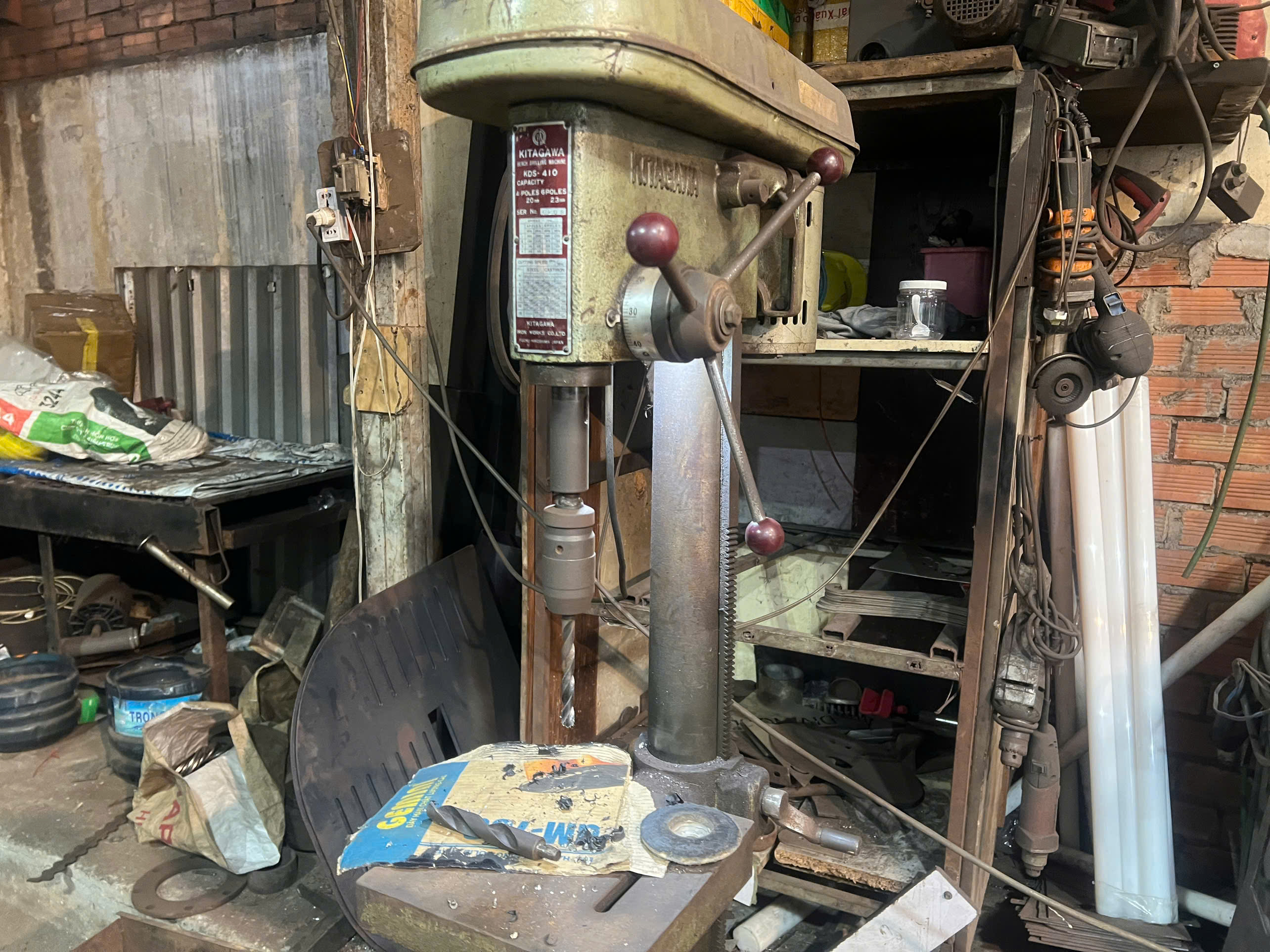

Last quarter, a European buyer nearly had a full container of stamping parts held at Rotterdam port — all because the technical documentation package was missing one key compliance certificate.
EU certifications required for stamping parts from Vietnam depend on end-use application and include CE marking for machinery or equipment directives, REACH regulation compliance for chemical substances, RoHS compliance for electronics, ISO 9001 certification for quality management, IATF 16949 for automotive, and EVFTA rules of origin documentation for preferential tariffs.
The certification landscape is not one-size-fits-all. Stamping is a manufacturing process, not a product category. So the rules change based on what the stamped part does and where it goes. Below, I walk through the specific requirements our team encounters every week when managing supply chains between Vietnam and EU markets.
How do I know which EU certifications my stamping parts actually need before I place an order?
A buyer we work with in Germany once assumed his mounting brackets needed full CE marking — he spent weeks chasing paperwork that was never required for his application in the first place.
To determine which EU certifications your stamping parts need, first identify the end-use application — automotive, machinery, electronics, or general industrial — then map each use case to the relevant EU directives such as the Machinery Directive, Pressure Equipment Directive, RoHS, or REACH regulation.

Why End-Use Application Is the Starting Point
There is no single "stamping parts directive" in EU law. The EU regulates products by their function, not by how they are made. A stamped steel bracket used inside a CNC machine falls under different rules than the same bracket used in an electric vehicle. Our Vietnam office handles dozens of stamping projects at any given time, and the first question we always ask a new buyer is: "What does this part do in your final assembly?"
Here is a simplified decision framework we share with clients:
| End-Use Application | Primary EU Directive / Regulation | CE Marking Required? |
|---|---|---|
| Automotive structural or safety part | IATF 16949 + Type Approval | Usually no (OEM handles CE) |
| Machinery sub-component (bracket, frame) | Machinery Directive 2006/42/EC | No — final machine manufacturer applies CE |
| Safety guard or protective component | Machinery Directive or PPE Regulation | Yes — part itself may need CE |
| Electrical/electronic housing or contact | Low Voltage Directive + RoHS compliance | Yes, if sold as a finished product |
| Pressure vessel or pressure-bearing part | Pressure Equipment Directive 1 (PED) | Yes |
| General industrial hardware (clips, mounts) | REACH regulation (chemical compliance) | No |
The "Component vs. Product" Trap
This is the single biggest source of confusion I see. Many sourcing managers think stamping parts always need CE marking. That is usually wrong. If your stamped bracket is a component that goes inside a larger machine, the machine builder in the EU applies the CE mark. Your part just needs to meet the technical specifications and come with proper material traceability documentation.
But there is an important exception. If the stamped part is a safety-critical component 2 — like a brake pedal arm, a pressure vessel shell, or a PPE guard — then the part itself may require CE marking and a Declaration of Conformity. The distinction is not about the stamping process. It is about the risk category of the final function.
Chemical Compliance Is Always Mandatory
Regardless of the end-use, every stamping part entering the EU must comply with the REACH regulation. This applies to the base metal alloy and any surface coatings like zinc plating or chromate conversion. If the part is used in electrical or electronic equipment, RoHS compliance also kicks in, restricting substances like lead, mercury, cadmium, and hexavalent chromium.
Our team always requests an EN 10204 material certificate 3 (typically a 3.1 inspection certificate) from the Vietnamese mill or supplier. This document traces the chemical composition of the raw material back to the heat or batch level. Without it, proving REACH compliance becomes very difficult.
Do Not Forget the Trade Agreement
The EU-Vietnam Free Trade Agreement (EVFTA) offers preferential tariffs 4 — often 0% — for qualifying goods. But you need proof of origin. This means either a EUR.1 certificate issued by Vietnamese customs or a self-declaration under the REX (Registered Exporter) system. We help buyers navigate the EVFTA rules of origin because getting this wrong means paying full MFN duties at the EU border.
Can my Vietnam supplier provide CE marking or REACH compliance documentation I can trust?
One lesson I learned early in our Vietnam operations is that a certificate is only as reliable as the system behind it — and not every supplier has a system.
Yes, reputable Vietnamese stamping suppliers can provide trustworthy CE marking documentation and REACH compliance certificates, but only if they work with internationally recognized testing bodies like SGS, Bureau Veritas, or TÜV Rheinland, and maintain a robust quality management system with proper material traceability.

What Good Documentation Looks Like
When we audit a stamping facility in Vietnam on behalf of an EU buyer, we look for specific documentation infrastructure — not just a certificate hanging on the wall. Here is what a reliable compliance package should include:
| Document | Purpose | Who Issues It |
|---|---|---|
| EN 10204 material certificate (Type 3.1) | Proves chemical composition and mechanical properties of raw steel/alloy | Steel mill or authorized lab |
| REACH SVHC Declaration | Confirms no Substances of Very High Concern above threshold | Supplier, backed by lab test report |
| RoHS Test Report | Verifies restricted substance levels in the part and coatings | Accredited third-party lab (SGS, TÜV, etc.) |
| Declaration of Conformity (DoC) | CE marking self-declaration referencing applicable EU directives | Manufacturer or EU importer |
| Material Safety Data Sheet (MSDS/SDS) | Details hazards of any chemical substances in coatings or treatments | Chemical supplier or testing lab |
| Full Material Disclosure (FMD) | Lists every material and substance in the part by weight percentage | Supplier, often required by automotive OEMs |
The Role of Third-Party Testing Labs in Vietnam
Vietnam has a growing network of internationally accredited testing and certification bodies. SGS Vietnam, Bureau Veritas, and TÜV Rheinland all operate local labs and audit offices. This is a major advantage. Ten years ago, you had to ship samples to Europe for testing. Now, initial REACH and RoHS screening can happen locally in Ho Chi Minh City or Hanoi.
However, for high-risk products that fall under specific CE marking directives — such as the Pressure Equipment Directive — final certification may still require an EU-notified body. A Vietnamese supplier can prepare the technical documentation and do preliminary testing, but the notified body review happens in Europe.
Red Flags to Watch For
Through our factory audit work, we have encountered suppliers who present certificates that are expired, issued for a different product line, or even fabricated. Here are warning signs:
- The certificate has no unique reference number or QR code linking to the issuing body's database.
- The supplier cannot produce the underlying test report behind the certificate.
- Dates on certificates predate the supplier's actual production start date.
- The scope description on an ISO 9001 certification 5 does not mention stamping or metal forming.
We always cross-reference certificate numbers directly with the issuing body's online verification portal. It takes five minutes and has saved our buyers from costly mistakes.
Emerging Requirements: CBAM and Digital Product Passports
EU regulations are evolving. Under the Carbon Border Adjustment Mechanism 6 (CBAM), importers now need to report the embedded carbon emissions of the steel or aluminum used in stamping. This is a reporting requirement today, but it will become a cost factor when carbon levies start applying.
Additionally, the upcoming Digital Product Passport 7 (DPP) under the Ecodesign for Sustainable Products Regulation (ESPR) will require stamped parts to carry machine-readable data about material composition and recyclability. Forward-thinking buyers are already asking Vietnamese suppliers to prepare for this.
What quality certifications like ISO 9001 or IATF 16949 should I require from my Vietnamese stamping partner?
The trade-off between cost and certification level is something our team weighs on nearly every new project — and getting it wrong in either direction is expensive.
At minimum, require ISO 9001 certification for any Vietnamese stamping supplier. For automotive stamping parts, IATF 16949 is a non-negotiable prerequisite. Aerospace applications demand AS9100. These quality management system certifications ensure process consistency, defect prevention, and the material traceability EU buyers expect.

Matching the Certification to Your Industry
Not every project needs the highest-tier certification. But choosing the wrong tier creates risk. Here is how we guide our buyers:
| Industry / Application | Required Quality Certification | Why It Matters |
|---|---|---|
| General industrial hardware | ISO 9001 | Ensures basic quality management system, document control, and corrective action processes |
| Automotive structural/safety | IATF 16949 | Adds automotive-specific requirements: PPAP, APQP, FMEA, MSA, SPC — all focused on defect prevention |
| Aerospace | AS9100 | Adds traceability, configuration management, and risk management layers beyond ISO 9001 |
| Medical devices | ISO 13485 | Requires design controls and regulatory alignment specific to medical products |
| Environmental compliance | ISO 14001 | Demonstrates structured environmental management; often requested by EU OEMs alongside ISO 9001 |
Why ISO 9001 Is the Baseline, Not the Goal
Thousands of Vietnamese manufacturers hold ISO 9001 certification. It is the entry ticket. But holding the certificate and actually running a disciplined quality management system are two different things. During our supplier audits, we look beyond the certificate. We check if the shop floor follows documented procedures. We review calibration records. We ask to see nonconformance logs and corrective actions.
A supplier with a well-implemented ISO 9001 system will have clear document control, incoming material inspection records, in-process checks, and final inspection protocols. If those records are thin or missing, the certificate is just paper.
IATF 16949: The Automotive Standard
For any buyer sourcing stamping parts for the EU automotive supply chain 8, IATF 16949 is mandatory. This is not optional. European OEMs and Tier 1 suppliers will not even consider a stamping partner without a valid IATF 16949 certificate.
The standard builds on ISO 9001 but adds automotive-specific tools:
- APQP (Advanced Product Quality Planning): A structured process for launching new parts.
- PPAP (Production Part Approval Process): Formal submission of samples, dimensional reports, and process capability data before production begins.
- FMEA (Failure Mode and Effects Analysis): Proactive risk analysis of each process step.
- MSA (Measurement Systems Analysis): Ensures your gauges and measurement tools are reliable.
- SPC (Statistical Process Control): Ongoing monitoring of critical dimensions during production.
A growing number of Vietnamese stamping suppliers now hold IATF 16949 certification. Our Vietnam team has seen this number increase significantly in the past three years as the country positions itself as an alternative to China for automotive stamping.
Tolerance Standards: ISO 2768
Beyond quality management systems, EU engineers frequently reference ISO 2768 for general tolerances on stamped parts. This standard defines acceptable tolerance classes (fine, medium, coarse) for linear and angular dimensions. When we review client drawings, we check that the tolerance callouts align with what the Vietnamese supplier's equipment can reliably hold. Misalignment here is a common source of first-article failures.
How do I verify a supplier's certification claims before shipping stamping parts to the EU?
A few years ago, we discovered during a factory audit in northern Vietnam that a supplier's ISO 9001 certificate had been expired for eight months — but it was still displayed prominently in their showroom.
Verify a supplier's certification claims by cross-checking certificate numbers on the issuing body's online database, conducting an on-site factory audit, requesting underlying test reports for REACH and RoHS, and using third-party inspection services like SGS or TÜV Rheinland in Vietnam before approving any shipment.

Step-by-Step Verification Process
Verification is not complicated, but it requires discipline. Here is the process we follow for every new Vietnamese stamping supplier before we approve them for EU-destined production:
Step 1: Request all certificates upfront. Ask for ISO 9001, IATF 16949 (if automotive), REACH declarations, RoHS test reports, and EN 10204 material certificates. A serious supplier will provide these within 48 hours.
Step 2: Check certificate validity online. Every legitimate certification body maintains a public database. For ISO and IATF certificates, you can verify the certificate number, scope, and expiration date on the certifying body's website. The IATF maintains its own public database at the IATF website where you can search by company name or certificate number.
Step 3: Review the scope of certification. This is critical. A supplier may hold ISO 9001 for "assembly of electronic components" but not for "metal stamping." If stamping is not explicitly listed in the scope, the certificate does not cover your parts.
Step 4: Conduct a factory audit. Nothing replaces boots on the ground. Our Vietnam-based team of seven employees conducts on-site audits that go beyond checking certificates. We inspect the production floor, review measurement equipment calibration records, examine raw material incoming inspection logs, and interview quality staff. We look at how they handle nonconformances and whether corrective actions actually get implemented.
Step 5: Request a sample run with full documentation. Before committing to volume production, require a sample run with complete PPAP-level documentation: dimensional reports, material certificates, process capability studies, and photographs of the production setup.
Social and Environmental Due Diligence
EU regulations are expanding beyond product compliance into supply chain ethics. The Corporate Sustainability Due Diligence Directive (CSDDD) means EU importers increasingly need evidence of responsible labor practices 9 at their suppliers. Social accountability audits like SA8000 or BSCI are becoming standard requests.
Similarly, the EU Conflict Minerals Regulation requires due diligence on stamping alloys or coatings containing tin, tantalum, tungsten, or gold (3TG). If your stamped part uses tin-plated contacts or tungsten-carbide tooling in the process, you may need to demonstrate conflict-free sourcing.
Packaging Compliance: An Often-Overlooked Requirement
The new Packaging and Packaging Waste Regulation (PPWR) in the EU means that even the industrial crates 10, pallets, and protective films used to ship stamping parts from Vietnam must meet recyclability and recycled-content targets by 2026. We now include packaging specifications in our supplier quality agreements to avoid surprises at the receiving dock.
The Cost of Getting It Wrong
Shipping non-compliant stamping parts to the EU does not just mean a rejected shipment. It can mean fines, product recalls, and permanent damage to your reputation with OEM customers. We have seen cases where a single failed REACH test result at the EU border led to a full container being quarantined for months. The testing, storage, and re-export costs exceeded the value of the parts.
That is why we treat verification as an investment, not an overhead cost. A thorough factory audit and pre-shipment inspection costs a fraction of what a compliance failure costs downstream. Understanding what quality certifications are required for Vietnamese stamping parts in regulated markets is the first step toward building a reliable supply chain.
Conclusion
Sourcing stamping parts from Vietnam for the EU market requires a layered compliance approach — from REACH and RoHS chemical compliance to industry-specific certifications like IATF 16949, proper EVFTA origin documentation, and rigorous supplier verification through factory audits and third-party testing.
Frequently Asked Questions
How do I know which EU certifications my stamping parts actually need before I place an order?
A buyer we work with in Germany once assumed his mounting brackets needed full CE marking — he spent weeks chasing paperwork that was never required for his application in the first place.
Can my Vietnam supplier provide CE marking or REACH compliance documentation I can trust?
One lesson I learned early in our Vietnam operations is that a certificate is only as reliable as the system behind it — and not every supplier has a system.
What quality certifications like ISO 9001 or IATF 16949 should I require from my Vietnamese stamping partner?
The trade-off between cost and certification level is something our team weighs on nearly every new project — and getting it wrong in either direction is expensive.
Footnotes
1. Official EU guidance on the directive governing pressure-bearing components. ↩︎
2. Wikipedia definition of safety-critical systems and components in engineering. ↩︎
3. Wikipedia entry for the EN 10204 standard governing material inspection certificates. ↩︎
4. Official European Commission page detailing the trade agreement and preferential tariffs. ↩︎
5. Official ISO page for the world’s most recognized quality management standard. ↩︎
6. Official EU page explaining carbon reporting requirements for imported steel and aluminum. ↩︎
7. Wikipedia overview of the EU initiative for digital material traceability and sustainability. ↩︎
8. Authoritative overview of the global automotive quality management standard. ↩︎
9. Official European Commission page on human rights and environmental due diligence requirements. ↩︎
10. Official EU page on packaging waste regulations affecting industrial shipping materials. ↩︎