EU chemical composition regulations for stamping parts confused one of our European buyers so badly that his shipment sat in customs for weeks. Our project team spent days untangling the paperwork. That experience changed how we handle every stamped bracket leaving our supply chain.
Stamping parts sold in the EU must comply with REACH SVHC disclosure above 0.1% w/w, SCIP notification under the Waste Framework Directive, and Annex XVII restrictions. RoHS applies only to electronic components, ELV applies to automotive parts, and food-contact rules apply where relevant.
That sounds like a lot of rules. It is. But most of them follow a simple logic once you break them down. Let me walk you through each one, based on what we actually verify for our clients every week.
How Do I Verify RoHS and REACH Compliance for My Custom Stamping Parts?
During a supplier audit in Vietnam last year, I asked a stamping shop for their REACH compliance evidence. They handed me a RoHS certificate instead. That mix-up happens constantly, and it tells you the supplier does not understand the difference.
Verify REACH compliance by requesting an SVHC declaration confirming no Candidate List substance exceeds 0.1% w/w of the article. Verify RoHS compliance—only if the part goes into electronics—through third-party XRF or lab testing against the ten restricted substances per homogeneous material.
The first step is understanding what your stamping part actually is under EU law. A stamped bracket is an "article." Its function comes from its shape, not its chemistry. That classification matters because articles carry lighter disclosure duties than mixtures like stamping oils or coatings.
REACH: The Rule That Applies to Every Stamping Part
REACH applies to all stamping parts entering the EU. No exceptions. Your supplier must tell you if any substance on the SVHC list appears above 0.1% weight-by-weight of the article. The Candidate List now holds over 170 substances, and ECHA adds more twice a year. For metal parts, the usual suspects hide in the surface treatment, not the base metal. Hexavalent chromium 1 in anti-corrosion plating is the classic trap. Nickel in plating layers is another. We have rejected plating subcontractors purely because they could not document their chromium chemistry.
Do not forget Annex XVII restrictions 2 either. These are outright bans and limits on substances like cadmium and lead in certain applications. They apply separately from the SVHC disclosure duty.
RoHS: Only If Your Part Goes Into Electronics
The RoHS directive 3 is conditional. A shelving bracket does not need RoHS. The same bracket mounted inside a control cabinet does. The thresholds also work differently:
| Aspect | REACH SVHC | RoHS Directive |
|---|---|---|
| Applies to | All articles | Electronic equipment components only |
| Threshold basis | Entire article weight | Each homogeneous material |
| Lead limit | 0.1% (disclosure) | 0.1% (restriction) |
| Cadmium limit | 0.1% (disclosure) | 0.01% (restriction) |
| Hexavalent chromium | 0.1% (disclosure) | 0.1% (restriction) |
| Proof method | SVHC declaration | XRF screening or lab test |
The "homogeneous material" rule makes RoHS stricter in practice. A zinc coating on a steel bracket counts as its own material. So a thin coating with cadmium can fail RoHS even when the whole part passes the REACH threshold.
What Documentation Should I Request from Suppliers to Prove Chemical Compliance?
One habit we built into our PPAP process early on: never accept a one-line email saying "our parts are compliant." A purchasing manager in Ohio once forwarded me exactly that from a previous supplier. It was worthless when his customer's auditor came knocking.
Request a material test report for the base metal, an SVHC declaration referencing the current Candidate List date, plating composition certificates, RoHS test reports if applicable, a SCIP notification number for SVHC-containing parts, and conflict minerals reporting for tin or other covered metals.
Documentation is where good suppliers separate themselves from risky ones. In our experience managing contract manufacturing across Vietnam and Taiwan, the quality of a supplier's paperwork predicts the quality of their parts. Sloppy documents usually mean sloppy process control.
The Core Document Stack
Here is the document set we collect for every EU-bound stamping project:
| Document | What It Proves | Who Issues It |
|---|---|---|
| Material test report (mill cert) | Base metal alloy composition | Steel mill or accredited lab |
| SVHC declaration | No Candidate List substance >0.1% | Supplier, dated against current list |
| Plating/coating composition sheet | Surface treatment chemistry | Plating subcontractor |
| RoHS test report | Heavy metal limits per homogeneous material | Third-party lab (XRF or ICP) |
| SCIP notification number | EU waste-transparency registration | Supplier or EU importer |
| Conflict minerals declaration (CMRT) | Responsible sourcing of 3TG metals | Supplier, per conflict minerals regulation |
| IMDS entry | Full material data for automotive | Supplier, into the IMDS database |
Why Dates and Versions Matter
An SVHC declaration is only as good as its date. The SVHC list updates roughly every six months. SVHC candidate list 4 A declaration from two years ago may miss newly added substances. We require our suppliers to reissue declarations after each Candidate List update for active EU programs.
For automotive work, IMDS reporting 5 is non-negotiable. European OEMs will not release your part for production without a complete IMDS entry, because they need it to prove ELV compliance downstream. We build IMDS submission into our project timeline from day one, because chasing material data after tooling is finished always causes delays.
Finally, watch the coatings. The base steel on a stamped bracket is rarely the problem. The zinc plate, passivation layer, or paint is where restricted heavy metals hide.
How Can I Ensure My Vietnam or Taiwan Supplier Meets EU Substance Restrictions?
Our team of seven in Vietnam spends a lot of time on plating lines, not in meeting rooms. There is a reason for that. The biggest EU substance risks in Southeast Asian stamping supply chains sit at the surface-treatment subcontractor, two tiers below the buyer's line of sight.
Ensure compliance by auditing the supplier and their plating subcontractors, contractually specifying REACH, RoHS, and Annex XVII limits on drawings and POs, requiring third-party lab testing of first articles, and re-verifying declarations after every SVHC list update.
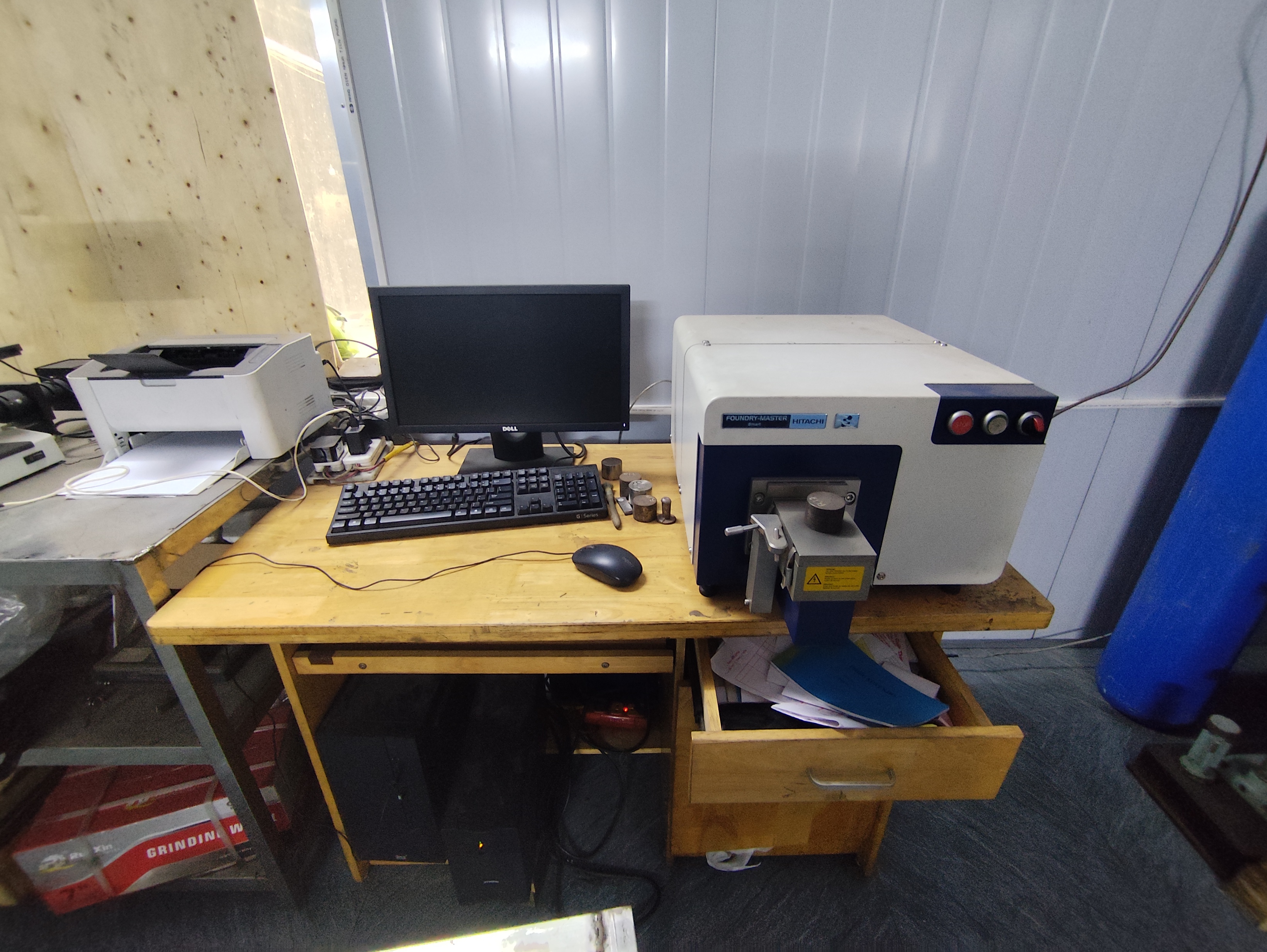
Vietnam and Taiwan both have capable stamping industries. But their exposure to EU chemical rules varies widely from shop to shop. Suppliers who mainly serve domestic or US markets often have never heard of SCIP notification or the ELV directive 6. That is not a character flaw. It is simply outside their daily experience. Your job—or your sourcing partner's job—is to close that gap systematically.
Our Four-Layer Verification Approach
- Contract layer. We write chemical requirements directly into drawings and purchase orders. "RoHS compliant plating" is too vague. We specify "trivalent chromium passivation only, hexavalent chromium free per RoHS and REACH Annex XVII."
- Audit layer. During supplier audits, we trace the surface treatment chain. Who does the plating? What bath chemistry do they use? Can they show chemical purchase records? A stamping shop that cannot name its plating subcontractor's process is a red flag.
- Test layer. First articles go to a third-party lab. XRF screening catches heavy metal limits violations fast and cheaply. If XRF shows a borderline result, we escalate to wet-chemistry ICP testing.
- Maintenance layer. Compliance is not a one-time event. We re-check declarations after Candidate List updates and re-test whenever a supplier changes plating vendors or bath chemistry.
Common Risk Points by Process Step
| Process Step | Typical Risk | Mitigation |
|---|---|---|
| Raw material | Lead in free-machining steel grades | Specify alloy grade; require mill cert |
| Stamping/forming | Residual lubricants with restricted additives | Review lubricant SDS; specify cleaning step |
| Zinc plating | Hexavalent chromium passivation | Mandate trivalent passivation in PO |
| Painting/coating | Phthalates, restricted pigments | Request coating composition sheet |
| Packaging | Heavy metals in packaging materials | Apply EU packaging directive limits |
The lesson we keep relearning: the cheapest quote often comes from the shop still running old hexavalent chromium baths. Locking the chemistry into the contract before quoting keeps the comparison honest.
What Happens If My Stamping Parts Fail EU Chemical Composition Requirements?
A buyer once called me in a panic after his EU distributor flagged an SVHC issue on parts sourced from a previous vendor. The parts were already on the water. Watching him work through the consequences taught me more about enforcement than any regulation text ever did.
Non-compliant stamping parts face customs detention, forced recalls, market withdrawal, fines from national enforcement authorities, and mandatory notification to EU customers. The importer of record bears legal liability, and repeated violations can trigger RAPEX alerts damaging your brand across all EU markets.

Enforcement of EU chemical rules happens at the national level. Each member state runs its own market surveillance authority 7. Germany and the Netherlands are known for active testing campaigns. They buy products, send them to labs, and act on the results. Stamped hardware with plated finishes gets caught in these sweeps more often than people think, usually for chromium or cadmium in the coating.
The Escalation Path
The consequences typically unfold in stages. First comes detection—at customs, in a surveillance test, or through a customer complaint. Then the authority issues a corrective demand. You may need to fix labeling, provide missing SVHC information, or pull the product entirely. Fines follow if you delay or if the violation is serious. In the worst cases, a RAPEX (Safety Gate) alert publishes your product across every EU member state, and recovery from that reputational hit takes years.
There is also a quieter commercial consequence. Under REACH Article 33 8, any EU customer can demand SVHC information, and you must answer within 45 days. Miss that deadline once, and a professional buyer will quietly move your parts to a competitor. Missing a required SCIP notification creates the same erosion of trust with waste-chain stakeholders and downstream customers.
How We Reduce the Blast Radius
Prevention beats remediation every time, but if a failure surfaces, speed matters. Our process control approach front-loads the risk: we verify chemistry at first article, hold retained samples from each production lot, and keep full traceability from mill cert to shipment. When a question comes, we can answer with lot-level data in days, not weeks. That traceability has turned potential recalls into contained, single-lot conversations more than once. For clients on our open-account terms, it also means their cash is not trapped in unsellable inventory while an investigation drags on.
Conclusion
EU chemical rules for stamping parts are manageable once you know which regulation applies where. Verify early, document thoroughly, and audit the plating chain—before your parts reach European customs.
If you want a partner who builds REACH compliance, testing, and traceability into every stamping project from Vietnam or Taiwan, reach out to our team at DEWIN. We would rather prevent a recall than help you survive one.
Frequently Asked Questions
How Do I Verify RoHS and REACH Compliance for My Custom Stamping Parts?
During a supplier audit in Vietnam last year, I asked a stamping shop for their REACH compliance evidence. They handed me a RoHS certificate instead. That mix-up happens constantly, and it tells you the supplier does not understand the difference.
What Documentation Should I Request from Suppliers to Prove Chemical Compliance?
One habit we built into our PPAP process early on: never accept a one-line email saying "our parts are compliant." A purchasing manager in Ohio once forwarded me exactly that from a previous supplier. It was worthless when his customer's auditor came knocking.
How Can I Ensure My Vietnam or Taiwan Supplier Meets EU Substance Restrictions?
Our team of seven in Vietnam spends a lot of time on plating lines, not in meeting rooms. There is a reason for that. The biggest EU substance risks in Southeast Asian stamping supply chains sit at the surface-treatment subcontractor, two tiers below the buyer's line of sight.
Footnotes
1. Background reference on the restricted substance frequently found in plating and passivation. ↩︎
2. Official European Commission portal for REACH Annex XVII chemical restrictions. ↩︎
3. EU official page explaining RoHS scope and restricted substances for electronic components. ↩︎
4. Authoritative Wikipedia overview of the REACH Candidate List of substances. ↩︎
5. Official International Material Data System site used for automotive material compliance reporting. ↩︎
6. EU official page detailing End-of-Life Vehicles Directive requirements mentioned as automotive compliance driver. ↩︎
7. EU official explanation of national market surveillance enforcement referenced in the article. ↩︎
8. ECHA guidance explaining REACH obligations including Article 33 communication duties. ↩︎