Last year, a European buyer asked our team whether the EU Machinery Regulation requirements for stamping parts applied to a simple stamped bracket. Nobody at his previous supplier could answer. Shipments stalled. Money sat frozen at customs. We stepped in, mapped his parts against Regulation (EU) 2023/1230, and got the paperwork right before the deadline hit.
EU Machinery Regulation (EU) 2023/1230 requires stamping parts to comply only when they function as machinery, safety components, interchangeable equipment, or partly completed machinery. Covered parts need risk assessment, Annex III conformity, technical documentation, CE marking or a Declaration of Incorporation, and instructions before EU market placement.
That short answer hides a lot of detail. The rules changed with the new Regulation, and the transition date of 20 January 2027 matters. Let me walk you through what actually applies to your stamped components, step by step.
How Do I Ensure My Stamping Parts Comply with EU Machinery Regulation 2023/1230?
During a supplier audit in Vietnam last spring, I watched an engineer classify a stamped mounting clip as "just hardware." He was right for that part. But the safety-interlock bracket on the same line needed a completely different compliance path, and nobody had flagged it.
Ensure compliance by first classifying each stamped part: raw component, machine part, safety component, or partly completed machinery. Then apply Regulation (EU) 2023/1230 obligations that match: Annex III essential health and safety requirements, documented risk assessment, correct conformity route, and the proper declaration before EU placement.

The most common mistake I see is treating all stamping parts the same. The Regulation does not regulate the stamping process. It regulates products. So the first question is always: what is this part, legally?
Step 1: Classify the Part
A plain stamped bracket sold as an ordinary industrial component is generally not machinery. It falls outside the Regulation unless it gains a machinery-related function. But the picture changes fast when the part does one of these jobs:
| Part Category | Covered by Regulation 2023/1230? | Typical Obligation |
|---|---|---|
| Raw stamped bracket or clip | Usually not | General product safety rules only |
| Part of a machine's safety function | Yes, as safety component | CE marking 1, conformity assessment |
| Interchangeable equipment for a press | Yes, as related product | CE marking, EU Declaration of Conformity 2 |
| Stamped subsystem for press integration | Yes, as partly completed machinery | Declaration of Incorporation, assembly instructions |
| Power transmission or control-linked part | Often yes, via the parent machine | Support the machine builder's technical file |
Step 2: Know the Timeline
Machinery placed on the EU market before 20 January 2027 stays under the old Machinery Directive 2006/42/EC 3. From that date, the new Regulation becomes the operative regime. If your parts ship into machinery built after that date, your documentation needs to support the new rules, not the old ones.
Step 3: Match Function to Obligation
Compliance depends on function, not form. Two visually identical stamped parts can carry totally different legal duties. In our sourcing projects, we ask the end customer how the part is used before we quote, because the compliance cost belongs in the price. A safety-related component may need third-party involvement. A generic bracket does not. Getting this wrong in either direction wastes money or invites enforcement action.
What Documentation Do I Need from My Supplier for CE Marking Compliance?
One of our U.S. clients once forwarded me a supplier's "CE certificate" that was nothing more than a one-page PDF with a logo. It carried no technical file, no risk assessment 4, no declaration. We rebuilt the entire documentation package from scratch before his customer's audit.
For CE marking compliance, request the technical documentation file, documented risk assessment, test reports, applied harmonized standards list, EU Declaration of Conformity (or Declaration of Incorporation for partly completed machinery), instructions for use, and proof of marking. Documentation must be retained for at least ten years.

Paperwork is where most Asian suppliers fall short, in my direct experience running audits across Vietnam and other sourcing regions. The parts may be dimensionally perfect. The file behind them may be empty. EU market surveillance authorities check the file, not just the part.
The Core Documentation Package
Here is the checklist we use when we vet suppliers for machinery-related stamped components:
| Document | Applies To | What to Verify |
|---|---|---|
| Technical file (drawings, calculations, test results) | All covered products | Complete, current revision, matches shipped parts |
| Risk assessment records | All covered products | Documented per recognized methodology, covers foreseeable misuse |
| EU Declaration of Conformity | Machinery, safety components, related products | Signed, lists Regulation 2023/1230 and standards applied |
| Declaration of Incorporation | Partly completed machinery | Included with assembly instructions or digital access route |
| Instructions for use | Machinery and related products | May be digital under the new Regulation; paper on request |
| Marking and identification | Machinery and related products | Manufacturer name, designation, CE mark, serial, year |
Digital Documentation Is Now Legal
The new Regulation recognizes digital instructions and electronic declarations. A QR code linking to the documentation package is acceptable in many cases. This helps exporters cut printing costs. But the digital route must stay accessible, and some buyers can still demand paper copies. We advise clients to keep both formats ready during the 2027 transition.
Retention and Traceability
The technical file must be retained for a minimum of ten years after manufacture. When we manage a project, we mirror the supplier's file in our own system. Suppliers change, close, or lose records. Your compliance duty does not disappear with them. Importers and distributors also carry verification duties under the new Regulation, so U.S.-based resellers shipping into Europe need their own copy of everything.
Which Risk Assessment Steps Should I Follow for Custom Stamped Components?
There is a trade-off I weigh on almost every custom project: how deep should the risk assessment go for a part that sits at the edge of the Regulation's scope? Go too shallow and you expose the client. Go too deep and you burn budget on a bracket that never needed it.
Follow the ISO 12100 process: define the part's intended use and limits, identify hazards including mechanical, ejection, noise, and ergonomic risks, estimate and evaluate each risk, apply design measures first, then safeguarding, then information for use, and document every step in the technical file.
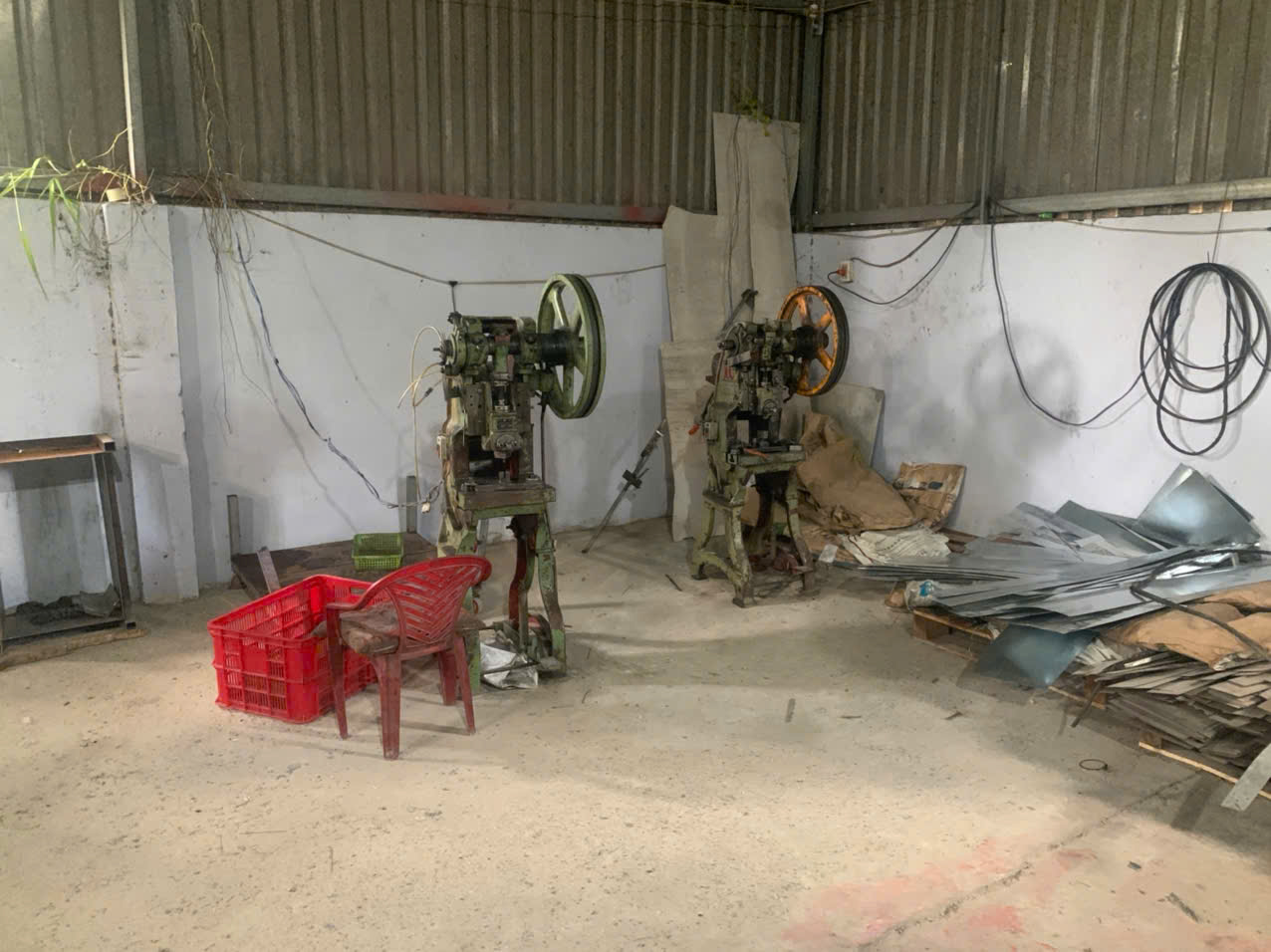
Risk assessment is the backbone of the entire compliance system. The Regulation requires hazards to be reduced across the whole lifecycle of the machine, from installation through maintenance to disposal. For custom stamped components, the assessment scope depends on the part's role, so I will break the process into a practical sequence.
The Five-Step Sequence
- Determine limits and intended use. Define what the part does, where it mounts, what loads it carries, and how someone might foreseeably misuse it. Foreseeable misuse is explicitly part of the legal standard, not an optional extra.
- Identify hazards. For stamping-related applications, the classic hazards are crushing, shearing, part ejection, sharp edges, noise, and ergonomic strain. A stamped guard bracket that fails could expose an operator to the press tooling directly.
- Estimate the risk. Rate severity and probability for each hazard. Keep the reasoning written down. An unrecorded assessment is legally close to no assessment at all.
- Evaluate and reduce. Apply the hierarchy: inherently safe design first, then guarding and protective devices, then warnings and instructions. Physical safeguards on presses, such as light curtains 5, two-hand controls, interlocked guards, and emergency stops, sit in the middle tier, and stamped components often form part of these assemblies.
- Document and iterate. Feed results into the technical file. Reassess whenever the design, material, or application changes.
Don't Forget Cybersecurity
The new Regulation adds protection against corruption. If your stamped component belongs to a connected safety system, a networked control cabinet, or an automated line with remote diagnostics, the risk assessment must now consider whether a cybersecurity threat could compromise the safety function. This is new territory for most stamping suppliers, and it is exactly where we see gaps during audits. When we co-develop parts for automated press lines, we now ask the machine builder for the cybersecurity boundary early, so our component documentation slots into their assessment cleanly.
How Can I Verify My Asian Supplier Understands EU Machinery Safety Standards?
A purchasing manager in the U.S. once told me his biggest fear was not price. It was discovering, after the goods landed, that his supplier had never actually read the standard printed on the drawing. That conversation shaped how our Vietnam office runs supplier verification today.
Verify understanding through a structured audit: request sample technical files and past EU declarations, quiz engineers on Regulation 2023/1230 scope and the 2027 transition, review their risk assessment method, check standard revisions in their library, and run a pilot order with documentation review before full production.

Certificates on a wall prove very little. Real verification tests whether the supplier's engineering and quality teams apply EU requirements in daily work. After years of auditing stamping and machining shops across Asia for our U.S. clients, here is the framework we rely on.
Audit Questions That Reveal Real Knowledge
Ask open questions, not yes/no questions. A supplier who genuinely works to EU standards can answer these without hesitation:
| Question | Strong Answer Signal | Red Flag |
|---|---|---|
| When does Regulation 2023/1230 fully apply? | Cites 20 January 2027 and the Directive transition | Has never heard of the new Regulation |
| How do you decide if a part is a safety component? | Explains function-based classification | Says "we CE mark everything" or "nothing needs it" |
| Show me a recent risk assessment. | Produces a documented ISO 12100 6-style file | Offers a generic template with no part-specific content |
| Who signs your Declaration of Conformity? | Names a responsible person and process | Confuses DoC with a test report or third-party certificate |
| What changed about digital instructions? | Knows digital delivery is now recognized | Unaware of any documentation changes |
Beyond the Interview
Documents can be staged for an audit day. So we go further. We pull a completed order at random and trace it: drawing revision, inspection records, material certs, and any declaration issued. We check whether the standards library holds current editions, because stamping shops often work from standards that were superseded years ago. We also review how the supplier handles engineering changes. Substantial modification is now a defined trigger under the new Regulation, and a supplier who modifies tooling or part function without a documented change process will eventually create a compliance gap in your supply chain 7.
Finally, we run a pilot order before committing volume. The pilot is judged on documentation quality as much as part quality. A supplier who delivers a perfect bracket with an incomplete file has only done half the job. Our clients on open account terms especially value this step, because it catches problems before large payments and large shipments are ever in motion.
Conclusion
Misclassifying stamped parts under EU rules invites blocked shipments and liability. Classify by function, demand full documentation, assess risks properly, and audit suppliers hard. Get those four steps right before 2027.
Frequently Asked Questions
How Do I Ensure My Stamping Parts Comply with EU Machinery Regulation 2023/1230?
During a supplier audit in Vietnam last spring, I watched an engineer classify a stamped mounting clip as "just hardware." He was right for that part. But the safety-interlock bracket on the same line needed a completely different compliance path, and nobody had flagged it.
What Documentation Do I Need from My Supplier for CE Marking Compliance?
One of our U.S. clients once forwarded me a supplier's "CE certificate" that was nothing more than a one-page PDF with a logo. It carried no technical file, no risk assessment 4 , no declaration. We rebuilt the entire documentation package from scratch before his customer's audit.
Which Risk Assessment Steps Should I Follow for Custom Stamped Components?
There is a trade-off I weigh on almost every custom project: how deep should the risk assessment go for a part that sits at the edge of the Regulation's scope? Go too shallow and you expose the client. Go too deep and you burn budget on a bracket that never needed it.
Footnotes
1. Background concept explaining the CE marking system referenced throughout the article. ↩︎
2. Official EU source on machinery legislation and conformity declaration requirements. ↩︎
3. Official EU reference for the predecessor directive being replaced by the new Regulation. ↩︎
4. General background concept underlying the safety evaluation process described in the article. ↩︎
5. Explains the safeguarding technology mentioned as a physical safeguard on presses. ↩︎
6. Official ISO standard page for the risk assessment methodology described in the article. ↩︎
7. Background concept for compliance gaps across manufacturing and sourcing networks discussed. ↩︎
8. Official ISO page clarifying quality management standard distinct from machinery safety law. ↩︎