

When our Vietnam office started handling stamping part orders for European buyers, REACH compliance quickly became the single biggest regulatory hurdle — and the one most likely to block a shipment at customs.
EU REACH compliance for stamping parts sourced from Vietnam requires the EU importer to verify SVHC content stays below 0.1% by weight, confirm no Annex XVII restricted substances exceed legal limits, obtain proper Safety Data Sheets and declarations from the Vietnamese supplier, and register any released substance exceeding one tonne per year with ECHA.
This guide breaks down every compliance requirement into plain, actionable steps. Whether you are a purchasing manager placing your first order or a veteran sourcing professional tightening your audit process, the sections below cover exactly what you need to know.
How do I verify that my Vietnamese stamping supplier meets REACH SVHC restrictions before placing an order?
A lesson we learned early on: one of our European clients had a shipment of zinc-plated brackets held at Rotterdam because the supplier's SVHC declaration was outdated by two Candidate List 1 updates. That single delay cost weeks and thousands of euros.
To verify SVHC compliance before ordering, request a current SVHC declaration referencing the latest Candidate List, cross-check it against ECHA's published list of 223 Substances of Very High Concern, and confirm through third-party chemical composition analysis that no SVHC exceeds the 0.1% weight threshold in the finished part.

Why the 0.1% Threshold Matters
The 0.1% rule is based on the weight of the individual article, not the weight of the entire shipment. A stamping bracket weighing 50 grams needs to contain less than 0.05 grams of any single SVHC. This sounds tiny, but certain coatings and plating processes can easily push a part over the line. Lead in free-cutting steels, cadmium in legacy coatings, and hexavalent chromium 2 in passivation layers are the usual offenders.
Step-by-Step Verification Process
- Download the current Candidate List from ECHA's website. The list now includes 223 substances and is updated twice a year.
- Send a formal SVHC inquiry to your Vietnamese supplier. Attach the latest list and ask them to declare against it — not against an older version.
- Request XRF or ICP-OES test reports from an accredited lab. We recommend selecting a lab with ISO 17025 3 accreditation to ensure the chemical composition analysis holds up under scrutiny.
- Compare declared substances against Annex XIV (Authorization List). Some SVHCs require explicit authorization to use in the EU. If your supplier uses hexavalent chromium in plating, you need to verify that the relevant authorization exists.
- Check the SCIP database notification requirement. If the part contains any SVHC above 0.1%, the importer of record must submit data to the SCIP database 4. This obligation applies even if notification to ECHA under Article 7.2 is not triggered.
Common SVHCs Found in Stamped Metal Parts
| Substance | Where It Appears | Typical Risk Level |
|---|---|---|
| Hexavalent chromium (Cr VI) | Chromate conversion coatings, passivation | High — requires Annex XIV authorization |
| Lead (Pb) | Free-cutting steel alloys, solder | Medium — common in legacy alloys |
| Cadmium (Cd) | Electroplated coatings | High — restricted under Annex XVII |
| Nickel (Ni) | Alloy compositions, plating | Medium — restricted in prolonged skin contact |
| Certain phthalates (DEHP, DBP) | Plasticized gaskets or seals on assemblies | Low for bare metal parts |
Timing Your Verification
Start verification at least six months before your first production order. Our Vietnam team typically coordinates sample testing during the quoting phase. If test results reveal a problem, the supplier still has time to reformulate a coating or switch to a compliant alloy. Waiting until after tooling is complete creates expensive rework.
Supply chain transparency starts here. If a supplier cannot or will not provide a current declaration, treat it as a red flag. In our experience, reliable Vietnamese stamping factories are willing to cooperate — they understand that EU market access depends on it.
What documentation should I request to prove REACH compliance for custom stamped parts from Vietnam?
During a recent supplier audit at a stamping factory near Ho Chi Minh City, our quality engineers found that the factory had test certificates — but none of them referenced the correct REACH regulation number. The documents looked professional, yet they would not satisfy a European customs authority.
You should request a signed SVHC declaration against the current Candidate List, Safety Data Sheets for every coating or chemical used in production, third-party lab test reports for restricted substances, a compliance statement confirming Annex XVII adherence, and — if applicable — SCIP database submission records for any SVHC above 0.1%.

The Complete Documentation Package
Think of REACH documentation as a technical documentation file that travels with the product throughout its lifecycle. The EU requires importers to keep these records for a minimum of ten years. Below is the core set of documents we compile for every stamping project destined for Europe.
| Document | Purpose | Who Provides It |
|---|---|---|
| SVHC Declaration | Confirms presence or absence of SVHCs >0.1% | Vietnamese supplier |
| Safety Data Sheets 5 (SDS) | Details hazards and safe-use info for coatings/chemicals | Chemical or coating supplier |
| Third-party test report (XRF/ICP) | Independent verification of substance content | Accredited testing lab |
| Annex XVII compliance statement | Confirms no restricted substances exceed limits | Vietnamese supplier |
| Material certificates (mill certs) | Verifies base metal alloy composition | Steel or alloy mill |
| SCIP database submission confirmation | Proves notification for articles with SVHCs >0.1% | EU importer |
| Only Representative 6 (OR) registration confirmation | Proves substance registration if OR is appointed | OR service provider |
Safety Data Sheets — Often Overlooked
Many buyers focus on SVHC declarations but forget to request Safety Data Sheets for the coatings and process chemicals. If your stamped bracket is zinc-plated and then passivated, there are at least two chemical processes involved. Each process uses substances that may be hazardous. The SDS covers hazard classification, safe handling, and exposure scenarios. European downstream users — your customers — may ask you for this information.
How to Handle the Only Representative Scenario
If your Vietnamese supplier has appointed an Only Representative in the EU, ask for the OR's contact details and registration confirmation. The OR handles substance registration on behalf of the non-EU manufacturer. This shifts part of the compliance burden away from the EU importer. However, most Vietnamese stamping factories have not yet appointed an OR. In that case, the importer of record responsibilities fall squarely on you.
Record Retention
Keep every document for at least ten years from the date of last supply. We store digital copies on a shared compliance drive, organized by project number. If ECHA or a national enforcement authority requests evidence, you need to produce it promptly. Paper-only archives are risky — fires, floods, and office moves can destroy irreplaceable records.
RoHS and REACH — Not the Same
Some suppliers conflate RoHS directive 7 compliance with REACH compliance. They are related but different regulations. RoHS restricts specific substances in electrical and electronic equipment. REACH covers all chemical substances in all products. A RoHS certificate does not replace a REACH declaration. Always request both if your stamping parts go into electronic assemblies. For a deeper look at how these two regulations intersect for stamped components, see our guide on RoHS and REACH compliance for stamping parts from Vietnam.
Which surface treatments and materials commonly trigger REACH compliance issues in stamped metal parts?
One trade-off we weigh constantly is performance versus compliance. A hexavalent chromium passivation gives outstanding corrosion resistance on a zinc-plated bracket. But that same finish creates serious REACH headaches because Cr(VI) is both an SVHC and an Annex XIV substance requiring authorization.
The most common REACH triggers in stamped metal parts are hexavalent chromium in passivation coatings, lead in free-cutting steel alloys, cadmium in electroplated finishes, and nickel in alloy compositions or plating — all of which appear on the Candidate List of substances or face Annex XVII restrictions.

Surface Treatments Under Scrutiny
Metal surface treatments are where most compliance problems originate. The base metal itself — cold-rolled steel, stainless steel, aluminum — is usually low risk. But the moment you add plating, passivation, painting, or lubrication, you introduce chemicals that fall under REACH.
| Surface Treatment | Substance of Concern | REACH Status | Compliant Alternative |
|---|---|---|---|
| Yellow chromate passivation | Hexavalent chromium | SVHC + Annex XIV (authorization required) | Trivalent chromium passivation |
| Cadmium plating | Cadmium | SVHC + Annex XVII restricted | Zinc-nickel plating |
| Nickel plating | Nickel | SVHC (skin contact restriction) | Tin plating, chrome-free coatings |
| Lead-containing steel | Lead | SVHC | Lead-free steel grades |
| Oil-based rust preventives | Certain mineral oils, boric acid | Varies — check Candidate List | Synthetic water-based preventives |
Base Material Risks
Not all risks come from coatings. Free-cutting steels often contain lead to improve machinability. If your stamping die uses a leaded steel, the finished bracket will carry that lead content. Check the mill certificate for lead percentage. Even 0.15% lead in a steel alloy can exceed the 0.1% SVHC threshold depending on how the weight calculation is performed.
Brass stamping parts pose a similar challenge. Many brass alloys contain lead at 1–3% by weight. This is well above the 0.1% notification threshold. If your design requires brass, confirm whether the alloy meets REACH requirements or switch to a lead-free brass.
The "Intended Release" Question
ECHA increasingly focuses on whether a substance is intended to be released from an article during normal use. A stamped bracket with a volatile corrosion inhibitor (VCI) coating is designed to release the inhibitor over time. That release can trigger a registration requirement if the substance volume exceeds one tonne per year across all your imports. Stamping parts with dry, non-releasing finishes — like trivalent chromium passivation or powder coating — generally avoid this trigger.
Practical Tip: Ask the Right Questions Early
When we send out RFQs to Vietnamese stamping factories, our specification sheet includes a section on surface treatment chemistry. We ask: What passivation chemistry do you use? Is it trivalent or hexavalent? What is the lead content in the base steel? These questions cost nothing to ask but can prevent costly compliance failures later. This level of supply chain transparency is what European buyers expect.
How can I build REACH compliance checks into my supplier audit process for Vietnam-based manufacturers?
A buyer interaction shaped how we now run audits. A European OEM asked us to demonstrate, on paper and on the factory floor, that every chemical used in stamping production was tracked from incoming receipt to finished part. That request forced us to build a structured audit protocol — and it has prevented compliance surprises ever since.
Build REACH compliance into your Vietnam supplier audit by adding a chemical management review to your standard audit checklist — verify incoming material certificates, inspect chemical storage and labeling, confirm SVHC declarations are current, check SDS availability on the production floor, and assess whether the factory monitors Candidate List updates systematically.
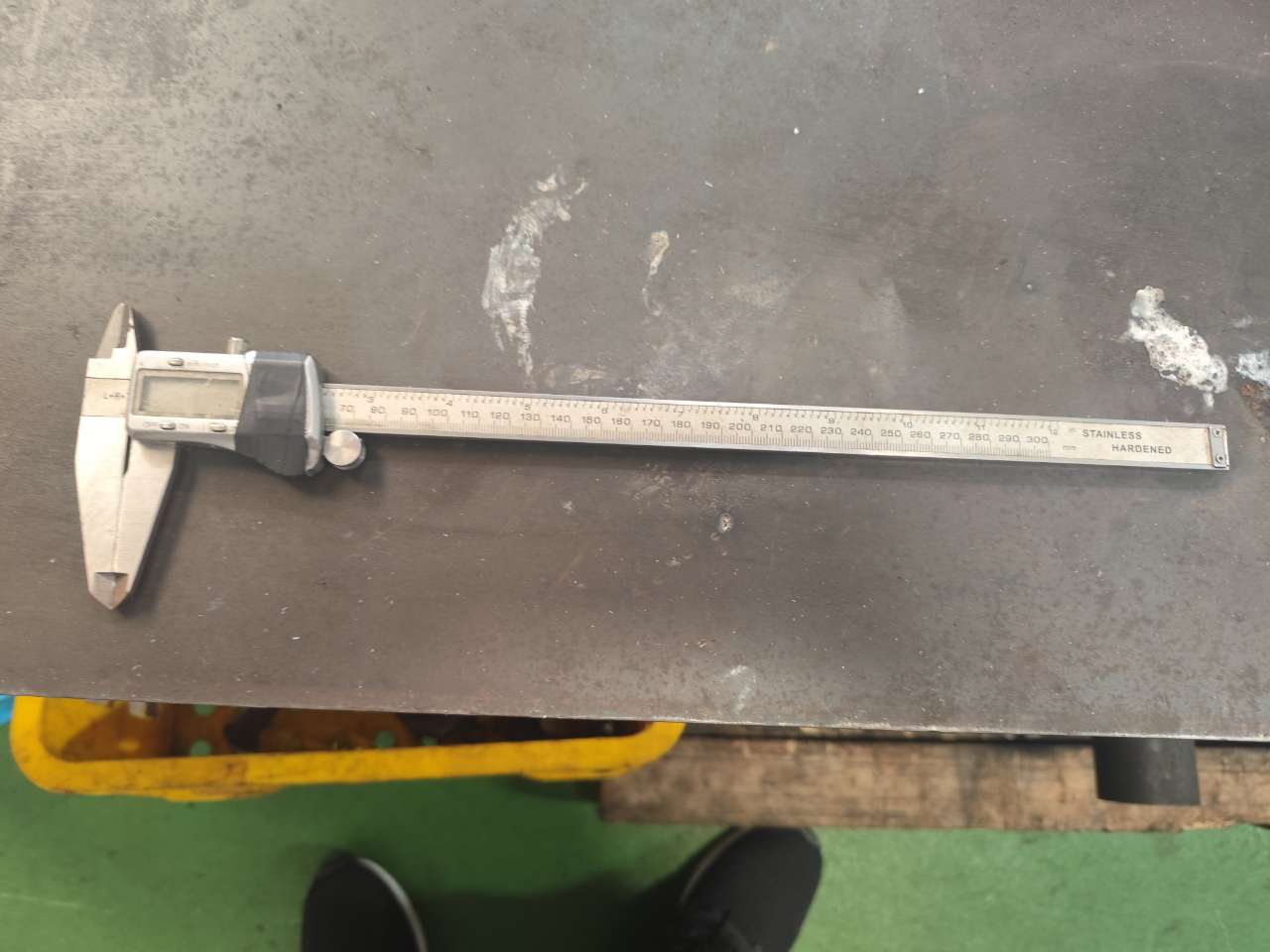
Integrating REACH Into an Existing Audit Framework
Most purchasing managers already audit Vietnamese suppliers for quality (ISO 9001), delivery, and capacity. Adding REACH compliance does not require a separate audit. It requires adding specific checkpoints to your existing framework. Below is the approach our Vietnam office uses.
Audit Checkpoint Breakdown
Incoming Material Control
Check whether the factory verifies mill certificates for every batch of steel or alloy received. Look for lead, cadmium, and nickel content on the certificate. If the factory does not review incoming material certificates, they cannot guarantee the base material is compliant.
Chemical Storage and Handling
Walk through the chemical storage area. Every container should be labeled with the product name and hazard classification. Safety Data Sheets should be physically available — either posted near the storage area or accessible in a binder. Ask the factory manager to show you the SDS for the plating or passivation chemicals they use. If they cannot produce an SDS within minutes, the chemical management system is weak.
SVHC Declaration Process
Ask the factory how they generate SVHC declarations. A strong supplier maintains a database of all substances used and cross-references it against the current Candidate List. A weak supplier copies a generic template and signs it without verification. Ask when they last updated their declaration. If the answer is more than six months ago, it may be outdated.
Corrective Action and Traceability
If a non-conformance is found — for example, a batch of parts plated with a non-compliant chemistry — how does the factory handle it? Look for documented corrective action procedures. Traceability from raw material lot to finished part lot is critical. Without it, a recall or containment action becomes impossible.
EVFTA and Regulatory Alignment
The EU-Vietnam Free Trade Agreement 8 provides a framework for regulatory cooperation. Vietnam's updated Law on Chemicals, including Decree 69/2025, is aligning local chemical reporting with international GHS standards 9. This makes it easier to extract REACH-compatible data from Vietnamese factories. During audits, we now ask whether the factory complies with Vietnam's domestic chemical regulations as a baseline indicator of their readiness for EU requirements. EVFTA trade regulations encourage this kind of mutual recognition.
Preparing for the Digital Product Passport
European regulation is moving toward the Digital Product Passport 10 under the ESPR. This will eventually require digital traceability for the chemical composition of all components, including stamped metal parts. Factories that invest in material traceability systems today will be better positioned tomorrow. During audits, we evaluate whether a supplier's ERP system can track material lots and chemical processes digitally. It is not yet mandatory, but it is a strong indicator of a forward-thinking supplier.
Sample Audit Scoring Matrix
| Audit Area | Strong (Score 3) | Adequate (Score 2) | Weak (Score 1) |
|---|---|---|---|
| Incoming material certificate review | Every batch checked and filed | Spot-checked periodically | No systematic review |
| SDS availability | All SDS current and accessible | Most SDS available, some outdated | SDS missing or inaccessible |
| SVHC declaration currency | Updated within last 6 months | Updated within last 12 months | Older than 12 months or generic |
| Chemical storage labeling | All containers labeled per GHS | Most containers labeled | Poor or no labeling |
| Corrective action for non-conformance | Documented procedure with evidence | Informal process | No procedure |
| Digital traceability (lot tracking) | Full ERP-based traceability | Partial manual tracking | No traceability |
A score below 12 out of 18 should trigger a corrective action plan before placing production orders. We share the scoring results with the factory and set a timeline for improvement. This approach builds partnership rather than confrontation — and it produces better long-term compliance. If your stamping parts also need to meet California Prop 65 requirements, a similar audit discipline applies for tracking lead, cadmium, and other listed substances.
Conclusion
EU REACH compliance for stamping parts from Vietnam demands proactive verification, thorough documentation, surface treatment scrutiny, and structured supplier audits — all anchored by the understanding that the EU importer carries the legal burden. For buyers also sourcing sheet metal fabrication, a parallel set of RoHS and REACH compliance requirements for sheet metal fabrication applies and is worth reviewing alongside this guide.
Frequently Asked Questions
How do I verify that my Vietnamese stamping supplier meets REACH SVHC restrictions before placing an order?
A lesson we learned early on: one of our European clients had a shipment of zinc-plated brackets held at Rotterdam because the supplier's SVHC declaration was outdated by two Candidate List 1 updates. That single delay cost weeks and thousands of euros.
What documentation should I request to prove REACH compliance for custom stamped parts from Vietnam?
During a recent supplier audit at a stamping factory near Ho Chi Minh City, our quality engineers found that the factory had test certificates — but none of them referenced the correct REACH regulation number. The documents looked professional, yet they would not satisfy a European customs authority.
Which surface treatments and materials commonly trigger REACH compliance issues in stamped metal parts?
One trade-off we weigh constantly is performance versus compliance. A hexavalent chromium passivation gives outstanding corrosion resistance on a zinc-plated bracket. But that same finish creates serious REACH headaches because Cr(VI) is both an SVHC and an Annex XIV substance requiring authorization.
Footnotes
1. ECHA’s live Candidate List table used to verify current SVHC declarations. ↩︎
2. Direct Wikipedia article for hexavalent chromium compounds. ↩︎
3. ISO standard page defining lab accreditation requirements for chemical testing. ↩︎
4. Official ECHA portal describing SCIP notification obligations for articles containing SVHCs. ↩︎
5. ECHA’s official guidance on SDS content and obligations under REACH. ↩︎
6. ECHA page detailing the Only Representative role for non-EU manufacturers under REACH. ↩︎
7. EU official page clarifying scope of RoHS versus REACH obligations. ↩︎
8. European Commission page detailing EVFTA framework and regulatory cooperation with Vietnam. ↩︎
9. UN reference for the Globally Harmonized System referenced in Vietnam’s chemical alignment. ↩︎
10. Official EU page explaining the upcoming Digital Product Passport requirement under ESPR. ↩︎