
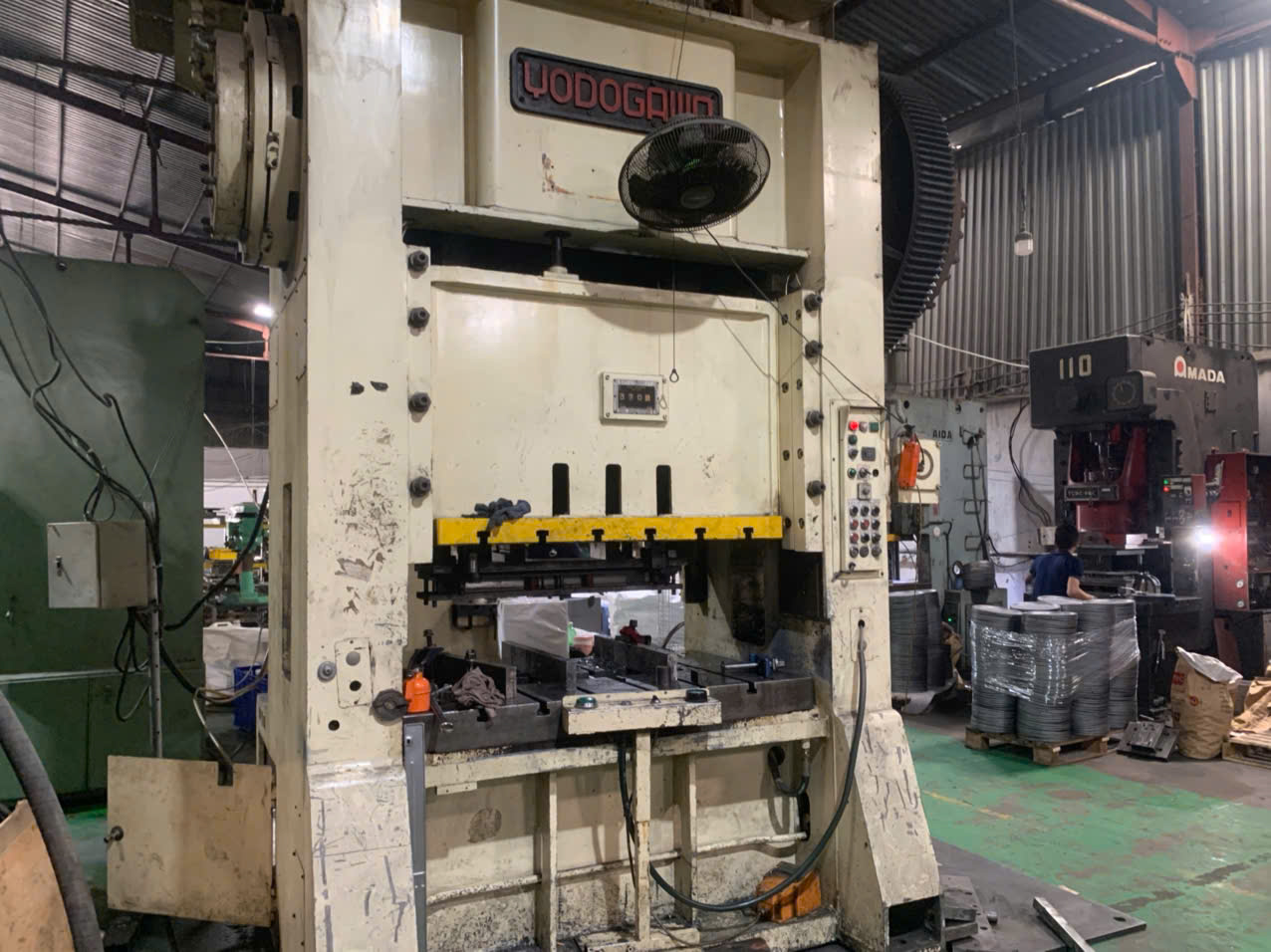
Last quarter, a U.S. buyer asked our team whether the stamped steel brackets we source for their consumer appliances need individual WEEE certification — and the answer surprised them.
The EU WEEE Directive’s recycling requirements for stamping parts apply indirectly: stamped metal components are not regulated as standalone items but must meet material recovery rates when integrated into finished Electrical and Electronic Equipment, contributing to category-specific recycling targets of 50% to 80%.
This distinction between component-level and product-level compliance trips up many purchasing managers RoHS directive (2011/65/EU) 1. Below, I break down exactly how stamping parts fit into the WEEE framework, what your suppliers must do, and how to protect your supply chain from costly non-compliance.
How Do I Determine If My Stamped Parts Fall Under WEEE Compliance Rules?
A buyer we work with in the Midwest once held an entire shipment of stamped aluminum brackets at customs, convinced they needed a separate WEEE declaration — they didn't, but the confusion cost them two weeks of lead time.
Your stamped parts fall under WEEE compliance rules only when they are integrated into a finished product classified as Electrical and Electronic Equipment. Standalone brackets, clips, or mounting hardware sold as raw components or spare parts are generally not subject to WEEE registration or reporting on their own.

The Component vs. Product Rule
The WEEE Directive (2012/19/EU) 2 regulates the end-of-life management of complete electrical and electronic equipment. It does not create obligations for individual sub-components like a stamped steel bracket or a copper connector housing. The legal responsibility sits with the entity that places the finished EEE product on the EU market.
However, your stamped parts become part of the compliance equation the moment they are assembled into a device. Their weight counts toward the total mass of the product. Their material composition affects whether the product can meet its category-specific recycling target. So while you do not register a stamping part with a national WEEE authority, you absolutely must ensure it does not create a barrier to the product's recyclability.
Which EEE Categories Involve Stamping Parts Most?
Under the 2012 recast directive, EEE is grouped into six categories. Stamping parts appear most frequently in Categories 1, 4, and 5. Here is how the categories and their targets break down:
| EEE Category | Examples | Recovery Target | Recycling Target |
|---|---|---|---|
| Category 1 — Temperature exchange | Refrigerators, air conditioners | 85% | 80% |
| Category 2 — Screens and monitors | TVs, laptops | 80% | 70% |
| Category 3 — Lamps | LED tubes, CFLs | — | 80% |
| Category 4 — Large equipment | Washing machines, industrial tools | 85% | 80% |
| Category 5 — Small equipment | Power tools, small appliances | 75% | 55% |
| Category 6 — Small IT/Telecom | Routers, phones | 80% | 70% |
When our sourcing team evaluates a new stamping project, we map the final product to its EEE category first. This tells us immediately what recycling threshold the metal content must help satisfy.
Spare Parts: A Gray Area
If your stamped parts are sold as replacement or repair components — not as part of a new EEE unit — they typically fall outside WEEE scope. But this is not absolute. Some EU member states interpret the rules more strictly. France and Germany, for example, have pushed for broader lifecycle tracking under their circular economy compliance frameworks. The safest approach is to treat every stamped part destined for an EEE application as if it will eventually be subject to WEEE processing.
What Recycling and Marking Standards Must My Suppliers Follow Under WEEE?
During a recent supplier audit at a stamping facility in Vietnam, I noticed they were applying the crossed-out wheelie bin symbol directly onto raw brackets. That symbol belongs on the finished product, not the component — a well-intentioned but incorrect step that can confuse downstream assemblers.
Your stamping suppliers must ensure their parts use RoHS-compliant materials, provide accurate material declarations, avoid hazardous coatings or platings, and support design for disassembly — but they are not required to apply the WEEE "wheelie bin" marking on individual components, as that obligation falls on the finished product's producer.

Material Restrictions: Where RoHS Meets WEEE
The WEEE directive governs end-of-life electronics processing. The RoHS directive (2011/65/EU) 3 governs what goes into the product during manufacturing. For stamping parts, both directives intersect at one critical point: material composition.
A stamped steel bracket plated with hexavalent chromium 4, for instance, is a dual failure. It violates RoHS limits during production and contaminates the metal scrap recycling stream at end of life, undermining WEEE recycling targets.
| Restricted Substance | RoHS Tolerance Limit | Common Stamping Application Risk |
|---|---|---|
| Lead (Pb) | 0.1% by weight | Solder coatings, free-machining steel alloys |
| Cadmium (Cd) | 0.01% by weight | Cadmium plating on connectors |
| Hexavalent Chromium (Cr6+) | 0.1% by weight | Chromate conversion coatings on zinc plating |
| Mercury (Hg) | 0.1% by weight | Rarely in stamping; occasional switch contacts |
Our quality control team checks these substances during the PPAP process. We require XRF test reports from every plating and coating sub-supplier before a single part ships.
Proper Treatment Under Annex VII
Annex VII of the WEEE directive outlines "proper treatment" requirements. It mandates that treatment facilities must selectively remove hazardous substances before shredding. For stamped metal parts, this means:
- Parts with mixed materials (e.g., metal brackets with bonded plastic inserts) must be separable.
- Coatings must not release toxic compounds during melting or shredding.
- Metals must be recoverable in a form suitable for re-smelting.
This is where design for disassembly becomes critical. If a stamped bracket is spot-welded to a plastic housing with no mechanical release point, the recycler must shred the entire assembly. This produces contaminated mixed waste. A bracket attached with snap-fits or screws through punched holes can be popped off in seconds, keeping the metal stream pure.
The EN 50625 Connection
European recyclers operate under EN 50625 standards 5, which specify technical requirements for WEEE treatment. These standards dictate how metal fractions must be sorted and processed. When your stamping supplier uses a single, well-documented alloy — say, DC04 mild steel with a trivalent chromium passivated zinc coating — it simplifies the recycler's job. Mixed or undocumented alloys create sorting headaches and drive down material recovery rates.
I always tell our engineering partners: the cleaner the material declaration, the smoother the end-of-life process. And the smoother the end-of-life process, the less financial risk the EEE brand carries under Extended Producer Responsibility.
How Can I Verify My Asian Manufacturing Partners Meet WEEE Recycling Requirements?
One lesson I learned early in our Vietnam operations: a supplier can have a gleaming factory floor and still ship parts with undisclosed cadmium in the plating bath. Verification takes more than a facility tour.
To verify Asian manufacturing partners meet WEEE recycling requirements, conduct material composition audits using XRF testing, request third-party RoHS test reports for every plating and coating process, review material safety data sheets for all chemicals used, and include WEEE-aligned material declaration clauses in your purchase agreements.
A Practical Verification Process
Our team in China and Vietnam follows a structured audit approach that we have refined over many projects. Here is the sequence we recommend to any purchasing manager sourcing stamped parts from Asia for EU-bound EEE products.
Step 1: Pre-Qualification Review. Before any trial order, request the supplier's material certifications. At minimum, you need mill certificates for the base metal and process certificates for any surface treatment. If the supplier cannot produce these within 48 hours, that is a red flag.
Step 2: First Article Inspection with XRF. During PPAP, we run XRF (X-ray fluorescence 6) analysis on the first article samples. This non-destructive test identifies elemental composition and catches restricted substances like lead or cadmium that might be present in trace amounts from recycled raw stock.
Step 3: Sub-Supplier Mapping. Many stamping factories outsource plating, heat treatment, or painting. You must know who those sub-suppliers are. A stamping factory might be perfectly compliant, but their plating vendor might use hexavalent chromium passivation instead of the trivalent alternative. Our local teams in Vietnam physically visit plating sub-suppliers to verify chemical bath compositions.
Step 4: Ongoing Lot Testing. Compliance is not a one-time event. We pull random samples from production lots and test them. Material drift happens, especially when suppliers switch raw material vendors without notification.
Key Documents to Request
| Document | Purpose | Who Issues It |
|---|---|---|
| Mill Test Certificate (MTC) | Confirms base metal alloy composition | Steel/aluminum mill |
| RoHS Test Report (IEC 62321) | Verifies restricted substance levels | Third-party lab (SGS, Bureau Veritas, TÜV) |
| MSDS for coatings/platings | Details chemical composition of surface treatments | Chemical supplier |
| Material Declaration (e.g., IPC-1752A) | Standardized format for full material disclosure | Stamping supplier |
| Process Flow Diagram | Shows all steps including outsourced treatments | Stamping supplier |
What About Digital Product Passports?
The EU's upcoming Digital Product Passport 7 (DPP) requirement will change the game. Under the Circular Economy Action Plan 8, each product will need a cloud-linked data record detailing exact alloy grades and material compositions. This means your stamping supplier will eventually need to provide data in a machine-readable format — not just a PDF certificate.
We have already started discussions with several of our suppliers about implementing barcode or QR-code traceability at the lot level. This kind of forward planning protects our buyers from scrambling to comply when the DPP regulation goes into effect.
Advanced sensor-based sorting at WEEE processing plants already uses material data to isolate high-value stamped alloys like beryllium copper 9 from bulk ferrous streams. The more precise the upstream data, the more efficient the downstream recovery.
What Documentation Do I Need From My Suppliers to Prove WEEE Compliance?
A trade-off we weigh on every project is documentation depth versus supplier willingness. Ask for too little, and you risk non-compliance. Ask for too much, and smaller factories push back or inflate prices. The key is knowing exactly what the regulation demands and what the EEE brand's waste management compliance team will audit.
You need material declarations confirming alloy compositions, third-party RoHS test reports for all restricted substances, surface treatment chemical certifications, a dismantling information sheet describing how the stamped part can be separated from the assembly, and a signed supplier compliance declaration referencing Directive 2012/19/EU and 2011/65/EU.

The Documentation Stack, Explained
Think of WEEE documentation as a layered stack. Each layer serves a different stakeholder in the compliance chain.
Layer 1 — For the EEE Producer (Your Client). The entity placing the finished product on the EU market needs proof that every component supports their recycling targets. They will ask you for a material declaration. This is a standardized form — often IPC-1752A or a custom format — listing the exact weight, alloy grade, and surface treatment of each stamped part. This data feeds directly into the product's recycling calculation.
Layer 2 — For the Treatment Facility. Under Article 15 of the WEEE directive, producers must provide "information for treatment facilities." This includes the location of hazardous substances and guidance on how to disassemble the product. If your stamped bracket houses or covers a battery compartment, for example, the treatment guide must explain how to remove it. Our engineering team works with buyers to create these disassembly guides during the co-development phase.
Layer 3 — For the National Authority or PRO. Producer Responsibility Organizations in each EU member state track the weight and category of EEE placed on the market. Your stamped parts contribute to the total registered weight. While the EEE producer files this registration, they need accurate component weights from their supply chain — including from you.
Building a Compliance File
Here is what a complete compliance file looks like for a typical stamped bracket project we manage:
- Purchase Order with WEEE/RoHS compliance clause.
- Material Test Certificate from the steel or aluminum mill.
- Third-party RoHS lab report (IEC 62321 methodology).
- Plating/coating chemical certificate from the treatment sub-supplier.
- Signed Supplier Declaration stating compliance with 2012/19/EU and 2011/65/EU.
- Dimensional and material inspection report from final inspection.
- Disassembly information (if applicable to the end product).
This file lives in our project management system and is shared with the buyer's compliance team before every shipment. It is not optional. It is the foundation of waste management compliance for every EU-destined product containing our sourced parts.
The Cost Question
Small stamping suppliers sometimes resist providing this documentation because it costs money. A full RoHS test from a certified lab runs between $200 and $500 per sample set. Mill certificates add administrative overhead. This is a real tension in the supply chain.
Our approach is to bundle compliance testing into the PPAP cost structure. We negotiate it upfront so there are no surprises. For repeat orders on the same material and process, we re-test annually rather than per shipment, which keeps costs reasonable while maintaining a defensible compliance record.
The emerging concept of closed-loop metallurgy adds another dimension. Some EU regulators are now tracking whether stamping scrap from the manufacturing phase itself is being recycled back into the supply chain. While this is not yet mandatory, it signals the direction of future circular economy compliance requirements. We advise our buyers to start documenting their suppliers' scrap management practices now.
Conclusion
The EU WEEE directive does not regulate stamping parts directly, but every stamped bracket, clip, and mounting component shapes whether the finished product meets its recycling targets. Getting material declarations, RoHS testing, and design-for-disassembly guidance from your suppliers now prevents costly failures later. For further guidance on safety certifications required for stamping parts in electronics, or how to require EU-compliant packaging from stamping parts suppliers, explore our related resources.
Frequently Asked Questions
Which EEE Categories Involve Stamping Parts Most?
Under the 2012 recast directive, EEE is grouped into six categories. Stamping parts appear most frequently in Categories 1, 4, and 5. Here is how the categories and their targets break down:
Key Documents to Request Document Purpose Who Issues It Mill Test Certificate (MTC) Confirms base metal alloy composition Steel/aluminum mill RoHS Test Report (IEC 62321) Verifies restricted substance levels Third-party lab (SGS, Bureau Veritas, TÜV) MSDS for coatings/platings Details chemical composition of surface treatments Chemical supplier Material Declaration (e.g., IPC-1752A) Standardized format for full material disclosure Stamping supplier Process Flow Diagram Shows all steps including outsourced treatments Stamping supplier What About Digital Product Passports?
The EU's upcoming Digital Product Passport 7 (DPP) requirement will change the game. Under the Circular Economy Action Plan 8 , each product will need a cloud-linked data record detailing exact alloy grades and material compositions. This means your stamping supplier will eventually need to provide data in a machine-readable format — not just a PDF certificate.
How Do I Determine If My Stamped Parts Fall Under WEEE Compliance Rules?
A buyer we work with in the Midwest once held an entire shipment of stamped aluminum brackets at customs, convinced they needed a separate WEEE declaration — they didn't, but the confusion cost them two weeks of lead time.
Footnotes
1. Explains scope of RoHS directive referenced alongside WEEE for material compliance. ↩︎
2. Official EU legislative text for the Waste Electrical and Electronic Equipment Directive. ↩︎
3. Official EU legislative text for the Restriction of Hazardous Substances Directive. ↩︎
4. Safety and regulatory information regarding the hazards of hexavalent chromium restrictions in industrial applications. ↩︎
5. Industry standards for the collection, logistics, and treatment of electronic waste in Europe. ↩︎
6. Scientific overview of XRF technology used for non-destructive elemental analysis of materials. ↩︎
7. Provides background on the EU’s upcoming traceability requirement mentioned in the text. ↩︎
8. EU Commission’s strategic framework for transitioning to a circular economy and sustainable production. ↩︎
9. Technical properties and industrial applications of beryllium copper alloys in electronics. ↩︎