When our engineering team reviews new project inquiries, one question keeps coming up: which everyday items truly benefit from sheet metal fabrication 1?
Sheet metal fabrication is best suited for everyday items that demand durability, precision, and corrosion resistance — including home appliances, kitchenware, HVAC systems, electronics enclosures, automotive body panels, and architectural elements. These items benefit from the strength, formability, and recyclability that sheet metal processes deliver.
This article walks through the most common categories, the right materials for each application, how to keep quality tight with an offshore supplier, and how to streamline your recurring supply chain injection molding 2. Let’s get into it.
How do I determine which of my everyday industrial items are best suited for sheet metal fabrication?
A client in the Midwest once sent us drawings for fifteen different components — some were perfect for sheet metal, and others clearly belonged in a machining or casting process. That conversation taught me that the very first step is understanding what sheet metal does best.
You determine suitability by evaluating whether your item requires thin-wall geometry, moderate-to-high volume production, corrosion resistance, and structural rigidity — if it does, sheet metal fabrication is almost certainly your best fit over casting, forging, or injection molding.

Start With the Shape and Function
Sheet metal fabrication excels at producing flat, bent, or formed parts from material typically ranging from 0.016" to 0.062" thick. If your item has a shell, panel, bracket, enclosure, or duct shape, it likely fits. Think about the outer casing of a refrigerator, the housing of a smart home device, or the ductwork in a commercial HVAC system. All of these are thin-wall structures that need strength without bulk.
Key Categories That Fit Sheet Metal
Here is a quick breakdown of the most common everyday categories:
| Category | Typical Items | Why Sheet Metal Works |
|---|---|---|
| Home Appliances | Refrigerators, ovens, washing machines, dishwashers | Strong shells, heat/moisture resistance, clean finish |
| Kitchenware | Graters, pot handles, whisks, utensil trays | Durability, food-safe surfaces, easy cleaning |
| HVAC Systems 3 | Air ducts, roof vents, clean-room units | Lightweight, easy to form complex airflow shapes |
| Electronics Enclosures 4 | Server cabinets, control panels, kiosk housings | Dust/water tightness, EMI shielding, structural rigidity |
| Automotive Parts | Body panels, door skins, truck frames | High strength-to-weight ratio, crash resistance |
| Architectural Elements | Facades, roofing panels, decorative metalwork, spiral staircases | Weather resistance, aesthetic flexibility |
A Simple Decision Framework
When I evaluate a new part for a client, I ask three questions:
- Is the wall thickness under about 6 mm? If yes, sheet metal is likely more efficient than casting.
- Does the part need bending, forming, or drawing? Sheet metal processes handle these naturally.
- Will I produce more than a few hundred units per year? Tooling costs for stamping or laser cutting pay off at moderate volumes.
If the answer to at least two of those is yes, sheet metal fabrication is the right path. Items like decorative metalwork or modular furniture components also qualify because laser cutting and CNC bending give you design freedom without expensive molds.
Watch for the Exceptions
Not every thin part belongs in sheet metal. If the geometry requires deep undercuts, internal channels, or very tight 3D contours, you may need CNC machining or investment casting instead. Our team in Vietnam runs a quick design-for-manufacturability review on every new drawing to catch these issues early — it saves weeks of back-and-forth later.
The bottom line: if your item is flat or bent, needs a clean surface, and will be produced in reasonable quantity, sheet metal fabrication is almost always the most cost-effective and quality-consistent choice.
What materials should I select to ensure my custom sheet metal parts meet my durability and quality standards?
Last year, a purchasing manager asked us to quote the same bracket in three different materials. The price difference was significant, but so was the performance gap. Material selection is not just a cost decision — it is a quality decision.
Select stainless steel for moisture- or chemical-exposed items, aluminum sheet for lightweight and corrosion-resistant applications, galvanized steel for cost-effective structural parts, and mild steel for general-purpose components that will receive a protective coating.
Material Properties at a Glance
The table below compares the four most common sheet metal materials we source for our U.S. clients:
| Property | Stainless Steel 5 | Aluminum | Galvanized Steel | Mild Steel |
|---|---|---|---|---|
| Corrosion Resistance | Excellent (≥10.5% chromium) | Very Good (natural oxide layer) | Good (zinc coating) | Poor (needs coating) |
| Weight | Heavy | Light | Heavy | Heavy |
| Weldability | Good | Good (requires skill) | Good | Excellent |
| Cost (Relative) | High | Medium-High | Medium | Low |
| Typical Use | Kitchenware, appliances, medical | HVAC ducts, automotive panels, electronics enclosures | Structural ductwork, shelving | Frames, brackets, general fabrication |
Stainless Steel: The Premium Choice
Stainless steel with a chromium content of at least 10.5% delivers rust and stain resistance that mild steel simply cannot match. This makes it the go-to material for home appliances like refrigerators and ovens, for kitchenware that contacts food and moisture, and for architectural elements like custom kitchen hoods and building facades. Our quality team always verifies the material certificate against the drawing specification — especially the chromium and nickel percentages — because a marginal alloy can fail in the field.
Aluminum Sheet: Light and Versatile
When weight matters, aluminum sheet 6 is the answer. It is roughly one-third the weight of steel. HVAC systems benefit enormously because lighter ductwork is easier to install and reduces structural load. In automotive, aluminum body panels help improve fuel efficiency. We source 5052 and 6061 alloys frequently; 5052 offers better formability, while 6061 provides higher strength after heat treatment.
Galvanized Steel and Mild Steel: The Workhorses
Galvanized steel 7 — mild steel coated with a zinc layer — gives you decent corrosion resistance at a fraction of the stainless steel price. It works well for structural ductwork, storage cabinets, and outdoor architectural elements that need weather resistance but not a food-grade surface. Plain mild steel (0.05–0.25% carbon) is the cheapest option. It welds easily and forms cleanly, but it must be powder-coated, painted, or plated to prevent rust.
Matching Material to Application
Here is how I think about it in practice:
- Will the part touch food or water daily? Choose stainless steel.
- Does the part need to be light? Choose aluminum.
- Is cost the primary driver and the part is indoors? Choose mild steel with powder coating.
- Is the part outdoors but not food-contact? Choose galvanized steel.
Corrosion resistance is the single most important factor for everyday items. Getting this wrong leads to warranty claims, field failures, and lost customer trust. Our suppliers in Vietnam and across Asia run salt spray tests on sample batches to confirm coating and material performance before full production begins. For a deeper dive into how these materials compare, see our guide on how stainless steel, aluminum alloy, and carbon steel compare in sheet metal fabrication.
How can I guarantee that my offshore supplier will produce my sheet metal components exactly to my specifications?
One of the toughest lessons I learned early on was that sending a drawing overseas does not mean the part comes back right. A few years ago, we had a case where a supplier missed a critical note about edge deburring on a bracket. The parts arrived in the U.S. with sharp edges, and the entire shipment needed rework. That single incident shaped how we manage quality today.
You guarantee specification conformance by implementing a structured quality process that includes detailed drawing reviews, first article inspection (FAI), PPAP documentation, in-process checks, and final inspection — all before the parts leave the factory floor.
Why Drawings Alone Are Not Enough
A drawing communicates dimensions and tolerances, but it does not communicate intent. When our team receives a new drawing from a U.S. client, we run a design-for-manufacturability (DFM) review. We flag anything ambiguous: unclear surface finish callouts, missing bend radius specifications, or tolerance stacks that are too tight for the chosen material. This step catches roughly 60–70% of potential quality problems before production even starts.
The PPAP Framework
Production Part Approval Process 8 (PPAP) is the gold standard for custom metal parts. It comes from the automotive world, but it works for any precision sheet metal component. Here is what a typical PPAP submission includes:
| PPAP Element | What It Covers | Why It Matters |
|---|---|---|
| Design Record | Final drawing with all revisions | Confirms both parties agree on the spec |
| Process Flow Diagram | Step-by-step manufacturing sequence | Ensures the supplier has a repeatable process |
| Control Plan | In-process inspection points and frequencies | Prevents drift during production |
| Dimensional Results | CMM or gauge measurements on sample parts | Proves the parts meet print tolerances |
| Material Certification | Mill test reports for raw material | Verifies the alloy and temper are correct |
| First Article Inspection (FAI) 9 | Full inspection of initial production samples | Confirms "right first time" capability |
Our China and Vietnam offices manage PPAP documentation for every new project. We do not release mass production until the FAI is approved by the client.
In-Process and Final Inspection
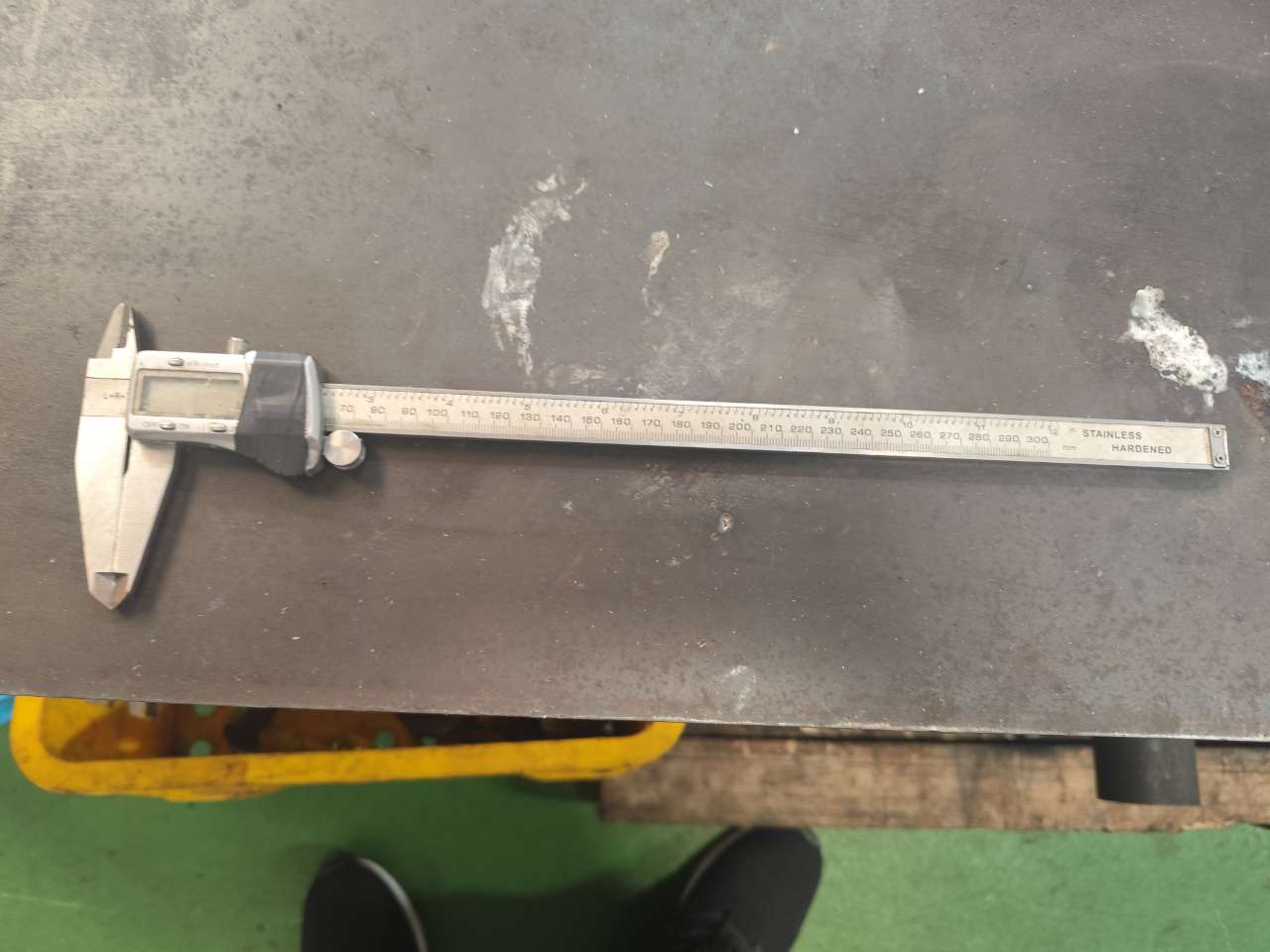
Even with PPAP in place, production can drift. Tooling wears. Operators change shifts. That is why in-process checks are essential. Our quality engineers visit the production floor during key milestones — after laser cutting, after bending, after welding, and after surface treatment. We use go/no-go gauges, calipers, and CMM machines depending on the tolerance class.
Final inspection happens before packing. We follow AQL (Acceptable Quality Level) sampling plans tailored to the client's risk tolerance. For critical custom metal parts, we often do 100% inspection on key dimensions.
Communication Is Half the Battle
Quality is not just about gauges and reports. It is about communication. Our project managers send weekly updates with photos, measurement data, and production status. If a supplier identifies a deviation during production, we escalate it to the client immediately — not after the parts ship. This proactive communication model is exactly what purchasing managers like our U.S. clients expect. They want to know about a problem when there is still time to fix it.
The key takeaway: never assume that sending a drawing is enough. Build a quality system around it, and work with a team that enforces it at the source.
What is the most efficient way for me to manage the supply chain and logistics for my recurring sheet metal orders?
A few months ago, a client told me their biggest frustration was not quality — it was delivery. They had a supplier who made great parts but shipped late on every single order. That unpredictability was costing them production downtime and lost revenue.
The most efficient approach combines blanket purchase orders with scheduled releases, safety stock planning, supplier performance tracking, and a logistics partner who manages door-to-door shipping — so you get the right parts at the right time without tying up excess capital.
Blanket Orders and Scheduled Releases
For recurring sheet metal orders, a blanket purchase order 10 (BPO) is the most practical tool. You commit to a total annual quantity, and the supplier produces and ships in agreed batches. This gives the supplier confidence to pre-buy raw material — especially aluminum sheet or stainless steel coils — at better prices. It also locks in your unit cost for the year.
We help our clients set up release schedules that align with their production calendars. Most of our U.S. customers prefer monthly or bi-monthly shipments. We coordinate with the factory to maintain a rolling production schedule so there is always a batch in progress.
Safety Stock: How Much Is Enough?
The right safety stock level depends on three things: your consumption rate, your supplier's lead time, and the variability in both. For standard sheet metal brackets or enclosures, we typically recommend keeping two to four weeks of safety stock in a U.S. warehouse. For custom metal parts with long lead times or specialty materials, that buffer may need to be six to eight weeks.
Tracking Supplier Performance
You cannot improve what you do not measure. We track three key metrics for every supplier:
- On-Time Delivery Rate (OTD): Percentage of shipments arriving on or before the agreed date.
- First Pass Yield (FPY): Percentage of parts that pass final inspection without rework.
- Responsiveness: Average time to reply to engineering queries or change requests.
We review these metrics quarterly with each supplier. If a supplier's OTD drops below 90%, we issue a corrective action request and work with them to identify root causes — whether it is raw material delays, capacity constraints, or process bottlenecks.
Door-to-Door Logistics Management
Shipping from Asia to the U.S. involves multiple handoffs: factory to local port, ocean freight, customs clearance, and last-mile delivery. Each handoff is a potential delay point. Our logistics team manages the entire chain. We consolidate shipments when it makes sense, handle export documentation, and coordinate with freight forwarders who specialize in industrial goods.
For clients who need flexible cash flow, we offer open account payment terms of 60 to 90 days. This means you receive and inspect the parts before payment is due. It is a model that works well for purchasing managers who need to match payables to their own receivables cycle.
Putting It All Together
Here is a simplified view of how a well-managed recurring order flow looks:
| Step | Action | Responsible Party |
|---|---|---|
| 1 | Issue blanket PO with annual quantity | Client |
| 2 | Confirm release schedule and raw material plan | DEWIN + Supplier |
| 3 | Produce batch per release schedule | Supplier |
| 4 | In-process and final inspection | DEWIN QC team |
| 5 | Export packing and documentation | DEWIN logistics |
| 6 | Ocean freight and customs clearance | Freight forwarder (managed by DEWIN) |
| 7 | Delivery to client's U.S. warehouse | Last-mile carrier |
| 8 | Quarterly performance review | DEWIN + Client |
The goal is simple: take complexity off your plate so you can focus on your own customers. When the supply chain runs smoothly, you stop firefighting and start planning.
Conclusion
Sheet metal fabrication touches nearly every industry — from home appliances and kitchenware to HVAC systems and electronics enclosures. Choose the right material, enforce quality at the source, and build a reliable supply chain to get consistent, high-quality custom metal parts delivered on time.
Frequently Asked Questions
Safety Stock: How Much Is Enough?
The right safety stock level depends on three things: your consumption rate, your supplier's lead time, and the variability in both. For standard sheet metal brackets or enclosures, we typically recommend keeping two to four weeks of safety stock in a U.S. warehouse. For custom metal parts with long lead times or specialty materials, that buffer may need to be six to eight weeks.
How do I determine which of my everyday industrial items are best suited for sheet metal fabrication?
A client in the Midwest once sent us drawings for fifteen different components — some were perfect for sheet metal, and others clearly belonged in a machining or casting process. That conversation taught me that the very first step is understanding what sheet metal does best.
What materials should I select to ensure my custom sheet metal parts meet my durability and quality standards?
Last year, a purchasing manager asked us to quote the same bracket in three different materials. The price difference was significant, but so was the performance gap. Material selection is not just a cost decision — it is a quality decision.
Footnotes
1. Defines the process of transforming flat metal sheets into specific shapes. ↩︎
2. Replaced with a comprehensive and authoritative Wikipedia article explaining injection molding. ↩︎
3. Replaced with a comprehensive and authoritative Wikipedia article on HVAC systems. ↩︎
4. Discusses manufacturing methods and materials for electronics enclosures. ↩︎
5. Explains properties, composition, and uses of stainless steel. ↩︎
6. Details properties, benefits, and applications of aluminum sheets. ↩︎
7. Replaced with a comprehensive and authoritative Wikipedia article explaining galvanization. ↩︎
8. Defines PPAP and its importance in manufacturing quality assurance. ↩︎
9. Replaced with a comprehensive and authoritative Wikipedia article on First Article Inspection. ↩︎
10. Replaced with an authoritative .edu source from UC Berkeley explaining blanket purchase orders. ↩︎