Every week, our engineering team in Vietnam reviews drawings from U.S. clients who need oversized sheet metal parts — and nearly half of those designs hit a size wall somewhere in the process.
Maximum part size in sheet metal fabrication is limited by laser cutting dimensions (typically 3048 mm × 1524 mm), press brake capacity (around 2032 mm bend length), raw material availability, tooling limitations, material thickness, and the ability to hold dimensional tolerances across large surfaces during forming and handling.
Understanding each constraint helps you design smarter and avoid costly surprises dimensional tolerances 1. Below, we break down the four main bottlenecks our clients encounter most often.
How do the bed dimensions of my supplier's laser and press brake machines restrict my design?
A recent project taught us this lesson the hard way: a client sent a single-piece enclosure panel measuring 2400 mm in bend length, and our press brake simply could not form it without splitting the part standard sheet metal sizes 2.
Your supplier's laser cutter bed — commonly 3048 mm × 1524 mm — sets the maximum flat blank size, while the press brake capacity, usually 2032 mm in bend length, determines the largest dimension you can form in one pass.
Laser Cutter Bed Size: The First Gate
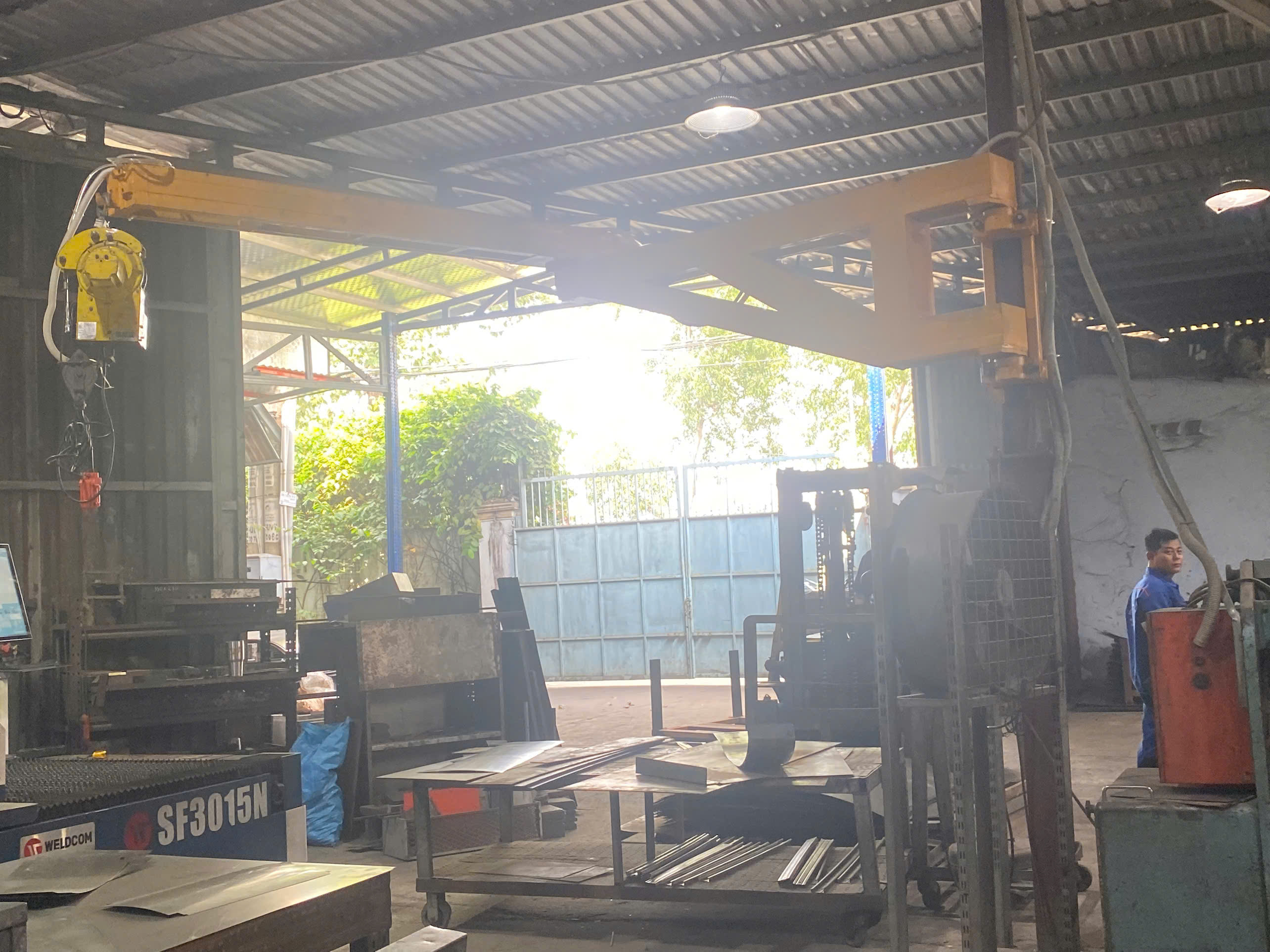
The laser cutter is the first machine your flat blank touches. laser cutting dimensions 3 If your part's flat pattern does not fit on the bed, it cannot be cut as one piece. Most fiber laser cutters 4 used in Vietnamese fabrication shops have a standard working area of 3000 mm × 1500 mm or 4000 mm × 2000 mm. A few high-end shops run 6000 mm × 2000 mm beds, but these are less common.
The practical limit is slightly smaller than the nominal bed size. Clamps, supports, and material positioning eat into the edges. Expect to lose 10–20 mm on each side.
Press Brake Bend Length: The Tighter Bottleneck
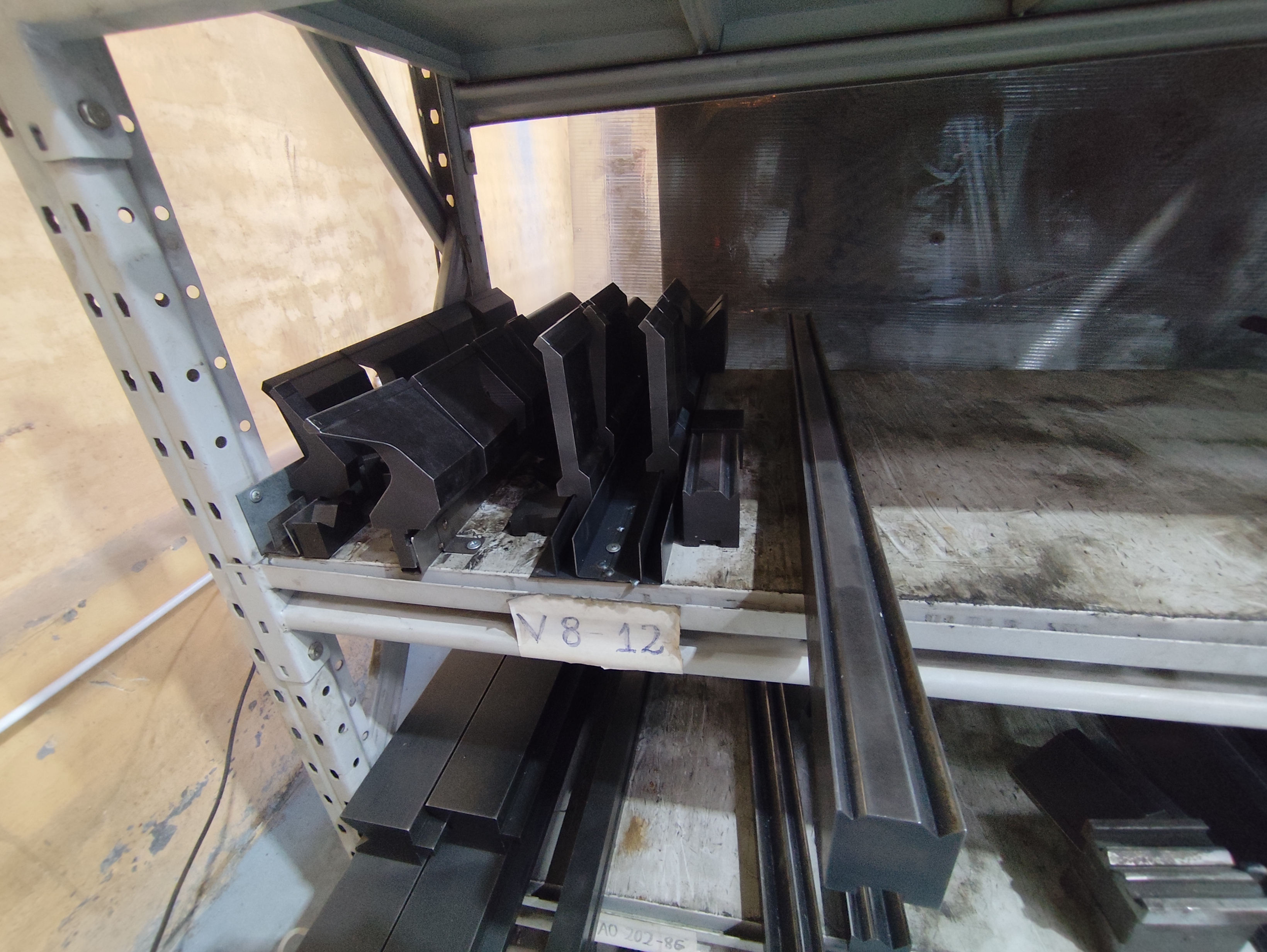
Even if you can laser-cut a 3000 mm long blank, you still need to bend it. Press brake capacity 5 is measured in two ways: tonnage (force) and bed length. A 3-meter press brake can handle bends up to roughly 3000 mm, but the effective bend length drops when you factor in tooling setup, backgauge clearance, and the geometry of the part itself.
Material thickness matters here too. Thicker material needs more tonnage per meter of bend. A 3 mm stainless steel part that is 2500 mm long requires significantly more force than a 1 mm mild steel part of the same length.
| Constraint | Laser Cutter | Press Brake |
|---|---|---|
| Typical max dimension | 3048 mm × 1524 mm | 2032–3000 mm bend length |
| Limiting factor | Bed area | Tonnage + bed length |
| Material thickness impact | Minimal (affects speed, not size) | Major (thicker = more tonnage needed) |
| Workaround for oversized parts | Repositioning or split blanks | Multi-piece welding and assembly |
When the Part Must Be Split
If your design exceeds either limit, the part must be fabricated in two or more pieces. This introduces welding and assembly steps, which add cost and can affect tolerances. We always recommend discussing size constraints during the co-development stage. A simple design change — like adding a weld seam in a non-critical area — can save weeks of back-and-forth.
Tool Collision: The Hidden Restriction
Even if the part fits the machine bed, the geometry can prevent fabrication. Complex bends with short flange length or tight return flanges can cause the part to collide with the upper tooling or the press brake body during forming. This risk increases with part size because larger parts have more material to swing during each bend.
We review every drawing for tool collision risk before quoting. It is one of the most common reasons a part that looks feasible on paper turns out to be impossible as a single piece.
What are the standard sheet metal raw material sizes available to my manufacturer in Vietnam?
One trade-off we weigh on nearly every large-part quote is whether the design can nest efficiently on a standard sheet or whether it will demand a custom-cut blank with a long lead time.
Standard sheet metal sizes in Vietnam typically follow international norms: 1220 mm × 2440 mm (4' × 8'), 1250 mm × 2500 mm, and 1500 mm × 3000 mm, with availability varying by material type, alloy grade, and material thickness.
Common Stock Sizes by Material
Vietnamese steel service centers and mills stock sheets in a few standard formats. Availability depends on the alloy. Mild steel and standard stainless grades are easy to find. Specialty alloys or unusual thicknesses may require imports from Japan, South Korea, or Taiwan.
| Material | Common Sheet Sizes (mm) | Typical Thickness Range |
|---|---|---|
| Mild steel (SPCC, SS400) | 1220 × 2440, 1250 × 2500, 1500 × 3000 | 0.5 mm – 25 mm |
| Stainless steel (SUS304, SUS316) | 1220 × 2440, 1250 × 2500, 1500 × 3000 | 0.5 mm – 16 mm |
| Aluminum (5052, 6061) | 1220 × 2440, 1250 × 2500 | 0.5 mm – 12 mm |
| Galvanized steel (SGCC) | 1220 × 2440, 1250 × 2500 | 0.4 mm – 3.2 mm |
What Happens When Your Part Exceeds Standard Sizes
If your flat pattern is larger than 1500 mm × 3000 mm, the fabricator has two options. The first is to order custom-sized sheets from the mill. This adds 4–8 weeks of lead time and usually requires a minimum order quantity. The second is to split the part into pieces that fit on standard sheets and join them later.
Our local team in Vietnam maintains relationships with multiple steel service centers. We can often source non-standard sizes faster than a client working through a broker. But even with good connections, exotic sizes in specialty materials like aluminum 6061 can stretch delivery timelines.
Material Properties Affect More Than Just Size
The material you choose also affects design for manufacturability at larger sizes. Aluminum is lighter but more prone to part distortion during bending. Stainless steel has higher springback, meaning the bend radius must be compensated differently for long parts. Mild steel is the most forgiving, but it corrodes without coating.
When we receive a drawing for an oversized part, we always check whether the specified material is available in the needed sheet size. If not, we propose alternatives early. Swapping from a 1500 × 3000 mm sheet to a 1250 × 2500 mm sheet — with a minor design adjustment — can cut material cost by 15–20% and eliminate lead time risk.
How will the logistics and shipping container limits affect the maximum dimensions of my custom order?
A lesson we learned early in our export business: you can fabricate a perfect 2800 mm panel, but if it does not fit through the container doors, the project stalls at the loading dock.
Shipping container internal dimensions — 5898 mm × 2352 mm × 2393 mm for a standard 20-foot container — set a hard ceiling on part size for international orders, and oversized parts may require flat-rack or open-top containers at significantly higher freight costs.
Standard Container Dimensions
Most sheet metal parts shipped from Vietnam to the United States travel in dry containers. shipping container internal dimensions 6 Understanding the internal dimensions of these containers is essential when you are designing parts that push size limits.
| Container Type | Internal Length (mm) | Internal Width (mm) | Internal Height (mm) | Door Opening Width (mm) | Door Opening Height (mm) |
|---|---|---|---|---|---|
| 20-foot standard | 5898 | 2352 | 2393 | 2340 | 2280 |
| 40-foot standard | 12032 | 2352 | 2393 | 2340 | 2280 |
| 40-foot high cube | 12032 | 2352 | 2695 | 2340 | 2585 |
| Flat rack (20-foot) | 5620 | 2200 | No roof | Open sides | Open sides |
The critical number is often the door opening, not the internal width. The door opening is narrower than the internal space. A part that is 2350 mm wide might fit inside the container but cannot pass through the 2340 mm door. We have seen clients overlook this detail, which leads to last-minute design changes or expensive flat-rack bookings.
Packaging Adds to the Footprint
Your part does not ship naked. Wooden crates, foam padding, edge protectors, and pallet bases all add to the total package size. A general rule: add 50–100 mm on each side for packaging. So a part designed to the container's internal maximum is already too large once packaged.
For heavy sheet metal components, the weight limit matters too. A 20-foot container has a payload limit of roughly 21,700 kg. Dense steel assemblies can hit the weight limit long before filling the volume.
When Parts Exceed Container Limits
If your part exceeds standard container dimensions, you have three options:
- Design the part to ship flat and assemble on-site. This requires welding and assembly capability at the destination, which not all end-users have.
- Use a flat-rack or open-top container. Freight costs jump significantly — sometimes 2× to 3× the standard rate.
- Split the part into sub-assemblies. This is usually the most cost-effective solution. We help clients identify natural split lines during the co-development phase.
We manage door-to-door logistics for our U.S. clients, so we catch these issues before production starts. Our standard practice is to verify that every part in a project fits within the chosen container type, including packaging, before we finalize the production drawings.
Domestic vs. Export Considerations
If the parts stay within Vietnam or ship within Asia, trucking and smaller vessels offer more flexibility. But for U.S.-bound orders, the container is the hard limit. Planning for it early avoids expensive surprises later.
Can my fabricator maintain the strict tolerances I need on oversized sheet metal components?
During a recent PPAP review for a U.S. engineering firm, we measured a 1800 mm formed bracket and found that cumulative tolerance stack-up from three sequential bends had pushed one hole pattern 0.6 mm off-nominal — acceptable for general fit, but a failure for the client's ±0.3 mm requirement.
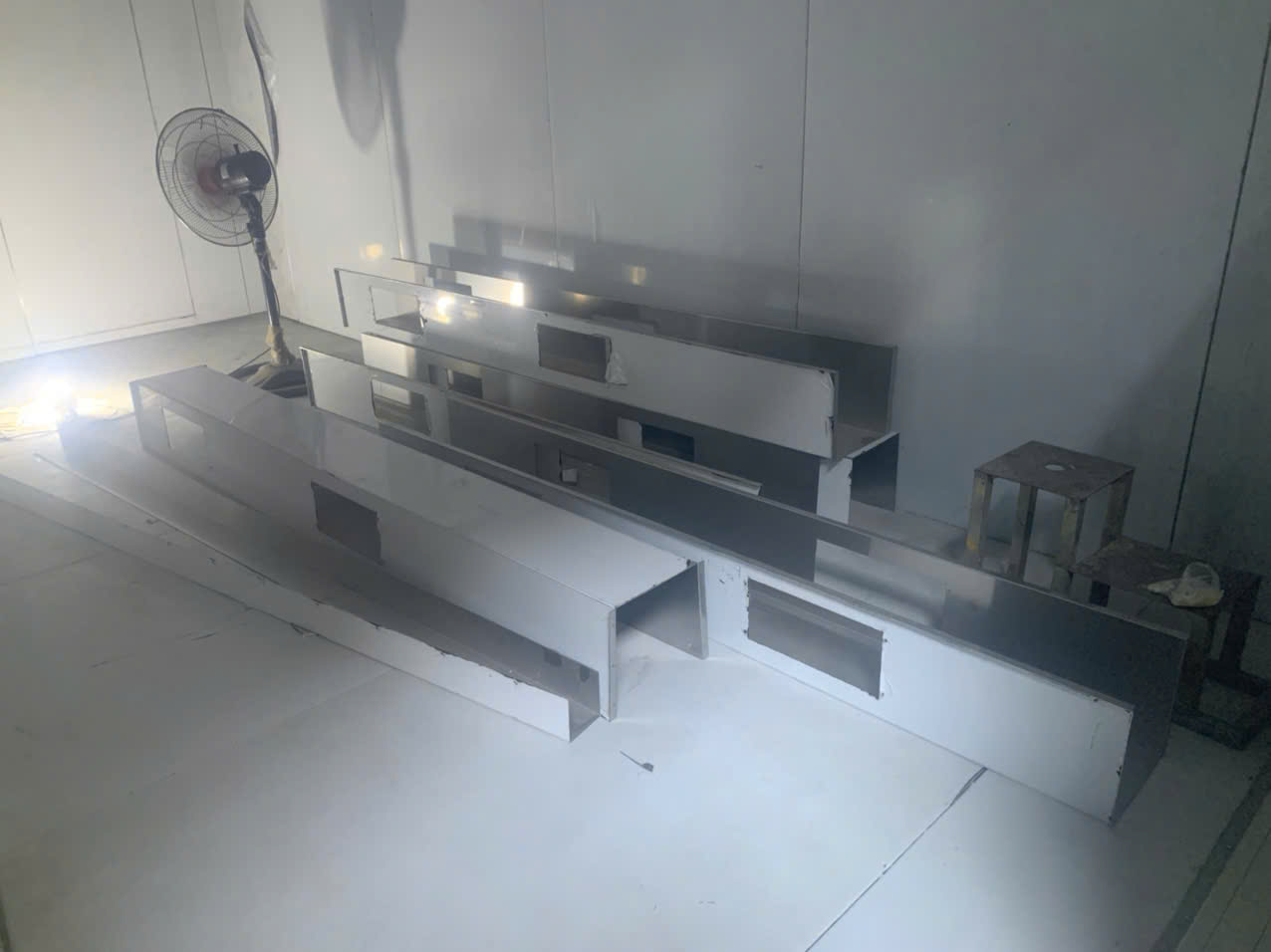
Maintaining strict dimensional tolerances on oversized sheet metal parts is significantly harder due to cumulative machine error, material springback, thermal expansion, and part distortion during forming, with practical limits of ±0.3 mm to ±0.8 mm for bends on parts over 1000 mm.
Why Tolerances Degrade with Size
On a small part — say 200 mm × 150 mm — a modern press brake can hold bend angles to ±0.5° and linear dimensions to ±0.1 mm without much difficulty. But as the part grows, several factors compound.
Material springback varies along the length of a long bend. The center of a 2000 mm bend behaves differently than the ends because of slight variations in material thickness, grain direction, and the press brake's deflection under load. Even with CNC crowning systems, some variation remains.
Thermal effects also matter. A 3000 mm aluminum panel cut in the morning at 22°C and measured in the afternoon at 30°C can expand by roughly 0.7 mm. That is within most general tolerances, but it can push a tight-tolerance feature out of spec.
Cumulative error from multiple operations — cutting, bending, hardware insertion, welding — stacks up. Each step introduces its own tolerance band. On a part with five bends, the final dimension could carry the combined error of all five.
Practical Tolerance Guidelines for Large Parts
| Part Size Range | Achievable Linear Tolerance (Bending) | Achievable Angular Tolerance | Notes |
|---|---|---|---|
| Up to 500 mm | ±0.1 mm to ±0.2 mm | ±0.25° | Standard CNC press brake accuracy |
| 500 mm – 1000 mm | ±0.2 mm to ±0.3 mm | ±0.5° | Requires careful setup and material control |
| 1000 mm – 2000 mm | ±0.3 mm to ±0.5 mm | ±0.5° to ±0.75° | Crowning essential; springback compensation needed |
| Over 2000 mm | ±0.5 mm to ±0.8 mm | ±0.75° to ±1.0° | Multi-piece assembly often more reliable |
How We Control Tolerances on Large Parts
Our process control approach includes several steps. First, we use material from consistent lots. Mixing material lots on a single large part invites thickness and hardness variation, which changes the bend radius unpredictably.
Second, we perform first-article inspection with full CMM measurement on critical dimensions. For parts over 1000 mm, we often use portable CMM arms that can reach the full envelope of the part.
Third, we apply tolerances strategically. We follow a principle aligned with ISO 2768-mK 7: general tolerances for non-critical dimensions and tighter call-outs only where form, fit, or function demand them. This is core design for manufacturability thinking. Blanket tight tolerances on a 2000 mm part drive cost up without adding functional value.
The Bend Radius Factor
The minimum bend radius — typically 1× material thickness for ductile materials like mild steel and stainless — also affects accuracy on large parts. A tighter bend radius on a long part increases the risk of cracking and inconsistent springback. We recommend a bend radius of at least 1.5× material thickness for parts over 1500 mm. This gives us more process margin and reduces the chance of part distortion.
When to Consider Post-Forming Machining
For truly critical features on large parts — like precision hole patterns or mating surfaces — we sometimes recommend machining after forming. This adds cost, but it removes the cumulative forming error from those specific features. It is a targeted solution for parts where ±0.1 mm is needed on a few features but general tolerances are fine everywhere else.
Conclusion
Maximum part size in sheet metal fabrication 9 comes down to machine limits, material availability, shipping constraints, and tolerance realities. Plan for all four early in your design. If you need help navigating these limits for your next project, our team is ready to review your drawings and find the most practical path forward.
Frequently Asked Questions
How do the bed dimensions of my supplier's laser and press brake machines restrict my design?
A recent project taught us this lesson the hard way: a client sent a single-piece enclosure panel measuring 2400 mm in bend length, and our press brake simply could not form it without splitting the part standard sheet metal sizes 2 .
What are the standard sheet metal raw material sizes available to my manufacturer in Vietnam?
One trade-off we weigh on nearly every large-part quote is whether the design can nest efficiently on a standard sheet or whether it will demand a custom-cut blank with a long lead time.
How will the logistics and shipping container limits affect the maximum dimensions of my custom order?
A lesson we learned early in our export business: you can fabricate a perfect 2800 mm panel, but if it does not fit through the container doors, the project stalls at the loading dock.
Footnotes
1. Explains various types of sheet metal tolerances, including dimensional. ↩︎
2. Provides information on common sheet metal sizes, gauges, and thicknesses. ↩︎
3. Discusses factors and common dimensions for laser cutting machines. ↩︎
4. Provides a technical overview of fiber laser technology and its applications. ↩︎
5. Explains how press brake capacity is determined by tonnage and tooling. ↩︎
6. Details ISO standards for shipping container dimensions, including internal measurements. ↩︎
7. Explains the general tolerance standard ISO 2768-mK for manufacturing. ↩︎
8. Explains the phenomenon of springback in sheet metal bending and its causes. ↩︎
9. Provides a comprehensive overview of sheet metal fabrication. ↩︎