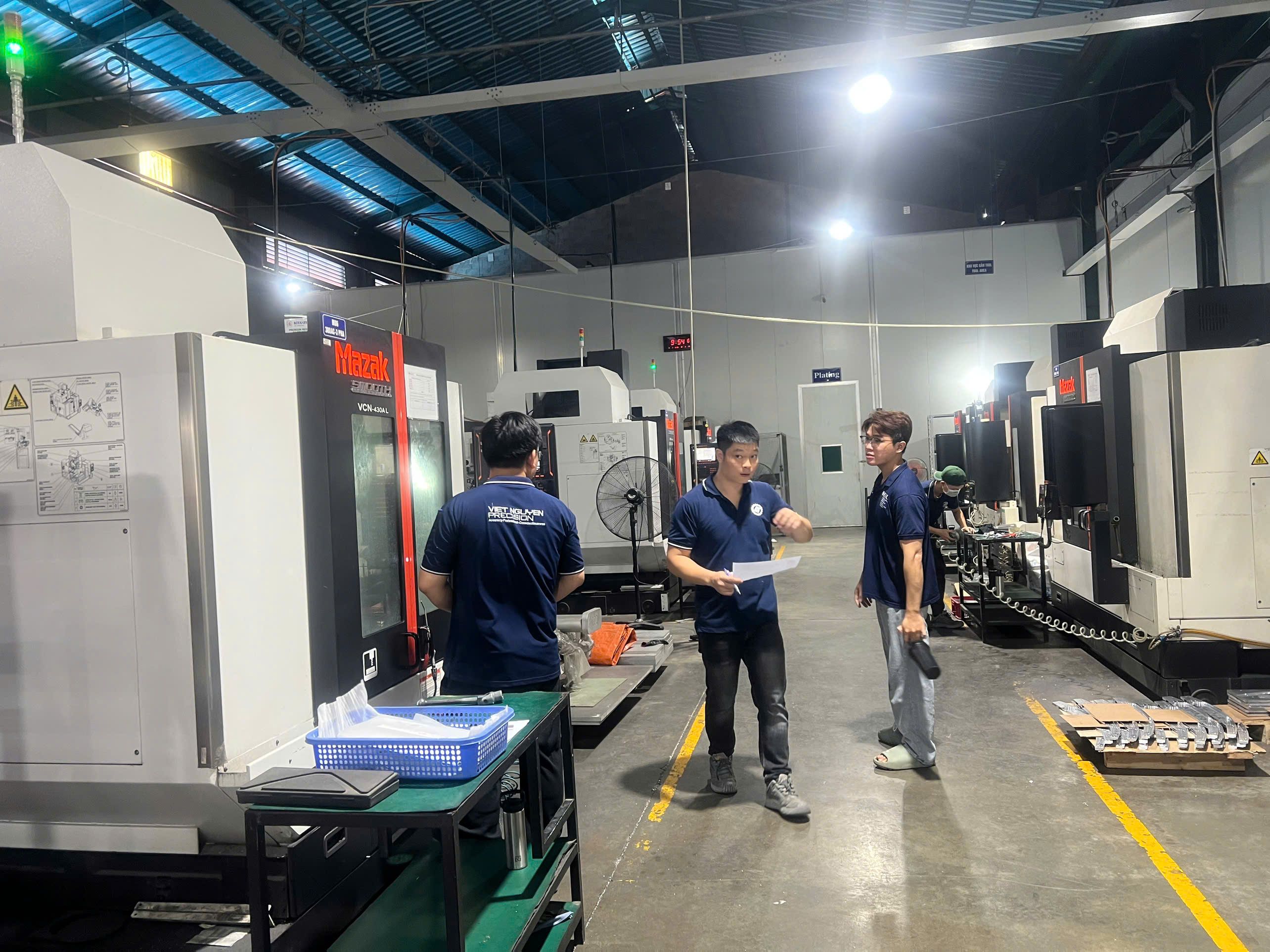
When our Vietnam office first helped a U.S. client source sheet metal brackets for a Class II surgical instrument, the client’s quality team panicked — they assumed every FDA regulation applied directly to the Vietnamese supplier, and the project stalled for weeks while everyone debated who needed what registration.
FDA regulations do not apply directly to Vietnamese sheet metal suppliers. They apply to the U.S. medical device manufacturer importing the material. The manufacturer must comply with Purchasing Controls under 21 CFR Part 820, validate all processes involving that metal, and maintain full traceability from raw material to finished device.
This distinction matters. It changes who does the paperwork, who bears the audit burden, and what documentation you actually need from your Vietnamese vendor ISO 13485:2016 1. Let me walk through each layer of compliance so you can source with confidence.
How do I verify if my Vietnamese sheet metal supplier is properly registered with the FDA?
A buyer from the Midwest once asked our team to confirm FDA registration 2 for a Vietnamese sheet metal stamping shop. The short answer surprised him — and it will probably surprise you too Design History File 3.
Your Vietnamese sheet metal supplier does not need FDA registration unless they manufacture a finished medical device. FDA registration applies to device manufacturers, not raw material or component suppliers. You, the U.S. device maker, hold the registration obligation and must qualify the supplier under your Quality Management System.
Understanding Who Registers and Who Does Not
The FDA requires medical device establishments to register under 21 CFR Part 807 Corrective and Preventive Action (CAPA) 4. An "establishment" means a place that manufactures, prepares, propagates, compounds, assembles, or processes a finished device. A factory that cuts, bends, and welds sheet metal into brackets is not manufacturing a medical device IQ/OQ/PQ protocols 5. It is producing a component.
So your Vietnamese supplier does not register with the FDA. You do.
That said, you still have work to do. Under the FDA's Quality System Regulation — now transitioning to the Quality Management System Regulation (QMSR) 6 incorporating ISO 13485:2016 — you must evaluate and qualify every supplier in your chain. This is not optional. It is a regulatory requirement.
What Supplier Qualification Looks Like in Practice
Here is how we help our U.S. clients verify and qualify Vietnamese sheet metal vendors:
| Verification Step | What You Check | Where to Look |
|---|---|---|
| FDA establishment registration | Confirm the supplier is NOT required to register (component only) | FDA Device Registration database 7 |
| ISO 13485 certification | Verify the supplier holds a current certificate from an accredited body | Request certificate; verify with the certification body |
| Business license and export permits | Confirm the supplier is legally operating in Vietnam | Vietnamese Ministry of Industry and Trade records |
| Import license Vietnam | Check if the supplier holds relevant Vietnamese import/export licenses for raw materials | Supplier documentation package |
| Quality Management System documentation | Review the supplier's QMS manual, procedures, and records | On-site audit or document review |
When a Supplier Might Need FDA Registration
There is one exception. If your Vietnamese partner assembles or finishes a complete medical device — not just a component — and ships it to the U.S., then they must register with the FDA and list that device. This applies to contract manufacturers who produce the final product. For sheet metal components alone, no registration is needed.
Our Vietnam team has seen confusion on this point many times. A supplier might tell you they are "FDA registered" because they supply another client's finished device line. That registration is specific to that product and that client's device listing. It does not automatically cover your components.
The bottom line: verify the supplier’s quality credentials, not their FDA registration status.
What specific quality documentation do I need from my Vietnam manufacturer to meet FDA standards?
One lesson we learned early in our Vietnam operations: U.S. clients often request a generic "FDA compliance certificate" from the sheet metal shop. No such document exists. What the FDA actually requires is a traceable paper trail that links every component back to verified specifications.
You need material certificates (mill test reports), dimensional inspection records, process control documentation, certificates of conformity, and ISO 13485 certification evidence from your Vietnamese manufacturer. These documents feed into your FDA-required Design History File and Device Master Record to demonstrate full compliance with Purchasing Controls.

The Core Documentation Package
The FDA does not prescribe a fixed list of documents your supplier must hand over. Instead, it requires you — the device manufacturer — to define what you need, verify that you received it, and keep records. Under 21 CFR Part 820 8.50 (Purchasing Controls), you must establish requirements that include quality specifications for purchased components.
Here is the documentation package we typically coordinate between our Vietnamese suppliers and U.S. clients:
| Document | Purpose | FDA Relevance |
|---|---|---|
| Material Test Report (MTR) 9 / Mill Certificate | Verifies alloy composition, tensile strength, hardness | Supports Design Controls and material biocompatibility evidence |
| Certificate of Conformity (CoC) | Confirms the batch meets purchase order specifications | Required under Purchasing Controls |
| First Article Inspection Report (FAIR) | Validates that the first production parts match drawings | Feeds into Design Verification and Validation |
| Dimensional Inspection Records | Shows measured vs. specified dimensions for each lot | Supports Process Validation and incoming inspection |
| Process Control Records | Documents machine settings, operator qualifications, environmental conditions | Required for Good Manufacturing Practices compliance |
| ISO 13485 Certificate | Proves the supplier's QMS meets international medical device standards | Demonstrates supplier evaluation rigor |
| PPAP (Production Part Approval Process) | Comprehensive package proving production readiness | Best practice for risk management in medical device supply chains |
| Certificates of Free Sale (if applicable) | Used for downstream regulatory filings in other markets | May support technical documentation for multi-market devices |
Material Biocompatibility and Traceability
For medical devices that contact the patient — especially implants — the FDA's 2021 guidance on material information puts extra weight on metal composition. If you source stainless steel sheet metal from Vietnam, you need to know whether it is 304, 316, or 316L grade. Each has different corrosion resistance and biocompatibility profiles.
We always recommend that our clients specify the exact ASTM standard (such as ASTM F138 for implant-grade stainless steel) in the purchase order. The Vietnamese supplier then provides a mill certificate showing the heat number, chemical analysis, and mechanical properties for that specific batch. This creates a traceability chain from the raw material to the finished device.
Vietnam's 2026 Labeling Rules — A Hidden Compliance Hurdle
Vietnam's Decree 37/2026/ND-CP introduces new labeling requirements for products manufactured or imported in Vietnam. Labels must include circulation or import license numbers, lot or serial numbers, date of manufacture, and expiry dates. Original foreign-language labels must be supplemented with Vietnamese translations if incomplete. These rules take effect January 26, 2026, and any products manufactured before that date are exempt.
While these are Vietnamese Ministry of Health requirements — not FDA rules — they affect your supply chain. If your Vietnamese supplier's labeling does not meet local requirements, shipments can be delayed or rejected. That disruption can cascade into FDA Medical Device Reporting obligations if your device production schedule is compromised.
Our team in Vietnam monitors these regulatory changes so our clients do not get blindsided.
How can I ensure my custom sheet metal parts from Vietnam comply with FDA Quality System Regulations?
A trade-off we weigh on every medical device project is this: how much process validation rigor does the device classification demand, versus what the Vietnamese supplier can realistically deliver? Getting this balance wrong means either over-engineering simple parts or — far worse — under-validating critical ones.
To ensure compliance, you must implement FDA Purchasing Controls by defining clear specifications, qualifying your Vietnamese supplier through audits and documentation review, validating all manufacturing processes with IQ/OQ/PQ protocols, and maintaining Corrective and Preventive Action (CAPA) systems to address any quality deviations throughout the supply chain.
Device Classification Drives Sourcing Rigor
The FDA classifies medical devices into three risk-based categories. The class of your finished device determines how much supplier oversight you need. This is not a one-size-fits-all situation.
| Device Class | Risk Level | Examples Using Sheet Metal | Supplier Validation Required |
|---|---|---|---|
| Class I | Low | Tongue depressor handles, simple instrument trays | Basic GMP; supplier evaluation with CoC |
| Class II | Moderate | Surgical instrument housings, diagnostic equipment enclosures | 510(k) clearance; comprehensive supplier validation; special controls |
| Class III | High | Implantable device housings, cardiac device enclosures | PMA approval; clinical data; most stringent supplier oversight; full biocompatibility testing |
Sheet metal for a Class III implantable device requires material traceability down to the individual coil or plate. Sheet metal for a Class I instrument tray does not. Know your classification before you set supplier requirements.
Process Validation: IQ, OQ, PQ
Under the QMSR, you must validate manufacturing processes whose results cannot be fully verified by subsequent inspection and testing. For sheet metal, this often includes:
- Laser cutting — Can you verify every internal feature non-destructively? Often not. Validate the process.
- Forming and bending — Spring-back varies with material lot. Validate with IQ (Installation Qualification), OQ (Operational Qualification), and PQ (Performance Qualification) protocols.
- Welding — Weld strength is not always visible. Validate welding procedures, operator qualifications, and inspect representative samples destructively.
- Surface finishing — Powder coating, passivation, or electropolishing affects corrosion resistance and patient safety. Validate.
Our role in this process is to work with the Vietnamese factory to establish these protocols, run the qualification studies, and compile the data our U.S. clients need for their Device Master Record 10s.
CAPA: Closing the Loop
Corrective and Preventive Action systems are not optional. If incoming inspection at your U.S. facility reveals that a batch of Vietnamese sheet metal brackets is out of tolerance, you need a formal CAPA process. This includes root cause analysis, corrective action at the supplier, verification of effectiveness, and documentation.
We have managed CAPA processes where the root cause was a worn die in the Vietnamese factory's press brake. The fix was straightforward — replace the die and re-validate — but without a formal CAPA system, the same defect would have recurred.
Over 50% of medical device recalls stem from non-compliance with FDA standards. Many of those trace back to supplier quality failures that were never formally investigated. A robust risk management approach to your supply chain prevents you from becoming a statistic.
Post-Market Surveillance Implications
Even after your device reaches the market, your obligations continue. Post-market surveillance requires that you monitor device performance and trace any failures back to root causes — including component quality. If a sheet metal bracket cracks in the field, you need to trace it back to the specific lot, the specific Vietnamese supplier, and the specific material certificate. Without traceability, you cannot comply with FDA Medical Device Reporting requirements.
What steps should I take to audit a Vietnamese factory for medical device component compliance?
During a recent supplier audit at a sheet metal facility near Ho Chi Minh City, our quality engineer noticed that the factory's calibration records showed a three-month gap. The factory manager explained they had "been busy." That single finding would have been a major nonconformity in any FDA or ISO 13485 audit. It also showed us exactly why on-site audits matter more than paper reviews.
To audit a Vietnamese factory, you should plan a risk-based audit scope, verify ISO 13485 certification and QMS documentation, inspect equipment calibration and maintenance records, review material traceability systems, evaluate operator training records, assess CAPA effectiveness, and document all findings in a formal audit report that feeds into your FDA Purchasing Controls file.

Building Your Audit Plan
Do not audit everything at once. Focus on the processes and controls that directly affect your device's safety and performance. A risk-based approach — aligned with how FDA inspections now work under QMSR — concentrates your time where it matters most.
Here is a practical audit sequence we follow:
- Pre-audit document review — Request the supplier's QMS manual, ISO 13485 certificate, recent internal audit reports, and CAPA log. Review these before you travel.
- Opening meeting — Clarify audit scope, schedule, and expectations with factory management.
- Facility walkthrough — Observe the shop floor. Look at material storage, handling, cleanliness, and workflow. First impressions reveal a lot.
- Process observation — Watch the actual cutting, bending, welding, and finishing operations. Compare what you see to what the procedures say.
- Record review — Pull specific batch records and trace them from raw material receipt to final inspection. Check calibration stickers on measurement equipment.
- Operator interviews — Ask operators about their training, how they handle nonconforming parts, and what they do when a process parameter drifts out of spec.
- CAPA review — Examine recent corrective actions. Were root causes identified? Were fixes verified as effective?
- Closing meeting — Present preliminary findings. Give the supplier a chance to respond or clarify.
What to Look For on the Shop Floor
| Audit Area | Key Observations | Red Flags |
|---|---|---|
| Material storage | Segregated by grade; labeled with heat numbers; protected from contamination | Mixed grades stored together; no labels; exposure to moisture |
| Equipment calibration | Current calibration stickers; traceable to national standards | Expired calibrations; no calibration records |
| Operator qualifications | Training records on file; welders certified to applicable standards | No training records; operators unfamiliar with procedures |
| In-process inspection | Documented checks at critical steps; statistical process control where appropriate | No in-process checks; reliance on final inspection only |
| Nonconforming material handling | Segregated and labeled; disposition documented | Mixed with conforming material; no documentation |
| Traceability | Each part traceable to raw material lot and process batch | No lot tracking; parts from different batches mixed |
| Data integrity | Electronic records backed up; access controlled; audit trails maintained | No backup; shared logins; no audit trail on quality records |
Cybersecurity and Data Integrity
This is an area that often surprises U.S. buyers. FDA's risk-based inspection approach now extends to data integrity. If your Vietnamese supplier uses CNC machines with digital controls, or maintains electronic quality records, you should verify that those systems have access controls, backup procedures, and audit trails. A corrupted inspection record is as bad as a missing one.
Leveraging a Local Team
Having our own team on the ground in Vietnam gives our clients a significant advantage. We can conduct pre-shipment inspections, run unannounced spot checks, and respond quickly when an issue arises. Auditing a factory 8,000 miles away is hard. Having a local presence makes it practical.
Our engineers understand both the Vietnamese manufacturing culture and the FDA's expectations. That bridge is what makes technical documentation accurate, Good Manufacturing Practices achievable, and delivery timelines reliable.
Conclusion
Sourcing medical device sheet metal from Vietnam is entirely viable — but the compliance burden falls on you, the U.S. device manufacturer, not the Vietnamese supplier. Implement Purchasing Controls, validate processes, audit rigorously, and maintain traceability from raw metal to finished device.
Frequently Asked Questions
How do I verify if my Vietnamese sheet metal supplier is properly registered with the FDA?
A buyer from the Midwest once asked our team to confirm FDA registration 2 for a Vietnamese sheet metal stamping shop. The short answer surprised him — and it will probably surprise you too Design History File 3 .
What specific quality documentation do I need from my Vietnam manufacturer to meet FDA standards?
One lesson we learned early in our Vietnam operations: U.S. clients often request a generic "FDA compliance certificate" from the sheet metal shop. No such document exists. What the FDA actually requires is a traceable paper trail that links every component back to verified specifications.
How can I ensure my custom sheet metal parts from Vietnam comply with FDA Quality System Regulations?
A trade-off we weigh on every medical device project is this: how much process validation rigor does the device classification demand, versus what the Vietnamese supplier can realistically deliver? Getting this balance wrong means either over-engineering simple parts or — far worse — under-validating critical ones.
Footnotes
1. Details the international standard for medical device quality management systems. ↩︎
2. Explains FDA establishment registration requirements for medical devices. ↩︎
3. Defines FDA requirements for Design History Files in medical device development. ↩︎
4. Explains the importance and framework of CAPA in quality assurance. ↩︎
5. Provides a guide to Installation, Operational, and Performance Qualification in medical device manufacturing. ↩︎
6. Provides information on the FDA’s new quality system regulation. ↩︎
7. Official FDA resource for searching registered medical device establishments. ↩︎
8. Official FDA regulation for quality system requirements. ↩︎
9. Explains the purpose and contents of Material Test Reports. ↩︎
10. Describes FDA requirements for Device Master Records for medical devices. ↩︎