
The welding parts market is changing fast, and I see it daily when our team audits fabrication suppliers across Vietnam and Asia for U.S. buyers of custom welded frames and brackets.
The welding parts market is moving toward robotic welding automation, laser beam welding, AI-driven quality inspection, eco-friendly consumables, and full digital traceability. The market may reach $22.55 billion by 2029, driven by EVs, renewable energy, lightweight materials, and Industry 4.0 integration.
Each of these trends affects how you should source welded parts. Let me walk you through them one by one, from a sourcing and supply chain perspective.
How will automation and robotic welding reshape my sourcing strategy for custom parts?
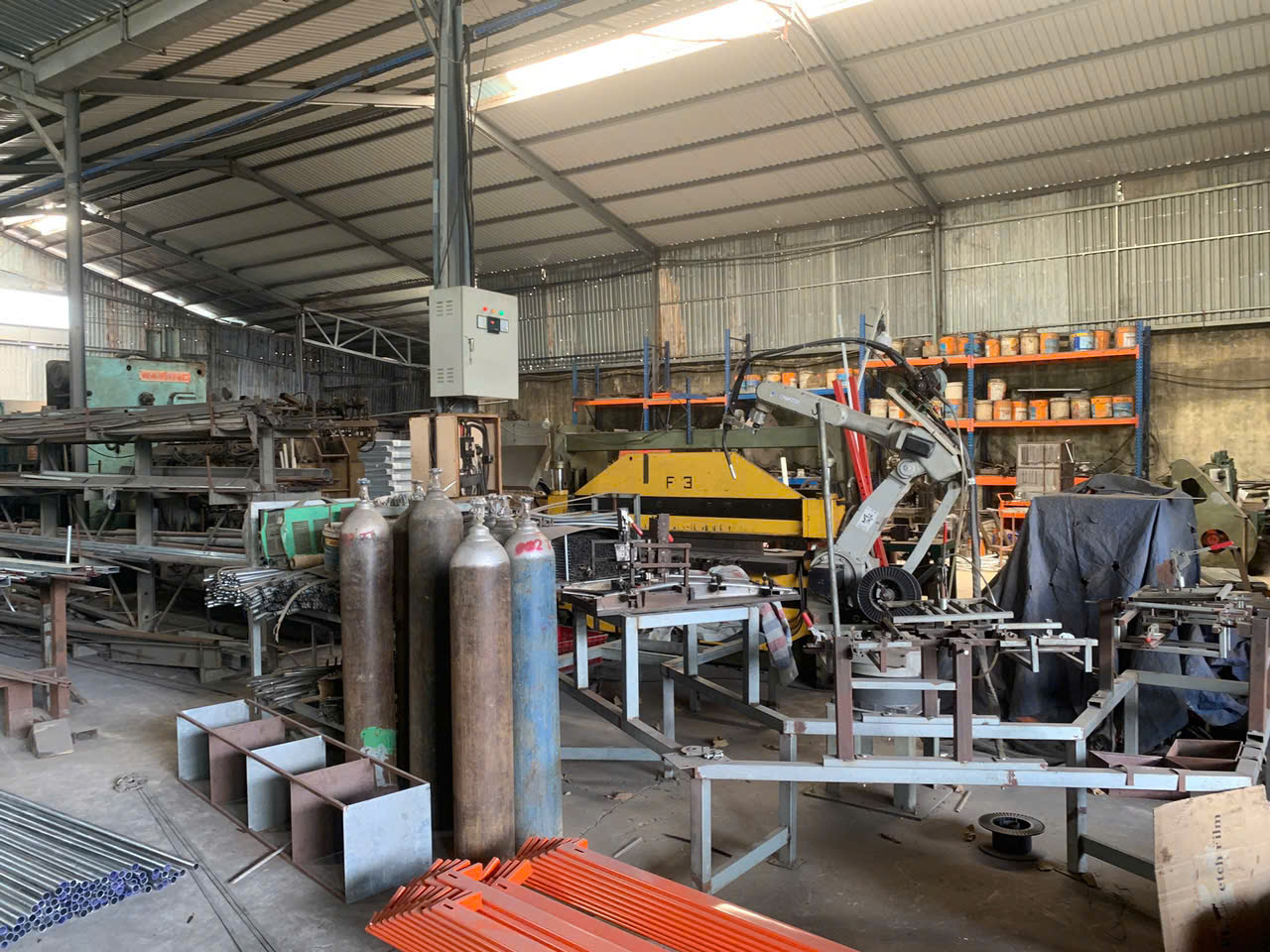
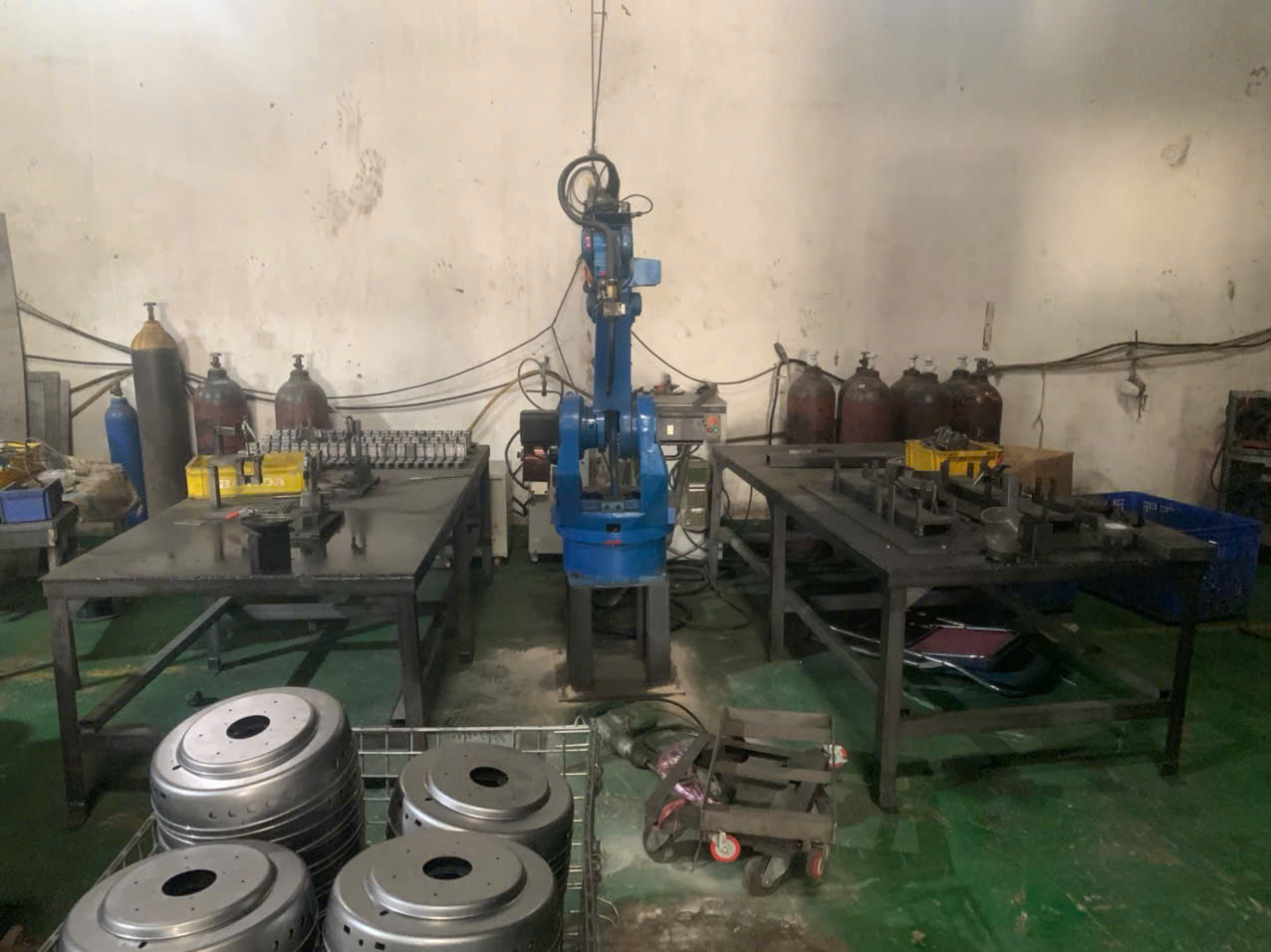
Last year, our Vietnam team audited a fabricator that had just installed two robotic welding cells. The difference in weld seam consistency on their transport skids was visible to the naked eye.
Robotic welding automation will shift your sourcing criteria from labor cost to process capability. Suppliers with robotic cells and collaborative robots deliver more consistent weld seams, faster cycle times, and better repeatability on custom parts, making automation maturity a key supplier qualification factor.

For decades, buyers sourced welded parts based on labor rates. That logic is breaking down. The global skilled welder shortage is real. Experienced welders are retiring, and fewer young people enter the trade. Automation is the industry's answer, and it changes what a "good supplier" looks like.
When we qualify a welding parts supplier today, we look at their automation roadmap as closely as their price sheet. A shop with robotic welding cells can hold tighter tolerances on repeat orders. It can also scale volume without hiring ten new welders. That directly protects your delivery dates.
What automation maturity means for your RFQs
Not every custom part suits a robot. Low-volume, complex frames may still need manual TIG or MIG work. But structural brackets, post bases, and skid frames with repetitive fillet welds are ideal robot candidates. Collaborative robots 1 (cobots) now fill the middle ground. They handle medium-volume runs and can be reprogrammed quickly for custom jobs, which matters for buyers like you who order families of similar parts.
| Supplier Automation Level | Best Fit | Sourcing Risk | Typical Impact on You |
|---|---|---|---|
| Fully manual welding | Low volume, complex one-offs | High variability, welder-dependent quality | More inspection needed, rework risk |
| Cobot-assisted welding | Medium volume, part families | Low to medium | Stable quality, flexible changeovers |
| Robotic welding cells | High volume, repetitive welds | Low | Consistent seams, reliable lead times |
| Robotic cells + offline programming | Mixed volume, custom projects | Lowest | Fast quoting, first-article accuracy |
My practical advice: ask suppliers how they program their robots. Offline programming from your 3D models shortens setup time and reduces first-article errors. In our experience managing PPAP 2 submissions for U.S. clients, robot-welded parts pass dimensional checks on the first attempt far more often than manually welded ones.
What emerging materials and welding techniques should I watch when qualifying suppliers outside China?
A U.S. engineering client recently sent us drawings calling for high-strength low-alloy steel on a bracket that used to be mild steel. That single spec change eliminated half the Vietnamese fabricators on our shortlist.
Watch for supplier capability in laser beam welding, friction stir welding, and joining advanced high-strength steels and aluminum. Suppliers in Vietnam, India, and Taiwan that master these techniques and tailored filler metals can handle the lightweight, high-spec parts driving EV, aerospace, and renewable energy demand.
Material specs are getting tougher. Automotive and aerospace buyers want lighter, stronger parts. That means aluminum, advanced high-strength steels (AHSS), and even titanium and nickel alloys are showing up on drawings that used to call for plain carbon steel. Traditional stick and MIG processes struggle with these materials. The techniques below are the ones to track.
Key processes and where they fit
- Laser beam welding — now mainstream, not niche. It delivers high-speed joining with minimal thermal distortion, which is critical for thin-gauge brackets and precision metal fabrication 3. Handheld fiber laser units are spreading fast across Asian workshops.
- Friction stir welding — the go-to method for joining dissimilar materials, such as aluminum to steel, without melting. It is expanding from aerospace into EV battery trays and structural components.
- Wire arc additive manufacturing (WAAM) — a form of additive manufacturing that uses welding power sources to 3D print large metal components. It is emerging for rapid prototyping and repair of complex custom parts.
- Advanced flux-cored and submerged arc welding — still growing in marine, offshore, and heavy structural work, with new consumables improving deposition rates.
| Technique | Best Materials | Typical Applications | Availability Outside China |
|---|---|---|---|
| Laser beam welding | Thin steel, stainless, aluminum | Brackets, enclosures, precision parts | Growing fast in Vietnam and Taiwan |
| Friction stir welding 4 | Aluminum, dissimilar joints | EV trays, aerospace panels | Limited, mostly Taiwan and India |
| WAAM / additive manufacturing | Steel, titanium, nickel alloys | Prototypes, large components, repair | Early stage, select shops |
| Advanced SAW / FCAW | Thick structural steel | Skids, frames, offshore structures | Widely available |
When we run supplier audits, we verify welder qualifications for the specific material and process on your drawing. Many shops claim aluminum capability but lack qualified WPS documents. Ask for weld procedure specifications and sample coupons before awarding the contract. It is a small step that prevents non-conforming shipments later.
Can new quality control technologies help me achieve right-first-time results with welding part suppliers?
The most painful call I ever received came from a purchasing manager whose container of welded post bases arrived with undercut on thirty percent of the seams. Every one of those defects was preventable at the source.
Yes. AI-powered machine vision, real-time monitoring sensors, and IoT-connected weld data now catch defects during welding rather than after shipment. Buyers who require suppliers to use these tools, paired with structured PPAP and final inspection, achieve dramatically higher right-first-time rates.

Traditional quality control on welded parts is reactive. A worker welds, an inspector checks, defects get ground out and rewelded. Rework wastes time, weakens joints, and delays your shipment. The new generation of quality technology flips this model. It monitors the weld as it happens.
The new QC toolkit
Smart welding power sources now log voltage, current, wire feed speed, and travel speed for every single weld. If a parameter drifts outside the qualified window, the system flags it instantly. AI-powered machine vision 5 cameras inspect seams in real time and detect porosity, undercut, and misalignment faster than any human eye. Some systems even adjust arc parameters autonomously mid-weld. Edge computing inside advanced torches enables microsecond-level arc modulation that suppresses spatter at the source, which means cleaner parts and less post-weld grinding.
For a buyer, the practical question is how to use this. In our process control work for U.S. clients, we build QC around three layers. First, we lock the weld procedure during PPAP, including sample welds and dimensional first articles. Second, we require in-process monitoring or documented parameter checks during production. Third, our local team performs final inspection against your drawing before the parts ever reach a container.
| QC Stage | Traditional Approach | Technology-Enabled Approach |
|---|---|---|
| Pre-production | Verbal confirmation of specs | PPAP with weld coupons and first articles |
| During welding | Operator self-check | Real-time monitoring sensors and machine vision |
| Post-weld | Visual spot check | Logged weld data plus structured final inspection |
| Pre-shipment | Trust the supplier | Third-party or in-country final inspection |
The lesson we have learned managing custom projects across Vietnam and Asia is simple. Technology helps, but it must sit inside a disciplined process. A supplier with sensors and no process discipline still ships defects. A supplier with both is how you get it right the first time.
How are sustainability and traceability requirements changing what I should expect from welding parts manufacturers?
During a recent supplier development project, a European client asked us for the carbon footprint data of a welded steel frame. Five years ago, nobody asked that question. Now it appears in RFQs regularly.
Expect welding parts manufacturers to provide material traceability, batch-level weld records, eco-friendly consumables, and energy-efficient processes. Regulatory pressure in the U.S. and Europe is turning green welding technology and full digital traceability from nice-to-have features into contract requirements.
Sustainability in welding is no longer just about emissions from the factory roof. It runs through the entire part lifecycle. Regulators and end customers in the U.S. and Europe increasingly demand proof of where steel came from, what consumables were used, and how much energy the process consumed. Suppliers who cannot document this will slowly lose access to Western contracts.
What green and traceable actually mean for welded parts
Green welding technology covers several concrete things. Energy-efficient inverter power sources cut electricity use per weld. Low-emission fluxes and wires reduce fume generation. Processes like laser beam welding and friction stir welding use less heat input, which means less energy and less distortion-related rework. Less rework is itself a sustainability gain, because every reworked joint burns energy and consumables twice.
Traceability is the other half. IoT-enabled cloud platforms 6 now record which welder or robot made each joint, with which wire batch, on which day. Smart consumables with embedded digital IDs, using RFID or NFC tags 7, can synchronize batch-specific metallurgical data directly with machine settings. This is Industry 4.0 integration applied to welding, and it gives you an audit trail from mill certificate to finished weld.
Here is what I recommend you ask suppliers for today:
- Mill test certificates traceable to each production lot.
- Consumable batch records linked to specific weld joints.
- Documented weld procedure specifications and welder qualifications.
- Energy or emissions data where your end customer requires it.
- A clear plan for digital record-keeping, even if it starts with spreadsheets.
When our team audits fabricators in Vietnam, we grade their documentation systems as strictly as their weld quality. Paperwork sounds boring, but in a warranty dispute or a recall, traceability records are what protect you and your end customer.
Conclusion
Sourcing welded parts the old way risks defects, delays, and lost contracts. The welding parts market now rewards buyers who demand automation, advanced processes, real-time QC, and traceability from every supplier.
Frequently Asked Questions
How will automation and robotic welding reshape my sourcing strategy for custom parts?
Last year, our Vietnam team audited a fabricator that had just installed two robotic welding cells. The difference in weld seam consistency on their transport skids was visible to the naked eye.
What emerging materials and welding techniques should I watch when qualifying suppliers outside China?
A U.S. engineering client recently sent us drawings calling for high-strength low-alloy steel on a bracket that used to be mild steel. That single spec change eliminated half the Vietnamese fabricators on our shortlist.
Can new quality control technologies help me achieve right-first-time results with welding part suppliers?
The most painful call I ever received came from a purchasing manager whose container of welded post bases arrived with undercut on thirty percent of the seams. Every one of those defects was preventable at the source.
Footnotes
1. Background reference explaining cobots, the automation technology reshaping welding supplier capabilities. ↩︎
2. Explains the Production Part Approval Process standard referenced throughout the quality control discussion. ↩︎
3. American Welding Society is the leading authority on welding processes and standards referenced in the article. ↩︎
4. TWI Global pioneered friction stir welding and remains the authoritative technical source on the process. ↩︎
5. IEEE is the leading technical body for machine vision and AI-driven inspection technologies discussed here. ↩︎
6. Updated NIST landing page for Internet of Things (IoT) standards and research. ↩︎
7. Background on RFID technology