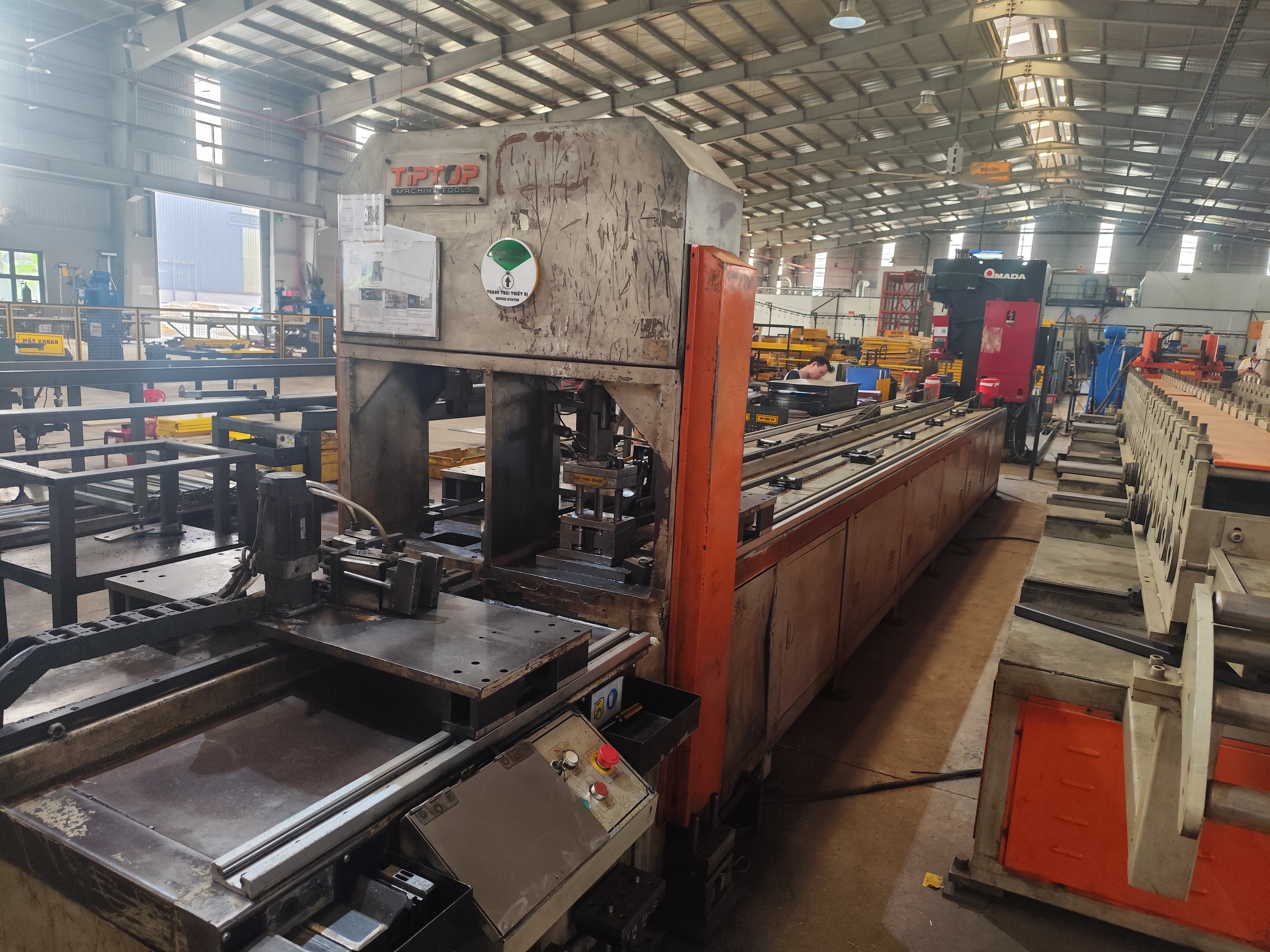

Every week, our Vietnam office fields calls from U.S. buyers stunned that their “30% cheaper” stamping quote ballooned after customs clearance fees, rework, and freight forwarding charges landed on the invoice.
Hidden costs affecting landed price when sourcing stamping parts from Vietnam include import duties and tariffs, tooling ownership traps, quality control inspections, freight and inland logistics fees, raw material markups from Chinese inputs, inventory carrying costs, and rework expenses — often inflating the factory quote by 10–20%.
Below, I break down each hidden cost category so you can audit your next quote line by line and protect your margins before you commit.
What tariffs and duties should I factor in when importing stamping parts from Vietnam?
One lesson we learned early when helping clients move programs out of China: the tariff savings that justified the move can vanish overnight if the raw material origin is wrong on the Certificate of Origin.
You should factor in the standard MFN duty rate for your HS code (typically 0–6% for steel stampings), any anti-dumping or countervailing duties on the base metal, and the real risk of tariff disqualification if over 70% of raw materials originate from China — which can add 10% or more to your landed price.

The Section 301 Advantage — and Its Fragility
Most buyers source stamping parts from Vietnam specifically to avoid the 25% Section 301 tariffs 1 applied to Chinese-origin goods. That math is straightforward: a $1.00 part from China lands at roughly $1.25 before freight, while the same part from Vietnam may land near $1.00. But the advantage is fragile.
Vietnam imports up to 70% of its steel and aluminum from southern China. If U.S. Customs determines that the "substantial transformation 2" test was not met — meaning the Vietnamese factory merely bent or punched Chinese sheet without enough value-added processing — the part can be reclassified as Chinese-origin. Suddenly, those Section 301 duties snap back, and your landed price jumps by the very percentage you were trying to avoid.
Key Tariff Line Items to Check
| Cost Element | Typical Range | What Catches Buyers Off Guard |
|---|---|---|
| MFN Duty (HS 7326, steel stampings) | 0–6% | Rate varies by exact HS subheading; misclassification is common |
| Section 301 Tariff (if origin reclassified) | 7.5–25% | Triggered by high Chinese raw-material content |
| Anti-Dumping / CVD on base metal | 0–200%+ | Applies when imported steel is from a tariffed country |
| Customs Clearance Fees (broker) | $150–$500 per entry | Flat fee per shipment; painful on small orders |
| Merchandise Processing Fee | 0.3464% of value | Capped at ~$538 per entry |
Anti-Circumvention Audits
U.S. Customs has stepped up anti-circumvention enforcement. We have seen audits where the importer was asked to prove, with mill certificates 3 and purchase orders, that the steel coil used in a Vietnamese stamping plant was not merely transshipped Chinese steel. If you cannot produce that paper trail, expect delays, potential penalties, and retroactive duty assessments. Always request full material traceability — including the mill certificate — before the first production run.
VAT and Tax Shifts in 2026
Vietnam is adjusting its VAT and Special Sales Tax schedules. If your supplier quotes you a price "ex-works" that excludes VAT recovery, or if the VAT refund timeline extends, your cash flow takes a hit. Make sure the quote clarifies whether VAT is included and how the refund mechanism works.
How do freight, logistics, and shipping fees impact my total landed cost from Vietnam?
A buyer we work with recently compared two quotes for the same bracket — one FOB Ho Chi Minh City, one DDP Houston. The DDP price was 18% higher, and every dollar of that gap was real cost the FOB quote had hidden.
Freight, logistics, and shipping fees typically add 5–15% to your stamping part cost from Vietnam, driven by ocean container rates, inland trucking from the factory to port, port handling charges, packaging upgrades for corrosion protection, and seasonal surcharges — especially around Tet Lunar New Year.

Inland Transport: The Overlooked First Mile
Vietnam's highway and port infrastructure 4 is improving, but it still lags behind China's. A factory in Binh Duong province may be only 30 km from Cat Lai port, yet congestion can turn that into a four-hour trip. Inland trucking costs are not always in the FOB quote. Ask your supplier whether inland freight is included, and get the cost in writing.
Ocean Freight and Container Fees
Ocean freight from Ho Chi Minh City to Los Angeles runs roughly $3,000–$6,000 per 20-foot container in 2025–2026, but rates swing with demand. Peak season surcharges, bunker adjustment factors 5, and big-season fees can push costs up by $500–$1,500 per container without warning. Port handling charges at both origin and destination add another $200–$600 per container.
Packaging for the Tropics
Vietnam's tropical climate creates a corrosion risk that many first-time importers underestimate. Standard cardboard boxing is not enough for bare steel stampings on a 25-day ocean voyage. VCI (Vapor Corrosion Inhibitor 6) bags, desiccants, and export-grade crating are essential — and they cost money. Our team always specs packaging at the quoting stage so there are no surprises.
| Logistics Cost Element | Typical Cost | Notes |
|---|---|---|
| Inland trucking (factory → port) | $100–$400 | Depends on distance and congestion |
| Ocean freight (HCMC → US West Coast, 20ft) | $3,000–$6,000 | Volatile; check spot rates |
| Port handling charges (origin + destination) | $200–$600 | Per container |
| VCI packaging upgrade | $0.02–$0.10/part | Critical for bare steel; often omitted from quotes |
| Customs broker fee (US side) | $150–$500 | Per entry |
| Tet Lunar New Year premium | 10–20% freight surcharge | Factories close 1–3 weeks; pre-Tet rush inflates rates |
The Tet Factor and Supply Chain Lead Times
Every January or February, Vietnam shuts down for Tet. Factories close for one to three weeks, and the rush to ship before the holiday drives up freight forwarding charges and creates port backlogs. If you do not plan your orders around Tet, you will pay premium rates and still receive late shipments. We advise our U.S. clients to place orders at least 8–10 weeks before the holiday to avoid the crunch.
Shipping Terms Matter
If your quote says "FOB" but you assumed "DDP," you are missing customs duties, freight insurance, destination port charges, and last-mile delivery. Always align on Incoterms before comparing quotes. A DDP quote is the closest proxy to your true landed price, even if it looks higher at first glance.
What quality control and inspection costs am I missing when sourcing stamping parts from Vietnam?
During a recent project for a U.S. client ordering mounting brackets, we caught a dimensional drift on the 500th piece during an in-process check — a problem that would have shipped 4,000 defective parts if we had relied solely on the supplier's outgoing inspection.
Hidden quality costs include first article inspection reports, CMM dimensional checks, material certification management, third-party inspection fees, sampling iterations costing $10,000–$50,000, and a 2–5% initial defect rate that triggers rework, return shipping, and production delays — costs rarely reflected in the factory quote.

What the Factory Quote Usually Excludes
Most Vietnamese stamping suppliers quote a piece price that covers basic visual inspection at the end of the line. It does not cover the kind of quality control inspections a U.S. buyer expects. Here is what is typically missing:
- First Article Inspection (FAI): A full dimensional report on the first production samples, often requiring CMM (Coordinate Measuring Machine) time. If the supplier does not own a CMM, they outsource it — and that cost lands on you.
- Material Certificates: Mill certs, material test reports, and traceability documents. Some suppliers charge a premium for sourcing certified grades or for producing the paperwork itself.
- PPAP Documentation: If your end customer requires PPAP (Production Part Approval Process), the documentation package — control plans, process flow diagrams, MSA, SPC data — is a separate cost. Our team builds this into every project plan because we know U.S. buyers need it, but many factories treat it as an add-on.
Sampling and Development Costs
Before production starts, you may go through two to five sample iterations. Each round involves material procurement, die trials, measurement, shipping samples internationally, and engineering review. First-time importers underestimate this phase by 50% or more.
| QC / Inspection Cost | Typical Range | When It Appears |
|---|---|---|
| First Article Inspection (FAI) | $200–$1,500 | Before mass production approval |
| CMM dimensional report | $100–$500/report | Per sample submission or lot |
| Third-party inspection (e.g., SGS, TÜV) | $250–$800/visit | Pre-shipment or during production |
| PPAP documentation package | $500–$3,000 | One-time, per part number |
| Sample iterations (2–5 rounds) | $10,000–$50,000 total | Product development phase |
| Rework / replacement (2–5% defect rate) | Variable | Post-delivery; includes return shipping |
Tooling and Die Maintenance — The Long Game
Stamping dies range from $1,000 to $100,000+ depending on complexity. The hidden cost is not just the upfront price; it is what happens over the die's lifecycle. If you do not contractually define tool lifecycle limits, maintenance schedules, and ownership rights, you may face unexpected replacement costs or find that the supplier charges "rental" fees if you try to move production.
We always insist on explicit die ownership clauses in our contracts. The buyer pays for the tool; the buyer owns the tool. If the supplier retains ownership, you lose leverage and flexibility.
Material Price Fluctuations and Yield Loss
Steel and aluminum prices swing. A quote based on today's material price may not hold if raw material costs spike before your order ships. Ask whether the quote locks in a material price or floats with the market. Also ask about yield loss — the scrap generated during blanking and stamping. This cost is baked into the piece price but rarely itemized, and it can represent 5–15% of material consumed.
How can supplier communication issues and rework increase my hidden costs when sourcing from Vietnam?
The most expensive email I ever read was one from a client saying, "The holes are 0.5 mm off center on all 10,000 pieces." The root cause? A tolerance note on the drawing was misread during technical translation, and no one caught it before mass production.
Communication gaps — including technical translation errors, timezone delays, and unclear drawing interpretations — cause misproduced parts, rework cycles, and air-freight replacement shipments that can add 5–15% to your total project cost, turning Vietnam's price advantage into a net loss.

The Technical Translation Overhead
Stamping drawings are dense with GD&T callouts 7, surface finish symbols, and material specs. Vietnamese engineers are skilled, but English is a second language, and engineering terminology does not always translate cleanly. A note like "break all sharp edges" may be interpreted differently than you intended. Our bilingual engineering team in Vietnam reviews every drawing before it reaches the shop floor, specifically to catch these gaps. Without that layer, errors slip through.
Timezone and Response Lag
Vietnam is 11–12 hours ahead of the U.S. East Coast. A question sent at 9 AM in Texas gets answered at 9 PM — if you are lucky. If clarification is needed, you lose another full day. Over a 6-week project, those daily delays compound. We mitigate this with overlapping work hours and a dedicated project coordinator, but buyers who deal directly with a factory often face 48–72 hour response loops for simple questions.
How Rework Compounds Cost
When a batch fails inspection, the costs multiply:
- Root cause analysis — Engineering time to identify what went wrong.
- Replacement production — New material, new press time, new inspection.
- Return or disposal — Defective parts must be scrapped or shipped back.
- Air freight — If the delivery deadline is firm, replacement parts fly instead of sailing. Air freight from Vietnam to the U.S. can be 8–10x the ocean rate.
- Customer relationship damage — Late deliveries and quality escapes erode trust with your end customer.
A 2–5% initial defect rate sounds small, but on a 50,000-piece order, that is 1,000–2,500 parts. If those parts are $2.00 each, the direct replacement cost is $2,000–$5,000 — before you add the air freight, the engineering time, and the inventory carrying costs of holding safety stock to cover the gap.
The Middleman Tax
Some buyers use sourcing agents or trading companies that add a 5–15% markup without adding proportional value. The "middleman tax" is not always visible. You may think you are dealing with a factory, but the entity is actually a broker who subcontracts the work. We operate differently: our Vietnam office manages the supplier directly, and our clients see the factory audit reports, process controls, and inspection data firsthand.
Currency Exchange and Hedging
The Vietnamese dong (VND) has been relatively stable, but material purchases often happen in USD or CNY. Exchange rate swings between quoting and payment can shift costs by 1–3%. For large programs, currency hedging is worth considering, though it adds its own administrative cost.
Carbon Border Adjustment Mechanism (CBAM) Reporting
For buyers who also sell into Europe, the EU's CBAM is introducing reporting obligations on embedded carbon 8 in imported goods Carbon Border Adjustment Mechanism 9. Steel stamping parts fall within scope. While CBAM is still in its transitional phase, the reporting cost — gathering emissions data from the Vietnamese supplier and the steel mill — is a new administrative burden that adds to total project overhead.
Conclusion
Hidden costs when sourcing stamping parts from Vietnam — tariffs, freight, quality control inspections, tooling traps, and communication-driven rework — can inflate your factory quote by 10–20%, so evaluate your total landed cost carefully before committing.
Frequently Asked Questions
What tariffs and duties should I factor in when importing stamping parts from Vietnam?
One lesson we learned early when helping clients move programs out of China: the tariff savings that justified the move can vanish overnight if the raw material origin is wrong on the Certificate of Origin.
How do freight, logistics, and shipping fees impact my total landed cost from Vietnam?
A buyer we work with recently compared two quotes for the same bracket — one FOB Ho Chi Minh City, one DDP Houston. The DDP price was 18% higher, and every dollar of that gap was real cost the FOB quote had hidden.
What quality control and inspection costs am I missing when sourcing stamping parts from Vietnam?
During a recent project for a U.S. client ordering mounting brackets, we caught a dimensional drift on the 500th piece during an in-process check — a problem that would have shipped 4,000 defective parts if we had relied solely on the supplier's outgoing inspection.
Footnotes
1. Official USTR page clarifies scope of Section 301 tariffs on Chinese-origin goods. ↩︎
2. U.S. Customs and Border Protection definition of the criteria used to determine a product’s country of origin. ↩︎
3. Explains the quality control document that certifies a metal’s physical and chemical properties. ↩︎
4. World Bank analysis of Vietnam’s economic development and infrastructure challenges. ↩︎
5. Explains the floating charges used by shipping lines to account for fuel price fluctuations. ↩︎
6. Technical explanation of chemical substances used to protect metal surfaces from rust. ↩︎
7. Official ASME page for the Y14 series of standards governing engineering drawing practices and GD&T. ↩︎
8. Official EU page explaining the regulation of carbon emissions associated with imported industrial goods. ↩︎
9. EU official page defines CBAM reporting obligations affecting steel imports into Europe. ↩︎