

Surface rust on stamped parts frustrates me every time a client reports it. I have opened containers in our Vietnam facility and seen months of work threatened by orange spots.
If stamped parts show surface rust, stop the spread first, then assess severity. Light rust can be removed with fine abrasives or chemical treatment, followed by immediate re-protection with oil or coating. Pitted or flaking parts should be quarantined, inspected against tolerances, and escalated to your supplier.
Rust is treatable, but only if you act fast and fix the root cause. Let me walk you through what actually works, based on real shipments and real claims I have handled.
What Causes My Stamped Parts to Rust After Shipping From My Supplier?
A container from Ho Chi Minh City to Long Beach spends weeks crossing the Pacific. Our team learned early that this journey is where most rust problems on stamped parts are born.
Stamped parts rust after shipping because of condensation inside containers, residual stamping lubricants reacting with moisture, bare cut edges exposed by the die, damaged or missing protective coatings, and inadequate packaging such as skipping VCI paper or desiccants during ocean transit.

Ocean freight 1 is brutal on bare steel. A container can swing from 40°C daytime heat to cool nights at sea. That temperature swing creates condensation, often called "container rain." Water droplets form on the ceiling and drip directly onto cartons. If the stamped parts inside have no barrier protection, rust starts within days.
But moisture is only half the story. The stamping process itself creates vulnerable surfaces. Every punched hole and sheared edge exposes fresh, unprotected metal metal stamping 2. Even galvanized sheet 3 has bare steel at the cut edges. Those edges are the first places rust appears, which is exactly what we see on brackets and mounting clips with multiple bends and punched slots.
The Main Rust Triggers, Ranked
| Cause | How It Happens | Risk Level |
|---|---|---|
| Container condensation | Temperature swings during ocean transit | High |
| Residual lubricant or coolant | Stamping fluids left on parts react with humidity | High |
| Bare sheared edges | Cutting exposes unprotected steel | High |
| Damaged coating | Scratches during handling or transit | Medium |
| Fingerprints and salts | Handling without gloves leaves corrosive residue | Medium |
| Wet or humid packaging materials | Cardboard absorbs moisture and holds it against parts | Medium |
Why Stainless Parts Rust Too
Buyers are often surprised when stainless stamped clips show rust spots. The usual culprit is free iron contamination. Carbon steel tooling can transfer iron particles onto the stainless surface during stamping. Those particles rust, even though the base metal does not. Passivation 4 after stamping removes this embedded iron. When we audit stamping suppliers, we always ask whether stainless parts get passivated and whether stainless and carbon steel run on shared tooling.
How Can I Tell If Surface Rust Will Affect My Parts' Performance and Fit?
A purchasing manager once emailed me photos of rusted zigzag brackets and asked one blunt question: scrap or ship? Our answer always starts with a severity check, not a guess.
Surface rust affects performance only when it progresses beyond a light film. Check for pitting, flaking, or measurable thickness loss with calipers or a micrometer. Light, uniform discoloration on non-critical surfaces is usually cosmetic; pitting near holes, bends, or mating faces threatens fit and strength.

Rust severity exists on a spectrum. The trick is sorting your parts honestly before deciding anything. In our final inspection process, we separate rusted stamped parts into three bins. Each bin gets a different disposition. This keeps a small problem from turning into a blanket rejection, and it keeps a serious problem from slipping into an assembly line.
The Three-Level Severity Test
| Severity | What You See | What You Feel | Typical Disposition |
|---|---|---|---|
| Light | Faint orange or brown film, uniform tint | Smooth, no texture change | Clean, re-protect, use |
| Moderate | Distinct rust patches, dull spots | Slight roughness under fingernail | Treat, re-inspect, then decide |
| Heavy | Flaking, scaling, dark pits | Rough, material lifts off | Measure, likely reject or rework |
Where the Rust Sits Matters as Much as How Deep
Location changes everything. Consider a stamped bracket with punched oval slots and a raised lip. Rust on a broad flat face is often cosmetic. Rust inside a slot that must accept a screw, or on a lip that must grip a panel, is a functional problem. Dimensional tolerance is the deciding factor. If your drawing calls out a slot width with a tight tolerance, even shallow pitting can push the part out of spec once you clean it.
Run these quick checks before you approve treatment:
- Measure material thickness at rusted zones and compare to the drawing.
- Gauge-check holes and slots that receive fasteners.
- Flex-test a sample; heavy corrosion at bend lines can crack under load.
- Check mating surfaces for flatness after test-cleaning one part.
If the part is safety-related or load-bearing, be conservative. Appearance can be restored. Lost cross-section cannot.
What Should I Ask My Supplier to Fix Recurring Rust Issues on Stamped Parts?
Recurring rust is a process failure, not bad luck. When one of our audited stamping shops had repeat rust claims, we traced it to inconsistent lubricant cleaning, not the packaging everyone blamed first.
Ask your supplier for a documented root-cause analysis covering post-stamping cleaning, drying, rust-inhibitor application, coating verification, and packaging method. Require corrective actions in writing, VCI packaging with desiccants, humidity-controlled storage, and pre-shipment rust inspection photos as standard deliverables on every order.

One rusty shipment can be transit bad luck. Two is a pattern. When the pattern appears, you need to shift the conversation from "please replace these parts" to "show me your process controls." In our supplier audits across Vietnam and other Asian countries, we work through the stamping line step by step, because rust root causes hide in unglamorous places: a skipped rinse tank, a worn die, an operator who applies oil by feel rather than by spec.
Questions That Actually Expose the Root Cause
Send your supplier this list, and ask for evidence, not just assurances:
- What cleaning process removes stamping lubricant, and how is cleanliness verified?
- How are parts dried after washing, and how long do they wait before packing?
- What rust inhibitor or protective oil is applied, and is coverage checked?
- For stainless parts, is passivation performed after stamping?
- Is tooling shared between carbon steel and stainless runs?
- What is the warehouse humidity 5, and is it monitored?
- What packaging spec applies: VCI paper, sealed bags, desiccants?
- How long do finished parts sit before shipment?
Demand Corrective Actions, Not Apologies
A credible supplier responds with an 8D report 6 or similar corrective-action document. It should name the root cause, the containment action for parts already in the pipeline, and the permanent fix. In one project we managed, the permanent fix was as simple as switching from plain kraft paper to VCI paper and adding a desiccant sachet per carton. The claims stopped. We also recommend requiring dated photos of parts and packaging taken at final inspection. It creates accountability and gives you a baseline if rust appears later in transit.
If the supplier resists documentation, that tells you something too.
How Do I Choose a Supplier With Better Anti-Rust Packaging and QC Processes?
Comparing quotes is easy. Comparing rust prevention is not, because it never shows up on a quotation line. Our sourcing team in Singapore scores this during audits before any purchase order is placed.
Choose a supplier that specifies VCI packaging and desiccants in writing, controls warehouse humidity, documents cleaning and oiling steps, performs final inspection with photo records, and offers PPAP-level process documentation. Verify these through an on-site audit or a third-party sourcing partner before ordering.
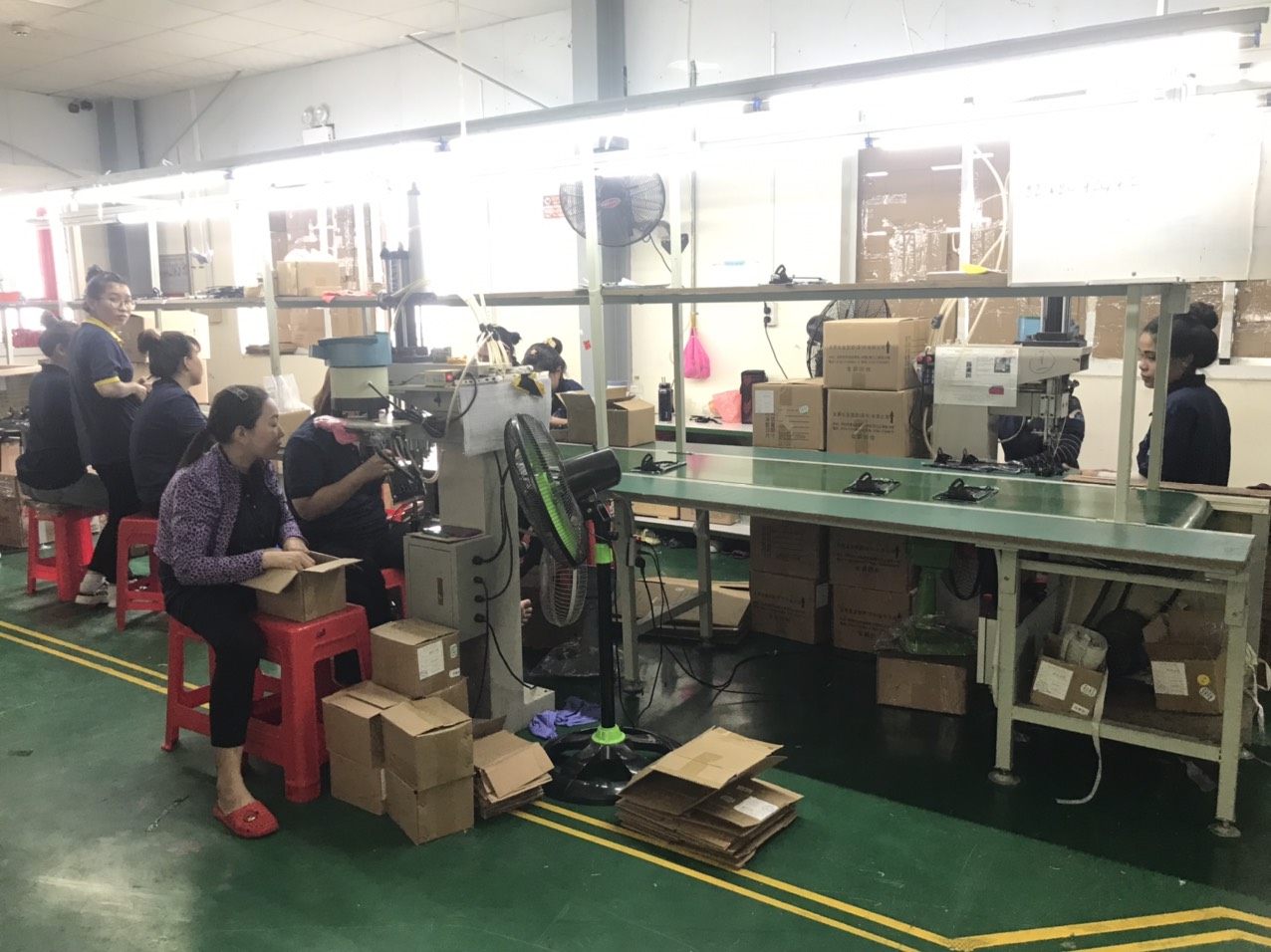
Price sheets look identical between a careful supplier and a careless one. The difference appears three months later, when your parts arrive either bright and clean or spotted orange. So you need to evaluate rust prevention as a specification, the same way you evaluate tolerances. When we qualify a stamping supplier for U.S. clients, anti-corrosion practice is a scored section of the audit, sitting right next to dimensional capability.
Supplier Comparison Scorecard
| Capability | Weak Supplier | Strong Supplier |
|---|---|---|
| Packaging spec | Plain paper, loose cartons | VCI paper or bags, desiccants, sealed liners |
| Post-stamping cleaning | Ad hoc wiping | Defined wash, rinse, and dry cycle |
| Rust protection | Sometimes oiled | Specified inhibitor with coverage check |
| Storage | Open warehouse, no monitoring | Humidity monitored, first-in-first-out flow |
| QC records | Verbal confirmation | Final inspection reports with photos |
| Process documentation | None | PPAP 7 or equivalent control plans |
| Response to claims | Blames shipping | Structured root-cause and corrective action |
How to Verify Before You Commit
Do not rely on the checklist answers alone. Ask for a video walkthrough of the packing station. Request photos of a recent export shipment before sealing. Order a small trial lot and open one carton immediately on arrival to check for moisture, oil coverage, and packaging condition. If you cannot visit Asia yourself, use a sourcing partner with local staff to audit on your behalf; our Vietnam team does exactly this for clients who cannot fly out for every qualification. A one-day audit costs far less than one rejected container.
Also weigh climate. A supplier in a humid coastal region needs stronger controls than one in a dry inland area. Good suppliers know this and compensate. Weak ones hope for the best.
Conclusion
Surface rust on stamped parts is fixable, but ignoring the root cause guarantees a repeat. Inspect severity, treat what is treatable, re-protect immediately, and hold suppliers to documented prevention.
Rust that keeps returning is a supplier problem, not a weather problem. I have watched buyers absorb claim after claim because switching suppliers felt harder than cleaning parts. It only gets more expensive. The fix is a three-step workflow: remove contamination, eliminate the rust, and rebuild protection—then lock that discipline into your supplier's process with audits, packaging specs, and inspection records. If you want help auditing or qualifying stamping suppliers in Asia, our team handles that groundwork every day, so your next container opens clean.
Frequently Asked Questions
What Causes My Stamped Parts to Rust After Shipping From My Supplier?
A container from Ho Chi Minh City to Long Beach spends weeks crossing the Pacific. Our team learned early that this journey is where most rust problems on stamped parts are born.
How Can I Tell If Surface Rust Will Affect My Parts' Performance and Fit?
A purchasing manager once emailed me photos of rusted zigzag brackets and asked one blunt question: scrap or ship? Our answer always starts with a severity check, not a guess.
What Should I Ask My Supplier to Fix Recurring Rust Issues on Stamped Parts?
Recurring rust is a process failure, not bad luck. When one of our audited stamping shops had repeat rust claims, we traced it to inconsistent lubricant cleaning, not the packaging everyone blamed first.
Footnotes
1. Background on container shipping conditions causing condensation damage during transit. ↩︎
2. Background on the stamping manufacturing process central to the article’s topic. ↩︎
3. Background on galvanized steel referenced regarding bare steel at cut edges. ↩︎
4. Explains the chemical process referenced for removing embedded iron from stainless steel. ↩︎
5. Explains humidity’s role in corrosion control, supporting the supplier question about monitoring. ↩︎
6. Defines the structured corrective-action methodology mentioned for supplier root-cause analysis. ↩︎
7. ISO reference for production part approval process documentation standards mentioned for supplier qualification. ↩︎