
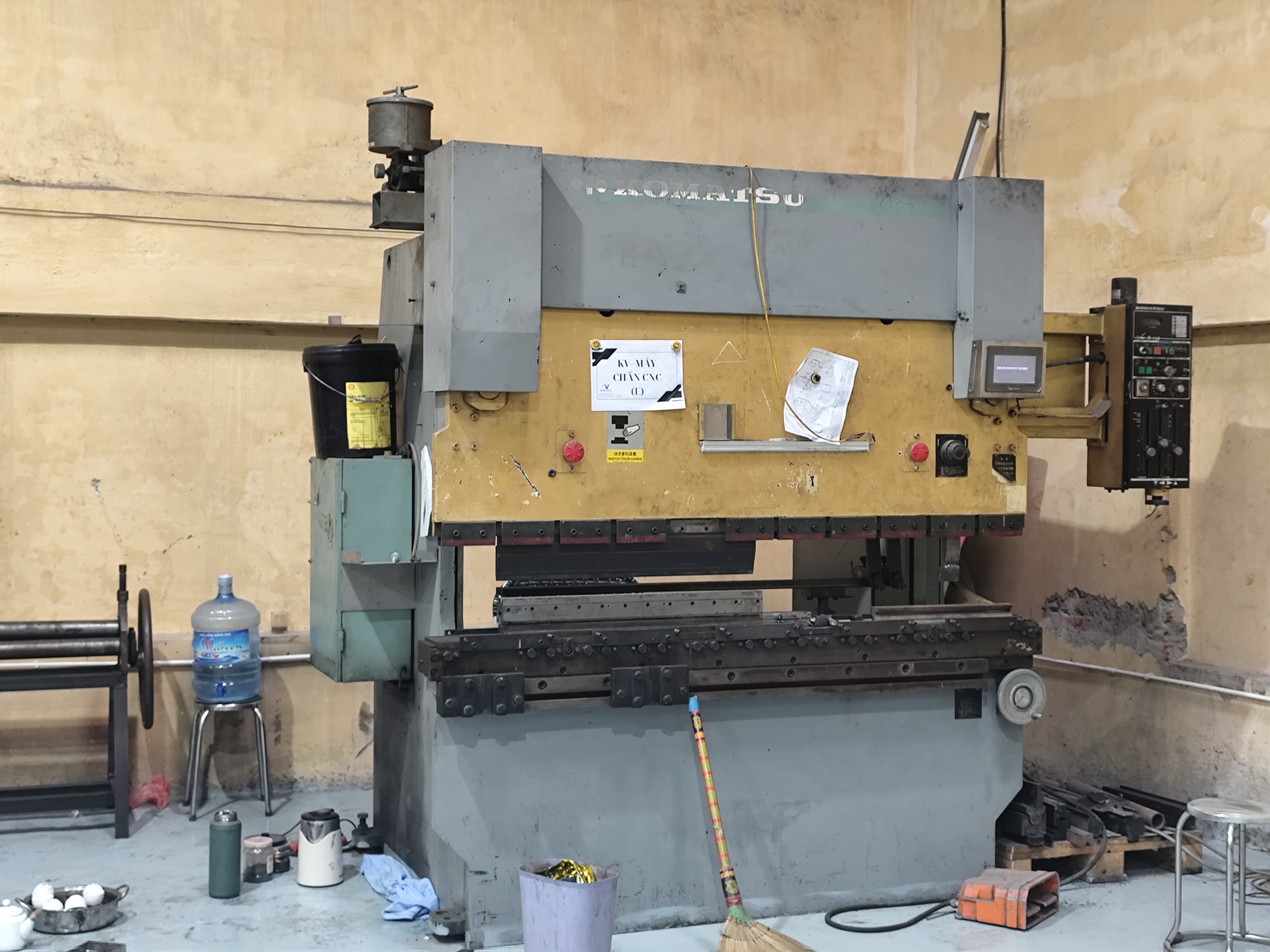
Every week, our team reviews sheet metal fabrication inquiries 1 from U.S. purchasing managers — and the ones missing key details always end up delayed, requoted, or worse, built wrong.
A sheet metal fabrication inquiry must include finalized technical drawings and CAD files, exact material specifications, tolerances, surface finish requirements, quantity requirements, lead time expectations, quality standards, and packaging requirements to receive an accurate, competitive quote that avoids costly revisions.
The difference between a smooth project and a frustrating one often comes down to the first email finalized technical drawings 2. Below, I walk through the four areas that matter most when you send an RFQ to a fabricator or supply chain partner.
Which technical drawings and 3D files must I provide to avoid manufacturing errors?
A lesson we learned early on at DEWIN: when a buyer sends a PDF sketch without dimensions and expects a quote by Friday, the entire project timeline is already at risk.
You must provide finalized 2D drawings with all dimensions, tolerances, and notes, plus 3D CAD files in STEP, IGES, DXF, or DWG format — this combination lets fabricators verify geometry, plan nesting, and flag design for manufacturability issues before production begins.
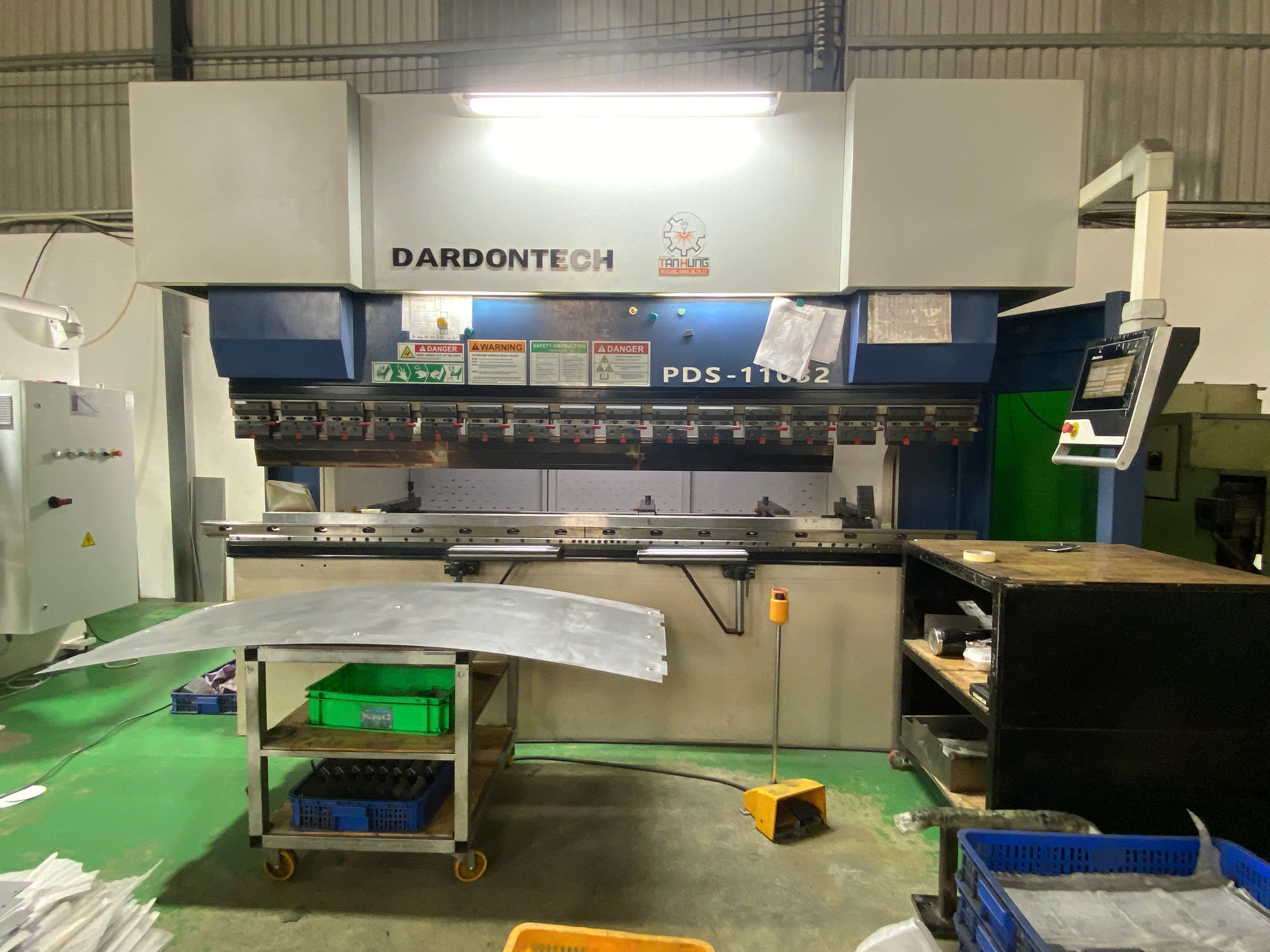
Why Both 2D and 3D Files Matter
A 3D model alone does not tell the full story. It shows shape and geometry, but it does not communicate tolerances, weld callouts, or thread specifications. A 2D drawing alone lacks the spatial context a CNC programmer needs to set up the machine. You need both.
When we manage projects for our U.S. clients sourcing from Vietnam or other Asian suppliers, we always request the complete drawing package before forwarding anything to the factory floor. If the 2D drawing says one thing and the 3D model shows another, we catch it during our engineering review — not after the parts are cut.
What Your Drawings Must Include
Here is a checklist of the items your technical drawings should contain:
| Drawing Element | Why It Matters | Common Mistake |
|---|---|---|
| General tolerances (e.g., ±0.010″) | Sets baseline expectations for all dimensions | Omitting tolerance block entirely |
| Critical tight tolerances | Identifies features needing extra precision | Assuming fabricator will guess which features are critical |
| Geometric dimensioning and tolerancing 3 (GD&T) | Defines flatness, perpendicularity, position | Using outdated GD&T symbols or mixing standards |
| Hole locations and diameters | Required for laser cutting and punching | Missing hole callouts on one view |
| Bend lines and bend radii | Controls forming accuracy | Not specifying inside vs. outside radius |
| Welding requirements and weld symbols | Tells the welder joint type, size, and method | Generic "weld all around" note with no detail |
| Thread specifications | Needed for tapped holes or inserts | Calling out threads in only one unit system |
| Assembly views | Shows how parts mate together | Sending only individual part drawings for a multi-part assembly |
File Format Recommendations
Our engineering team in China processes hundreds of files each month. STEP files 4 are the universal standard — nearly every CAM software reads them. If your design includes sheet metal features modeled in SolidWorks, sending the native file is even better, because bend information transfers cleanly.
Avoid sending only PDF files. A PDF is fine as a reference, but it cannot be imported into nesting software or used to generate a flat pattern. If your fabricator has to manually recreate your model, you are paying for that time — and introducing the risk of errors.
One more point: version control. Always label your files with a revision number and date. We have seen projects delayed because the factory quoted Revision A, but the buyer expected Revision C pricing. A simple naming convention like PartName_RevC_2024-12-01.STEP prevents confusion.
How can I clearly define my material and finishing specs to get an exact price?
During a recent project review, one of our purchasing clients in the U.S. specified "stainless steel" on their RFQ — no grade, no temper, no thickness. Three suppliers quoted three different materials, and the prices ranged by over 40%.
To get an exact price, specify the material type, grade, temper, and thickness (e.g., 304 SS, 2B finish, 16 gauge), plus the required surface finish treatment such as powder coating, anodizing, or plating — including color, gloss level, and whether the part is for interior or exterior use.
Material Specifications Drive Cost
Material is often the single largest line item in a sheet metal quote. The difference between cold-rolled steel and 316L stainless steel can double or triple the raw material cost. material type, grade, temper 5 And within a single alloy family, gauge thickness changes the price per sheet, the forming force required, and sometimes the tooling needed.
Here is a comparison of common sheet metal materials and their relative cost impact:
| Material | Typical Grades | Relative Cost | Common Applications |
|---|---|---|---|
| Cold-Rolled Steel (CRS) | 1008, 1010, 1018 | Low | Enclosures, brackets, internal structural parts |
| Hot-Rolled Steel (HRS) | A36, A572 | Low–Medium | Heavy brackets, frames, non-cosmetic parts |
| Stainless Steel | 304, 316, 430 | Medium–High | Food equipment, outdoor fixtures, medical devices |
| Aluminum | 5052, 6061, 6063 | Medium | Lightweight housings, heat sinks, aerospace parts |
| Galvanized Steel | G90, G60 | Low–Medium | Outdoor enclosures, HVAC components |
For tubing or piping, include outside diameter, wall thickness, and length. If your application requires material certifications — such as a Certificate of Conformance or mill test reports — state that upfront. It affects which suppliers can bid and sometimes adds a small traceability cost.
Surface Finish Requirements
Surface finish is not just cosmetic. It determines corrosion resistance, wear life, and regulatory compliance. When we coordinate finishing for our clients, we always ask three questions:
- What environment will the part operate in? Indoor parts may only need a basic powder coat. Outdoor or marine parts often require hot-dip galvanizing or marine-grade anodizing. powder coating, anodizing 6
- What color and gloss level do you need? RAL color codes eliminate ambiguity. "Matte black" means different things to different suppliers unless you call out RAL 9005 with a gloss range.
- Are there industry-specific standards? Some applications demand RoHS-compliant coatings or mil-spec finishes.
How Finishing Affects Your Quote
Many buyers underestimate the cost of finishing. A simple deburring and cleaning step is cheap. But a multi-stage process — sandblasting, priming, powder coating, and silk-screening — can add 20–30% to the part cost. By defining your finish requirements clearly, you let the fabricator quote accurately instead of padding the price for unknowns.
Also consider this: if your design allows flexibility, mention it. I have seen cases where switching from wet paint to powder coat saved a client 15% on finishing costs with better durability. A good fabricator or supply chain partner will suggest alternatives — but only if they know your application.
What volume and lead time details should I share to optimize my supply chain costs?
One trade-off we weigh constantly with our clients: do you order 50 units now at a higher unit price, or commit to 500 over the year and lock in volume pricing? supply chain costs 7 The answer depends on information most buyers forget to include in their RFQ.
Share your initial order quantity, expected annual volume, prototype versus production status, and your exact delivery deadline — including any phased delivery needs — so the fabricator can optimize setup costs, reserve machine time, and offer step-quantity pricing that reduces your per-unit cost.
Why Quantity Changes Everything
Setup cost is the hidden driver in sheet metal pricing. Programming the laser cutter, setting up the press brake, building fixtures — these costs are fixed whether you make 10 parts or 10,000. On a one-time order of 10 units, that setup cost might add $50 per part. On 1,000 units, it drops to $0.50 per part.
This is why I always encourage buyers to request step quotes. Ask your supplier for pricing at multiple quantities so you can see where the cost curve flattens.
| Quantity | Estimated Setup Cost per Unit | Per-Unit Material + Processing | Total Per-Unit Cost |
|---|---|---|---|
| 10 (prototype) | $45.00 | $12.00 | $57.00 |
| 100 (pilot run) | $4.50 | $11.00 | $15.50 |
| 500 (production) | $0.90 | $10.00 | $10.90 |
| 1,000+ (volume) | $0.45 | $9.50 | $9.95 |
These numbers are illustrative, but the pattern is real. Setup amortization is the reason your prototype costs five times more per unit than production.
Communicating Lead Time Effectively
Lead time is not just "how fast can you make it." It includes material procurement, production scheduling, finishing, inspection, and shipping. When you tell a fabricator "I need these ASAP," you are not giving them actionable information.
Instead, provide:
- The date parts must arrive at your facility (not the date you want them shipped)
- Whether the timeline is firm or flexible — if you have a two-week buffer, say so. The fabricator may be able to schedule your job more efficiently and pass savings along.
- Phased delivery requirements — for example, "ship 200 units by March 1, remaining 300 by April 15." This helps with cash flow and warehouse planning on both sides.
Recurring Orders and Blanket Agreements
If you know you will need the same part quarterly, tell the supplier. At DEWIN, when we set up recurring orders for our U.S. clients, the factory can keep tooling staged, pre-purchase material at bulk rates, and reduce lead time from weeks to days on repeat runs. Some suppliers also offer blanket order pricing — a commitment to annual volume in exchange for a locked-in unit price.
Rapid prototyping services now deliver parts in days rather than weeks, but these carry a premium. For production quantities, plan ahead and give your supply chain partner enough lead time to optimize. Understanding how long custom sheet metal fabrication takes from design to delivery can help you set realistic expectations.
How do I communicate my quality standards and PPAP requirements in the initial inquiry?
Last quarter, a client's first shipment from a new supplier arrived with parts that looked fine but failed dimensional inspection on three critical features. The root cause? The buyer never shared their inspection criteria or PPAP expectations in the original RFQ.
In your initial inquiry, specify your required quality standards (e.g., ISO 9001, AS9100), inspection methods, acceptance criteria, any PPAP submission level, First Article Inspection (FAI) requirements, and required certifications — this ensures the fabricator builds quality planning into the quote from day one.
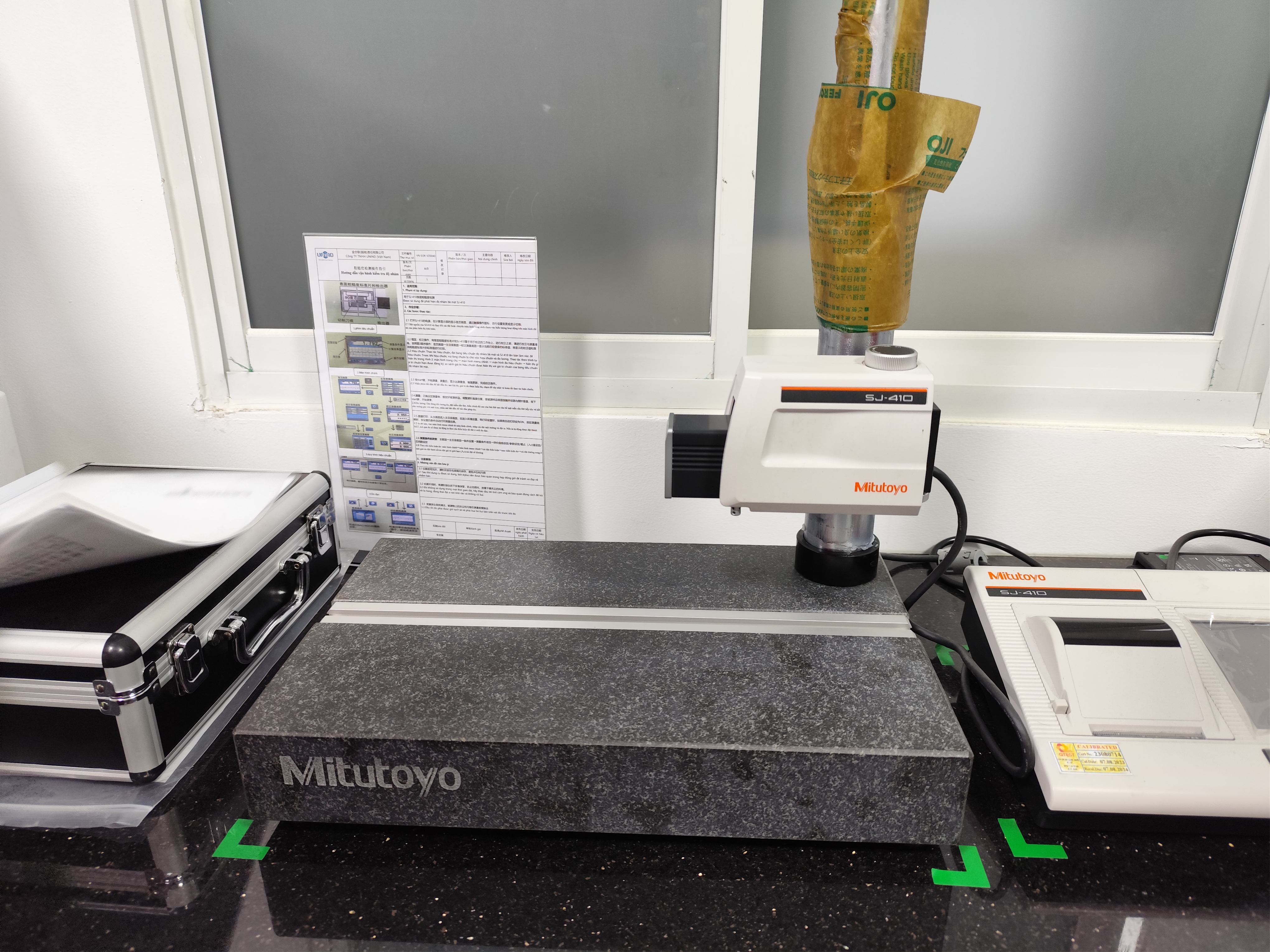
Why Quality Specs Belong in the RFQ
Quality is not free. When a fabricator sees that you require a full PPAP Level 3 submission — including process flow diagrams, control plans, measurement system analysis, and dimensional results — they factor that engineering and documentation time into their quote. If you spring it on them after the PO is issued, expect delays, change orders, or both.
Our team manages PPAP documentation as part of our supply chain services. We know that a typical PPAP package for a sheet metal bracket might take 2–3 weeks of additional engineering time. That is time and cost that should be visible from the start.
What to Include in Your Quality Section
Here is what I recommend covering in the quality portion of your RFQ:
- Applicable quality management standard — ISO 9001 8 is baseline for most industrial parts. Aerospace requires AS9100. Defense may need ITAR compliance.
- First Article Inspection (FAI) — State whether you need a formal FAI report per AS9102 or a simpler dimensional report.
- PPAP level — If you follow AIAG PPAP guidelines, specify the submission level (1 through 5). PPAP submission level 9 Level 3 is the most common for new parts.
- In-process inspection requirements — Do you want SPC data? In-process checks at specific operations?
- Final inspection criteria — Define sampling plans (e.g., AQL 1.0 for critical, AQL 2.5 for major) and what instruments should be used.
- Non-destructive testing (NDT) — If welds require X-ray, dye penetrant, or ultrasonic testing, specify it.
- Material certifications — Certificate of Conformance, mill test reports, or RoHS compliance documentation.
- Packaging requirements — This is often overlooked in the quality section, but how parts are packaged directly affects whether they arrive undamaged. Specify if you need anti-corrosion VCI bags, foam inserts, custom crating, or export-grade pallets.
Design for Manufacturability and Quality
One of the most effective ways to get quality right the first time is to request a design for manufacturability (DFM) review as part of the quoting process. A good fabricator will flag features that are difficult to hold in tolerance, bends that risk cracking, or hole placements too close to a bend line.
At DEWIN, we provide DFM feedback during the quoting stage at no charge. We have found that small design adjustments — widening a bend relief, adjusting a hole position by 2mm, simplifying a bracket geometry — can reduce reject rates dramatically and cut costs by 10–20% by eliminating secondary operations.
If your part must mate with other components, provide the mating part models or at least the interface dimensions. This lets the fabricator verify fit before cutting metal. It is far cheaper to adjust a flat pattern on screen than to rework a stamped part on the shop floor.
Finally, if you have a target budget range, sharing it can help. I am not suggesting you show your ceiling price. But indicating whether you are targeting $5 or $50 per unit helps the fabricator recommend appropriate processes, materials, and tolerance strategies that avoid fabrication disputes and align with your cost goals.
Conclusion
A complete sheet metal fabrication inquiry — covering technical drawings, material specifications, volume strategy, and quality standards — is the single best way to get an accurate quote and avoid costly rework down the line.
Frequently Asked Questions
Which technical drawings and 3D files must I provide to avoid manufacturing errors?
A lesson we learned early on at DEWIN: when a buyer sends a PDF sketch without dimensions and expects a quote by Friday, the entire project timeline is already at risk.
How can I clearly define my material and finishing specs to get an exact price?
During a recent project review, one of our purchasing clients in the U.S. specified "stainless steel" on their RFQ — no grade, no temper, no thickness. Three suppliers quoted three different materials, and the prices ranged by over 40%.
What volume and lead time details should I share to optimize my supply chain costs?
One trade-off we weigh constantly with our clients: do you order 50 units now at a higher unit price, or commit to 500 over the year and lock in volume pricing? supply chain costs 7 The answer depends on information most buyers forget to include in their RFQ.
Footnotes
1. Provides a comprehensive guide on writing effective RFQs for manufacturing, relevant to inquiries. ↩︎
2. Replaced HTTP 403 link with an authoritative Wikipedia overview of technical drawing principles. ↩︎
3. References the authoritative ASME standard for GD&T, crucial for precise engineering communication. ↩︎
4. Replaced HTTP 403 link with an authoritative Wikipedia page explaining the ISO 10303 (STEP) standard. ↩︎
5. Offers a foundational understanding of alloys, which encompasses material type, grade, and temper. ↩︎
6. Replaced HTTP 403 link with an authoritative Wikipedia overview of powder coating, one of the specified surface finishes. ↩︎
7. Discusses key drivers of supply chain costs, relevant to optimizing expenses. ↩︎
8. Links to the official ISO page for ISO 9001, a global quality management standard. ↩︎
9. Replaced HTTP 400 link with a comprehensive guide explaining PPAP submission levels. ↩︎