Replacement stamping parts look simple, yet our sourcing team sees [buyers get burned constantly](https://dewintech.com/blog/what-most-common-pitfalls-beginners-buying-stamping-parts/) ISO 9001 certificates 1. A bracket arrives, looks identical, and still refuses to fit. The hole is off by a millimeter. The gauge is wrong. Now the machine sits idle, the project stalls, and the “cheap” part costs a fortune in downtime. After years of managing stamping projects across Vietnam and the wider Asian supply base, I can tell you the fix is not luck—it is a disciplined checklist before you ever click “buy.”
Before buying replacement stamping parts, verify the exact part number, dimensions, material grade, thickness, and finish against the original. Confirm the supplier’s quality certifications, request material traceability, clarify lead times and payment terms, and never assume visual similarity guarantees compatibility or performance.
That answer sounds simple. In practice, each step hides traps. Let me walk you through them one by one, in the order a smart buyer should work.
How Can I Verify a Stamping Supplier's Quality Before Placing My Order?
Last year, our team audited a stamping shop in northern Vietnam for a U.S. client. The showroom samples were flawless. The production line told a very different story. That gap is exactly what you need to uncover before ordering.
Verify a stamping supplier's quality by checking ISO 9001 or IATF 16949 certification, requesting material certificates and sample parts, reviewing dimensional inspection reports, asking about their in-process quality controls, and confirming they can provide first-article inspection before full production begins.

Certificates are the starting point, not the finish line. In our supplier audits, we have seen shops with valid ISO 9001 certificates 2 that still ship non-conforming brackets. The paper matters, but the daily process behind it matters more. So dig deeper.
Ask for Evidence, Not Promises
A reliable stamping supplier will happily show you proof. A weak one will stall or send vague answers. Here is what our audit team asks for, and what each item tells you:
| What to Request | Why It Matters |
|---|---|
| ISO 9001 / IATF 16949 certificate | Confirms a documented quality system exists |
| Mill or material certificates | Proves the steel grade and thickness match spec |
| First-article inspection (FAI) report | Shows the first part off the die meets your drawing |
| Sample parts before bulk production | Lets you test real fit before committing money |
| Dimensional inspection report with tolerances | Confirms holes, bends, and flanges were actually measured |
| Photos or video of the press line | Reveals real equipment condition and housekeeping |
Run a Simple Sample Test Yourself
You do not need a lab. Take the sample and the old part. Measure hole spacing, thickness, and bend angles with calipers. Check the plating for bare spots or flaking. Test-fit the part in the actual assembly. If a supplier refuses to send a sample for a replacement part, treat that as your answer.
Response Quality Is a Quality Signal
Pay attention to how the supplier handles your technical questions. When we screen new stamping partners, slow or evasive answers about tolerances almost always predict problems later. A shop that reads your drawing carefully before quoting is a shop that will read it carefully before pressing metal.
What Specifications Should I Confirm Before Buying Replacement Stamping Parts?
A buyer once sent us a photo of a Z-shaped mounting clip and asked for "the same thing." We asked for the old part instead. Good thing we did—the photo hid a critical difference in material hardness that a picture could never show.
Confirm the exact part number, material grade, sheet thickness, hole diameters and spacing, bend angles, overall dimensions with tolerances, surface finish or coating, and hardness requirements. Also verify load conditions, since structural replacement stamping parts must match strength, not just shape.
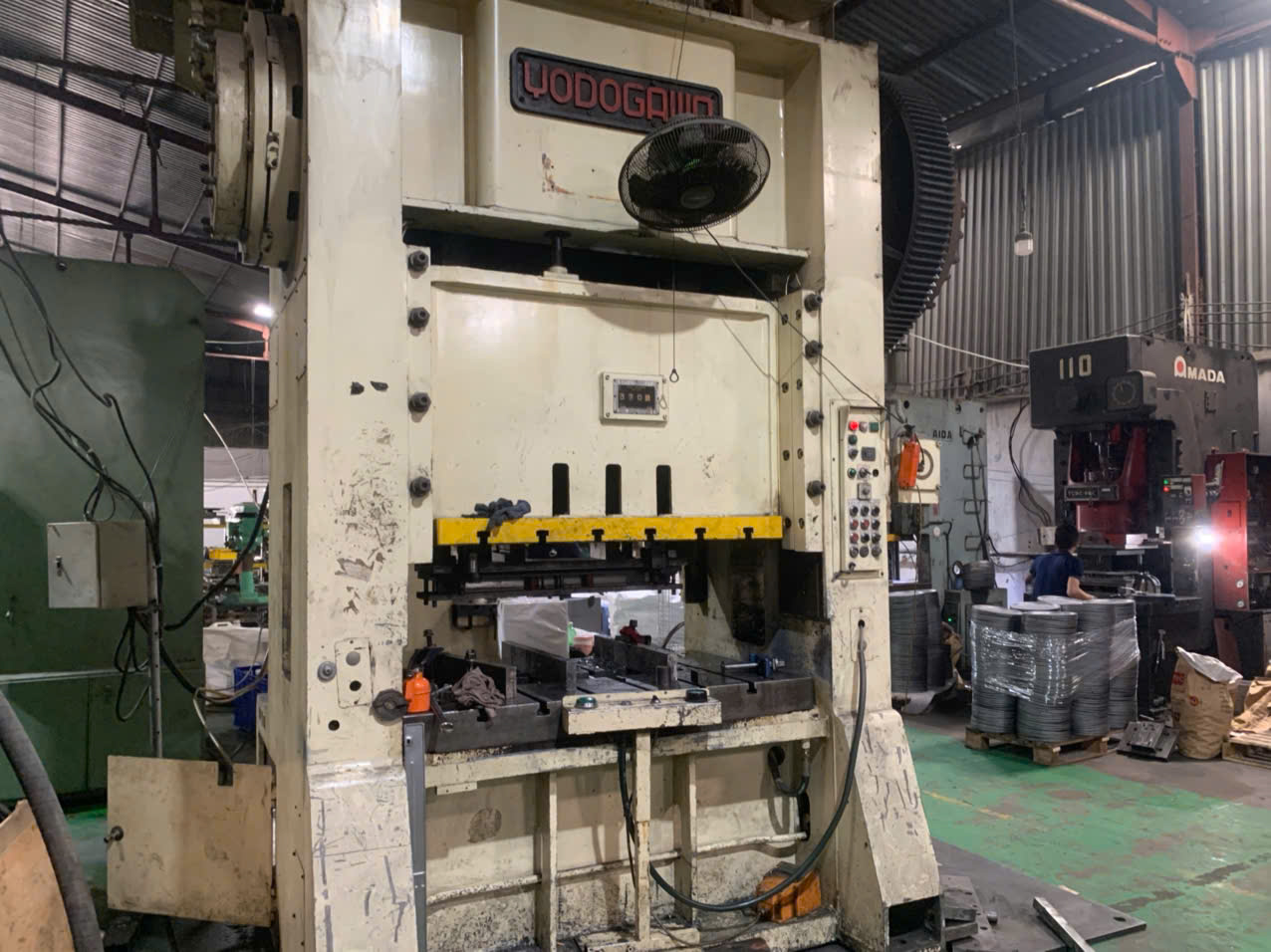
Metal stamping turns flat sheet into finished parts through blanking, piercing, bending, drawing, forming, and trimming. Each operation adds a dimension that can go wrong. That is why "close enough" fails so often with stamped parts. A bracket with mounting holes off by even half a millimeter may never line up with your existing fastener pattern.
The Core Specification Checklist
Work through this table with your old part, the service manual, or the OEM drawing before you request a quote:
| Specification | What to Check | Common Failure If Ignored |
|---|---|---|
| Part number | Full number, revision, and version suffix | Wrong version arrives; holes moved between revisions |
| Material grade | Steel, stainless, aluminum, or specific alloy | Part rusts, cracks, or bends under load |
| Thickness (gauge) | Measure with calipers on a flat section | Part flexes or does not seat in its slot |
| Dimensions & tolerances | Hole spacing, bend angles, flange heights | Misaligned mounting; forced or impossible assembly |
| Finish / coating | Zinc-plated, galvanized, powder-coated, bare | Premature corrosion in outdoor or damp use |
| Hardness / temper | Spring clips need spring steel, not mild steel | Clip loses grip after a few cycles |
| Load environment | Structural, vibrating, heat-exposed, cosmetic | Fatigue failure in service |
Do Not Forget Grain Direction
Here is a detail most individual buyers never hear about. Sheet metal has a grain direction 3 from the rolling process. Bends made parallel to the grain crack more easily than bends made across it. For load-bearing brackets and spring clips, ask whether the supplier controls stamping orientation. In our experience developing custom parts, this single question separates serious stamping shops from generic metal benders.
OEM, Aftermarket, or Custom?
Choose OEM when the part is safety-critical or precision-critical. Choose quality aftermarket for low-risk, cosmetic, or common hardware. Choose custom stamping only when the original part is obsolete or no standard replacement exists—it costs more and takes longer because new tooling is required.
How Do I Avoid Delivery Delays When Sourcing Stamping Parts From Asia?
The single biggest complaint we hear from U.S. purchasing managers is not price. It is delay. Our Vietnam office exists partly because clients grew tired of promised dates that quietly slipped by weeks.
Avoid delays by confirming tooling status and realistic lead times in writing, building buffer time for sampling and shipping, requiring production milestone updates, choosing suppliers with proven on-time records, and clarifying who manages customs and door-to-door logistics before ordering.

Delays with stamped parts usually come from three sources: tooling, quality rework, and logistics. Understand each one and you can plan around most of them.
Tooling Is the Hidden Clock
Standard stamping runs on existing dies. Custom or obsolete replacement parts often need new tooling, and die fabrication 4 takes time—typically several weeks before the first sample even exists. Then come sample runs, testing, and adjustments. Ask upfront: does tooling already exist for my part? If not, get the tooling timeline in writing, separate from the production timeline.
A Realistic Timeline Framework
Here is how we coach buyers to plan a stamping order from Asia:
| Stage | Typical Time Range | Buyer Action |
|---|---|---|
| Quoting and drawing review | 3–7 days | Send complete specs the first time |
| Tooling (custom parts only) | 3–8 weeks | Confirm die status before deposit |
| Sample and first-article approval | 1–2 weeks | Approve or reject quickly with clear feedback |
| Mass production | 2–4 weeks | Require weekly progress photos |
| Final inspection | 2–3 days | Insist on pre-shipment inspection reports |
| Ocean freight to the U.S. | 3–5 weeks | Add buffer for port congestion |
Rework Is the Delay Nobody Budgets For
The most painful delays happen when parts fail inspection and must be re-run. That is why "right first time" matters so much. Getting the drawing review, sample approval, and process controls correct upfront costs a few extra days. Skipping them can cost two months. In our project management work, we hold suppliers to milestone check-ins—raw material arrival, first-off approval, mid-production check, final inspection—so a slipping schedule surfaces early, while there is still time to react.
Also, decide logistics ownership 5 before you order. A part sitting finished at a factory helps nobody if customs paperwork stalls it at the port.
What Payment and Communication Terms Should I Expect From a Reliable Stamping Parts Supplier?
One of our long-term U.S. clients told me his previous supplier only wrote back when an invoice was due. Silence during production, then a surprise at shipment. That pattern is a warning sign every buyer should learn to spot.
Expect a reliable supplier to offer clear written quotes, reasonable deposits of around 30 percent for custom tooling, milestone-based payments, and possibly credit terms for repeat buyers. Communication should include drawing confirmations, proactive production updates, and prompt English-language responses within one business day.

Payment structure tells you a lot about a supplier's confidence and financial health. So does communication rhythm. Let us break both down.
What Fair Payment Terms Look Like
For a first order of replacement stamping parts, a typical structure is a deposit with the order and the balance before shipment or against shipping documents. For custom parts, tooling costs are usually paid upfront or split. Be cautious at both extremes. A supplier demanding 100 percent upfront shifts all risk onto you. A supplier accepting zero deposit on custom tooling may be desperate for cash flow, which brings its own risks.
For repeat business, mature suppliers offer more flexibility. In our own trading operations, we extend open account terms 6 to established corporate clients precisely because cash flow pressure is a real pain point for importers. As an individual or small buyer, you may not get 60–90 day terms immediately, but a supplier's willingness to discuss terms as trust grows is a good sign.
Communication Standards Worth Insisting On
- Written confirmation of every drawing, spec, and revision before production. Verbal agreement means nothing across time zones.
- A named contact person who answers technical questions, not just sales questions.
- Proactive updates at each production milestone, with photos.
- Immediate notification of any problem—material shortage, dimensional issue, schedule risk—rather than silence until the deadline passes.
- Clear return, replacement, and warranty terms in writing, including who pays return freight if parts arrive non-conforming.
Documentation Protects You Later
Insist on traceability: material certs 7, batch numbers, and inspection records tied to your order. If a part fails in service six months later, that paper trail is the difference between a resolved warranty claim and a shrugged-off email. Suppliers who resist basic documentation are telling you how a future dispute will go.
Conclusion
Replacement stamping parts punish assumptions. A wrong gauge, a shifted hole, a skipped inspection—each one turns a small purchase into a stalled project. The fix is discipline: verify the supplier, confirm every specification, plan realistic timelines, and demand clear terms in writing. In my years managing custom-part projects across Asia, the buyers who treat stamped parts as precision components—not generic hardware—get it right the first time, every time.
Frequently Asked Questions
OEM, Aftermarket, or Custom?
Choose OEM when the part is safety-critical or precision-critical. Choose quality aftermarket for low-risk, cosmetic, or common hardware. Choose custom stamping only when the original part is obsolete or no standard replacement exists—it costs more and takes longer because new tooling is required.
How Can I Verify a Stamping Supplier's Quality Before Placing My Order?
Last year, our team audited a stamping shop in northern Vietnam for a U.S. client. The showroom samples were flawless. The production line told a very different story. That gap is exactly what you need to uncover before ordering.
What Specifications Should I Confirm Before Buying Replacement Stamping Parts?
A buyer once sent us a photo of a Z-shaped mounting clip and asked for "the same thing." We asked for the old part instead. Good thing we did—the photo hid a critical difference in material hardness that a picture could never show.
Footnotes
1. Official ISO source clarifying what ISO 9001 certification actually verifies for suppliers. ↩︎
2. Official ISO standard defining the quality management requirements suppliers should certify against. ↩︎
3. Background on sheet metal rolling process that creates grain direction affecting bend strength. ↩︎
4. Explains metal stamping tooling and die-making processes referenced in lead time discussion. ↩︎