
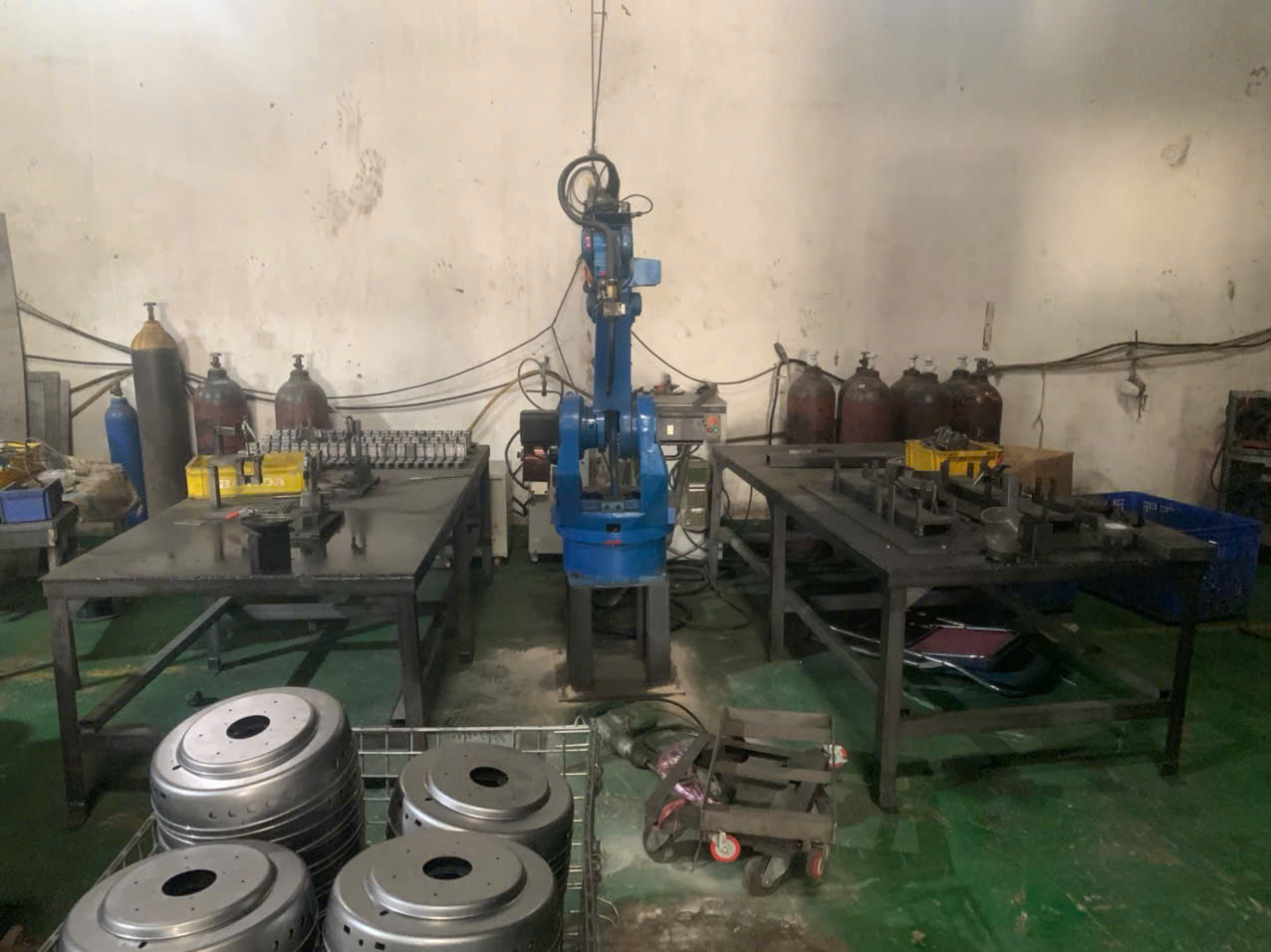
International welding standards for sheet metal fabrication came into sharp focus for us when a U.S. client rejected an entire shipment over undocumented weld procedures — a painful, preventable loss.
International welding standards that apply to sheet metal fabrication include AWS D9.1 for nonstructural thin gauge metal, AWS D1.3 for structural sheet steel, ISO 5817 for weld quality levels, and ISO 3834 for comprehensive fusion welding quality requirements. Selecting the correct standard depends on material, thickness, and application.
Below, we break down each standard, explain how to verify supplier compliance, list the certifications you should demand, and show how proper adherence prevents costly reworks and delays.
Which ISO or AWS welding standards should I specify for my custom sheet metal project?
One lesson we learned early while co-developing custom mounting brackets with a U.S. engineering firm: specifying "good welds" on a drawing means nothing without referencing a recognized code.
For nonstructural sheet metal, specify AWS D9.1; for structural sheet steel under 4.8 mm, specify AWS D1.3. Globally, ISO 5817 defines weld quality levels, and ISO 3834 governs overall fusion welding quality management. Your choice depends on whether the part is structural, its thickness, and the target market.

AWS D9.1 — The Sheet Metal Welding Code
AWS D9.1 1 is the cornerstone standard for nonstructural sheet metal fabrication. It covers arc welding and braze welding of metals in sheet form — typically under 6 mm (0.25 inch). This code addresses the unique problems of thin gauge metal: burn-through, distortion control, and joint design for thin walls.
On our production floor in Vietnam, we reference AWS D9.1 whenever we fabricate precision enclosures, HVAC ductwork, or mounting brackets that do not carry structural loads. The code spells out welder qualification requirements, workmanship standards, and inspection criteria that our QC team uses as a daily checklist.
AWS D1.3 — Structural Sheet Steel
If your part carries a load, AWS D9.1 does not apply. AWS D1.3 2 is the structural welding code for sheet steel equal to or less than 3/16 inch (4.8 mm). It covers arc spot welds, arc seam welds, and arc plug welds — weld types unique to structural sheet steel assemblies such as containers, frames, and cold-formed members.
ISO 5817 — Global Quality Levels
ISO 5817 3 classifies imperfections in fusion-welded joints across steel, nickel, titanium, and their alloys. It defines three quality levels — B (stringent), C (intermediate), and D (moderate). When we export parts to European clients, they almost always require ISO 5817 Level B or C on the drawing. This standard works hand-in-hand with ISO 6520-1, which classifies the geometric imperfections themselves.
ISO 3834 — Comprehensive Quality Requirements
ISO 3834 4 is not a welding procedure standard. It is a quality management system for fusion welding 5. It defines what a fabricator must have in place: qualified personnel, approved welding procedure specification 6s, proper filler metals, calibrated equipment, and traceable records. Think of it as ISO 9001 7 tailored specifically for welding operations.
Decision Matrix: Which Standard Do You Need?
| Factor | AWS D9.1 | AWS D1.3 | ISO 5817 | ISO 3834 |
|---|---|---|---|---|
| Application | Nonstructural sheet metal | Structural sheet steel | Weld quality acceptance | Welding quality system |
| Thickness | < 6 mm (typical) | ≤ 4.8 mm | ≥ 0.5 mm | Any |
| Region Focus | North America | North America | Global (EU emphasis) | Global (EU emphasis) |
| Covers Welder Qualification? | Yes | Yes | No | Yes (references ISO 9606 8) |
| Covers Imperfection Limits? | Workmanship-based | Workmanship-based | Yes — 3 quality levels | No (references ISO 5817) |
Material-Specific Standards
Do not overlook material-specific codes. Structural aluminum welding falls under AWS D1.2. Pressure vessel components require ASME Section IX 9 for procedure and welder qualification, which supersedes AWS codes in that domain. When a client sends us a drawing for an aluminum bracket destined for a pressurized system, we must layer ASME Section IX on top of any sheet metal code.
For European projects, the EN 1011 series provides additional recommendations for arc welding ferritic steels (Part 2) and stainless steels (Part 3). EN 1418 covers approval testing of welding operators for mechanized and automatic welding, aligning with ISO 14732.
The bottom line: always confirm with your client whether the part is structural or nonstructural, identify the target market (North America vs. EU), and check for any pressure or safety-critical requirements. This three-step check prevents misapplied standards.
How do I verify if an offshore supplier meets international welding quality requirements?
A buyer we work with in the Midwest once told us he had visited three factories in Asia, and every single one claimed ISO 3834 compliance — yet none could produce a single qualified welding procedure specification when asked.
To verify an offshore supplier's welding quality, request their ISO 3834 certificate from an accredited body, audit their welding procedure specifications and procedure qualification records, confirm welder qualifications per ISO 9606 or AWS standards, and review non-destructive testing reports for recent production runs. On-site or third-party audits provide the most reliable evidence.

Step 1: Check the Quality Management Framework
Start with the big picture. Does the supplier hold ISO 3834 certification? This standard comes in three tiers:
| ISO 3834 Part | Level | Typical Application |
|---|---|---|
| ISO 3834-2 | Comprehensive | Safety-critical, high-responsibility welds |
| ISO 3834-3 | Standard | General-purpose fabrication |
| ISO 3834-4 | Elementary | Low-risk, simple welds |
For custom sheet metal parts with mid-to-high quality requirements — the kind we handle daily — ISO 3834-3 is the minimum. If the supplier cannot show a certificate issued by a recognized body like TÜV, Lloyd's, or Bureau Veritas, treat their claim with skepticism.
Step 2: Review Welding Procedure Specifications (WPS) and PQRs
A welding procedure specification documents exactly how a weld will be made: process (MIG welding, TIG welding, etc.), filler metals, shielding gas, amperage, voltage, travel speed, preheat temperature, and joint design. The procedure qualification record (PQR) proves the WPS was tested and the resulting weld passed mechanical and visual inspection.
Our team in China audits supplier WPS documents before any production order starts. We check that the WPS matches the material, thickness, and welding position stated on the client's drawing. A common red flag: a supplier using the same generic WPS for every job, regardless of material or thickness.
Step 3: Confirm Welder Qualifications
Individual welders must be qualified. In the AWS system, this means the welder has passed a performance test per the applicable code (D9.1, D1.3, etc.). In the ISO system, welder qualification follows ISO 9606. Each qualification has a defined range of validity — it covers specific processes, materials, thicknesses, and positions.
Ask for copies of welder qualification certificates. Check the expiration dates. Verify that the welders assigned to your job are qualified for the exact process and position your parts require.
Step 4: Demand Non-Destructive Testing Evidence
Non-destructive testing 10 (NDT) is how you verify weld quality without destroying the part. Common methods include visual inspection (VT), dye penetrant testing (PT), radiographic testing (RT), and ultrasonic testing (UT). For sheet metal, VT and PT are the most common because the thin material limits the applicability of RT and UT.
We recommend requiring the supplier to submit NDT reports with photographs for each production lot. If you cannot visit the factory yourself, hire a third-party inspection company in the supplier's country. Our team in Vietnam and China regularly performs these inspections on behalf of U.S. clients, reviewing everything from heat affected zone appearance to weld bead uniformity.
Step 5: Conduct an On-Site or Remote Audit
Nothing replaces eyes on the factory floor. Look at the welding stations, the condition of equipment, the storage of filler metals (they should be dry and organized), and how welders handle thin gauge metal. Are fixtures used for distortion control? Is there a calibration schedule for welding machines?
If travel is not feasible, a video audit with a checklist can catch major issues. We have conducted dozens of remote audits where our local engineers walk through the shop with a camera, guided by the client's quality team in real time.
What welding certifications and documentation should I demand to ensure my parts are defect-free?
During a recent project for a set of custom-fabricated industrial mounting brackets, our engineering team caught a subtle issue — the supplier had used incorrect filler metals for stainless steel, creating a risk of intergranular corrosion that would only appear months later in service.
Demand a complete documentation package: qualified welding procedure specifications (WPS) with supporting PQRs, current welder qualification certificates per AWS or ISO 9606, material test certificates for base metals and filler metals, non-destructive testing reports, and dimensional inspection records. This documentation trail is your primary defense against hidden defects.
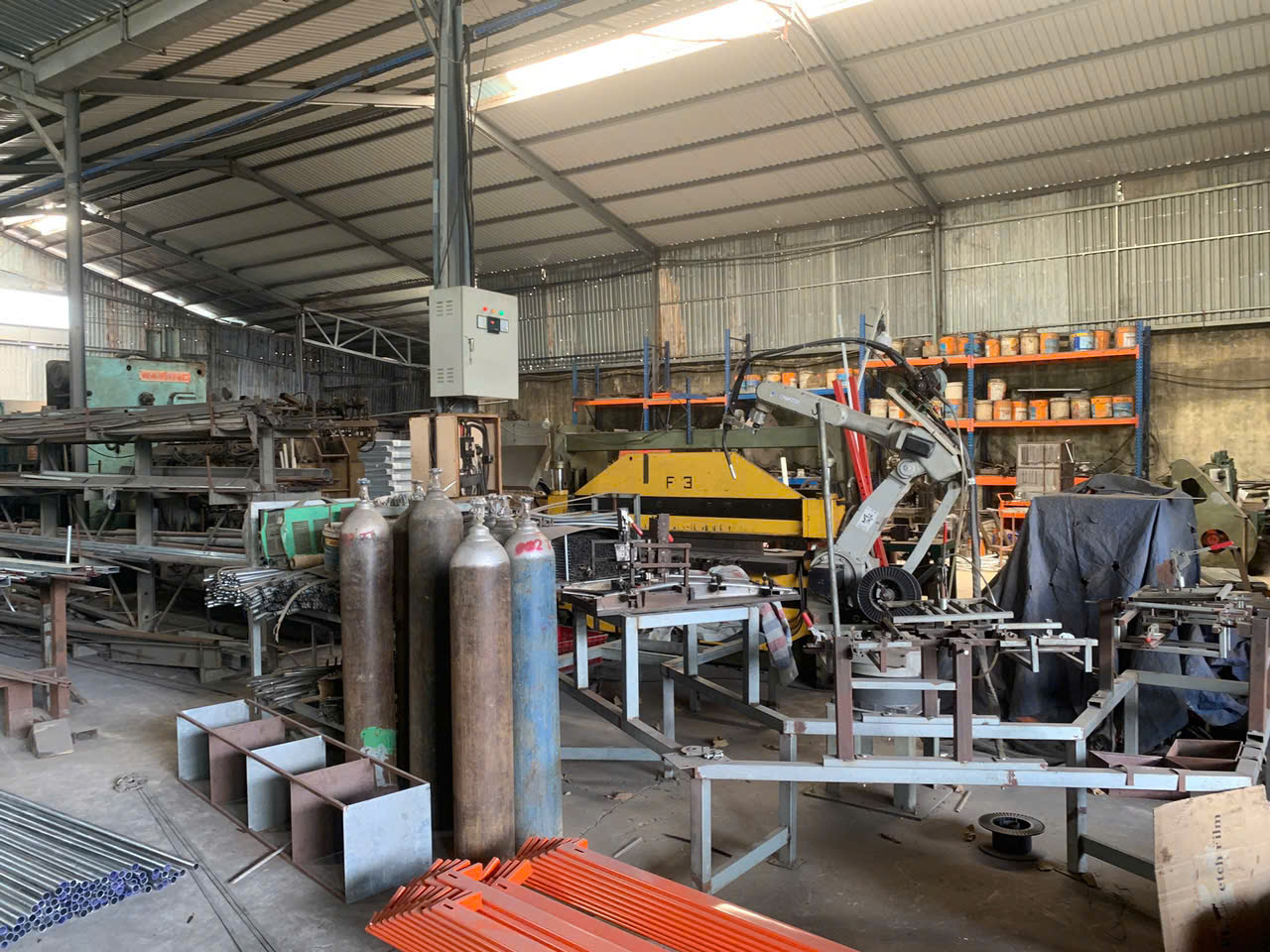
The Essential Certification Checklist
Here is a practical list we use internally and share with our U.S. clients when setting up a new sheet metal welding project:
| Document | Purpose | Standard Reference |
|---|---|---|
| Welding Procedure Specification (WPS) | Defines how each weld is to be made | AWS D9.1 / D1.3 or ISO 15614 |
| Procedure Qualification Record (PQR) | Proves the WPS produces sound welds | AWS D9.1 / D1.3 or ISO 15614 |
| Welder Qualification Certificate | Confirms the welder passed performance testing | AWS code or ISO 9606 |
| Material Test Report (MTR) — Base Metal | Verifies chemical composition and mechanical properties | EN 10204 Type 3.1 |
| Material Test Report — Filler Metals | Confirms filler compatibility with base metal | AWS A5.x or EN ISO 14343 |
| NDT Reports | Documents inspection results (VT, PT, RT, UT) | ISO 17637 (VT), ISO 3452 (PT) |
| Dimensional Inspection Report | Verifies finished part dimensions and tolerances | Customer drawing |
| Heat Treatment Records (if applicable) | Confirms post-weld heat treatment was performed | Project specification |
Why Each Document Matters
WPS and PQR: Without a qualified WPS, the welder is guessing. The PQR contains actual test specimens — tensile tests, bend tests, and macro-etch results — that prove the parameters in the WPS produce defect-free welds. When we review a supplier's PQR, we check that the test thickness range covers our part's thickness, the welding position matches, and the base material group aligns.
Welder Qualification: A welder qualified for flat-position MIG welding on carbon steel is not automatically qualified for overhead TIG welding on stainless steel. Each variable has a defined range. Expired certificates are surprisingly common; we have seen cases where a supplier's "qualified" welder had a certificate that lapsed two years ago.
Filler Metals: The wrong filler metal can cause cracking, corrosion, or reduced strength. For example, welding 304 stainless steel with a carbon steel filler wire will contaminate the heat affected zone and create a galvanic corrosion risk. We require filler metal certificates that list the classification (e.g., AWS A5.9 ER308L) and the heat number for traceability.
NDT Reports: Visual inspection catches surface defects — undercut, porosity, incomplete fusion. Dye penetrant testing reveals cracks invisible to the naked eye. For critical parts, we require photographic evidence. Digital records are becoming the norm, and some of our advanced suppliers now upload inspection data to cloud platforms for real-time traceability.
The PPAP Connection
For automotive and high-reliability sectors, the Production Part Approval Process (PPAP) bundles all of this documentation into a structured submission. Our PPAP packages for welded sheet metal components include the WPS, PQR, welder certs, MTRs, NDT reports, dimensional results, process flow diagrams, and control plans. This is the gold standard for ensuring "right first time" production.
How can adhering to global welding standards help me avoid costly reworks and delivery delays?
A trade-off we weigh on every project is speed versus documentation rigor. Some clients push us to skip the paperwork and just ship. But we have seen firsthand what happens when corners are cut — a batch of brackets rejected at incoming inspection in Texas, air-freighted replacements, and a six-week delay that nearly cost us the account.
Adhering to global welding standards prevents rework and delays by establishing clear acceptance criteria upfront, qualifying processes before production begins, catching defects early through mandated inspections, and providing documented evidence that resolves disputes quickly. Standards like AWS D9.1, ISO 5817, and ISO 3834 create a shared language between buyer and supplier that eliminates ambiguity.

How Standards Prevent the Three Most Common Failures
Sheet metal welding has three dominant failure modes: distortion (warping), burn-through, and weld defects (porosity, cracking, incomplete fusion). Each one leads to scrap, rework, or rejection at the customer's dock.
Distortion control is addressed directly in AWS D9.1. The code provides guidance on fixturing, weld sequence, and heat input limits. For thin gauge metal under 2 mm, we use pulse MIG welding or TIG welding with short intermittent beads to keep heat input low. Typical amperage ranges for sheet metal MIG welding are 30–90 A, and for TIG welding 20–70 A. These parameters, documented in the WPS, ensure every welder follows the same controlled approach.
Burn-through is the enemy of thin materials. When heat input is too high, the arc melts completely through the sheet. AWS D9.1 addresses this with joint design recommendations — lap joints and plug welds distribute stress and heat more evenly than butt joints on thin stock. Laser welding, which our more advanced suppliers use for ultra-thin panels (0.2–2 mm), virtually eliminates burn-through due to its concentrated heat source and high travel speeds (200–500 mm/min).
Weld defects like porosity and cracking are caught by the inspection requirements built into every standard. ISO 5817 defines exactly how much porosity is acceptable at each quality level. This removes subjectivity. When a weld meets Level B, both the supplier and the buyer know it meets Level B — there is no argument.
The Cost of Non-Compliance
We track rejection rates across our supplier base. Suppliers who operate without formal welding procedure specifications have first-pass rejection rates two to five times higher than those with qualified procedures. Each rejection triggers a chain reaction: root cause analysis, corrective action, re-welding (if the part is salvageable), re-inspection, and re-shipping. The cost of a single rework cycle often exceeds the cost of the original part.
Delivery delays compound the financial damage. When a rejected batch needs to be re-fabricated from scratch, lead times reset. For our U.S. clients who have committed delivery dates to their own customers, this cascade effect is devastating.
The Role of Digital Traceability
A growing trend we are embracing is digital welding documentation. Instead of paper WPS binders and handwritten inspection logs, our suppliers increasingly use cloud-based platforms. Weld parameters are recorded automatically by the welding machine. NDT results are uploaded with time-stamped photos. This digitalization speeds up dispute resolution — when a client questions a weld, we can pull the exact parameters used, the welder's ID, and the inspection photos within minutes.
Some fabricators are also exploring AI-driven real-time weld monitoring. Sensors on the welding torch track voltage, current, and wire feed speed. Software flags any deviation from the qualified WPS parameters instantly. This is still emerging technology, but it represents the future of process control in sheet metal welding.
Sustainability and Standards
Newer revisions of welding standards increasingly address material waste and energy efficiency. Proper distortion control means fewer scrapped parts. Optimized joint design reduces the amount of filler metals consumed. Low-heat processes like pulse MIG and laser welding consume less energy per meter of weld. For clients with sustainability goals, adherence to welding standards is not just a quality play — it is an environmental one.
Conclusion
International welding standards — AWS D9.1, AWS D1.3, ISO 5817, and ISO 3834 — form the foundation of reliable sheet metal fabrication, and proper compliance is your best insurance against defects, rework, and delays.
Frequently Asked Questions
Which ISO or AWS welding standards should I specify for my custom sheet metal project?
One lesson we learned early while co-developing custom mounting brackets with a U.S. engineering firm: specifying "good welds" on a drawing means nothing without referencing a recognized code.
How do I verify if an offshore supplier meets international welding quality requirements?
A buyer we work with in the Midwest once told us he had visited three factories in Asia, and every single one claimed ISO 3834 compliance — yet none could produce a single qualified welding procedure specification when asked.
What welding certifications and documentation should I demand to ensure my parts are defect-free?
During a recent project for a set of custom-fabricated industrial mounting brackets, our engineering team caught a subtle issue — the supplier had used incorrect filler metals for stainless steel, creating a risk of intergranular corrosion that would only appear months later in service.
Footnotes
1. Official standard for nonstructural sheet metal welding. ↩︎
2. Official standard for structural sheet steel welding. ↩︎
3. Official ISO standard for weld quality levels and imperfections. ↩︎
4. Authoritative information on the quality management system for fusion welding. ↩︎
5. Detailed explanation of fusion welding processes and principles. ↩︎
6. Comprehensive overview of welding procedure specifications (WPS). ↩︎
7. Official ISO standard for general quality management systems. ↩︎
8. Replaced HTTP 403 ISO link with an authoritative BSI Group page explaining the ISO 9606-1 standard for welder qualification. ↩︎
9. Authoritative source for the qualification standard for welding, brazing, and fusing. ↩︎
10. General information on non-destructive testing methods and applications. ↩︎