High pressure die-casting and low pressure die-casting are two different methods of metal die-casting, with the main difference being the difference in pressure and flow velocity. High pressure die casting is suitable for large-scale production of small and medium-sized products with complex geometric shapes and thin walls, while low pressure die casting is suitable for large castings.
Die casting is a commonly used method for large-scale production of non-ferrous metal parts, especially aluminum and zinc. Its versatility in high-precision manufacturing of complex geometric shapes has made it widely used in various industries. The two main types of die-casting are high-pressure die-casting (HPDC) and low-pressure die-casting (LPDC). Although their ultimate goal is to manufacture metal parts, there are significant differences in the methods used to achieve this goal between the two.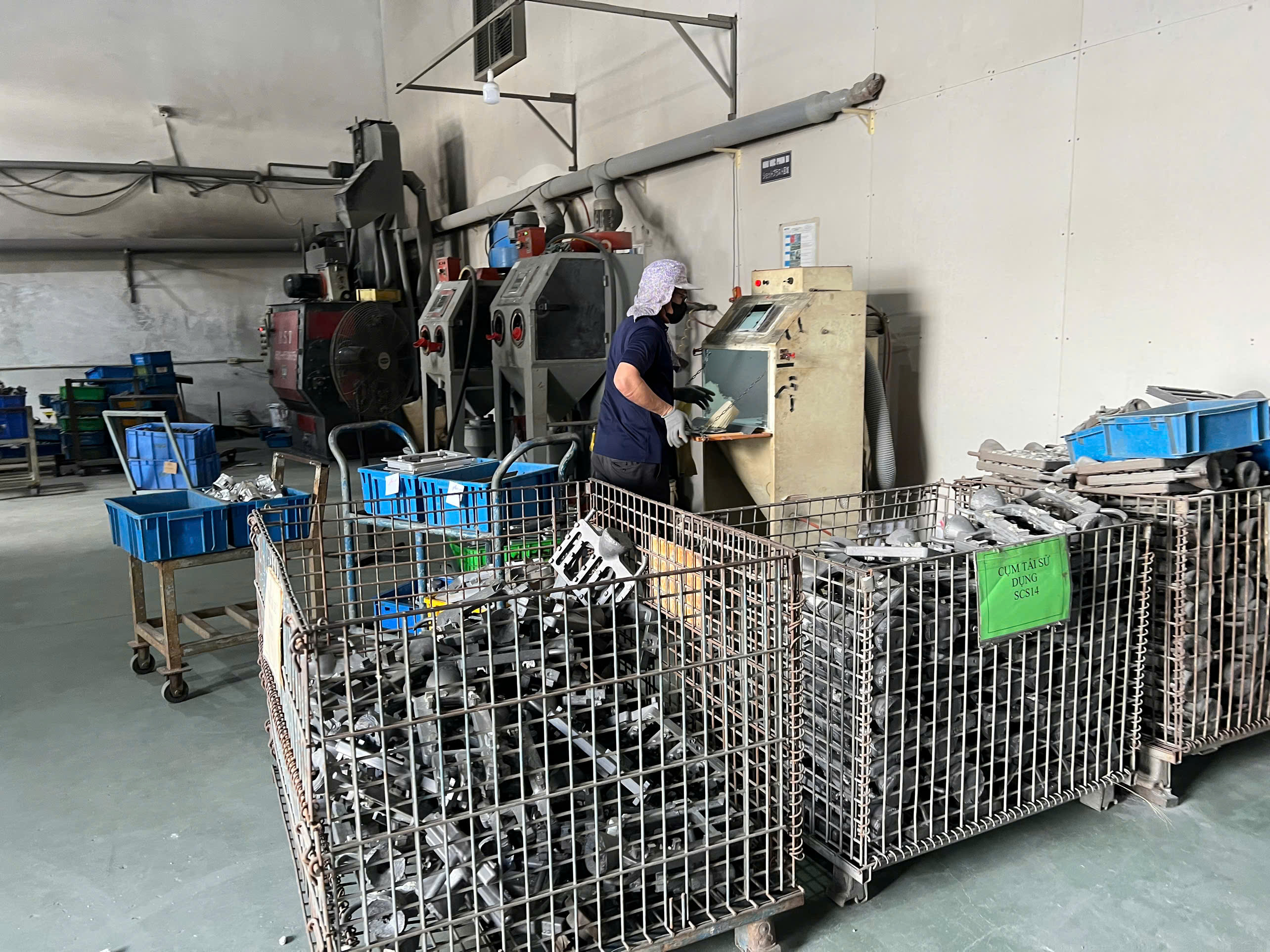
High Pressure Die Casting (HPDC)
High pressure die casting: High pressure die casting injects molten metal directly into the mold through high pressure, then maintains pressure until the casting solidifies completely. This method can produce castings with high precision and good surface finish, suitable for mass production. However, the lifespan of the mold is relatively low, and the requirements for the mold are high.
High pressure casting will also provide smoother surfaces for precision machining options. The surface finish depends on the quality of the mold’s finish. This high-quality surface treatment allows other coatings to be directly applied.
A significant advantage of HPDC is its high-speed production, achieving higher production in a shorter period. However, it also has a limitation – it may lead to the appearance of pores in cast products. Although recent technological advancements have provided methods to minimize this impact, it remains a key consideration for HPDC.
Low Pressure Die Casting (LPDC)
Low pressure die-casting: Low pressure die-casting is the process of moving liquid metal under pressure along the rising tube in the mold into the mold cavity. After the casting solidifies, the pressure is lowered to allow excess metal liquid to return to the furnace. This method can reduce bubbles and slag inclusions and improve the internal quality of castings. However, production efficiency is relatively low, equipment is complex, and costs are high.
LPDC is very suitable for manufacturing larger, more complex parts with excellent mechanical properties and cleaner surfaces. It is commonly used in parts such as alloy wheels, cylinder heads, and engine blocks in the automotive industry. However, compared to HPDC, the slow filling process in LPDC results in longer cycle times, making it less suitable for large-scale production.
In summary, the selection of high-pressure and low-pressure die-casting depends on the project’s specific requirements. The factors to consider include the design complexity and size of the components to be produced, production volume, and acceptable porosity levels. These processes have advantages and disadvantages, and the most suitable production process can only be selected based on specific needs.
Thank you for reading our article. If you need related products or have any questions or suggestions about our products, please don’t hesitate to contact us by sending an email, and we will reply to your email as soon as possible.
Precision Manufacturing & Sourcing Specification Matrix
| Technical Dimension | Standard Commercial Grade | High-Precision OEM Export Grade | DEWIN Verification Protocol |
|---|---|---|---|
| Machining & Forming Tolerance | ISO 2768-m (±0.10 mm nominal) | ISO 2768-f (±0.01 mm – ±0.025 mm critical bores) | Calibrated 3D CMM & Air/Pin Gauging |
| Surface Roughness & Finish | Ra 1.6 – 3.2 µm as-machined / standard coat | Ra 0.4 – 0.8 µm precision ground / MIL-A-8625 anodized | Profilometer & Coating Thickness Gauge |
| Material & Alloy Certification | Supplier Mill Test Report (MTR) | Independent OES chemical & mechanical verification | EN 10204 3.1 + RoHS/REACH Compliance |
| Batch Inspection & Packaging | ISO 2859-1 (AQL 1.0 Major / 2.5 Minor) | Zero-defect critical features + VCI export crating | Pre-Shipment Inspection (PSI) Report |
Frequently Asked Questions
What engineering files are required to quote what is the difference between high pressure and low pressure die casting? with DEWIN?
Provide 3D CAD models (STEP or IGES) along with 2D engineering drawings (PDF/DXF) specifying critical-to-quality (CTQ) tolerances, material grade, surface finish, and annual volume.
How does DEWIN verify dimensional accuracy and material compliance before shipment?
Every production lot undergoes incoming material spectrometer verification (EN 10204 3.1), First Article Inspection (FAI) via 2D/3D coordinate measuring machines (CMM), and AQL pre-shipment audits.
Can DEWIN support both low-volume prototype validation and mass production scaling in Vietnam and China?
Yes. DEWIN coordinates rapid CNC and bridge-tooling prototypes alongside high-tonnage production tooling across audited ISO 9001 and IATF 16949 partner factories in Vietnam and China.