

I learned about ISF 10+2 requirements 1 the hard way — a client’s sheet metal shipment sat at a Vietnamese port because data was missing from the filing, and the clock was ticking.
ISF 10+2 requirements for sourcing sheet metal fabrication from Vietnam mandate that U.S. importers electronically submit 10 specific data elements to CBP at least 24 hours before cargo is loaded onto the vessel, while the ocean carrier provides 2 additional elements, ensuring supply chain security for all ocean freight entering the United States.
This is not optional. It is not limited to high-risk goods. Every containerized ocean shipment from Vietnam — including custom brackets, enclosures, and mounting components — must comply with this rule under 19 CFR 149.3 2. Let me walk you through every detail you need to get this right.
How do I ensure my Vietnam sheet metal supplier provides the correct data for my ISF 10+2 filing?
A few years ago, one of our U.S. clients placed an order for precision-formed steel mounting brackets from a factory in Ho Chi Minh City — and nearly missed the filing window because the supplier had never heard of ISF requirements supply chain security 3.
You ensure correct ISF data by providing your Vietnam sheet metal supplier with a detailed checklist of all 10 required data elements well before production ends, explicitly requesting they return the information at least 72 hours prior to vessel loading so your customs broker can file on time.
Why Vietnamese Suppliers Often Miss ISF Data
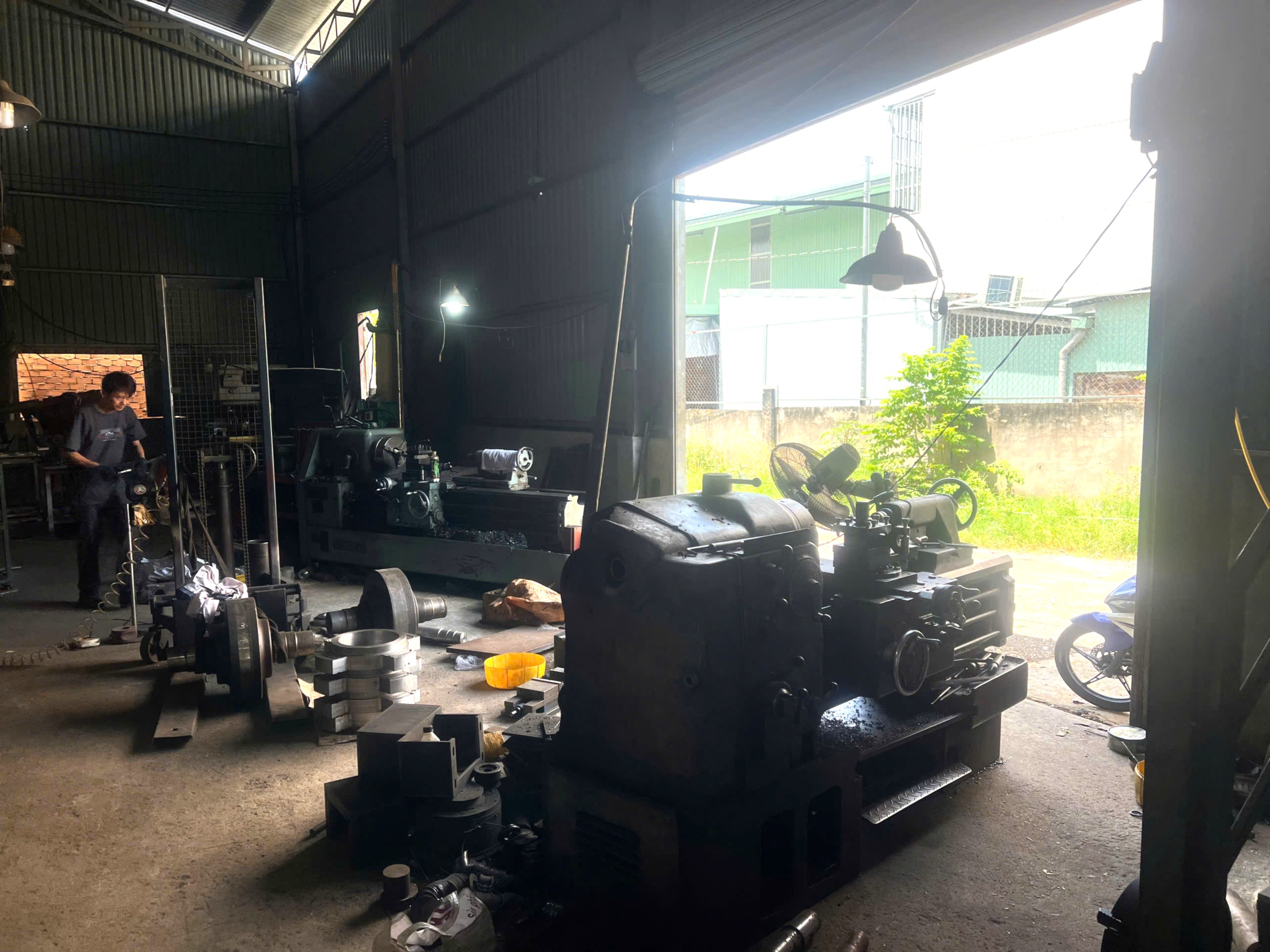
Most sheet metal factories in Vietnam are focused on manufacturing. They know tolerances, bending radii, and powder-coat specifications. They do not know U.S. import regulations. This is a gap I see constantly. Our Vietnam office — with seven team members on the ground — has to bridge this gap on every single project.
The problem is simple. Vietnamese suppliers export to many countries. The ISF 10+2 rule is a U.S.-specific requirement. Unless the importer or their sourcing agent explicitly tells the factory what data to provide, the factory will send a commercial invoice 4 and a packing list — and nothing else. That is not enough.
The 10 Importer Data Elements
Here is the full list of what you must collect. I keep this table posted in our Vietnam office so every project coordinator knows what to request from the factory floor.
| # | Data Element | Who Provides It | Notes for Sheet Metal |
|---|---|---|---|
| 1 | Manufacturer/Supplier Name & Address | Factory | Must be the actual fabrication facility, not a trading company |
| 2 | Seller Name & Address | Factory or Trading Co. | Could differ from manufacturer if sold through an intermediary |
| 3 | Buyer Name & Address | U.S. Importer | The entity that agreed to purchase the goods |
| 4 | Ship-To Name & Address | U.S. Importer | First delivery-to party after Customs release |
| 5 | Container Stuffing Location | Factory or Consolidator | Physical address where goods were loaded into the container |
| 6 | Consolidator (Stuffer) Name & Address | Factory or Freight Forwarder | Party that physically stuffed or arranged stuffing |
| 7 | Importer of Record Number | U.S. Importer | EIN, IRS number, or CBP-assigned number |
| 8 | Consignee Number | U.S. Importer | CBP-assigned number for the consignee |
| 9 | Country of Origin | Factory | Vietnam — must match actual manufacturing location |
| 10 | Commodity HTS Code | U.S. Importer / Customs Broker | Minimum 6 digits; 10 digits recommended |
The Manufacturer vs. Seller Distinction
This trips up many importers. In Vietnam, sheet metal parts are sometimes sold through trading companies. The trading company is the seller. The factory is the manufacturer. These are two different data elements. If your supplier is a trading house that subcontracts fabrication, you need both names and addresses. When we manage sourcing for clients, our team verifies the actual production facility during supplier audits, so the manufacturer field is always accurate.
A Practical Checklist Email
I recommend sending your Vietnam supplier a structured email at least two weeks before the expected ship date. List each data element by name. Ask them to fill in every field. Attach a simple spreadsheet. Make it impossible to misunderstand. Our project managers do this on every shipment — and it has eliminated last-minute scrambles.
What specific information must I collect from my Vietnam factory to meet the 24-hour rule?
During a recent shipment of custom laser-cut steel enclosures from our partner factory near Hai Phong, I realized that even experienced purchasing managers sometimes confuse what the 24-hour rule actually requires versus what can be filed later.
To meet the 24-hour rule, you must collect and file eight of the ten importer data elements — including the manufacturer name and address, HTS code, and country of origin — at least 24 hours before the cargo is loaded onto the vessel at the Vietnamese port, with container stuffing location and consolidator details permitted to be filed later.
Understanding the Filing Timeline
The 24-hour rule is precise. It does not mean 24 hours before the vessel departs. It means 24 hours before the cargo is laden — physically loaded — aboard the vessel. This distinction matters because loading can happen well before departure. For ocean freight from Vietnam, that window can be tight if your factory ships from a smaller port.
Here is how the timeline works in practice:
| Milestone | Action Required | Recommended Buffer |
|---|---|---|
| Production complete | Collect all 10 data elements from factory | 5–7 days before vessel loading |
| 72 hours before loading | Submit ISF filing through Automated Commercial Environment 6 (ACE) | Best practice for data validation |
| 24 hours before loading | Legal deadline — 8 of 10 elements must be filed | Absolute minimum |
| Between loading and 24 hours before U.S. arrival | File container stuffing location and consolidator if not already submitted | Use only as a fallback |
The Two Late-Filed Elements
CBP allows two specific elements to be filed after the 24-hour mark: the container stuffing location and the consolidator (stuffer) name and address. This flexibility exists because, in some supply chains, the container is stuffed at a consolidation warehouse that may not be confirmed until very close to loading. For sheet metal shipments from Vietnam, though, I find this is rarely an issue. Most custom fabricated parts ship directly from the factory — and the factory is the stuffing location. We always aim to include all 10 elements in the initial filing.
The 72-Hour Best Practice
The legal deadline is 24 hours. The practical deadline is 72 hours. Here is why. If you file at the 24-hour mark and CBP rejects the filing due to a data error — say the Harmonized Tariff Schedule code 7 is wrong by one digit — you have zero time to correct it. The vessel loads, and now you face penalties for non-compliance. Filing 72 hours ahead gives you a buffer to fix errors, contact the factory, and resubmit through the Automated Commercial Environment system.
HTS Code Accuracy for Sheet Metal
Getting the HTS code right is critical for customs compliance 8. Sheet metal fabrication covers a wide range of products. A galvanized steel bracket has a different classification than a stainless steel enclosure or an aluminum heat sink. Using the wrong 6-digit code can trigger an ISF rejection or, worse, a misclassification penalty after entry.
| Sheet Metal Type | Common HTS Chapter | Example 6-Digit Code |
|---|---|---|
| Flat-rolled stainless steel | Chapter 72 | 7219.XX |
| Aluminum sheet/plate | Chapter 76 | 7606.XX |
| Fabricated steel parts (articles of iron/steel) | Chapter 73 | 7326.XX |
| Custom brackets/mountings | Chapter 83 | 8302.XX |
I always recommend working with a licensed customs broker to confirm the correct HTS code before filing. The 6-digit minimum is the legal requirement, but filing the full 10-digit code reduces the risk of CBP scrutiny.
How can I avoid costly CBP penalties when importing custom fabricated parts from Vietnam?
One of our longtime U.S. clients once told me about a previous supplier relationship where a single missing data field — the consolidator address — triggered a $5,000 penalty from CBP. That was the cost of one oversight on one shipment.
You avoid costly CBP penalties by filing accurate, complete ISF data well ahead of the 24-hour deadline, working with an experienced customs broker, verifying HTS codes with precision, ensuring your customs bond is active, and maintaining clear documentation of the country of origin and substantial transformation for all custom fabricated parts from Vietnam.
The Real Cost of Non-Compliance
Penalties for non-compliance with ISF 10+2 typically start at $5,000 per violation. A "violation" can mean a late filing, an inaccurate filing, or a missing data element. If you ship monthly, and each shipment has a filing error, you are looking at $60,000 a year in avoidable penalties. Beyond the financial hit, CBP can also hold your cargo for intensive examination, delay release, or even refuse entry. For custom fabricated parts — where your client has a production schedule depending on those brackets and enclosures arriving on time — a delay can cascade through the entire supply chain.
Common Penalty Triggers for Sheet Metal Imports
Here are the issues I see most often when working with U.S. importers who source from Vietnam:
- Wrong manufacturer address. The ISF lists a trading company, but the actual factory is a different entity at a different location. CBP considers this inaccurate.
- Incorrect HTS code. The importer guesses at the Harmonized Tariff Schedule classification instead of confirming with a customs broker. A bracket classified under the wrong chapter can trigger both ISF penalties and duty discrepancies.
- Late filing. The factory sends shipping documents after the container is already at the port. There is no time to file 24 hours before loading.
- Missing customs bond. Every ISF filing requires an active customs bond 9. If your bond lapses, you cannot file — period.
Country of Origin and Substantial Transformation
This is an area of growing importance. With evolving U.S. trade policies and potential reciprocal tariffs, CBP is scrutinizing whether goods listed as "Made in Vietnam" were genuinely manufactured there. For sheet metal fabrication, this means the raw steel or aluminum may come from another country — sometimes China, Japan, or South Korea. The key question is whether a "substantial transformation" occurred in Vietnam.
If your Vietnamese factory takes imported flat-rolled steel, laser-cuts it, bends it, welds it, and applies a powder-coat finish, that is a substantial transformation. The country of origin is Vietnam. But if the factory simply repackages parts fabricated elsewhere, the origin may not be Vietnam, and listing it as such on the ISF creates a compliance risk. Understanding the certificate of origin requirements for your shipments is essential to getting this right.
Our team conducts supplier audits that specifically verify where raw materials come from and what processes are performed in the Vietnamese facility. This documentation is essential not only for ISF accuracy but also for compliance with regulations like the Uyghur Forced Labor Prevention Act, which requires importers to demonstrate supply chain transparency regarding the origin of raw materials.
Bond Requirements
You need an active customs bond to file ISF. There are two types: a single-entry bond (for occasional shipments) and a continuous bond (for frequent importers). If you are sourcing custom sheet metal parts on a recurring basis, a continuous bond is more practical and cost-effective. Your customs broker can help you set this up through the CBP system.
Can my sourcing agent in Vietnam manage the ISF documentation to streamline my supply chain?
A purchasing manager at a mid-sized engineering firm in Ohio recently asked me this exact question. He was spending hours every month chasing data from his Vietnamese factory and forwarding it to his customs broker. He wanted to know if there was a better way.
Yes, a qualified sourcing agent in Vietnam can manage ISF documentation by collecting all required data elements directly from the factory, verifying accuracy against shipping documents, and transmitting the information to your customs broker or filing it through the Automated Commercial Environment, significantly streamlining your import supply chain.

What a Sourcing Agent Actually Does for ISF
A sourcing agent is not a customs broker. The agent does not file the ISF directly with CBP in most cases. What the agent does is gather, verify, and transmit all the data your customs broker needs — before the deadline, and without errors. This is the operational bottleneck for most importers. The filing itself takes minutes. Getting accurate data from a factory 12 time zones away takes days.
Our Vietnam office handles this for every shipment we manage. Here is the typical workflow:
- Production milestone confirmation. When production of the sheet metal parts is 80% complete, our project coordinator contacts the factory to confirm the estimated ship date and booking details.
- Data collection. We send the factory our ISF data template. They fill in the manufacturer name and address, the container stuffing location, the consolidator details, and the seller information. We already have the buyer, ship-to, importer of record, and consignee information on file.
- Verification. Our team cross-checks the factory data against the purchase order, the commercial invoice, and the bill of lading draft. We confirm the country of origin matches the actual production facility. We verify the HTS code with the client's customs broker.
- Transmission. We send the verified data package to the client's customs broker at least 72 hours before the estimated loading date. The broker files through ACE.
- Monitoring. We track the filing status and flag any CBP rejections immediately so corrections can be made before the 24-hour deadline.
The Value of a Local Team
Having people on the ground in Vietnam makes a measurable difference. When a factory in Binh Duong tells me the container will be stuffed at a third-party warehouse in Thu Duc, our local team can verify that address the same day. When there is a discrepancy between the seller name on the invoice and the manufacturer name on the ISF, our team can resolve it face-to-face — not through a chain of emails that takes three days.
This is especially important for custom fabricated sheet metal parts. Unlike commodity products, custom parts often involve multiple processing steps — cutting, forming, welding, surface treatment — that may happen at different locations. The ISF needs the address of the entity that last manufactured or assembled the goods. Our team confirms this on the factory floor.
Digitalization and API Integrations
Leading importers are adopting digital tools to automate ISF data collection and submission. Some customs brokers offer API integrations that allow supply chain data to flow directly from the sourcing agent's project management system into the ACE filing platform. We are exploring these integrations for our highest-volume clients. The goal is to eliminate manual data entry, reduce errors, and compress the timeline from data collection to filing.
A Hypothetical Scenario
Imagine you order 2,000 custom steel mounting brackets from a factory in Dong Nai, Vietnam. The brackets are powder-coated, drilled, and packed into a 20-foot container. The vessel is scheduled to load on Monday. Your factory sends the commercial invoice on Friday evening — but forgets to include the container stuffing location. Your customs broker cannot file because the data is incomplete. By the time you reach the factory on Monday morning Vietnam time, the container is already at the port. You miss the 24-hour window. CBP issues a $5,000 penalty. Your brackets arrive a week late because the shipment is flagged for examination.
Now imagine a sourcing agent had collected the stuffing location on Thursday, verified it on Friday morning, and sent the complete data package to your broker by Friday afternoon. The ISF is filed 72 hours before loading. No penalty. No delay. That is the difference.
Conclusion
ISF 10+2 compliance is not optional when sourcing sheet metal fabrication from Vietnam by ocean freight. Collect accurate data early, file 72 hours ahead, and consider partnering with a sourcing agent who has local presence in Vietnam. Beyond ISF filing, be sure you also understand the broader U.S. customs clearance requirements and applicable tariffs and duties that apply to your imports.
Frequently Asked Questions
How do I ensure my Vietnam sheet metal supplier provides the correct data for my ISF 10+2 filing?
A few years ago, one of our U.S. clients placed an order for precision-formed steel mounting brackets from a factory in Ho Chi Minh City — and nearly missed the filing window because the supplier had never heard of ISF requirements supply chain security 3 .
What specific information must I collect from my Vietnam factory to meet the 24-hour rule?
During a recent shipment of custom laser-cut steel enclosures from our partner factory near Hai Phong, I realized that even experienced purchasing managers sometimes confuse what the 24-hour rule actually requires versus what can be filed later.
How can I avoid costly CBP penalties when importing custom fabricated parts from Vietnam?
One of our longtime U.S. clients once told me about a previous supplier relationship where a single missing data field — the consolidator address — triggered a $5,000 penalty from CBP. That was the cost of one oversight on one shipment.
Footnotes
1. Comprehensive guide to ISF 10+2 requirements for U.S. ocean cargo imports. ↩︎
2. Replaced with a direct link to the official Electronic Code of Federal Regulations (eCFR) for 19 CFR 149.3. ↩︎
3. Explains the importance of supply chain security in global trade. ↩︎
4. Details the purpose and requirements of a commercial invoice for international shipping. ↩︎
5. Official U.S. government information on the purpose of a packing list for exports. ↩︎
6. Official CBP page describing the Automated Commercial Environment (ACE) system. ↩︎
7. CBP guidance on identifying HTS codes for determining duty rates. ↩︎
8. Explains the importance of adhering to trade regulations in international trade. ↩︎
9. Official CBP guidance on how to obtain a customs bond. ↩︎
10. Outlines guidelines for penalties related to ISF 10+2 violations. ↩︎