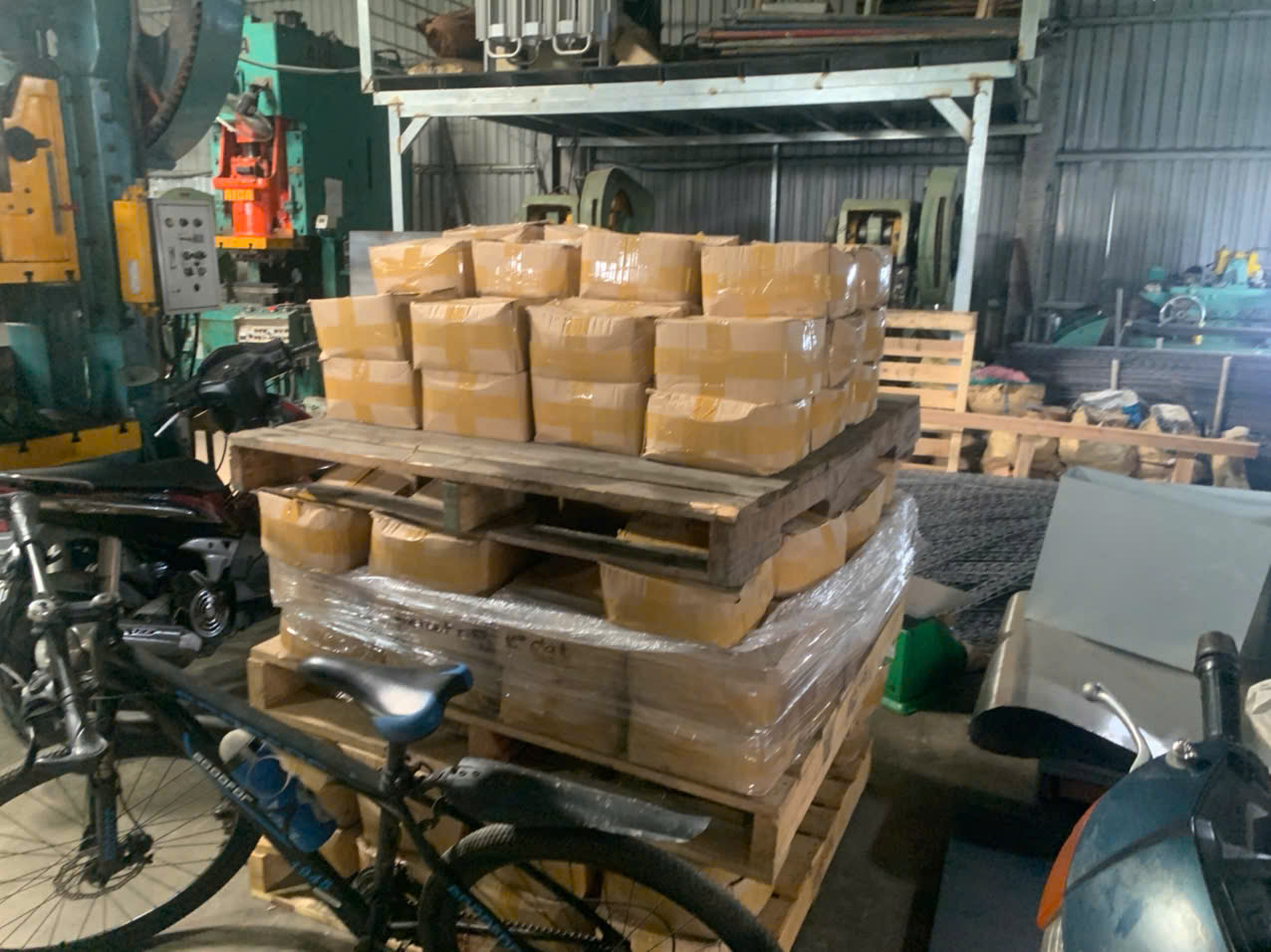
A single untreated wood pallet nearly cost one of our U.S. clients a $12,000 customs delay on a sheet metal fabrication order from Vietnam — all because of a missing stamp.
ISPM 15 wood packaging rules require that all raw wood pallets, crates, and dunnage thicker than 6mm used to ship sheet metal fabrication from Vietnam must be debarked, heat-treated or fumigated, and stamped with the official IPPC mark before customs clearance in the destination country.
The sheet metal itself is never the problem. It is the wood holding it that triggers phytosanitary inspections, port rejections, and costly supply chain delays. Below, I break down every rule, exemption, and practical step you need to get this right.
How do I ensure my Vietnamese sheet metal supplier complies with ISPM 15 wood packaging standards?
Last year, our Vietnam office caught a supplier using raw, untreated pine dunnage inside a container of precision-engineered mounting brackets — the kind with tight tolerances and powder-coated finishes that took weeks to produce. If that container had reached U.S. customs, the entire shipment would have been held or destroyed.
To ensure your Vietnamese sheet metal supplier complies with ISPM 15, you must contractually require treated wood packaging material, verify the IPPC mark on every pallet and crate before shipment, and audit the supplier's partnership with a certified treatment facility.
Understanding What ISPM 15 Actually Covers
ISPM 15 is an international standard created by the International Plant Protection Convention 1. Its sole purpose is to prevent quarantine pests — insects and pathogens — from spreading across borders inside raw wood. It does not regulate the metal parts. It regulates the wood that carries them.
Vietnam has been a mandatory ISPM 15 country since 2005. Every piece of solid wood packaging leaving Vietnam must be treated and marked. Over 180 countries enforce these international trade regulations, including the United States, the European Union, and Australia. If the wood is not compliant, the shipment does not enter.
The Three Non-Negotiable Requirements
There are exactly three things the wood must satisfy:
| Requirement | Standard | Details |
|---|---|---|
| Debarking | Bark must be removed before treatment | Remnant bark allowed only if less than 3 cm wide and less than 50 cm² total area |
| Treatment | Heat treatment 2 (HT) or methyl bromide fumigation (MB) | HT requires a core temperature of 56°C for at least 30 continuous minutes |
| Marking | Official IPPC mark 3 stamped on wood | Must show the IPPC symbol, country code (VN), facility registration number, and treatment code (HT or MB) |
Heat treatment is now the preferred method globally. Methyl bromide fumigation 4 is still technically allowed under ISPM 15, but the EU and several other regions have restricted or banned it due to environmental and health concerns. When we coordinate shipments for our clients, we always specify HT.
Practical Steps to Verify Compliance
From our experience managing export compliance for custom parts out of Vietnam, here is what works:
- Add an ISPM 15 clause to your purchase order. State that all wood packaging material must comply with ISPM 15 and that the supplier bears the cost of any customs rejection caused by non-compliant packaging.
- Request photos of the IPPC mark before the container is sealed. Our team in Vietnam does this on every shipment as part of our final inspection process.
- Ask for the treatment facility's registration number. Cross-check it against Vietnam's national plant protection organization 5 records if possible.
- Inspect dunnage separately. Sheet metal parts — especially heavy brackets and housing bases — often need wooden blocks or bracing inside the container. These pieces of dunnage are covered by ISPM 15 and are the most commonly overlooked items.
A supplier who resists these steps is a supplier who may not have a reliable process. In our supplier audits across Vietnam, we treat packaging compliance as a pass/fail criterion, not a nice-to-have.
What documentation should I request to verify that my custom parts are shipped in heat-treated crates?
One lesson I learned early in this business: a verbal promise from a supplier that pallets are "treated" means nothing at the port of entry. U.S. APHIS inspectors 6 do not accept phone calls — they look at the wood, check the stamp, and make a decision in minutes.
You should request a certificate of treatment from the ISPM 15 facility, pre-shipment photographs clearly showing the IPPC mark on every pallet and crate, and a written confirmation in the packing list that all wood packaging material meets ISPM 15 heat treatment requirements.
The Documents That Matter
Not all paperwork carries the same weight. Here is what you actually need, ranked by importance:
| Document | Purpose | Who Provides It |
|---|---|---|
| IPPC stamp on the wood (physical) | The legal proof of compliance; customs inspectors check this first | Applied by the certified treatment facility |
| Certificate of treatment | Confirms the wood was treated at a registered facility; lists the treatment method, date, and facility number | The treatment facility or supplier |
| Pre-shipment photos | Visual evidence that the mark exists and is legible before the container is sealed | The supplier or your inspection agent |
| Packing list notation | Written statement that all wood packaging material is ISPM 15 compliant | The supplier |
| Phytosanitary certificate | Sometimes required by destination countries for additional plant health verification | Vietnam's national plant protection authority |
A phytosanitary certificate is not always required alongside ISPM 15 compliance, but some buyers request one as an extra layer of assurance. In certain markets, customs authorities may ask for it during random inspections.
What to Look for on the IPPC Mark
The IPPC mark is the single most important element. It is a small stamp, usually burned or painted onto the wood. Here is what it must contain:
- The IPPC symbol (a stylized grain/wheat logo)
- VN — the country code for Vietnam
- A facility registration number — unique to the treatment provider
- HT or MB — indicating the treatment method used
If the mark is smudged, incomplete, or placed on only one side of the pallet, it can still trigger a customs delay. Our team checks that marks are clear and visible on at least two sides of every pallet.
How We Handle Documentation at DEWIN
When we manage a sheet metal fabrication project from Vietnam, documentation is built into the process from the start. We include ISPM 15 requirements in our initial supplier briefing. Our Vietnam-based quality team inspects the packaging during the final inspection — the same visit where we verify dimensions, surface finish, and weld quality on the custom parts themselves.
We photograph the IPPC mark and include those photos in the shipment documentation package sent to the client before the container ships. This way, there are no surprises at customs clearance. If a mark is missing or illegible, we catch it before the container door closes — not after it arrives in Long Beach or Savannah.
This is the kind of proactive process control that prevents the rework, returns, and delays that so many sourcing managers struggle with.
Will my shipment face customs delays if the wood packaging from Vietnam lacks the proper IPPC markings?
I have seen a $6,000 order of sheet metal brackets sit at a U.S. port for three weeks because one pallet inside the container had no IPPC mark. The cost of the pallet was maybe $15. The cost of the delay — port storage fees, re-treatment charges, lost production time for the end customer — was many times the value of that pallet.
Yes, your shipment will almost certainly face customs delays, and potentially rejection, re-export, or destruction if wood packaging from Vietnam lacks proper IPPC markings. U.S. APHIS and equivalent agencies in other countries actively inspect and enforce ISPM 15 requirements on all inbound wood packaging material.
What Happens When Packaging Is Non-Compliant
The consequences are not theoretical. They are real, expensive, and disruptive. Here is how enforcement typically plays out in the United States:
- Inspection. U.S. Customs and Border Protection, working with APHIS, inspects wood packaging material on a risk-based schedule. Shipments from countries with higher pest interception rates get more scrutiny.
- Hold. If the IPPC mark is missing, illegible, or inconsistent, the shipment is placed on hold. The container stays at the port.
- Action. The importer is given options: re-treat the wood at the port (expensive), re-export the shipment (very expensive), or have the non-compliant packaging destroyed and replaced (costly and time-consuming).
- Costs. Port storage fees, treatment fees, labor, and logistics charges add up quickly. A single non-compliant pallet can generate thousands of dollars in additional cost.
The Importer Bears the Liability
This is a critical point that many buyers miss. In the United States, the importer — not the Vietnamese exporter — is legally responsible for ensuring all wood packaging material entering the country is compliant. You cannot point to your supplier and shift the blame. The fine and the delay land on your desk.
This is exactly why our clients value having a team on the ground in Vietnam that checks packaging before it ships. Catching a problem in Ho Chi Minh City costs almost nothing. Catching it in Los Angeles costs a lot.
The Dunnage Trap
Heavy sheet metal components — brackets, housings, formed panels — need to be secured inside the container. Suppliers often use raw wood blocks, wedges, and braces to keep parts from shifting during transit. This is dunnage. And dunnage is explicitly covered by ISPM 15.
I call it the "silent trap" because even suppliers who use compliant pallets sometimes throw untreated wood blocks inside the container at the last minute. Our inspection protocol specifically checks for this. We open the container, look at every piece of wood — not just the pallets — and verify the mark.
| Packaging Element | Covered by ISPM 15? | Common Issue |
|---|---|---|
| Wood pallets | Yes | Missing or illegible IPPC mark |
| Wood crates | Yes | Untreated raw wood used to save cost |
| Dunnage (blocks, braces, wedges) | Yes | Added at the last minute without treatment |
| Plywood 7 sheets | No (exempt) | Sometimes mixed with raw wood corner blocks that ARE regulated |
| Plastic strapping / foam | No (exempt) | No wood content, no ISPM 15 concern |
| Cardboard boxes | No (exempt) | No wood content |
Can I use alternative packaging materials to bypass ISPM 15 regulations when importing sheet metal from Vietnam?
A purchasing manager we work with in the Midwest once asked me a simple question: "Can we just skip the wood entirely and avoid this whole ISPM 15 headache?" The answer surprised him — and it might surprise you too.
Yes, you can use alternative packaging materials like plywood pallets, plastic pallets, metal racks, or cardboard to bypass ISPM 15 regulations entirely, because the standard only applies to raw solid wood thicker than 6mm. Processed wood products like plywood, particleboard, and OSB are fully exempt.

What Qualifies as Exempt
The key distinction is between raw wood and processed wood. ISPM 15 targets raw, solid wood because it can harbor quarantine pests 8 — bark beetles, wood borers, and similar organisms. Processed wood has already been subjected to heat and pressure during manufacturing, which eliminates these risks.
Here are the main exemptions:
- Plywood — Made from thin layers of wood bonded with adhesive under heat and pressure. Exempt.
- Particleboard — Made from wood chips and resin, compressed under heat. Exempt.
- Oriented strand board (OSB) — Similar to particleboard but with aligned wood strands. Exempt.
- Wood thinner than 6mm — Below the thickness threshold. Exempt.
- Non-wood materials — Plastic, metal, foam, cardboard. Not covered by ISPM 15 at all.
The Catch With Mixed Materials
Here is where it gets tricky. A pallet made entirely of plywood is exempt. But if that plywood pallet uses raw wood corner blocks or raw wood stringers, those raw wood components must be treated and marked. The exemption applies to the material, not to the entire pallet by default.
We have seen this issue more than once. A supplier ships parts on a "plywood pallet," but the corner blocks are untreated solid pine. That single component can trigger a customs hold.
When Alternatives Work — and When They Do Not
For lightweight sheet metal parts — thin brackets, small formed panels, laser-cut components — plywood pallets and plastic packaging work well. They are strong enough, they are exempt from ISPM 15, and they eliminate the compliance risk entirely.
For heavy sheet metal assemblies — thick mounting brackets with multiple weld joints, large housings, or stacked plate components — the situation is different. These parts can weigh hundreds of kilograms per pallet. Plywood pallets may not have the load-bearing capacity needed. Plastic pallets can be expensive. In these cases, treated raw wood pallets with proper IPPC marks remain the most practical and cost-effective choice.
Making the Right Call
The decision between alternative packaging and compliant raw wood depends on three factors:
- Part weight. Heavier parts need stronger pallets. Raw debarked wood, properly treated, is often the best structural option.
- Cost. Plywood pallets cost slightly more than raw wood but save you the treatment and marking expense. Plastic pallets cost significantly more.
- Risk tolerance. If you have had customs issues before, switching to exempt materials eliminates the risk entirely.
When we plan packaging for a client's sheet metal order, we discuss these trade-offs upfront. For a run of precision-engineered brackets heading to the U.S., we might recommend plywood pallets with foam inserts — no ISPM 15 concern, good protection, reasonable cost. For a heavy batch of steel housings, we coordinate with a certified treatment facility in Vietnam and verify every IPPC mark before shipment.
Conclusion
ISPM 15 wood packaging rules 10 are straightforward but unforgiving. When sourcing sheet metal fabrication from Vietnam, verify that every pallet, crate, and piece of dunnage is debarked, heat-treated, and stamped with the IPPC mark — or use exempt materials. Compliance protects your supply chain.
Frequently Asked Questions
How do I ensure my Vietnamese sheet metal supplier complies with ISPM 15 wood packaging standards?
Last year, our Vietnam office caught a supplier using raw, untreated pine dunnage inside a container of precision-engineered mounting brackets — the kind with tight tolerances and powder-coated finishes that took weeks to produce. If that container had reached U.S. customs, the entire shipment would have been held or destroyed.
What documentation should I request to verify that my custom parts are shipped in heat-treated crates?
One lesson I learned early in this business: a verbal promise from a supplier that pallets are "treated" means nothing at the port of entry. U.S. APHIS inspectors 6 do not accept phone calls — they look at the wood, check the stamp, and make a decision in minutes.
Will my shipment face customs delays if the wood packaging from Vietnam lacks the proper IPPC markings?
I have seen a $6,000 order of sheet metal brackets sit at a U.S. port for three weeks because one pallet inside the container had no IPPC mark. The cost of the pallet was maybe $15. The cost of the delay — port storage fees, re-treatment charges, lost production time for the end customer — was many times the value of that pallet.
Footnotes
1. Direct replacement for the IPPC overview page on the official IPPC website. ↩︎
2. Details specific requirements for ISPM 15 heat treatment. ↩︎
3. Describes the required elements and application of the official ISPM 15 mark. ↩︎
4. Explains the chemical used for fumigation in ISPM 15. ↩︎
5. Lists national plant protection organizations and their role. ↩︎
6. Outlines APHIS’s role in enforcing ISPM 15 regulations. ↩︎
7. Explains why plywood is exempt from ISPM 15 regulations. ↩︎
8. Defines key phytosanitary terms, including quarantine pests. ↩︎
9. FAQ page explaining ISPM 15 exemptions, including processed wood products. ↩︎
10. Direct replacement for ISPM 15 standard on the official IPPC website. ↩︎