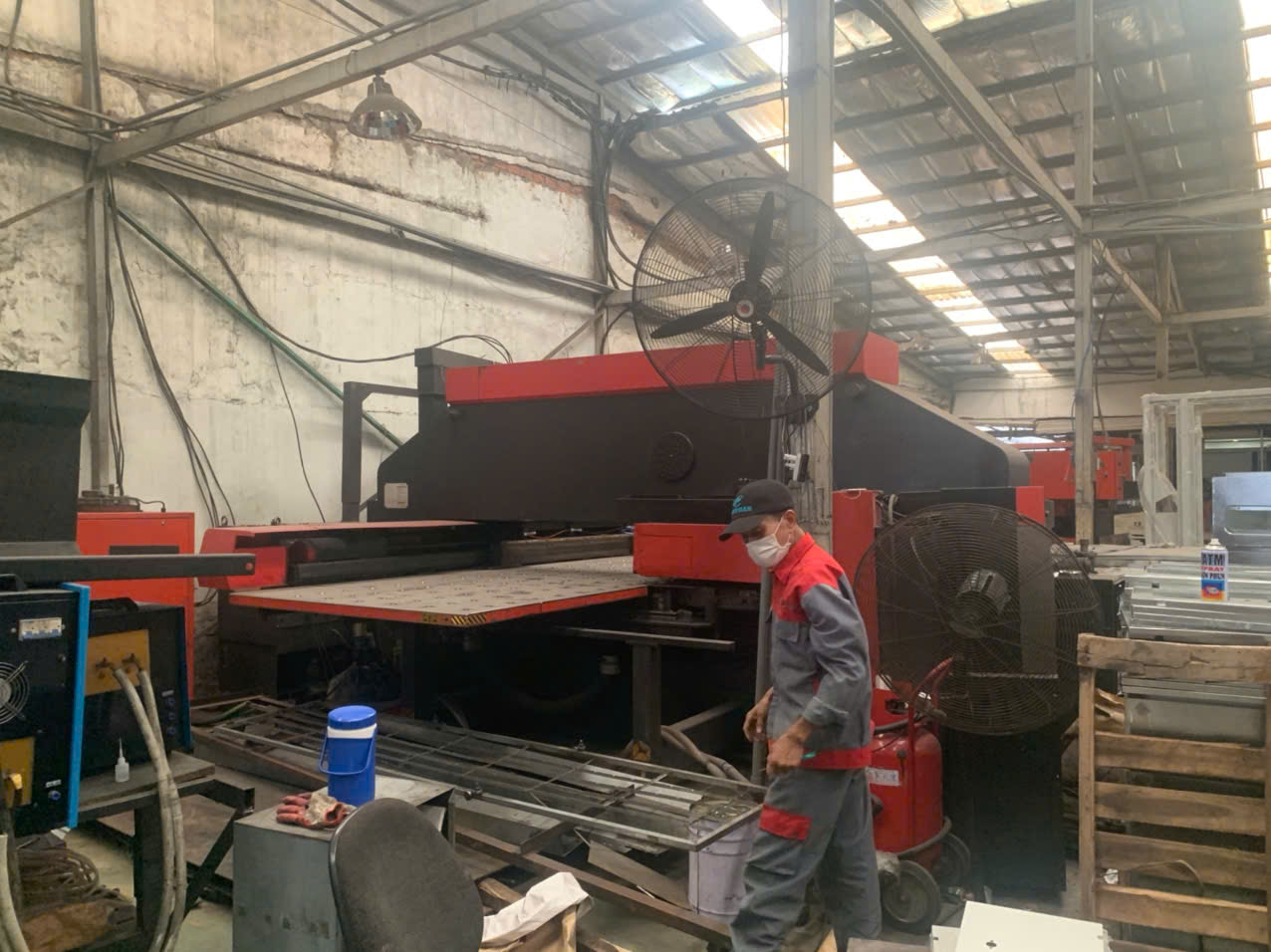
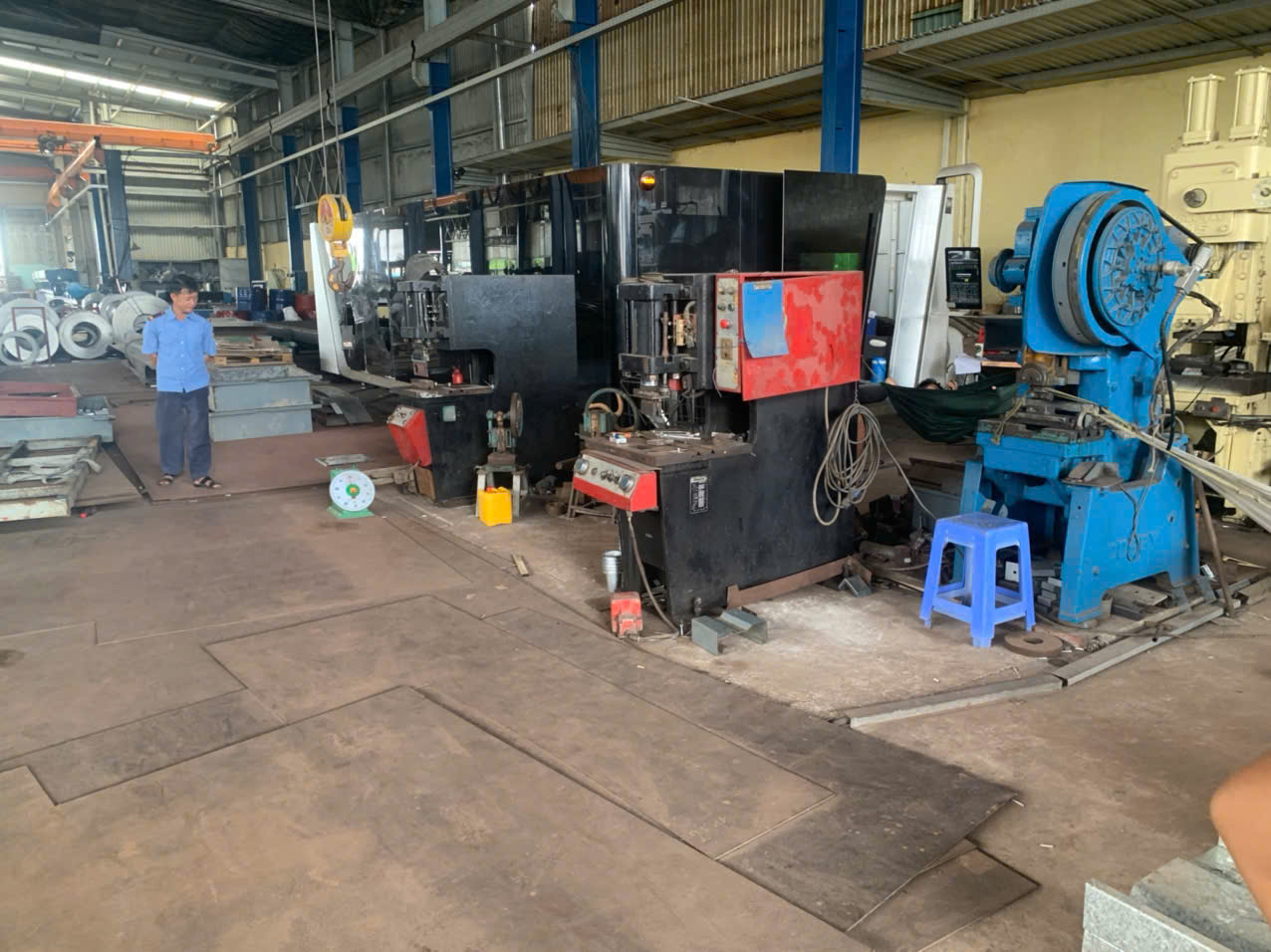
A few months ago, one of our U.S. clients asked us to source a stamped steel bracket for a defense subassembly — and that single request opened a compliance minefield none of us expected.
ITAR/EAR export compliance requirements for stamping parts procurement depend on whether the part is specially designed for a defense article on the US Munitions List (requiring DDTC registration, technical data controls, and export licenses) or falls under EAR as a dual-use or EAR99 item (requiring Commerce Control List classification, party screening, and five-year record retention).
The distinction between ITAR and EAR controls shapes every decision in your supply chain — from which suppliers you can work with to how you handle CAD files Export Control Classification Number 1. Let me walk you through the key requirements, step by step.
How Do I Determine If My Stamping Parts Are Subject to ITAR or EAR Controls?
Before our team in Vietnam kicks off any new stamping project for a U.S. buyer, the very first question we ask is not about material gauge or tolerance — it is about commodity jurisdiction Specially Designated Nationals 2.
To determine if your stamping parts fall under ITAR or EAR, first check if the part is specially designed for a defense article on the 21-category US Munitions List; if it is not listed there, classify it on the Commerce Control List for an Export Control Classification Number, or default to EAR99 for commercial items.
The Jurisdiction Decision Tree
The process starts with one core question: Is this stamping part "specially designed, developed, configured, adapted, or modified" for a USML defense article 3? If the answer is yes, the part is ITAR-controlled. If the answer is no, you move to the EAR side and check the Commerce Control List 4 for an applicable Export Control Classification Number (ECCN). If neither applies, the part is classified as EAR99.
Most commercial stamping parts — like the L-brackets, post base mounts, and channel brackets we commonly produce — fall into the EAR99 category. They are standard hardware with no military-specific design intent. But the moment a buyer modifies the geometry, alloy, or coating specification to meet a defense requirement, the commodity jurisdiction can shift to ITAR.
Key Differences at a Glance
| Factor | ITAR (USML) | EAR (CCL / EAR99) |
|---|---|---|
| Governing Agency | DDTC (State Department) | BIS (Commerce Department) |
| Scope | Defense articles & services | Dual-use and commercial items |
| Registration | Mandatory DDTC registration before manufacturing | No registration required for most companies |
| Licensing Default | Presumptively requires license for all countries | License required only for specific ECCNs and destinations |
| Record Retention | 5 years | 5 years |
| Technical Data | Strict controls on all forms (CAD, verbal, visual) | Controls vary by ECCN classification |
What "Specially Designed" Really Means
I have seen procurement teams assume that because a stamped part looks identical to a commercial bracket, it cannot be ITAR-controlled. That assumption is dangerous. The "specially designed" test focuses on design intent. If the engineering drawings were created to meet a military specification, or the part was developed in response to a defense contract requirement, the part may be ITAR-controlled regardless of its physical simplicity.
Our approach is to request a written commodity jurisdiction determination from the buyer before we issue a quotation. This protects both sides. The buyer confirms whether the part sits on the US Munitions List or the Commerce Control List, and we can set up the correct controls from day one.
Don't Forget the Tooling
One detail that catches many stamping suppliers off guard: the dies and tooling used to produce an ITAR-controlled part are themselves considered defense articles. If we were to transfer a progressive stamping die from our China facility to our Vietnam office for an ITAR part, that physical transfer would constitute a regulated export. The same logic applies to digital simulation data and digital twins used for process optimization — they are classified as technical data under ITAR. For a deeper look at how these rules interact, see our guide on ITAR and EAR export compliance requirements for stamping parts.
What Export Documentation Should I Require From My Asian Stamping Suppliers?
When we onboard a new stamping project at DEWIN, our project managers build a documentation checklist before the first sample is cut — because missing a single form can halt a shipment at U.S. Customs.
You should require your Asian stamping suppliers to provide DDTC registration proof (if ITAR applies), an end-user certificate, commodity jurisdiction or ECCN classification records, a Technology Control Plan for technical data handling, and complete shipping and inspection records maintained for at least five years.
The Documentation Stack
The documents you need depend on whether the part is ITAR or EAR controlled. Here is a practical breakdown we use internally:
| Document | Required for ITAR? | Required for EAR? | Purpose |
|---|---|---|---|
| DDTC Registration (Form DS-2032) | Yes — mandatory before manufacturing | No | Proves supplier is authorized to manufacture defense articles |
| End-User Certificate | Yes | Yes (for licensed ECCNs) | Confirms the ultimate end user and intended use |
| ECCN / EAR99 Classification Record | No (uses USML category) | Yes | Documents Commerce Control List classification |
| Technology Control Plan 5 (TCP) | Yes | Sometimes (for controlled technical data) | Governs who can access controlled data at the facility |
| Shipping & Export Authorization Records | Yes | Yes | Proves lawful export and correct license usage |
| Inspection & Manufacturing Reports | Yes | Recommended | Quality evidence; also supports compliance audits |
| Employee Access Logs | Yes | Recommended | Tracks who handled controlled items or data |
Technical Data Control Is the Hidden Trap
In our experience coordinating between U.S. engineering teams and Asian stamping facilities, the most overlooked compliance risk is technical data control. When a buyer emails a CAD file of an ITAR-controlled bracket to our engineering team, that transmission is an export. If any member of our team is not a U.S. person, that email could constitute a deemed export 6 violation — even though no physical part crossed a border.
This is why we insist on establishing a Technology Control Plan before any controlled data enters our system. The TCP defines who can access the files, what encryption is required, and how physical prints are stored and destroyed. Our China office, with 21 employees, maintains separate digital folders with role-based access controls specifically for projects that might touch controlled technical data.
End-User Certificates and End-Use Statements
An end-user certificate is not just a formality. It is a legally binding declaration that the stamped parts will be used by a specific entity for a specific purpose. When sourcing from Vietnam or other Asian countries, we prepare these certificates as part of the order package. The certificate must name the ultimate consignee 7, describe the end use (military vs. commercial), and confirm the parts will not be diverted to a restricted party or country.
Record Retention: The Five-Year Rule
Both ITAR and EAR mandate a five-year retention period for all export-related records. This includes manufacturing reports, shipping documents, export authorizations, technical data communications, and employee access logs. We maintain digital archives with date-stamped backups to ensure nothing is lost. If a BIS or DDTC auditor comes knocking, you need to produce these records quickly and completely.
How Can I Verify My Vietnam or China Supplier Complies With U.S. Export Regulations?
A lesson we learned early in our supply chain work: a supplier's verbal assurance of compliance is worth nothing without verifiable evidence. Verification requires structured due diligence.
To verify your Vietnam or China stamping supplier's export compliance, conduct on-site audits of their access controls and data handling, screen them against BIS Entity List and OFAC restricted party lists, confirm active DDTC registration if ITAR applies, and review their Technology Control Plan and employee training records.

Supply Chain Due Diligence: A Practical Process
Verification is not a one-time event. It is a continuous process. Here is the step-by-step approach our team follows when evaluating a stamping supplier for export-controlled work:
-
Screen against restricted party lists. Before engaging any supplier, we run their company name, address, and key personnel through the BIS Entity List 8, OFAC Specially Designated Nationals (SDN) list, and the Denied Persons List. We repeat this screening at every shipment.
-
Confirm DDTC registration status. If the project involves ITAR-controlled parts, the supplier must hold active DDTC registration. We request a copy of their registration confirmation and verify it is current. A supplier cannot legally manufacture defense articles without this registration.
-
Audit physical and digital access controls. During our on-site visits — and our Vietnam team conducts these regularly — we check whether the facility restricts access to controlled parts and data. Are ITAR materials stored in locked areas? Are computer systems password-protected with access limited to authorized personnel? Are visitor logs maintained?
-
Review the Technology Control Plan. We ask to see the supplier's TCP or Access Control Plan. This document must spell out how they prevent unauthorized access to controlled technical data, including restrictions on foreign national employees.
-
Verify training records. Compliance is only as strong as the people executing it. We check that the supplier's employees have received export compliance training and that records of this training exist.
-
Check sub-tier suppliers. A stamping facility often outsources finishing, coating, or heat treatment to sub-contractors. Each sub-contractor in the chain must also be screened and verified. We have seen cases where a supplier's plating vendor appeared on a restricted party list — catching that early prevented a serious violation.
For a broader framework on evaluating Vietnamese supplier capabilities when sourcing stamping parts, our detailed guide covers quality systems, facility audits, and production readiness checks beyond export compliance.
Red Flags During Supplier Verification
| Red Flag | What It Suggests |
|---|---|
| Supplier refuses to share TCP or access control documentation | Possible lack of compliance program |
| No DDTC registration despite claiming defense work | Illegal manufacturing of defense articles |
| Foreign national employees with unrestricted access to all project data | Potential deemed export violations |
| No record retention system in place | Non-compliance with 5-year record requirements |
| Sub-contractors not screened against restricted party lists | Supply chain due diligence failure |
| Scrap and defective parts disposed of without controlled destruction | Risk of reverse engineering of sensitive geometries |
The Deemed Export Rule in Practice
The deemed export rule is especially relevant when working with suppliers in China and Vietnam. If a Chinese national at a supplier's facility views ITAR-controlled technical data — even on a computer screen — that access constitutes a deemed export to China. This means the supplier must have clear protocols separating controlled projects from general production, and only U.S. persons (citizens, permanent residents, or protected individuals) should handle ITAR data.
In practice, this is one of the hardest requirements for Asian suppliers to meet. Our approach is to work with the buyer to determine whether any technical data shared during the procurement process actually reaches ITAR thresholds. If it does, we implement a strict access protocol before any files are transmitted.
What Compliance Risks Should I Watch for When Sourcing Custom Stamped Parts From Asia?
One interaction with a prospective client last year crystallized the biggest compliance risk I see in this industry: the buyer assumed that because their stamped bracket was a simple piece of bent steel, no export controls could possibly apply.
The top compliance risks when sourcing custom stamped parts from Asia include misclassifying ITAR-controlled parts as EAR99, sharing controlled CAD files without a Technology Control Plan, failing to screen suppliers against restricted party lists, overlooking deemed exports to foreign national employees, and not securing controlled destruction of ITAR scrap and defective parts.

Risk 1: Misclassification of Commodity Jurisdiction
The most common and most dangerous error is assuming a stamped part is EAR99 without performing a proper commodity jurisdiction analysis 9. I have seen procurement managers skip the USML review entirely because the part "looks commercial." But a mounting bracket designed to a MIL-SPEC for integration into a weapons system is not a commercial bracket — even if the stamping process is identical.
The fix is simple: always start with the US Munitions List. Review all 21 categories. If the part is not listed and was not specially designed for a listed item, proceed to the Commerce Control List. Document the classification decision in writing. This record protects you in an audit.
Risk 2: Uncontrolled Technical Data Transfers
Every time a buyer sends a drawing, 3D model, or process specification to an Asian supplier, they are potentially exporting technical data. If that data relates to an ITAR item, the transfer requires prior authorization. Even metadata embedded in CAD files — such as material callouts, tolerance notes, or assembly context — can trigger controls.
Leading procurement teams are now deploying AI-driven compliance monitoring tools that scan CAD metadata and bills of materials to automatically flag ITAR/EAR risks before an RFQ is issued to global vendors. At DEWIN, we support this by maintaining secure file transfer protocols and requiring buyers to confirm data classification before we open any engineering file.
Risk 3: Inadequate Scrap and Skeleton Disposal
This is one that almost nobody talks about. When stamping ITAR-controlled parts, the production waste — metal skeletons, slug material, defective parts — must be disposed of through controlled destruction. Why? Because the scrap retains the geometry of the controlled part, and a motivated adversary could reverse-engineer the design from the waste material.
Our production partners understand this requirement, and we include controlled scrap disposal as a line item in our quality control plan for any project that touches ITAR.
Risk 4: Registration Timing Errors
DDTC registration must be in place before a supplier begins manufacturing ITAR items. Not during. Not after. Before. I have encountered situations where a small stamping shop in Asia accepted a defense subcontract and started production without registering, intending to "sort out the paperwork later." That is a violation from day one. Understanding what ITAR restrictions apply when sourcing sheet metal fabrication for defense parts can help procurement teams avoid these registration pitfalls.
Risk 5: Ignoring the Firearms Parts Jurisdiction Shift
Recent regulatory changes have moved many firearms components 10 from ITAR to EAR, classified under various ECCNs or as EAR99. This creates a complex compliance landscape where some firearms-related stamped parts now require BIS licensing instead of — or in addition to — DDTC authorization. Procurement teams must verify the current classification of every firearms-related stamping part, because relying on outdated USML classifications can lead to incorrect licensing.
Quick-Reference Risk Matrix
| Risk | Likelihood | Severity | Mitigation |
|---|---|---|---|
| Commodity jurisdiction misclassification | High | Critical | Formal jurisdiction analysis before quoting |
| Uncontrolled CAD file transfer | High | Critical | Technology Control Plan + secure file protocols |
| Failure to screen restricted parties | Medium | Critical | Automated screening at every transaction |
| Deemed export to foreign nationals | High | High | Access controls + TCP at supplier facility |
| Uncontrolled scrap disposal | Medium | High | Controlled destruction clause in supplier contract |
| DDTC registration timing error | Low | Critical | Verify registration before PO issuance |
| Outdated firearms parts classification | Medium | Medium | Re-verify ECCN classification annually |
Conclusion
ITAR/EAR export compliance for stamping parts procurement demands careful jurisdiction analysis, rigorous supplier verification, strict technical data controls, and continuous restricted party screening — all before the first part ships.
Frequently Asked Questions
How Do I Determine If My Stamping Parts Are Subject to ITAR or EAR Controls?
Before our team in Vietnam kicks off any new stamping project for a U.S. buyer, the very first question we ask is not about material gauge or tolerance — it is about commodity jurisdiction Specially Designated Nationals 2 .
What Export Documentation Should I Require From My Asian Stamping Suppliers?
When we onboard a new stamping project at DEWIN, our project managers build a documentation checklist before the first sample is cut — because missing a single form can halt a shipment at U.S. Customs.
How Can I Verify My Vietnam or China Supplier Complies With U.S. Export Regulations?
A lesson we learned early in our supply chain work: a supplier's verbal assurance of compliance is worth nothing without verifiable evidence. Verification requires structured due diligence.
Footnotes
1. Official BIS explanation of ECCNs and how to classify dual-use items. ↩︎
2. Official Treasury Department page for the SDN list and restricted party screening. ↩︎
3. Official DDTC guidance on the United States Munitions List and defense article classification. ↩︎
4. Official Bureau of Industry and Security page for the Commerce Control List regulations. ↩︎
5. Authoritative academic resource explaining the purpose and structure of a Technology Control Plan. ↩︎
6. Official Bureau of Industry and Security (BIS) guidance on deemed exports. ↩︎
7. Detailed overview of end-user certificates and the role of the ultimate consignee in exports. ↩︎
8. Official government list of foreign parties subject to specific license requirements. ↩︎
9. Official DDTC portal for determining whether an item is under State or Commerce jurisdiction. ↩︎
10. Official Electronic Code of Federal Regulations (eCFR) for USML Category I firearms. ↩︎