
Every week, our team fields quotes from buyers who are stunned by the gap between their budget and the actual landed cost of custom sheet metal parts 1 — a gap that often comes from overlooking several hidden cost layers beyond raw material prices.
Sheet metal fabrication costs when sourcing are driven by five core components: material selection, fabrication processes (cutting, bending, welding), tolerances, surface finishing, and hardware/assembly — plus logistics, duties, quality control, and production volume, all of which shape your final landed price.
Below, I break down each cost driver so you can build a realistic budget, avoid surprises, and make smarter sourcing decisions whether you buy locally or from Asia.
How do my material choices and design complexity influence the final fabrication quote?
A question I hear in nearly every kick-off call with a new U.S. client: "Why did the price jump so much just because we switched from mild steel to 304 stainless?" The answer always comes back to material type and thickness 2 — and then how part complexity multiplies everything downstream.
Your material choice sets the baseline cost — raw materials can account for up to 86% of a high-volume project budget — while design complexity (number of bends, cutouts, and tight tolerances) determines how much labor, machine time, and inspection the part demands on top of that baseline.
How Material Type and Thickness Drive Price
Different metals carry vastly different per-kilogram prices, and they behave differently under a laser or press brake. Stainless steel and copper cost significantly more than carbon steel or aluminum. But price per kilogram is only part of the story. A harder alloy dulls tooling faster, requires slower cutting speeds, and may need specialized shielding gas for welding 3. All of that adds machine time and consumable costs.
Thickness matters just as much. A 3 mm panel needs more laser power, longer cut cycles, and higher tonnage on the press brake than a 1 mm panel of the same outline. When our Vietnam office quotes a bracket in 1.5 mm 5052 aluminum versus 3 mm 304 stainless, the stainless version can cost three to four times more — not just because the metal is pricier, but because every downstream operation takes longer. Understanding the material to processing cost ratio helps explain why these differences compound so quickly.
| Material | Relative Raw-Material Cost | Ease of Fabrication | Common Applications |
|---|---|---|---|
| Mild Steel (A36 / SPCC) | Low | Easy — welds and bends well | Chassis, enclosures, brackets |
| Aluminum 5052 | Medium | Good — lighter, corrosion-resistant | Electronics housings, panels |
| Aluminum 6061 | Medium-High | Moderate — harder, may crack on tight bends | Structural brackets |
| Stainless Steel 304 | High | Moderate — work-hardens, slower cutting | Food equipment, medical parts |
| Copper / Brass | Very High | Moderate — soft but gummy | Electrical bus bars, heat sinks |
How Design Complexity Multiplies Costs
Part complexity is not just about looks. Every additional bend, hole pattern, or weld joint adds a discrete operation — and each operation has its own setup time, cycle time, and inspection step. A flat plate with four mounting holes might cost $5. The same plate with six bends, three countersinks, two welded studs, and a tight ±0.1 mm positional tolerance could easily reach $30–$50 per piece.
Here is a simplified look at how complexity stacks up:
| Complexity Level | Typical Features | Estimated Per-Part Cost Range |
|---|---|---|
| Simple | Flat cut, 1–2 holes, no bends | $5 – $15 |
| Moderate | 2–4 bends, several holes, light deburring | $15 – $50 |
| Complex | 5+ bends, welded sub-assemblies, tight tolerances, surface finish | $50 – $200+ |
Grades and Tolerance Requirements
Choosing the right material grade can save real money. If your bracket does not need the high strength of 6061 aluminum, dropping to 5052 can cut raw material prices and improve bendability, reducing scrap and rework. Similarly, relaxing tolerance requirements from ±0.05 mm to ±0.15 mm where function allows eliminates the need for secondary machining passes and expensive CMM inspection.
Design for manufacturability 4 is the single most effective lever you have before a quote is even generated. Standardize bend radii, minimize unique hardware, and avoid mixing materials in one assembly whenever possible.
What labor and tooling expenses should I expect when I source custom sheet metal parts from Asia?
During a recent project review with a client in Ohio, we walked through a 12-line quote from a Vietnamese supplier. He was surprised that labor costs and tooling costs together outweighed the material line — even though the parts were simple carbon-steel brackets. That experience is typical, not exceptional.
When sourcing custom sheet metal from Asia, expect labor costs (machine operators, welders, inspectors) plus tooling costs (dies, fixtures, jigs) to comprise 30–60% of the fabrication price, with custom tooling often requiring a one-time upfront investment that is amortized over your production volume.
Breaking Down Labor Costs
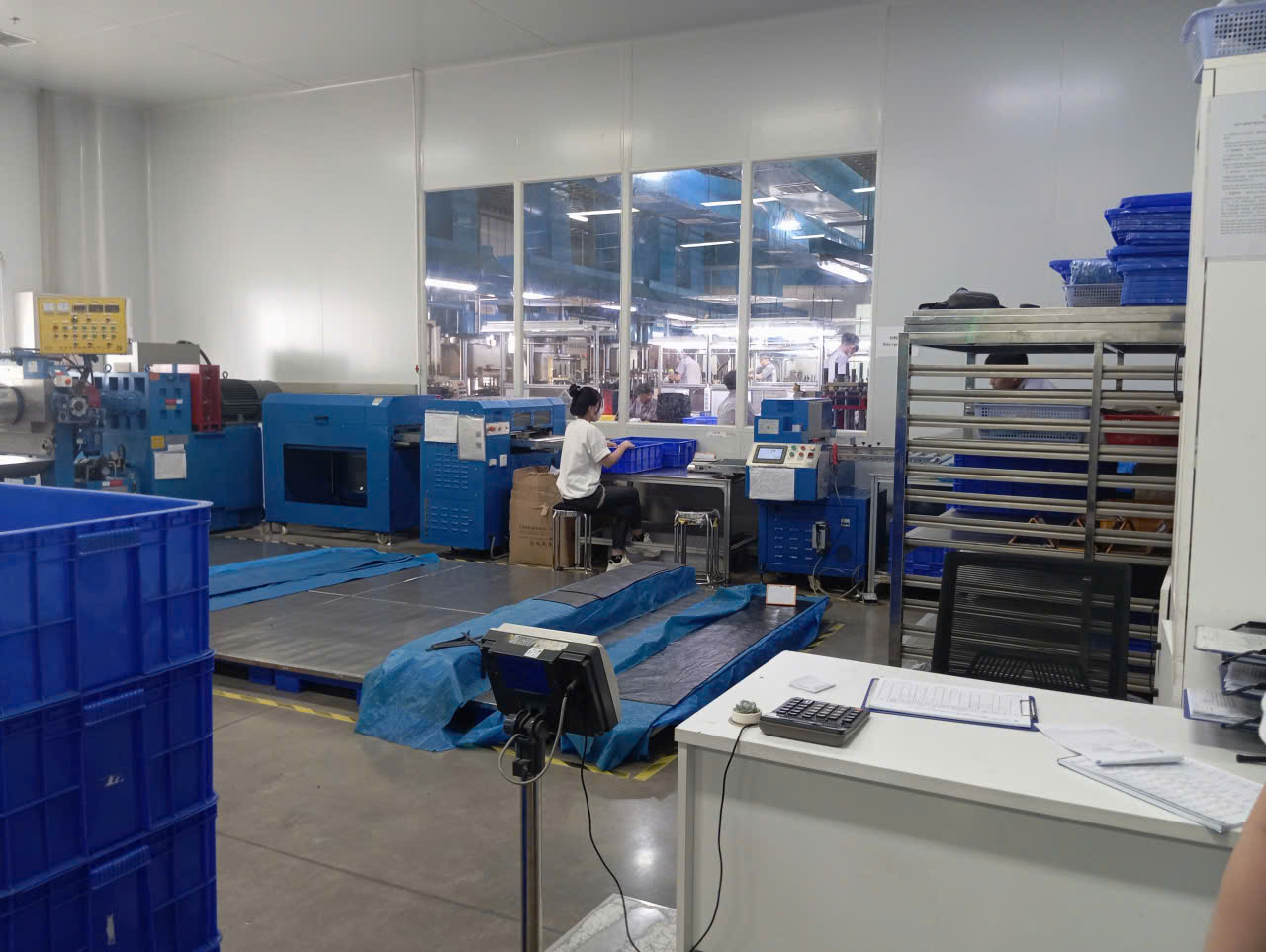
Labor in Asian fabrication shops is less expensive per hour than in the U.S. or Europe, but the savings are not as dramatic as many buyers assume. Skilled welders and CNC press-brake operators 5 in Vietnam or Taiwan command meaningful wages, and the number of operations per part is the true cost multiplier. A part that requires laser cutting, deburring, three bending steps, TIG welding, and grinding involves six distinct labor touches — each with its own setup and handling time.
The core cost formula many fabricators use internally is:
Part Cost = (Volume × Density × Unit Price) + (Hourly Machine Cost × Cycle Time ÷ 3600 × Efficiency)
This formula shows that cycle time — how long each cutting, bending, or welding operation takes — directly scales the labor and machine component.
Tooling: One-Time vs. Recurring
Tooling costs fall into two buckets:
- Standard tooling — V-dies, punches, and laser nozzles that the shop already owns. You pay only for wear and setup time.
- Custom tooling — Progressive dies 6, stamping molds, welding fixtures, and inspection gauges built specifically for your part. These can range from $500 for a simple fixture to $15,000+ for a progressive stamping die.
Custom tooling is typically a one-time charge. In our contracts, we break it out as a separate line item so the client owns the tool. Over large production volumes, the per-unit tooling amortization becomes negligible. Over small runs, it can dominate the unit price.
| Cost Element | Small Run (50 pcs) | Medium Run (500 pcs) | High Run (5,000 pcs) |
|---|---|---|---|
| Material per unit | $4.00 | $3.50 | $3.00 |
| Labor per unit | $8.00 | $5.00 | $3.00 |
| Custom tooling amortized per unit | $30.00 | $3.00 | $0.30 |
| Total per unit | $42.00 | $11.50 | $6.30 |
The Role of Automation and Digitalization
Shops with modern fiber lasers, robotic press brakes, and advanced CAD/CAM nesting software can cut cycle times and reduce scrap. When we audit potential suppliers in Vietnam and Taiwan, the level of automation is one of the first things our engineers evaluate. A shop running a 6 kW fiber laser with automatic sheet loading will quote lower cutting operations costs and faster lead times than a shop using an older CO₂ laser with manual loading.
However, automation does not eliminate labor — it shifts labor from machine operation to programming, quality inspection, and material handling. The net effect is usually a 15–25% reduction in overall bending costs and welding costs compared to a fully manual shop, while also improving repeatability.
How do logistics, duties, and door-to-door shipping impact my total landed cost?
One lesson we learned early when setting up our Singapore-based supply-chain operation: a great factory price means nothing if your landed cost balloons after freight, customs duties, and last-mile delivery are added. I have seen projects where logistics ate 18–22% of the total cost — enough to wipe out the entire labor-rate advantage of sourcing from Asia.
Logistics, duties, and door-to-door shipping typically add 10–25% on top of your factory-gate price, depending on part weight, volume, origin country, and applicable tariff codes — making total landed cost, not unit price, the only meaningful number for sourcing decisions.
Ocean Freight vs. Air Freight
Most sheet metal parts are heavy relative to their value, so ocean freight is the default. A full container load (FCL) 7 of brackets from Ho Chi Minh City to Los Angeles typically takes 18–25 days port-to-port. Less-than-container-load (LCL) shipments are cheaper per shipment but more expensive per kilogram and add consolidation delays.
Air freight costs roughly five to eight times more than ocean per kilogram but cuts transit to two to four days. We reserve air freight for prototype runs, urgent replacement batches, or lightweight high-value parts where the speed justifies the premium.
Duties, Tariffs, and Rules of Origin
U.S. import duties on sheet metal parts vary by material, form, and country of origin. Steel articles from certain countries may face additional Section 232 tariffs of 25%. Aluminum faces a 10% Section 232 duty. Parts sourced from Vietnam or India may avoid some China-specific tariffs, but you still need to verify the correct HTS code 8 with your customs broker.
Here is a simplified comparison:
| Cost Element | China Origin | Vietnam Origin | India Origin |
|---|---|---|---|
| Base duty (HTS-dependent) | 2–5% | 2–5% | 2–5% |
| Section 232 (steel) | 25% | 25% | 25% |
| Section 301 (China-specific) | 7.5–25% | 0% | 0% |
| Approximate ocean freight (per CBM, West Coast) | $120–$180 | $100–$160 | $140–$200 |
| Transit time (port-to-port) | 14–18 days | 18–25 days | 25–35 days |
Note: Tariff rates change frequently. Always confirm current rates before committing.
Door-to-Door Cost Build-Up
When our team quotes a door-to-door price, we include: factory packaging, inland trucking to port, export customs clearance, ocean freight, marine insurance, U.S. customs clearance and duties, port drayage, and final delivery to the client's warehouse. Each step carries a fee — and missing even one line item leads to budget surprises.
Raw material prices may be lower in Asia, but the logistics chain has many nodes. Currency fluctuations, fuel surcharges, and container-shortage premiums (as we saw in 2021–2022) can introduce unpredictable spikes. We hedge against these by locking freight rates quarterly and building a 5% contingency into landed-cost estimates.
Packaging Considerations
Sheet metal parts with surface finishing like powder coat or anodizing require protective packaging — foam inserts, VCI paper for corrosion protection, and sturdy cartons or wooden crates. Packaging cost is minor per piece but adds up on large shipments, and poor packaging leads to damage claims that cost far more than the packaging itself.
What are the hidden costs of quality control and supplier audits that I need to account for?
Last quarter, a prospective client shared a painful story: he had saved $12,000 by choosing the cheapest Vietnamese supplier on Alibaba — then spent $28,000 on rework, air-freight replacements, and a lost end-customer when the first shipment failed incoming inspection. The "savings" became a net loss. Quality-related hidden costs are the most dangerous line item because they only appear after the damage is done.
Hidden quality costs include supplier audits ($2,000–$5,000 per visit), third-party inspection fees, first-article inspection (FAI) and PPAP documentation, rework and scrap from non-conforming parts, and the opportunity cost of delayed shipments — collectively adding 5–15% to your total project spend if not planned upfront.

Why Supplier Audits Matter
Before we onboard any new factory into our approved supplier list, our China and Vietnam teams conduct an on-site audit. We evaluate equipment condition, operator skill, raw-material traceability, and — critically — the shop's internal quality system. A factory that lacks in-process inspection points will ship defective parts, and you will pay for it downstream.
Audit costs include travel, engineer time, and report preparation. For a U.S. buyer sending their own quality engineer to Asia, a single trip can cost $5,000–$8,000 including airfare, hotels, and per diem. This is why many of our clients rely on our local teams to perform audits on their behalf — it is faster, cheaper, and repeatable.
PPAP and First-Article Inspection
Production Part Approval Process (PPAP) 9 is standard practice for mid-to-high quality custom parts. It includes dimensional reports, material certifications, process flow diagrams, control plans, and capability studies. Preparing a full PPAP package adds engineering hours at the supplier and at our office. But it pays for itself by catching issues before mass production begins — achieving the "right first time" outcome that experienced purchasing managers demand.
First-article inspection (FAI) with a CMM (Coordinate Measuring Machine) typically costs $200–$500 per part number, depending on the number of dimensions. For parts with tight tolerance requirements — say ±0.05 mm on critical mating surfaces — the inspection time increases and may require specialized fixtures.
The True Cost of Getting It Wrong
When a batch fails inspection after it arrives in the U.S., the costs cascade:
- Sorting and rework labor at your warehouse
- Return shipping or scrapping of non-conforming parts
- Expedited replacement production at the factory
- Air freight for the replacement batch to meet your customer's deadline
- Reputation damage with your end-customer
Our process-control approach — in-process checks at each operation, final inspection before packing, and container-loading supervision — is designed to prevent these cascading failures. Yes, it adds a line item to every project. But compared to a single quality escape, it is a fraction of the cost.
How to Budget for Quality
A practical rule: allocate 5–8% of your fabrication budget specifically for quality activities on a new part number, and 3–5% on repeat orders once the process is stable. This covers audits, PPAP, in-process inspection, final inspection, and any third-party testing you require (salt spray, hardness, coating thickness). If you are evaluating quotes from multiple vendors, understanding why supplier quotes vary so much can help you identify which ones are cutting corners on quality.
Conclusion
Sheet metal fabrication costs extend well beyond material and cutting — they include tooling, labor, surface finishing, logistics, duties, and quality control. Budget for every layer, audit your suppliers, and focus on total landed cost to make sourcing decisions that truly protect your bottom line. For a deeper dive into reading and comparing vendor pricing, see our guide on how to understand sheet metal fabrication quotes and cost breakdowns.
Frequently Asked Questions
How do my material choices and design complexity influence the final fabrication quote?
A question I hear in nearly every kick-off call with a new U.S. client: "Why did the price jump so much just because we switched from mild steel to 304 stainless?" The answer always comes back to material type and thickness 2 — and then how part complexity multiplies everything downstream.
What labor and tooling expenses should I expect when I source custom sheet metal parts from Asia?
During a recent project review with a client in Ohio, we walked through a 12-line quote from a Vietnamese supplier. He was surprised that labor costs and tooling costs together outweighed the material line — even though the parts were simple carbon-steel brackets. That experience is typical, not exceptional.
How do logistics, duties, and door-to-door shipping impact my total landed cost?
One lesson we learned early when setting up our Singapore-based supply-chain operation: a great factory price means nothing if your landed cost balloons after freight, customs duties, and last-mile delivery are added. I have seen projects where logistics ate 18–22% of the total cost — enough to wipe out the entire labor-rate advantage of sourcing from Asia.
Footnotes
1. Provides a comprehensive overview of custom sheet metal fabrication services. ↩︎
2. Explains how material type and thickness influence sheet metal bending and fabrication. ↩︎
3. Details the types and applications of shielding gases in welding processes. ↩︎
4. Explains the core principles and importance of Design for Manufacturability. ↩︎
5. Describes the responsibilities and skills required for CNC press-brake operators. ↩︎
6. Explains the process, benefits, and applications of progressive die stamping. ↩︎
7. Defines Full Container Load (FCL) and its role in ocean freight shipping. ↩︎
8. Explains the purpose and structure of HTS codes for international trade and customs. ↩︎
9. Details the standardized process for Production Part Approval Process (PPAP) in manufacturing. ↩︎