Evaluating OEM welding parts suppliers is something I deal with every week — helping U.S. buyers avoid the pain of failed shipments, wrong dimensions, and silent factories.
When evaluating OEM welding parts suppliers, you should ask targeted questions about their quality assurance systems, industry certifications, manufacturing capabilities, welding procedure specifications, material sourcing, lead times and delivery reliability, cost and pricing structure, technical expertise, communication and support responsiveness, and risk management practices before committing to any partnership.
The rest of this article breaks down each of these critical areas open account payment terms 1. I will share what we have learned from managing suppliers across Vietnam and China, and give you practical tools — tables, checklists, and real scenarios — to make your next supplier evaluation sharper and faster.
How can I verify that my OEM welding supplier follows strict QC and PPAP standards?
A lesson we learned early on: one missed dimensional check on a welded steel frame cost our client three weeks and thousands of dollars in rework — all because the supplier skipped incoming material inspection Design for Manufacturability (DFM) review 2.
You can verify your OEM welding supplier's QC and PPAP standards by requesting their ISO 9001 or ISO 3834 certificates, reviewing their last external audit report, asking for sample PPAP documentation packages, and confirming they perform in-process inspections at every critical welding stage.
Why Certifications Alone Are Not Enough
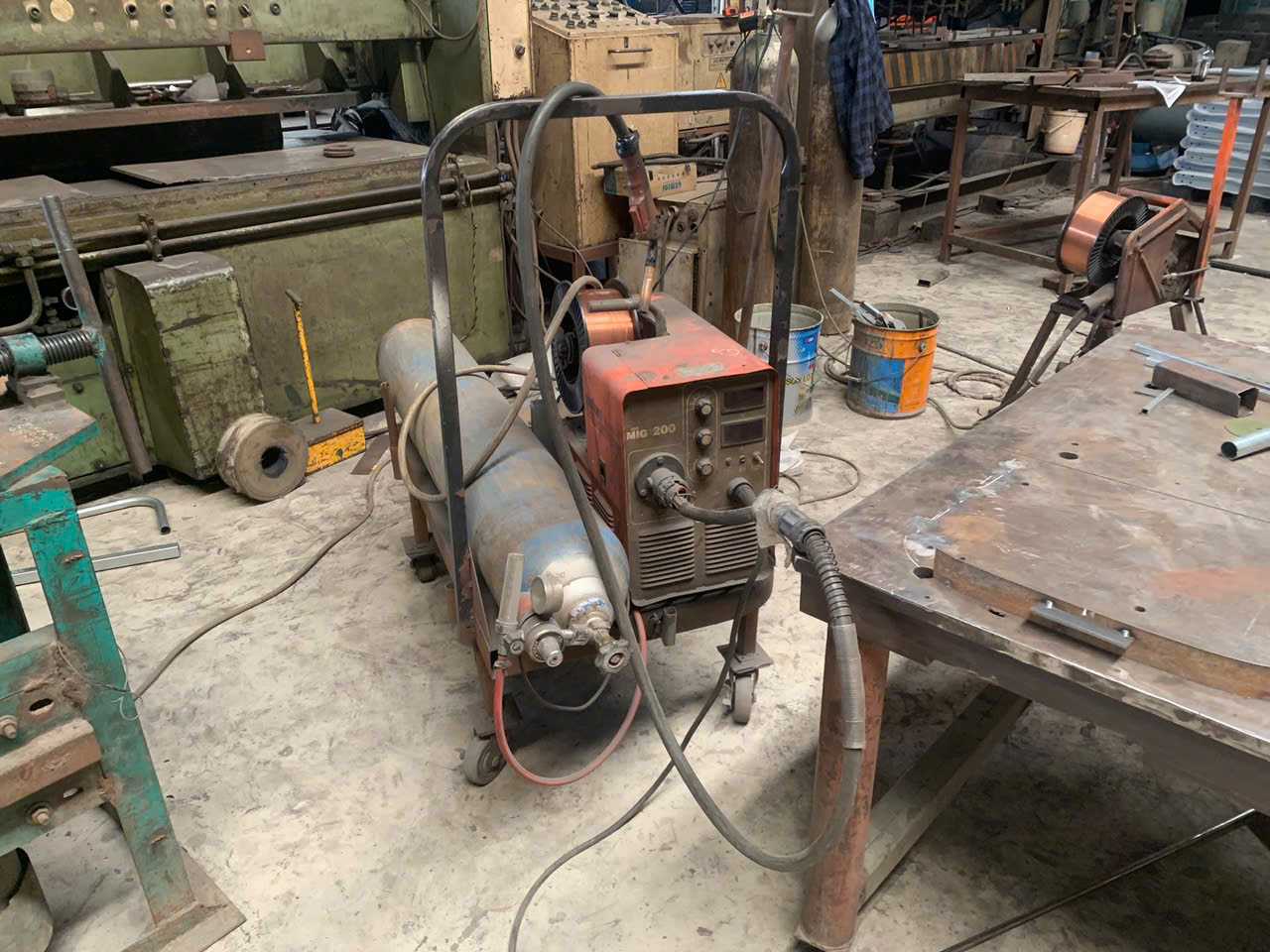
Many buyers ask a supplier if they are ISO certified and stop there. That is a mistake. A certificate on the wall does not tell you if the shop floor follows the procedures. When our team audits a welding facility in Vietnam, we go beyond the certificate. We check the internal audit logs. We look at corrective action records. We ask the quality manager to walk us through their reaction plan when a weld fails visual inspection.
Here is what we look for during a supplier QC audit:
| QC Checkpoint | What to Ask | Red Flag |
|---|---|---|
| Incoming material inspection | Do they test raw steel or aluminum before cutting? | No incoming inspection records |
| Welder certification | Are welders certified to AWS D1.1 3 or equivalent? | Certifications expired or missing |
| In-process inspection | Do they check fit-up, gap, and alignment before welding? | No documented checkpoints |
| Final inspection | Do they use CMM, gauges, or fixtures to verify dimensions? | Only visual inspection, no data |
| PPAP documentation 4 | Can they produce a full PPAP package (control plan, PFMEA, MSA)? | Never heard of PPAP |
Understanding the PPAP Process for Welded Parts
PPAP — Production Part Approval Process — is standard in automotive. But it applies to any custom welded part where consistency matters. A proper PPAP package for welded assemblies should include a process flow diagram, a control plan that lists every inspection point, measurement system analysis, and initial sample inspection reports with actual measured values versus drawing tolerances.
When we manage a project for a U.S. buyer, we require our welding partners to submit PPAP Level 3 documentation before the first production run ships. This catches problems early. It forces the supplier to prove they understand the drawing, have the right fixtures, and can repeat the process.
Welder Certification and Recertification
Welder certifications are generally valid for three to five years. But skills can erode, and new welding procedure specifications may be introduced. Ask the supplier about their recertification policy. Do they track which welders are qualified for which processes? A facility that welds both MIG on carbon steel and TIG on stainless steel needs welders certified for each.
We also check whether the supplier audits their Non-Destructive Examination (NDE) process 5. For structural welded parts — like the heavy-duty mounting brackets and multi-level steel frames our clients order — we want to see evidence of dye penetrant testing or ultrasonic testing on critical joints, not just a visual pass.
Why should I consider sourcing my custom welded parts from Vietnam instead of China?
Three years ago, one of our U.S. clients asked us to find a welding partner outside of China. Tariffs had pushed their landed cost up by 25%, and they needed a competitive alternative — fast.
You should consider sourcing custom welded parts from Vietnam because it offers lower tariff exposure for U.S. imports, competitive labor costs, a growing base of skilled welders, and favorable trade agreements — all while providing quality levels that rival established Chinese suppliers when managed with proper oversight.

The Tariff Factor
This is the most immediate reason U.S. buyers are shifting. Section 301 tariffs 7 on Chinese-origin steel and aluminum fabrications can add 25% or more to your cost. Vietnam-origin parts currently face significantly lower duties. For heavy welded assemblies — frames, brackets, base plates — the savings on a single container can be substantial.
| Factor | China | Vietnam |
|---|---|---|
| Section 301 tariff exposure | 25% on most steel/aluminum parts | Generally not subject to Section 301 |
| Average welding labor cost | Higher than Vietnam, rising annually | 30–50% lower than China in many regions |
| Supplier density for welding | Very high, thousands of options | Growing, hundreds of capable shops |
| English communication level | Variable | Variable, but improving rapidly |
| Our local team presence | 21 employees in our China office | 7 employees in our Vietnam office |
| Trade agreements favoring U.S. | Limited | CPTPP member 8, bilateral trade growth |
What Vietnam Gets Right
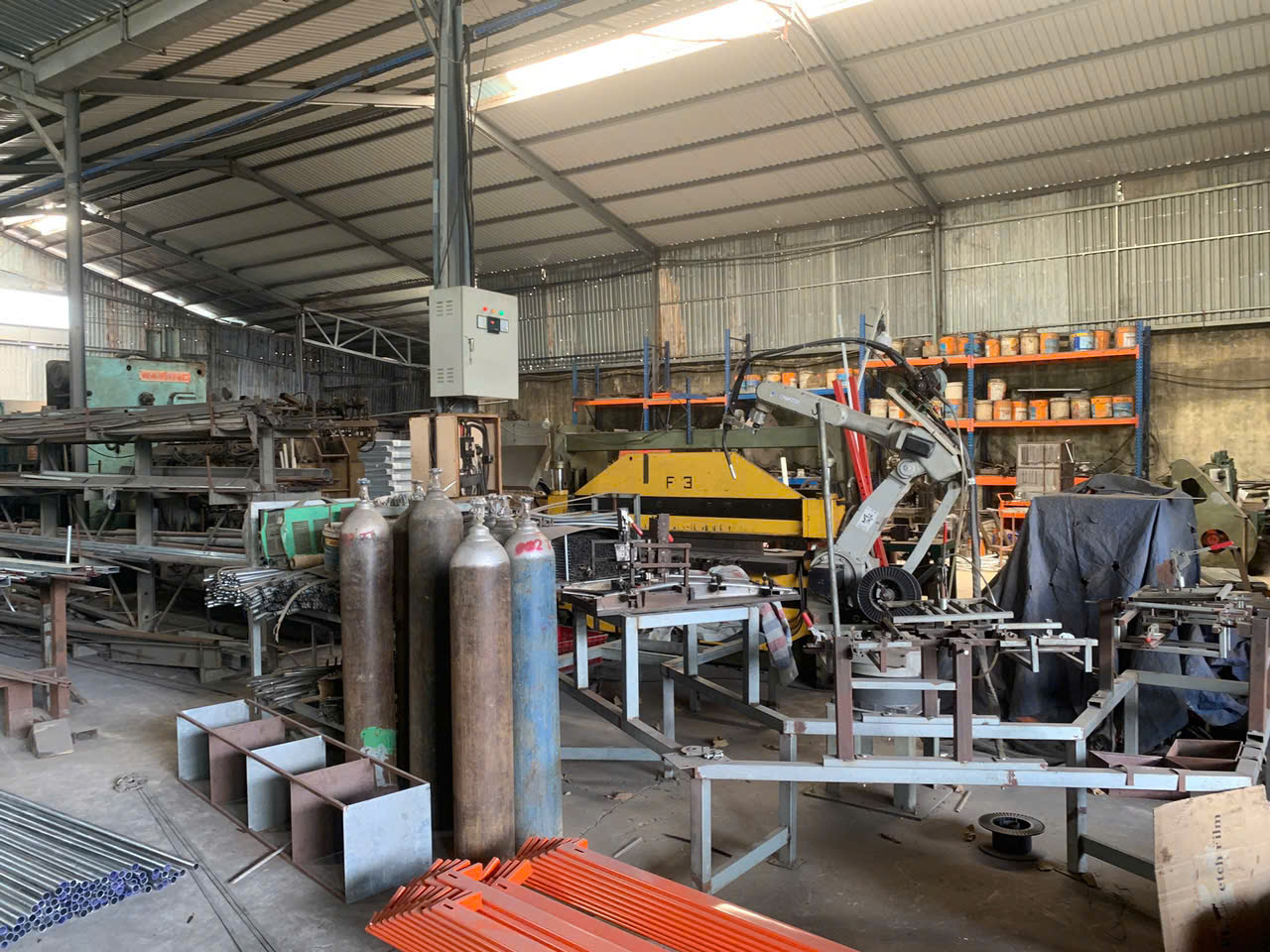
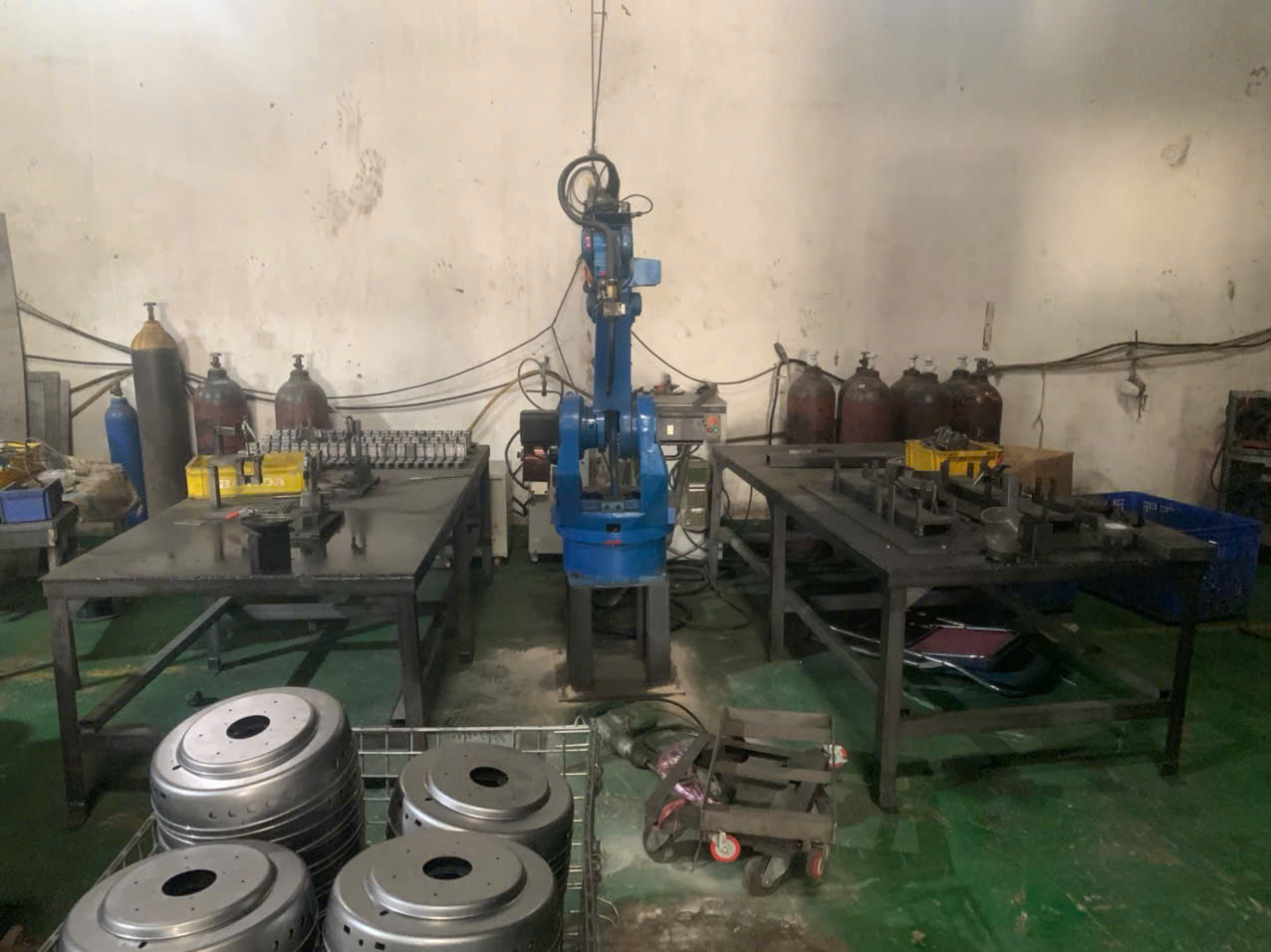
Vietnam's manufacturing capabilities in metal fabrication have expanded rapidly. Many Vietnamese welding shops have invested in modern equipment — CNC plasma cutters, robotic MIG welding cells, and coordinate measuring machines. The workforce is young and trainable. When our Vietnam team onboards a new welding supplier, we find that factories are eager to adopt quality systems and follow procedures.
That said, Vietnam is not a drop-in replacement for China. The supply chain for raw materials is thinner. Some specialty alloys still need to be imported. Lead times for material sourcing can be longer if you need something beyond standard carbon steel or aluminum.
When China Still Makes Sense
I want to be fair. For extremely complex welded assemblies that require multiple secondary processes — machining, plating, heat treatment — all under one roof, China still has an edge in supplier density. If your project requires a single-source partner who can handle everything from laser cutting to powder coating to final assembly, you may find more options in China's industrial clusters.
But for straightforward welded frames, brackets, and structural assemblies — the types of thick-gauge steel and aluminum components with precision-drilled mounting holes and reinforced gussets that our clients typically order — Vietnam is highly competitive. And with our local team managing the process, the risk management gap narrows significantly.
A Practical Decision Framework
Ask yourself three questions before choosing a country:
- Is tariff cost a major factor in my total landed price?
- Is my part a standard welded assembly, or does it require specialized secondary processes?
- Do I have (or can I access) on-the-ground oversight in the sourcing country?
If you answer yes, yes (standard), and yes, Vietnam deserves serious consideration. For a deeper look at comparing quotes across Vietnamese suppliers, see our guide on how to evaluate supplier quotes when sourcing welding parts from Vietnam.
Can my welding partner offer open account payment terms to support my business growth?
When I talk with purchasing managers in the U.S., cash flow always comes up — usually after the third or fourth conversation, once they trust us enough to mention it.
Yes, some welding partners can offer open account payment terms — typically 60 to 90 days — to qualified buyers, which frees up working capital, reduces reliance on letters of credit, and supports smoother procurement cycles for growing businesses that import custom parts regularly.
Why Payment Terms Matter More Than Price Per Piece
Many buyers focus only on unit price when comparing suppliers. But payment terms have a direct impact on your cash flow and your ability to scale. If Supplier A offers $5.00 per bracket with 30% deposit and 70% before shipment, and Supplier B offers $5.20 per bracket on 60-day open account, Supplier B may actually cost you less when you factor in the time value of money and the avoided cost of tying up cash.
Here is a comparison:
| Payment Structure | Cash Impact on Buyer | Risk to Supplier | Common With |
|---|---|---|---|
| 100% prepayment | Maximum cash burden on buyer | Zero risk for supplier | New or small suppliers |
| 30/70 (deposit/before shipment) | Moderate cash burden | Low risk for supplier | Most Asian suppliers |
| Letter of credit | Bank fees, paperwork | Low risk, bank-backed | Traditional trade |
| Open account (Net 60–90) | Minimal cash burden | Higher risk for supplier | Trusted, established partners |
How We Make Open Account Work
At DEWIN, we understand that U.S. importers need flexible payment terms to stay competitive. We offer open account terms — typically Net 60 or Net 90 — to qualified clients. This is unusual in Asian manufacturing trade. Most suppliers in Vietnam or China will not extend credit because they lack the financial infrastructure or the trust mechanisms.
We can do this because of our Singapore headquarters, our established banking relationships, and our rigorous client qualification process. We treat payment terms as a partnership tool, not a risk. When a buyer commits to regular orders and demonstrates reliability, we invest in the relationship by easing their cash flow pressure.
What You Should Ask Your Welding Partner
Not every supplier will offer open account, and that is okay. But you should still ask:
- What payment terms do you offer for repeat orders?
- Is there a minimum order volume required to qualify for credit terms?
- Do you offer any flexibility during peak ordering seasons?
- Can you provide trade references from other U.S. clients who use your credit terms?
If the supplier refuses to discuss payment flexibility at all, it may signal limited financial stability or a transactional mindset that does not support long-term partnership.
How do I ensure my supplier understands my technical drawings to avoid costly rework?
Last quarter, we caught a critical error during a pre-production review: a Vietnamese welding shop had misread a GD&T callout on a mounting bracket drawing. The position tolerance on four bolt holes was 0.5mm, but the shop had set up their fixture for 1.0mm. We caught it before a single part was welded.
You can ensure your supplier understands your technical drawings by conducting a formal Design for Manufacturability (DFM) review before production, requiring them to submit a marked-up drawing with questions, verifying they can interpret GD&T symbols, and using a first article inspection (FAI) to validate the first production sample.
The Root Cause of Most Welding Rework
In our experience, the number one reason for rework on custom welded parts is not poor welding skill. It is miscommunication. The supplier does not fully understand the drawing. They assume a tolerance instead of asking. They miss a note about weld type or surface finish. They ignore a critical dimension because it is buried on page three of a multi-page drawing package.
This is especially common with complex welded assemblies — like multi-level steel frames with V-shaped brackets, pre-drilled mounting holes, and reinforced gussets. These parts have dozens of dimensions, and every one matters.
The DFM Review Process
Before any metal gets cut, we run a structured DFM review with the welding shop. Here is our typical process:
- Send the drawing package to the supplier with a request for written feedback within five business days.
- Require a marked-up drawing where the supplier highlights any dimension they have questions about, any tolerance they consider tight, and any feature they believe needs a special fixture or process.
- Hold a video call to walk through the marked-up drawing together. This is where we uncover the gaps.
- Issue a finalized production drawing with any agreed changes clearly noted in revision clouds.
- Lock the control plan — every critical dimension gets a defined inspection method and frequency.
Common Drawing Misinterpretation Issues
| Drawing Element | Common Misunderstanding | How to Prevent It |
|---|---|---|
| GD&T position callout | Supplier treats it as a basic linear tolerance | Confirm GD&T training; provide datum reference examples |
| Weld symbol (e.g., fillet vs. groove) | Supplier defaults to their preferred weld type | Specify weld type, size, and length explicitly |
| Surface finish callout | Supplier ignores it or applies wrong standard | Include finish samples or reference photos |
| Material specification (e.g., A36 vs. A572) | Supplier substitutes without asking | Require material test certificates for incoming steel |
| Assembly sequence notes | Supplier welds in wrong order, causing distortion | Include a welding sequence diagram in the package |
First Article Inspection: Your Safety Net
Even after a thorough DFM review, we always require a first article inspection. first article inspection (FAI) 9 The supplier produces one to three pieces, fully inspects them against the drawing, and sends us the FAI report with actual measured values. Our QC team in Vietnam or China verifies the report independently. Only after FAI approval does mass production begin.
This step adds a few days to the schedule. But it saves weeks of potential rework. For the heavy-duty industrial brackets and fabricated hardware components our clients order — parts with L-shaped mounts, U-channels, and flat base plates that must fit precisely into larger assemblies — getting it right the first time is not optional. It is the whole point.
Technical Expertise Is a Two-Way Street
I want to emphasize one thing: technical expertise is not just about the supplier's skills. It is also about how clearly you communicate your requirements. Provide complete drawings. Include 3D models when possible. Add reference photos of similar parts. The more information your welding partner has, the fewer assumptions they make. And fewer assumptions means fewer surprises at the receiving dock. If you are new to OEM procurement and still building your supplier evaluation process, our article on how new OEM procurement professionals can find the best welding parts suppliers provides a useful starting framework.
Conclusion
Evaluating OEM welding parts suppliers requires more than checking a price list. Ask hard questions about quality assurance systems, technical expertise, payment flexibility, and drawing comprehension — then verify the answers with documentation, audits, and trial orders. Understanding what key factors contract manufacturers should prioritize when selecting welding parts suppliers can further strengthen your evaluation approach.
Frequently Asked Questions
How can I verify that my OEM welding supplier follows strict QC and PPAP standards?
A lesson we learned early on: one missed dimensional check on a welded steel frame cost our client three weeks and thousands of dollars in rework — all because the supplier skipped incoming material inspection Design for Manufacturability (DFM) review 2 .
Why should I consider sourcing my custom welded parts from Vietnam instead of China?
Three years ago, one of our U.S. clients asked us to find a welding partner outside of China. Tariffs had pushed their landed cost up by 25%, and they needed a competitive alternative — fast.
Can my welding partner offer open account payment terms to support my business growth?
When I talk with purchasing managers in the U.S., cash flow always comes up — usually after the third or fourth conversation, once they trust us enough to mention it.
Footnotes
1. U.S. government resource explaining open account transactions in international trade. ↩︎
2. Replaced with an authoritative Wikipedia page defining Design for Manufacturability (DFM). ↩︎
3. Official American Welding Society page for the Structural Welding Code – Steel. ↩︎
4. Explains the Production Part Approval Process (PPAP) and its 18 elements for supplier approval. ↩︎
5. ASNT provides an overview of NDE methods for evaluating materials without causing damage. ↩︎
6. Official ISO page explaining the ISO 9001 quality management system standard. ↩︎
7. Replaced with an authoritative Wikipedia page explaining Section 301 of the Trade Act of 1974, which covers these tariffs. ↩︎
8. Australian government site outlining the CPTPP agreement and its member countries. ↩︎
9. Replaced with an authoritative Wikipedia page defining First Article Inspection (FAI). ↩︎