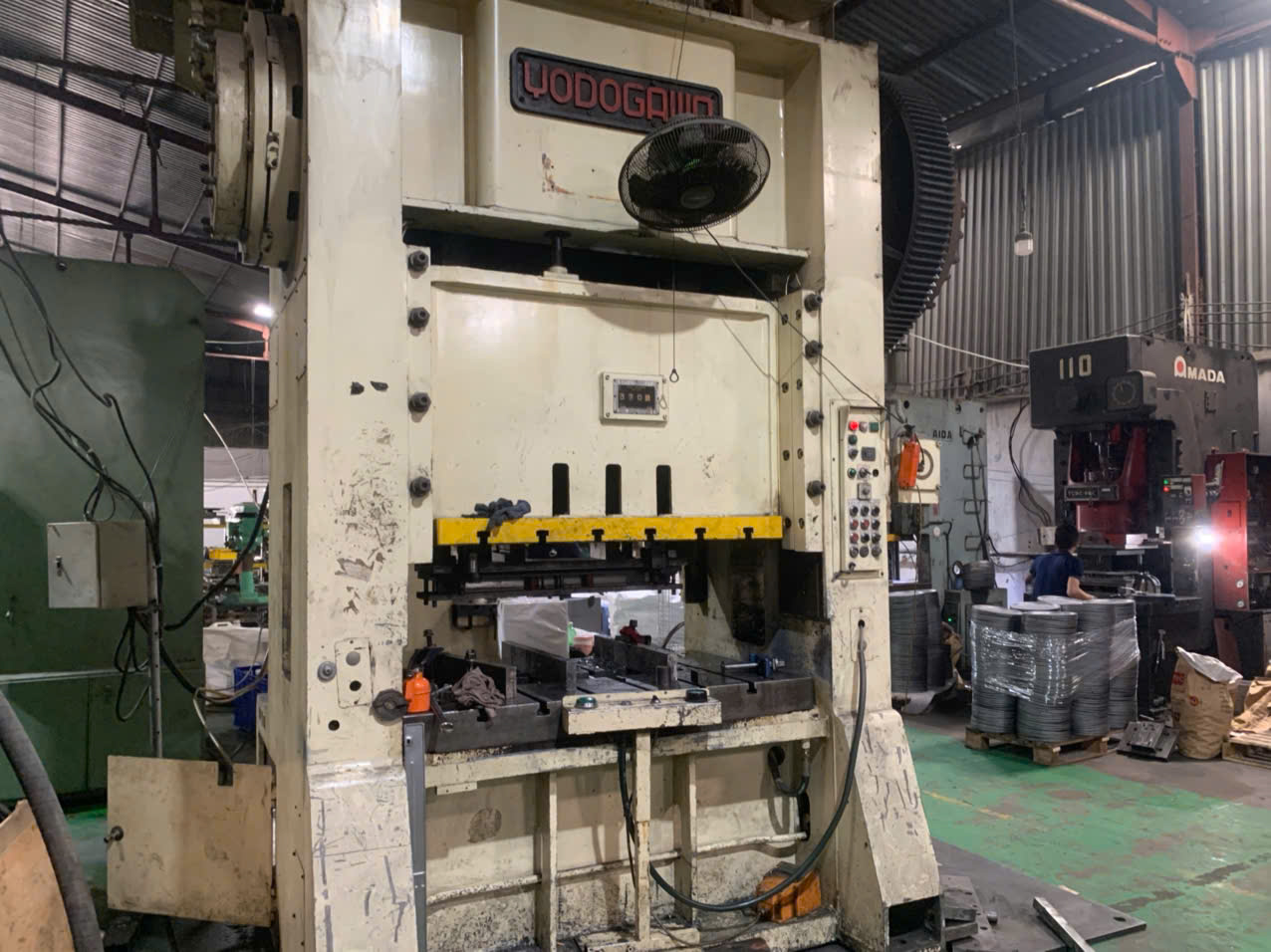

Last quarter, our Vietnam office handled a shipment of custom stamping brackets where a single mismatched part description on the commercial invoice froze payment for eleven days—a problem that keeps recurring across the industry.
Letter of Credit operations when sourcing stamping parts from Vietnam require extreme precision in documentation, strict UCP 600 compliance, and close coordination between buyer, supplier, and issuing and advising banks to prevent costly discrepancies that delay payment and customs clearance.
This guide covers the full L/C workflow, the documents you need, common pitfalls with Vietnamese banking practices, and when an L/C actually makes sense versus open account terms. Every section draws on our direct experience managing trade finance for custom stamping projects between Vietnam and the United States.
How does a Letter of Credit actually work when I import stamping parts from Vietnam?
A buyer we work with in Ohio once told me he avoided L/Cs for years because the process "felt like a black box." After his previous supplier shipped non-conforming parts with no recourse, he reconsidered. We walked him through each step, and his first L/C-backed order cleared without a single discrepancy.
An L/C works by having the buyer's bank guarantee payment to the Vietnamese supplier once compliant shipping documents—Bill of Lading, commercial invoice, inspection certificate, and Certificate of Origin—are presented and verified by the advising bank under UCP 600 rules.

The Five-Step L/C Workflow
The process follows a predictable sequence. Understanding each step helps you avoid surprises.
- Sales contract first. You and the stamping supplier agree on price, Incoterms 2020 1 terms (commonly FOB Ho Chi Minh City), part specifications, and required documents. This contract is the foundation of the L/C.
- Buyer applies for the L/C. You go to your issuing bank with the contract. The bank drafts the L/C and transmits it via SWIFT 2 to the supplier's advising bank in Vietnam.
- Advising bank verifies. A Vietnamese bank—often Vietcombank, Techcombank, or BIDV—authenticates the L/C and forwards it to the supplier.
- Supplier ships and presents documents. After production and export customs clearance, the supplier submits the full document set to the advising bank.
- Banks check compliance. If everything matches, the advising bank sends documents to the issuing bank, payment is released, and you receive the documents needed for import customs clearance.
Sight vs Usance LC: Which Fits Stamping Orders?
This is a trade-off we discuss with nearly every new client. The choice affects cash flow on both sides.
| Feature | Sight L/C | Usance (Deferred) L/C |
|---|---|---|
| Payment timing | Immediately upon compliant document presentation | 30, 60, or 90 days after presentation |
| Cash flow impact on buyer | Higher—funds leave your account quickly | Lower—gives you time to receive and sell goods |
| Supplier preference | Strongly preferred by most Vietnamese stamping shops | Accepted but may require higher unit pricing |
| Bank fees | Standard L/C fees | Slightly higher due to deferred risk |
| Common use case | New supplier relationships, first orders | Established partnerships, large-volume contracts |
Most Vietnamese stamping manufacturers prefer irrevocable at-sight L/Cs. They want payment security before releasing goods. In our experience, if you need extended terms, a usance L/C at 60 days is workable, but expect to negotiate. Note that Circular 21/2024/TT-NHNN has introduced stricter limits on UPAS L/Cs in Vietnam, so confirm your bank's current policy before applying.
The Role of Each Bank
The issuing bank acts on behalf of the buyer. The advising bank acts on behalf of the supplier. Neither bank inspects the physical goods. They only verify paper documents. This is a critical distinction. The L/C is a documentary credit, not a product guarantee. That is why a third-party quality inspection certificate becomes so important for stamping parts with tight tolerances.
Red Clause L/Cs for Custom Tooling
One emerging practice in the stamping industry involves "Red Clause" L/Cs. These allow the supplier to draw an advance payment before shipment—specifically to cover the cost of custom die and mold fabrication. If your stamping parts require new tooling, this structure can reduce the supplier's upfront financial burden and accelerate production start.
What documents do I need to prepare to avoid L/C discrepancies with my Vietnam supplier?
When our team in Vietnam reviews an L/C draft before issuance, we check every document requirement against what the supplier can actually produce. I learned this the hard way: one early project specified an inspection certificate from "SGS 4 Vietnam" but the supplier's local SGS office only issued certificates under a slightly different entity name. That mismatch cost us a week.
To avoid L/C discrepancies, you need a precisely worded commercial invoice, a full set of clean on-board Bills of Lading, the correct Certificate of Origin form, a third-party quality inspection certificate, and a detailed packing list—all matching the L/C terms word for word.

The Core Document Checklist
Here is the standard document set required for stamping parts shipped from Vietnam under an L/C:
| Document | Key Requirements for Stamping Parts | Common Discrepancy |
|---|---|---|
| Commercial Invoice | Exact part numbers, material specs (e.g., "SPCC cold-rolled steel"), quantity, unit price, total amount matching L/C | Using "steel" instead of "cold-rolled steel" |
| Bill of Lading (B/L) | Full set of 3 originals, marked "clean on board," consignee per L/C, goods description matching invoice | Shipped-on-board date after L/C deadline |
| Certificate of Origin (C/O) | Form D (ASEAN), Form EUR.1 (EU), or standard Chamber of Commerce form depending on destination FTA | Wrong form type or missing FTA reference |
| Quality Inspection Certificate | Issued by a named third-party firm (SGS, Bureau Veritas 5, TÜV) ISO 6, covering dimensional accuracy and material composition | Inspector entity name not matching L/C wording |
| Packing List | Quantity per carton/crate, net and gross weight, package dimensions, moisture barrier notation for stamping parts | Missing packaging method details |
| Insurance Certificate | If CIF terms, coverage amount typically 110% of invoice value | Coverage amount less than L/C requirement |
Why Stamping Parts Need Extra Attention
Stamping parts are not generic commodities. A bracket with a 0.5mm tolerance and a zinc-galvanized finish has very specific material and quality descriptors. If the L/C says "zinc-plated mounting bracket, material: SGCC," the invoice must say exactly that. Not "galvanized bracket." Not "steel clip." The words must match.
Our process includes a document alignment review before the L/C is even issued. We sit down with the supplier and go through every line item. We confirm:
- The exact part description they will print on invoices.
- Which inspection body has a local office and can issue a certificate within the required timeframe.
- Whether the correct C/O form is obtainable for the buyer's destination country.
Specialized Documents for Precision Stamping
For buyers in automotive or electronics, the L/C may also mandate an IATF 16949 7 quality certificate or a material test report. These are becoming non-negotiable for precision metal fabrication Vietnam orders. Some emerging "Green L/C" clauses even require carbon emission data or CBAM-compliant documentation carbon border adjustment mechanism 8. If your industry is heading in that direction, build those requirements into the sales contract before the L/C is drafted.
The 21-Day Rule
Under UCP 600 compliance standards, documents must be presented to the advising bank within 21 days after the Bill of Lading date and before the L/C expiry date—whichever comes first. Missing this window means automatic rejection, regardless of how perfect your documents are. We always build a 5-day internal buffer into our project timelines to account for document preparation.
Why do so many L/C transactions with Vietnamese stamping suppliers get delayed or rejected?
Here is a pattern I have seen repeatedly: a U.S. buyer issues an L/C with document requirements copied from a previous order with a Chinese supplier. The Vietnamese supplier agrees to the terms without fully reading them. Then, at document presentation, three discrepancies surface—and everyone points fingers.
L/C transactions with Vietnamese stamping suppliers get delayed primarily because of document discrepancies—mismatched part descriptions, incorrect C/O forms, late document presentation, and the strict verification standards of Vietnamese banks that reject documents for even minor typographical errors.

The Top Five Causes of L/C Failure
Based on our direct involvement in dozens of stamping part shipments, these are the most frequent problems:
- Part description mismatch. The L/C says "precision stamped bracket, material: SUS304." The invoice says "stainless steel bracket." The bank rejects it.
- Late shipment date. Production delays push the shipping date past the L/C's latest shipment deadline. The on-board B/L date does not lie.
- Incorrect C/O form. The buyer needs Form D for ASEAN preferential treatment, but the supplier obtains a standard Chamber of Commerce certificate.
- Missing or incorrectly named inspection body. The L/C requires inspection by "Bureau Veritas Vietnam." The certificate is issued by "Bureau Veritas Certification Vietnam Co., Ltd." The bank flags the entity name difference.
- Typographical errors. A wrong digit in the L/C number on the invoice. A misspelled consignee name on the B/L. Vietnamese banks are notorious for catching these.
Vietnamese Banks and Strict Verification
There is a reason Vietnamese banks earn a reputation for being highly pedantic. Under UCP 600, banks have no discretion—they must refuse documents that do not comply. But in practice, some banking cultures are more flexible about minor errors. Vietnamese banks tend to follow the rules to the letter. A missing comma, a date format inconsistency (DD/MM/YYYY vs. MM/DD/YYYY), or a slight difference in the goods description will trigger a formal discrepancy notice.
This strictness protects the buyer, but it can frustrate suppliers who are unfamiliar with the process. In our Vietnam office, we run a pre-submission review of every document before the supplier takes them to the advising bank. This step alone has eliminated the majority of discrepancies we used to encounter.
The Cost of Discrepancies
| Discrepancy Outcome | Impact on Buyer | Impact on Supplier |
|---|---|---|
| Bank requests amendment | L/C amendment fee ($50–$200), 3–7 day delay | Shipment held at port, storage costs |
| Documents sent "under reserve" | Buyer must approve discrepancy, loses negotiating leverage | Payment delayed until buyer accepts |
| Documents rejected outright | Goods stuck at origin, potential re-export or contract dispute | No payment, cash flow crisis |
How to Prevent These Problems
Prevention starts before the L/C is issued. We recommend a "mirror review" process:
- Draft the L/C terms.
- Send them to the supplier for review.
- Have the supplier confirm they can produce every required document exactly as described.
- Adjust any terms that do not match reality.
This takes one to two extra days upfront but saves weeks of delay later. Digital L/C platforms like TradeFlat are also shortening the documentary gap by enabling electronic document presentation, though most Vietnamese banks still require physical originals for final verification. For related guidance, see our article on how to ensure accurate export documents when sourcing stamping parts from Vietnam.
Should I choose a Letter of Credit or open account terms when sourcing stamping parts from Vietnam?
One of our longest-standing U.S. clients started with L/Cs for every order. After two years and roughly fifteen successful shipments, he asked us to switch to open account terms with 60-day payment. The transition made sense—trust was established, quality was proven, and the bank fees were adding up. But for his first order with a new Vietnamese supplier last year, he went right back to an L/C.
Choose a Letter of Credit for new supplier relationships, high-value stamping orders, or when you lack verified trade history; switch to open account terms only after building trust through multiple successful shipments, as open account carries higher non-payment risk for the supplier.

Side-by-Side Comparison
| Factor | Letter of Credit | Open Account (Net 60–90) |
|---|---|---|
| Payment security for supplier | High—bank guarantees payment | Low—relies on buyer's creditworthiness |
| Payment security for buyer | High—payment only upon compliant documents | Moderate—goods received before payment |
| Cost | Bank fees: 0.5%–2% of L/C value, plus amendment and advising fees | Minimal—no bank intermediary fees |
| Speed | Slower—document preparation and bank verification take 5–15 days | Faster—invoice and payment on agreed terms |
| Administrative burden | High—precise documentation, bank coordination | Low—standard invoicing |
| Best for | First orders, large orders, new suppliers, high-risk markets | Repeat orders, established relationships, trusted suppliers |
| Cash flow impact on buyer | Requires cash collateral or credit line at issuing bank | Payment deferred, better working capital |
When to Use an L/C
Use an L/C when:
- You are placing your first order with a Vietnamese stamping supplier.
- The order value exceeds your risk tolerance for unsecured trade.
- The supplier is a smaller metal fabrication Vietnam shop without an established export track record.
- You need formal proof of shipment and origin for regulatory or compliance purposes.
When Open Account Makes Sense
Open account terms work when:
- You have completed multiple successful orders with the supplier.
- You have conducted a supplier audit and are confident in their production and financial stability.
- Your supply chain partner (like our team at DEWIN) provides on-the-ground oversight, including PPAP, process control, and final inspection.
- The bank fees and administrative time of L/Cs are no longer justified by the risk.
The Middle Ground: Combining Both
Some of our clients use a hybrid approach. They start with L/Cs for the first three to five orders. Once the supplier proves reliable—on-time delivery, right-first-time quality, clean documentation—they transition to open account with 60-day terms. We facilitate this transition by providing the buyer with detailed supplier performance reports, which build the confidence needed to extend credit.
For buyers who want the security of trade finance without the full complexity of an L/C, a standby letter of credit 10 (SBLC) is another option. It acts as a safety net—the buyer pays on open account terms, but if they fail to pay, the supplier can draw on the SBLC. This gives both sides flexibility while maintaining a financial backstop. You can also learn more about choosing secure L/C terms when sourcing welding parts from Vietnam for additional strategies that apply across part types.
The Hidden Costs of L/Cs
Beyond the obvious bank fees, consider the indirect costs:
- Internal staff time to coordinate with banks and review documents.
- Potential storage fees at port if documents are delayed.
- The opportunity cost of cash tied up as collateral at the issuing bank.
- Amendment fees if production timelines shift and L/C terms need updating.
For a $50,000 stamping parts order, total L/C-related costs can reach $1,000–$2,500. For a $5,000 order, the same fees make the L/C disproportionately expensive. This is why we generally advise L/Cs for orders above $20,000 with new suppliers, and open account for smaller repeat orders with proven partners.
Conclusion
Managing Letter of Credit operations for Vietnam stamping parts demands precision, local expertise, and the right payment strategy for each stage of your supplier relationship. Get the documents right, and the process protects everyone. For a deeper dive into the documentation side, see our guide on how to verify export documents from Vietnam stamping parts suppliers.
Frequently Asked Questions
Sight vs Usance LC: Which Fits Stamping Orders?
This is a trade-off we discuss with nearly every new client. The choice affects cash flow on both sides.
How does a Letter of Credit actually work when I import stamping parts from Vietnam?
A buyer we work with in Ohio once told me he avoided L/Cs for years because the process "felt like a black box." After his previous supplier shipped non-conforming parts with no recourse, he reconsidered. We walked him through each step, and his first L/C-backed order cleared without a single discrepancy.
What documents do I need to prepare to avoid L/C discrepancies with my Vietnam supplier?
When our team in Vietnam reviews an L/C draft before issuance, we check every document requirement against what the supplier can actually produce. I learned this the hard way: one early project specified an inspection certificate from " SGS 4 Vietnam" but the supplier's local SGS office only issued certificates under a slightly different entity name. That mismatch cost us a week.
Footnotes
1. Incoterms 2020 defines shipping and cost responsibility terms referenced for the sales contract. ↩︎
2. SWIFT is the interbank messaging network used to transmit the L/C internationally. ↩︎
3. UCP 600 is the core international rulebook governing L/C documentary compliance discussed throughout. ↩︎
4. SGS is the global inspection company cited in the discrepancy example about certificate naming. ↩︎
5. Bureau Veritas is a named third-party inspection firm central to certificate discrepancy examples. ↩︎
6. ISO sets international standards relevant to quality certificates referenced for stamping parts. ↩︎
7. IATF 16949 is the automotive quality management standard mentioned as a mandated certificate. ↩︎
8. CBAM is the EU carbon regulation referenced regarding emerging Green L/C documentation requirements. ↩︎
9. WTO oversees global trade rules underpinning FTA-based Certificate of Origin requirements discussed. ↩︎
10. SBLC is a specific financial instrument option explained as an alternative payment safety net. ↩︎