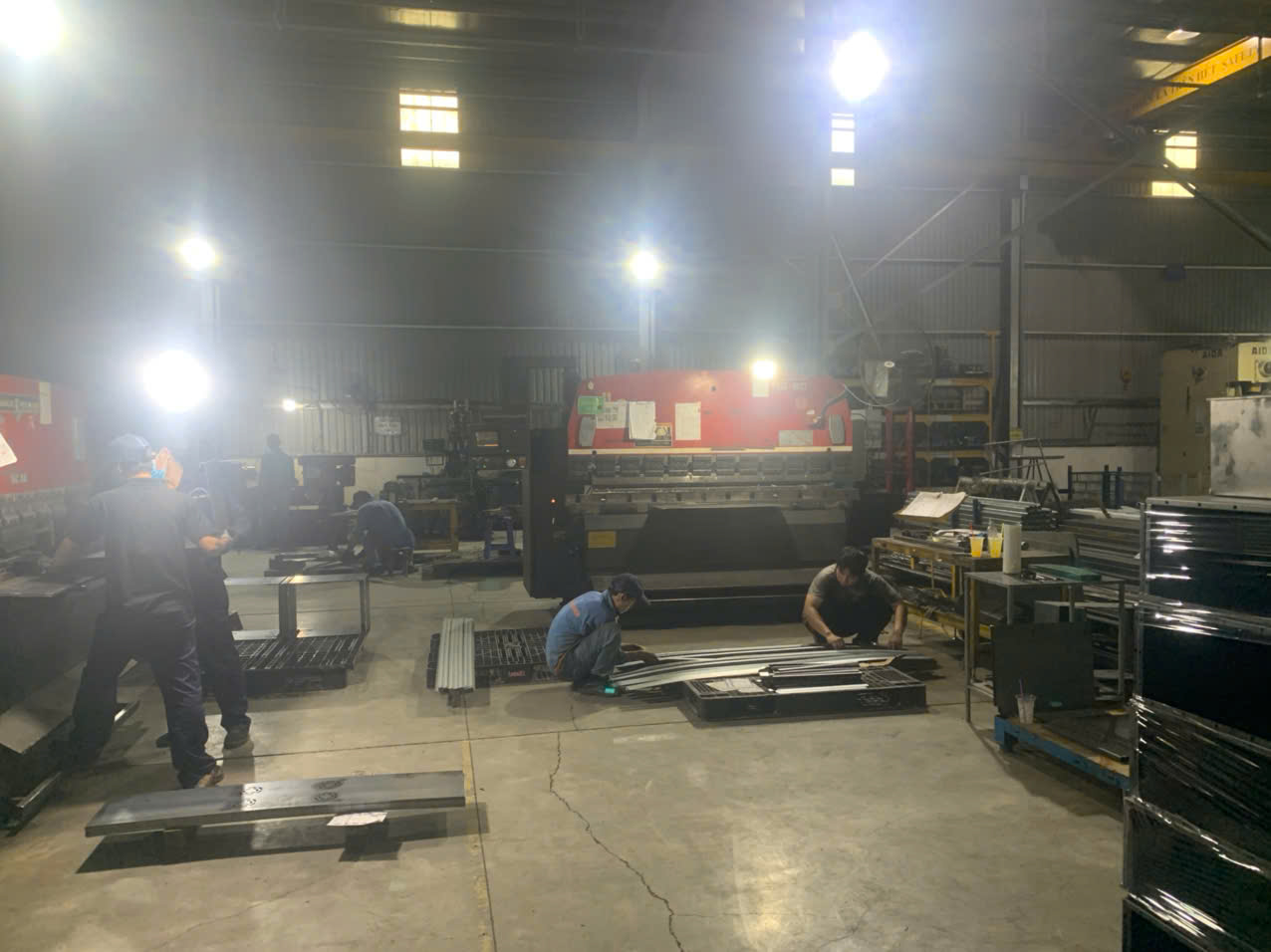

L/C operations when sourcing stamping parts from Vietnam tripped up one of our U.S. clients last year — a single mismatched document held up $38,000 in brackets for six weeks.
When sourcing stamping parts from Vietnam, you must understand irrevocable Letter of Credit mechanics, required shipping and inspection documents, tooling ownership clauses, material grade specifications, and bank compliance under UCP 600 guidelines to protect payment and ensure on-time delivery of conforming parts.
This article walks through the L/C types, document checklists, common discrepancies, and risk factors our team encounters daily while managing stamping supply chains between Vietnam and the United States.
How Do I Choose the Right Type of Letter of Credit for Vietnam Stamping Suppliers?
A lesson we learned early in our Vietnam office: the wrong L/C type can stall a stamping project before the first sheet of steel hits the press.
For Vietnam stamping suppliers, choose an irrevocable, sight-payment Letter of Credit as your default — it guarantees the supplier receives payment immediately upon presenting compliant documents, while protecting the buyer from shipping or quality risks through strict documentary credit process controls.

Why Sight L/C Works Best for Stamping
Stamping projects have a unique cost structure. Tooling and die costs are heavy upfront — often $3,000 to $15,000 for a single progressive die — while the per-piece price is low. This means the supplier carries significant financial exposure before production even begins. A sight L/C tells the supplier: "Deliver compliant documents, and your bank pays you immediately." That confidence matters. It keeps the supplier from dragging their feet on die construction or substituting cheaper material to hedge their risk.
In our experience coordinating between U.S. buyers and Vietnamese sheet metal fabrication shops 1, the sight L/C removes the most common friction point: payment timing. The supplier ships, presents documents, and gets paid. No waiting 60 or 90 days.
When to Consider Other L/C Types
Not every project fits a sight L/C perfectly. Here is a comparison of the main types we see in practice:
| L/C Type | Payment Timing | Best Use Case | Risk to Buyer | Risk to Supplier |
|---|---|---|---|---|
| Irrevocable Sight L/C | Immediate on document presentation | Standard stamping orders | Low — pays only on compliant docs | Low — gets paid fast |
| Usance (Deferred) L/C | 60–120 days after Bill of Lading date | Large industrial orders needing cash-flow flexibility | Low — delayed payment but still bank-backed | Medium — waits for payment |
| Back-to-Back L/C | Tied to a master L/C | Trading companies hiding supplier identity | Medium — complexity increases error risk | Medium — depends on master L/C |
| Transferable L/C | Transferred to a second beneficiary | Multi-tier supply chains | Medium — identity disclosure risk | Low |
| Revocable L/C | Can be canceled without notice | Never use for stamping | High — supplier may refuse to ship | Very high — no guarantee |
What About Tooling Payments?
Here is a practical tip from our project management team: do not put tooling costs inside the L/C. Tooling development involves iterations — prototype approval, dimensional adjustments, surface finish tweaks. Each change could trigger an L/C amendment, which costs money and time. Instead, pay tooling via Telegraphic Transfer 2 (T/T) in two stages: 50% upfront and 50% after first-article approval. Reserve the L/C for production piece shipments only.
Volume Thresholds That Affect Your L/C Decision
The economics of stamping in Vietnam also influence which payment method makes sense. If your annual volume is under $50,000, the tooling amortization and L/C banking fees may not justify the switch from China. Our team typically recommends L/C-backed Vietnam stamping when the order hits thousands of pieces and the tooling lead time of four to eight weeks fits within the program schedule.
What Documents Do I Need to Prepare for a Smooth L/C Transaction With My Vietnamese Supplier?
One detail our Vietnam team flagged during a recent bracket shipment: the buyer's L/C required a Certificate of Origin 3 in Form D, but the supplier submitted Form AK — the bank rejected the documents on the spot.
For a smooth L/C transaction with a Vietnamese stamping supplier, you must prepare a commercial invoice, packing list, Bill of Lading, Certificate of Origin, material test certificates, first-article inspection reports, and an insurance certificate — all matching the L/C terms exactly in wording, quantity, and format.

The Core Document Set
Vietnamese banks operate on a strict "documents-only" principle. They check paperwork, not parts. If the documents comply, the bank releases payment — regardless of whether the stamping parts actually meet your tolerances. This makes your document list your first and last line of defense.
Here is the standard document set we include in every L/C we help structure:
| Document | Purpose | Who Prepares It | Common Pitfall |
|---|---|---|---|
| Commercial Invoice | States price, quantity, Incoterms 2020 | Supplier | Description mismatch with L/C |
| Packing List | Details carton count, weight, dimensions | Supplier | Net/gross weight inconsistencies |
| Bill of Lading | Proof of shipment, title to goods | Shipping line / Freight forwarder | "On board" date after L/C shipping deadline |
| Certificate of Origin | Confirms Vietnam origin for tariff benefits | Chamber of Commerce or trade authority | Wrong form type (e.g., Form D vs. Form AK) |
| Material Test Certificate | Verifies steel grade, tensile strength, coating | Mill or independent lab | Missing ASTM/DIN/JIS standard reference |
| First-Article Inspection Report | Confirms dimensions match drawing | Supplier QC or third-party inspector | Tolerance format mismatch |
| Insurance Certificate | Covers marine cargo risk | Buyer or supplier (per Incoterms) | Coverage amount below 110% of invoice value |
| Beneficiary Certificate | Supplier's declaration of compliance | Supplier | Wording does not match L/C verbatim |
Why the Certificate of Origin Matters More Than You Think
Vietnam has extensive Free Trade Agreements 4 with the EU, ASEAN, and other regions. The Certificate of Origin is not just paperwork — it is the key that unlocks tariff advantages. For U.S. buyers, it also helps demonstrate that the parts did not originate in China, which matters when Section 301 tariffs 5 on Chinese goods range from 25% to 145% depending on the HTS code. If the C/O form is wrong, your customs broker cannot apply the correct duty rate, and your bank may reject the document set entirely.
Third-Party Inspection as a Payment Condition
For precision stamping — especially automotive brackets or structural mounting hardware — we strongly recommend mandating a third-party quality control inspection certificate as a condition for payment. Services like SGS or V-Trust provide independent verification that critical dimensions, surface finish, and material properties meet the drawing requirements. This certificate becomes part of the documentary credit process, so the bank will not release funds unless the inspection report is included and compliant.
Matching Every Word
Banks are literal. If your L/C says "hot-dipped galvanized steel brackets" and the invoice says "HDG steel brackets," that is a discrepancy. Our project coordinators review every document against the L/C text word by word before submission. This step alone has saved multiple shipments from costly delays during export customs clearance.
How Can I Avoid Common L/C Discrepancies When Sourcing Stamping Parts From Vietnam?
During a recent project involving powder-coated mounting brackets for a U.S. furniture hardware distributor, we caught three document mismatches forty-eight hours before the bank presentation deadline — any one of them would have frozen the payment.
To avoid common L/C discrepancies, align every document detail — product descriptions, quantities, shipping dates, and Incoterms 2020 — with the L/C text verbatim, negotiate a clerical error tolerance clause upfront, and conduct an internal document review at least three business days before presenting to the bank.

The Most Frequent Discrepancies We See
L/C discrepancies are the number one reason payments get delayed in Vietnam stamping transactions. Vietnamese advising banks can charge $50 to $200 per discrepancy, and some use minor errors as leverage to extract fees. Here are the discrepancies our team encounters most often, ranked by frequency:
- Product description mismatch — The invoice says "steel stamping bracket" but the L/C says "carbon steel stamped mounting bracket." One missing word triggers rejection.
- Late shipment date — The Bill of Lading shows an "on board" date one day after the L/C's latest shipping date. This happens when port congestion delays vessel loading.
- Inconsistent quantities — The packing list shows 10,020 pieces, but the L/C allows a maximum of 10,000. Even a small overship can be a problem unless the L/C includes a quantity tolerance clause (typically ±5% or ±10%).
- Insurance coverage shortfall — UCP 600 requires minimum 110% of CIF value. If the insurance certificate shows only 100%, the bank rejects it.
- Missing or incorrect Certificate of Origin form — Using Form AK (for ASEAN-Korea FTA) when the L/C specifies Form D (for ASEAN Trade in Goods Agreement).
The Clerical Error Tolerance Clause
This is a negotiation point most buyers overlook. We recommend adding language to the L/C that allows the advising bank to accept documents with minor typographical errors — misspelled city names, transposed digits in a phone number, or slight formatting differences — without declaring a formal discrepancy. Not every Vietnamese bank will agree, but when they do, it eliminates the most frustrating category of rejections.
A Pre-Submission Checklist
Our Vietnam office uses a standardized review process before any document set goes to the bank. Here is a simplified version:
| Check Item | What to Verify | Pass / Fail Criteria |
|---|---|---|
| Product description | Exact match with L/C wording | Word-for-word identical |
| Quantity | Within L/C tolerance (e.g., ±5%) | No over- or under-shipment outside tolerance |
| Unit price and total amount | Matches L/C value | No rounding errors |
| Shipping date | "On board" date on B/L | On or before L/C latest shipping date |
| Document presentation deadline | Calendar days after B/L date | Presented within 21 days (UCP 600 default) |
| Insurance coverage | Minimum 110% of invoice value | Certificate shows ≥110% |
| Certificate of Origin | Correct form type and issuing authority | Matches L/C requirement exactly |
| Beneficiary name and address | Matches L/C beneficiary field | No abbreviations or variations |
Building the Review Into Your Timeline
Do not wait until the shipping date to prepare documents. Our standard practice is to draft all documents in parallel with production. Once the parts pass final quality control inspection and are packed, we only need to insert the actual weights and Bill of Lading number. This gives us a three-day buffer to catch errors. For stamping parts with specific material certifications — ASTM A1008 6 for cold-rolled steel, for example — we request the mill certificate early in production, not after the parts ship.
What Risks Should I Watch for When Using L/C Payment Terms With New Vietnamese Manufacturers?
The first time we onboarded a domestic Vietnamese stamping factory for a U.S. client's post-base brackets, the supplier quoted an attractive piece price — but buried the die maintenance costs, finish inspection, and export customs clearance fees in a vague "additional charges" line item.
When using L/C payment terms with new Vietnamese manufacturers, watch for hidden tooling and die costs, unclear material grade commitments, resistance to confirmed L/Cs, inconsistent export documentation practices, and limited familiarity with UCP 600 guidelines — all of which can trigger payment disputes or delivery failures.

Supplier Vetting Goes Beyond Certificates
Vietnam's stamping supplier landscape varies enormously. Foreign-owned factories — Japanese, Korean, Taiwanese, or Danish operations — generally communicate more clearly with Western buyers and maintain structured document control systems. Domestic Vietnamese factories can offer lower prices, but their familiarity with international L/C requirements is often limited.
Our team conducts equipment-level verification before we recommend any supplier to a client. That means walking the press floor, reviewing the tonnage range of their presses, checking whether they have coil-feeding automation, and confirming whether they operate an in-house toolroom. A supplier who outsources die-making may struggle with the tooling lead time commitments that your L/C validity period depends on.
Tooling Ownership: The Hidden Battleground
This is the risk that catches the most buyers off guard. If your L/C contract does not explicitly state that the buyer owns the die, the Vietnamese supplier may claim ownership — and refuse to release it if you want to move production to another factory. We always include a tooling ownership clause in the purchase agreement, separate from the L/C, specifying:
- The buyer owns the die upon final payment of tooling costs.
- The supplier is responsible for die maintenance up to a defined number of strokes (e.g., 500,000 hits).
- The expected die life and replacement cost triggers are documented.
Material Grade and Specification Risks
When we specify ASTM A653 7 galvanized steel for a bracket, we need the supplier to confirm that this grade is locally available in Vietnam or priced with import lead time from Japan, Korea, or China. Some domestic suppliers will substitute a "similar" local grade without disclosure. The L/C should mandate a material test certificate referencing the exact international standard — DIN, JIS, or ASTM — so that a substitution would create a documentary discrepancy and block payment.
Confirmed L/C Resistance
Many Vietnamese suppliers resist confirmed L/Cs. The reason is practical: Vietnamese banks charge high additional fees and collateral requirements for confirmed L/Cs. The supplier may need to deposit 10% to 20% of the L/C value as collateral with their bank. For smaller stamping shops, this ties up working capital they need for raw material purchases. We typically advise clients to use an unconfirmed irrevocable L/C 8 with a reputable issuing bank instead, which most Vietnamese suppliers accept without pushback.
Logistics and Delivery Risks
Vietnam's export infrastructure has improved significantly. Deep-water ports like Lach Huyen in the north and Cai Mep in the south support weekly ocean freight to North America and Europe. Highway networks connect major industrial zones directly to these shipping hubs. However, new suppliers may not have ERP tracking systems 9 capable of supporting just-in-time delivery schedules. We verify this during the supplier audit — if the factory cannot provide real-time production status updates, we flag it as a delivery risk.
The Blockchain Factor
One emerging development worth noting: major Vietnamese banks 10 are adopting blockchain-based electronic L/Cs. These e-L/Cs can reduce document processing times from ten days to less than twenty-four hours. For stamping programs with tight delivery windows, this technology is a game-changer. We have started working with banks that offer e-L/C platforms, and the speed improvement is real — though adoption is still limited to the larger banking institutions.
Conclusion
L/C operations for stamping parts from Vietnam demand precision in document preparation, deliberate L/C type selection, explicit tooling ownership terms, and thorough supplier vetting — get these right, and Vietnam delivers real cost and tariff advantages. For a deeper dive into using Letters of Credit for secure sheet metal fabrication sourcing from Vietnam, explore our detailed guide on the topic.
Frequently Asked Questions
What About Tooling Payments?
Here is a practical tip from our project management team: do not put tooling costs inside the L/C. Tooling development involves iterations — prototype approval, dimensional adjustments, surface finish tweaks. Each change could trigger an L/C amendment, which costs money and time. Instead, pay tooling via Telegraphic Transfer 2 (T/T) in two stages: 50% upfront and 50% after first-article approval. Reserve the L/C for production piece shipments only.
How Do I Choose the Right Type of Letter of Credit for Vietnam Stamping Suppliers?
A lesson we learned early in our Vietnam office: the wrong L/C type can stall a stamping project before the first sheet of steel hits the press.
What Documents Do I Need to Prepare for a Smooth L/C Transaction With My Vietnamese Supplier?
One detail our Vietnam team flagged during a recent bracket shipment: the buyer's L/C required a Certificate of Origin 3 in Form D, but the supplier submitted Form AK — the bank rejected the documents on the spot.
Footnotes
1. Provides a general overview of the sheet metal industry and common fabrication processes. ↩︎
2. Defines the electronic method of fund transfer used for international business transactions. ↩︎
3. Authoritative guide on the purpose and issuance of certificates of origin in international trade. ↩︎
4. Provides official information on regional trade agreements and their impact on global commerce. ↩︎
5. Official U.S. government resource explaining trade enforcement actions and tariffs on imported goods. ↩︎
6. Technical standard for cold-rolled carbon steel sheet used in stamping applications. ↩︎
7. Technical standard for hot-dip galvanized steel sheet used in manufacturing stamped components. ↩︎
8. Authoritative Wikipedia entry defining the mechanics and types of irrevocable letters of credit. ↩︎
9. Defines the integrated management systems used by manufacturers to track production and logistics. ↩︎
10. Comprehensive list of state-owned and commercial banks in Vietnam for trade finance reference. ↩︎